Archives for April 23, 2019

Laundroid company folds before its giant robot does

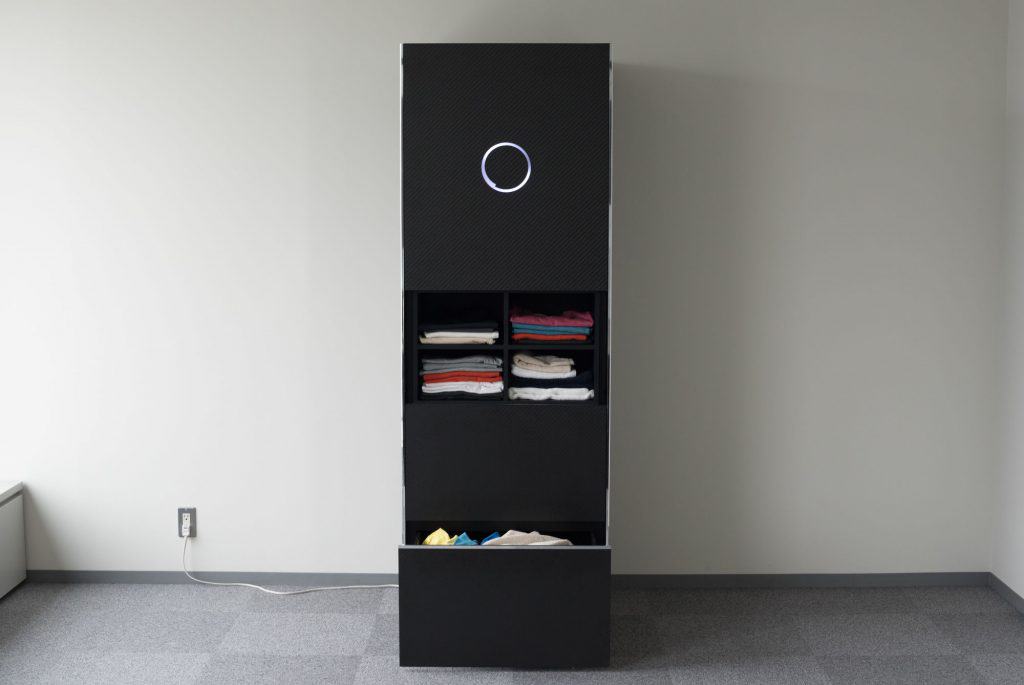
The Seven Dreamers Laboratories Inc. Laundroid robot prototype stands at the company’s headquarters in Tokyo, Japan, on Monday, Nov. 21, 2016. Seven Dreamers’ chief executive officer Shin Sakane received 6 billion yen ($53 million) from partners, including Panasonic Corp., last month to advance “the Laundroid” — a robot he is developing to not only wash and dry garments, but also sort, fold and neatly arrange them.

It’s all on you, Foldimate.

A small part of us always knew the Laundroid was too good to be true. The black obelisk, developed by Japanese company Seven Dreamers, was supposed to be a washing machine, dryer, ironing and laundry-folding robot rolled into one. It was the perfect appliance, in short, for chore-dodging so-and-sos who hate dealing with grimy clothes. But that dream has come to a predictable end. Today, Seven Dreamers filed for bankruptcy in Japan, all but ensuring its halo product will never reach store shelves. According to Teikoku Databank, a private credit research agency, the company owes 2.25 billion yen ($20.1 million USD) to 200 creditors.

Clearly, the product was too ambitious. Seven Dreamers had planned a simpler, but still potentially-impressive version that merely folded and sorted clothes. The first-gen model still required a complex combination of robotics, image analysis and artificial intelligence to achieve its goals, however. The company said the machine would recognize different types of clothing and sort them into “neat, organized piles.” A companion app would also keep you posted on what had been folded and offer a quick overview of your wardrobe. Public demonstrations at CES, though, were underwhelming. As The Verge reports, a version shown in 2018 struggled with basic t-shirts that weren’t part of a carefully pre-prepared basket.

Seven Dreamers had other products, including Nastent, a tube-shaped medical device that helps people breathe while they’re asleep. The company also raised capital in three funding rounds between 2015 and 2017. The investments weren’t enough, though, to offset the continued development costs of the Laundroid, which had been delayed many times.

The company’s demise leaves the market wide open for Foldimate, a laundry-folding rival based in San Francisco. A few months back, the startup showed a working prototype — a welcome change from its usual nonfunctional demonstrations — at CES in Las Vegas. The final version is scheduled to ship later this year for somewhere in the $1,000 price range.
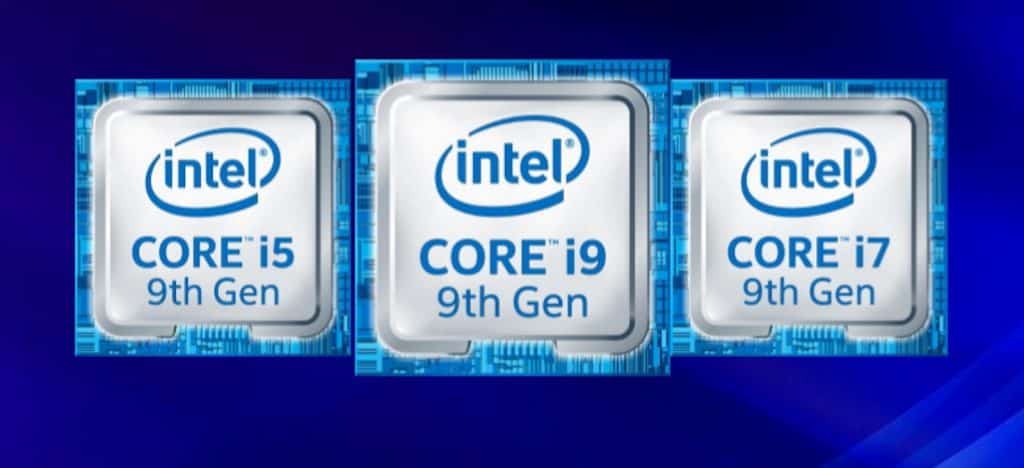
Intel’s 9th-gen laptop CPUs also reach up to 5GHz

They’ll power the next generation of gaming laptops.

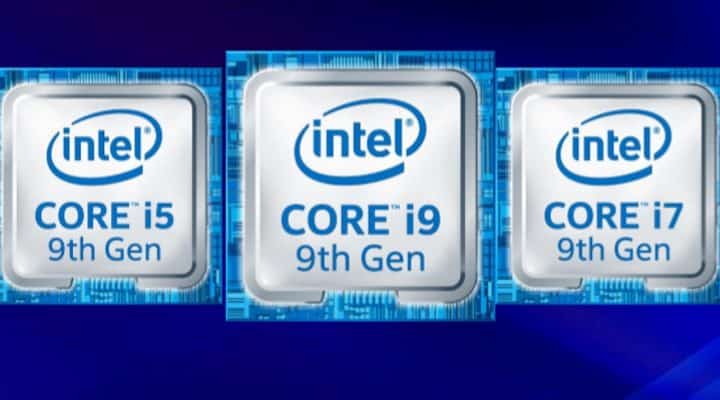
When Intel debuted its ninth generation Core processors last fall, the star of the show was the i9-9900K, its first consumer CPU to reach 5GHz. That was a huge milestone, and it made that chip even more tempting to power-hungry gamers. But now, that processor has a laptop-focused sibling that can also hit 5GHz: the i9-9980HK, an unlocked eight-core chip for beefy, overclockable notebooks. And if that’s too much power for you, Intel also has a slew of other ninth-gen chips coming. You can expect to see them in laptops soon, as ASUS, Lenovo and Razer also just announced their latest gaming notebooks to coincide with Intel’s news.

Intel 9th gen laptop

The 9980HK features a base speed of 2.4 GHz, with boost performance up to 5GHz. As you’d expect, it also has 16 threads of performance, thanks to Intel’s Hyperthreading technology (two threads per core). For people who don’t need to overclock, there’s also the new 9880H, which is almost as fast. Intel’s new laptop chips go all the way down to the quad-core i5-9300H, which can still reach upwards for 4GHz in boost speeds.

So how fast are these chips? According to Intel, the i9-9980HK offers 18 percent higher framerates than last year’s 8th-generation 8950HK in Hitman 2 and 28 percent faster for 4K video editing. And while gaming, streaming and recording in Black Ops 4, it delivers 2.1x faster framerates. That’s a significant leap from just a year ago. Compared to three-year old systems running the i7-6700HQ, the new chips offer 56 percent faster FPS in Total War 2, 54 percent speedier 4K video editing, and an overall performance bump of 33 percent.

Basically, if you bought a laptop last year, you don’t need to rush out and upgrade. But if you’re running an older system and looking for a big step forward, the 9th generation chips will be ideal. Another plus: they support Intel’s Optane Memory H10 module, which combines their zippy memory technology with large SSD storage. Intel claims that component will load game levels 2.29 faster than a three year old system with a traditional SSD, as well as open up large files 1.63x faster. Alongside these new ninth-generation CPUs, Intel’s 300 series laptop chipset will also support its AX200 Wi-Fi 6 adapter, which offers wireless speeds up to 2.4 Gbps, as well up to 128GB of DDR4 RAM.

While bulky gaming laptops like the Alienware Area 51m are already banking on the i9-9900K desktop CPU, that comes at the expense of portability and battery life, since it has a high 95-watt thermal design. With this batch of 9th generation laptop chips, which are built around a more reasonable 45-watt design, Intel is offering gamers a slightly more balanced option. I won’t expect to see the 12-hours-plus of battery life we’re getting on ultraportables these days, but there’s a better chance laptops running these new CPUs will be able to last more than a few hours.

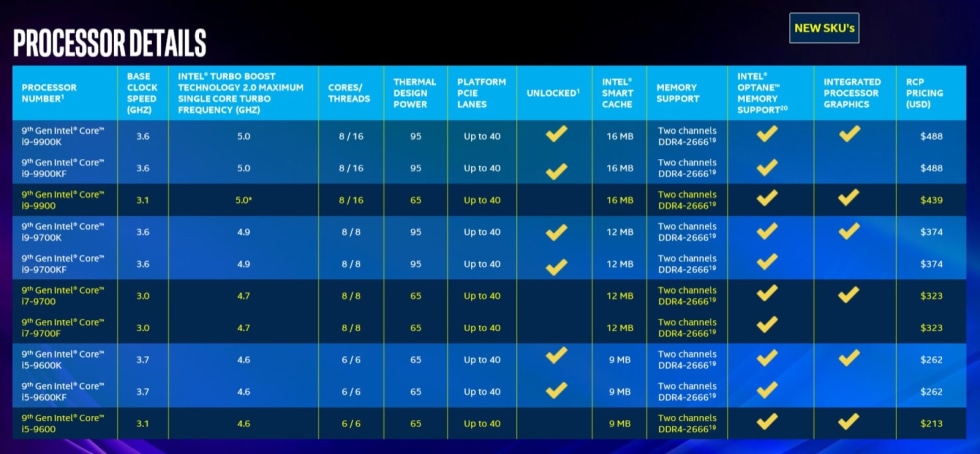
Additionally, Intel is also rounding out the rest of its ninth-generation desktop chips today: there’s the i9-9900, which will reach 5GHz like the 9900K, but is slightly cheaper and can’t be officially be overclocked. At the bottom of the barrel are the latest Pentium Gold and Celeron chips, which don’t appear to be significantly faster than last year’s models, but will still be good news for anyone looking for inexpensive machines.

FDA clears first personal ECG device to detect three heart arrhythmias

AliveCor’s KardiaMobile can spot more than just AFib.

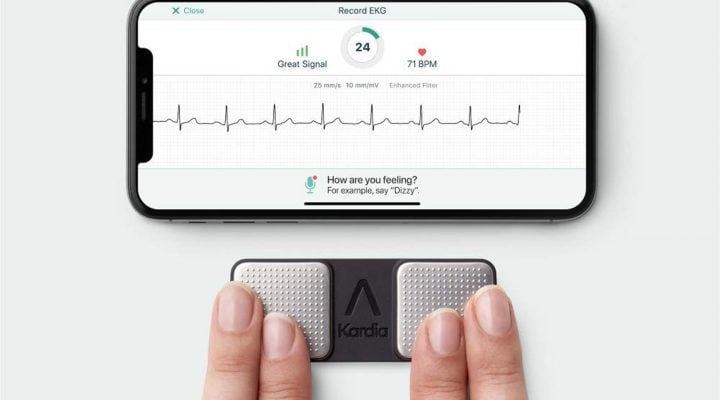
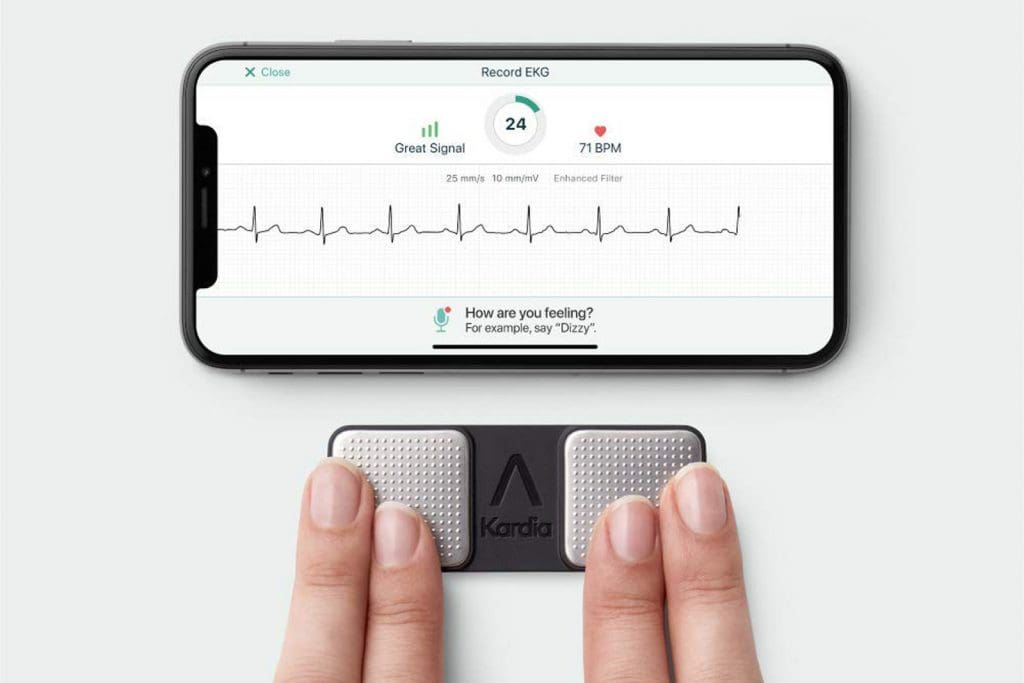
To date, personal ECG devices have only really detected one kind of heart arrhythmia: atrial fibrillation. While that’s helpful, it doesn’t cover other conditions that could be just as dangerous. You might not be left wondering for much longer. AliveCor’s KardiaMobile has received the first FDA clearance allowing a personal device to detect two other relatively common conditions, bradycardia (where your heart rate dips to 40-50BPM) and tachycardia (a jump to 100-140BPM). While these conditions are sometimes innocuous and might not show symptoms, they can also be representative of issues like heart disease.

AliveCor emphasizes that this will only help “inform” chats with your doctor, not replace them. This still isn’t as sophisticated as a multi-lead ECG you’d receive at a clinic or hospital. However, it could be useful even if you’re in fine health. It should reduce the number of inconclusive ECG results you see, and provide a clearer picture of your heart’s performance than before. Don’t be surprised if other devices follow suit.

Tesla promises ‘one million robo-taxis’ in 2020

The company says self-driving cars will be on the road this year.

Two days ahead of its first-quarter earnings disclosure, the company had an event to explain its autonomous technology to investors. The talks were probably denser than the average shareholder was expecting but it was an opportunity to see how Tesla will deliver a self-driving car and it announced that Tesla robo-taxis will be available next year.

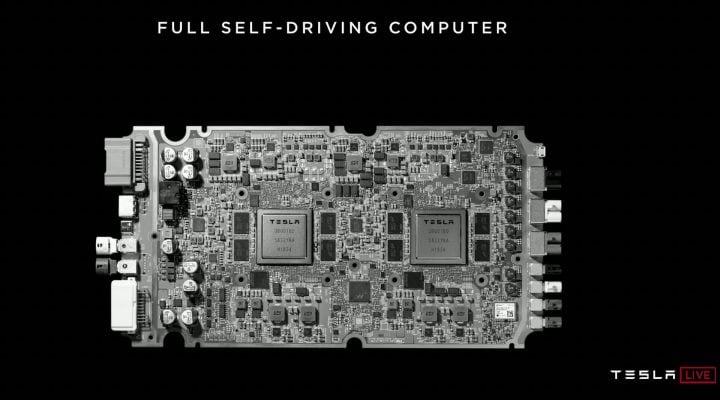
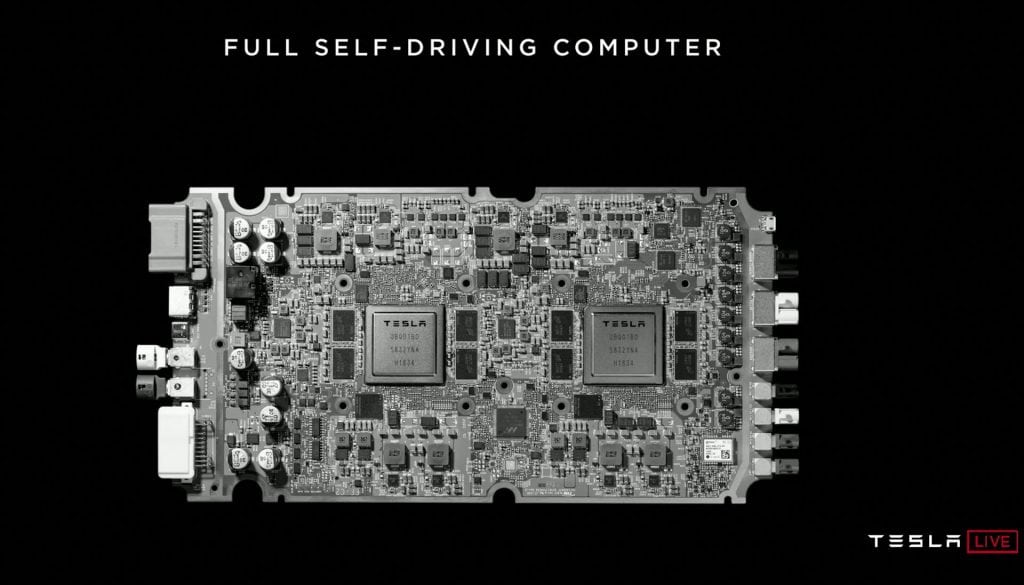
To kick things off, the company shared that it had built its very own computer for self-driving cars. The neural network chip was built from the ground up; the project started back in 2016. Each computer (which is stored behind the glove box) has redundancy so that if one chip fails, the second chip can take over.

This is the company’s first time building its own silicon. CEO Elon Musk was quick to boast that Tesla ” which has never designed a chip, designed the best chip in the world.”

Musk reiterated what he’s said before about the hardware available in Teslas. “All Tesla cars right now have everything necessary for self-driving available today. All you need to do is improve the software.”

That hardware includes the company’s reliance on cameras and radar. When the subject of LiDAR (Light Detection and Ranging) came up, Musk said “LiDAR is a fool’s errand. Anyone that’s relying on LiDAR is doomed.” He later added that “it’s fricking stupid. It’s expensive and unnecessary.”

Most other automakers are using or are planning on using LiDAR for their driver’s assistance features. The technology’s cost has come down while its ability to see further down the road has increased. Coupled with radar and cameras, it’s an additional tool for vehicles to see the world.

In its presentation, Tesla noted that the attendees arrived at the event using their eyes (and not lasers). An odd argument against LiDAR since people can’t see 360 degrees but a Tesla can see the world like that thanks to eight cameras. A human doesn’t have eight eyes.

As for the way the vehicle’s see and interact with the world, the company noted that for things like “cut-ins” (when a car pulls in front of another car) the company has been training its neural network using real-world interactions with vehicles. It then trains the system to understand the movements of cars as they are about to change lanes.

Tesla

To test the system Tesla uses something called “shadow mode.” The car sees a vehicle that’s about to change lanes and it makes a note of what it would have done. The data is sent to Tesla and it looks for false positives, or incorrect decisions and retrains the system. Once the system works as well as the company wants it too, it’s fully deployed.

For cut-ins, the update was pushed live three months ago.

As for full autonomy, Musk noted: “the software problem should not be minimized.” He continued that, “it’s a very difficult software problem.” Still, he promised that Teslas will be capable of self-driving by the end of this year and self-driving robo-taxis will be on the road in 2020. Also, in two years, the company will be making cars without steering wheels or pedals at all.

Musk hopes to undercut Uber and Lyft with the cost per mile of a robo-taxi being less than $.18 a mile. Typical ride sharing costs are $2 to $3 a mile.

Tesla

“If you fast forward a year, maybe a year three months, we’ll have over a million robo-taxis on the road.”

According to Musk vehicles will drive anywhere. “If you need geofenced maps, you’re not self-driving,” he said. He said that Teslas will be available to autonomously navigate dense urban areas like San Francisco and New York by the end of the year.

That self-driving prediction is far more aggressive than other automakers and Tesla has a history of announcing roadmaps then missing dates. But according to Musk, by next summer we’ll all be cruising in self-driving Tesla to the beach.

Stocks to Watch: Interpace Diagnostics Group, Inc. (IDXG) and Radiant Logistics, Inc. (RLGT) on the Marquee

The price of Interpace Diagnostics Group, Inc. (NASDAQ:IDXG) went down by $0 now trading at $0.69. Their shares witnessed a 1.47% increase from the 52-week low price of $0.68 they recorded on 2019-04-22. Even though it is still -157.97% behind the $1.78 high touched on 2018-09-20. The last few days have been rough for the stock, as its price has decreased by -3.7% during the week. It has also performed poorly over the past three months, as it lost around -36.11% while it has so far retreated around -24.11% during the course of a year. The stock of IDXG recorded -13.75% downtrend from the beginning of this year till date. The 12-month potential price target for Interpace Diagnostics Group, Inc. is set at $3.84. This target means that the stock has an upside potential to increase by 456.52% from the current trading price.

5 institutions entered new Interpace Diagnostics Group, Inc. (NASDAQ:IDXG) positions, 9 added to their existing positions in these shares, 9 lowered their positions, and 3 exited their positions entirely.

Interpace Diagnostics Group, Inc. (IDXG) trade volume has decreased by -13.27% as around 237,022 shares were sold when compared with its 50-day average volume of traded shares which is 273,300. At the moment, IDXG is witnessing a downtrend, as it is trading -11.34% below its 20-day SMA, -21.83% below its 50-day SMA, and -36.86% below its 200-day SMA. The company runs an ROE of roughly -33.1%, with financial analysts predicting that their earnings per share growth will be around 15% per annum for the next five year. This will be compared to the 16.5% increase witnessed over the past five years.

The first technical resistance point for Interpace Diagnostics Group, Inc. (NASDAQ:IDXG) will likely come at $0.7, marking a 1.43% premium to the current level. The second resistance point is at $0.71, about 2.82% premium to its current market price. On the other hand, inability to breach the immediate hurdles can drag it down to $0.66, the lower end of the range. IDXG’s 14-day MACD is -0.06 and this negative figure indicates a downward trading trend. The company’s 14-day RSI (relative strength index) score is 25.62, which shows that its stock has been oversold. The 20-day historical volatility for the stock stands at 29.69 percent, which is low when compared to that of the 50-day’s 41.77 percent.

The shares of Radiant Logistics, Inc. (NYSE:RLGT) has decreased by -1.56%, and now trading at $6.94 on the Wall Street in the intra-day deal, with their shares traded now around 357,309. This is a decline of -149,847 shares over the average 507,156 shares that were traded daily over the last three months. The stock that is trading at $6.94 went higher by 100.58% from its 52-week low of $3.46 that it attained back on 2018-05-01. The stock recorded a 52-week high of $7.33 nearly 6 days ago on 2019-04-17.

RLGT stock has performed well over the past 30 days, as it added 18.84% while its price climbed by 63.29% year-to-date (YTD). Looking at the last few days, it has been good for the stock, as it rose 4.83% over the last week. The stock’s 12-month potential target price is now at $8. This means that the stock price might likely increase by 15.27% from its current trading price. 5 out of 5 Wall Street analysts which represents 100% rated the stock as a buy while the remaining 0% rated it as a hold, with 0% of analysts rating it as a sell.

Radiant Logistics, Inc. (NYSE:RLGT) has been utilizing an ROE that is roughly 8.4%, with stock analysts predicting that the company’s EPS for the next five years will go up by 24.6% per year, following the 1.7% raise that was witnessed during the past five years. The stock at the moment is on a uptrend, trading 8.93% above its 20-day SMA, 12.54% above its 50-day SMA, and 34.41% above its 200-day SMA. In percentage terms, the aggregate Radiant Logistics, Inc. shares held by institutional investors is 48.9%. 14 institutions jumped in to acquire Radiant Logistics, Inc. (RLGT) fresh stake, 53 added to their current holdings in these shares, 44 lowered their positions, and 5 left no stake in the company.

The stock’s 9-day MACD is 0.22 and this positive figure indicates an upward trading trend. The company’s 9-day RSI score is 63.97, which shows that its stock has been neutral. The 20-day historical volatility for the shares stand at 37.59 percent, which is less when compared to that of the 50-day’s 41.53 percent. On the daily chart, we see that the stock could reach the first level of resistance at $7.15, sporting a 2.94% premium to the current level. The next resistance point is at $7.36, representing nearly 5.71% premium to the current market price of Radiant Logistics, Inc. (RLGT). On the other hand, failure to breach the immediate hurdles can drag it down to $6.66, the lower end of the range.

Stocks to Watch: Safe Bulkers, Inc. (SB) and Akoustis Technologies, Inc. (AKTS) In the spotlight

The price of Safe Bulkers, Inc. (NYSE:SB) went up by $0.06 now trading at $1.68. Their shares witnessed a 31.25% increase from the 52-week low price of $1.28 they recorded on 2019-03-08. Even though it is still -132.14% behind the $3.9 high touched on 2018-06-14. The last few days have been good for the stock, as its price has grew by 9.09% during the week. It has also performed poorly over the past three months, as it lost around -15.58% while it has so far retreated around -47% during the course of a year. The stock of SB recorded -5.62% downtrend from the beginning of this year till date. The 12-month potential price target for Safe Bulkers, Inc. is set at $2.51. This target means that the stock has an upside potential to increase by 49.4% from the current trading price.

9 institutions entered new Safe Bulkers, Inc. (NYSE:SB) positions, 38 added to their existing positions in these shares, 31 lowered their positions, and 8 exited their positions entirely.

Safe Bulkers, Inc. (SB) trade volume has decreased by -7.07% as around 300,419 shares were sold when compared with its 50-day average volume of traded shares which is 323,272. At the moment, SB is witnessing a uptrend, as it is trading 11.26% above its 20-day SMA, 10.91% above its 50-day SMA, and -26.21% above its 200-day SMA. The company runs an ROE of roughly 3.6%, with financial analysts predicting that their earnings per share growth will be around 14% per annum for the next five year. This will be compared to the -31.3% decrease witnessed over the past five years.

The first technical resistance point for Safe Bulkers, Inc. (NYSE:SB) will likely come at $1.73, marking a 2.89% premium to the current level. The second resistance point is at $1.77, about 5.08% premium to its current market price. On the other hand, inability to breach the immediate hurdles can drag it down to $1.53, the lower end of the range. SB’s 14-day MACD is 0.1 and this positive figure indicates an upward trading trend. The company’s 14-day RSI (relative strength index) score is 62.29, which shows that its stock has been neutral. The 20-day historical volatility for the stock stands at 46.84 percent, which is low when compared to that of the 50-day’s 56.28 percent.

The shares of Akoustis Technologies, Inc. (NASDAQ:AKTS) has decreased by -3.92%, and now trading at $6.62 on the Wall Street in the intra-day deal, with their shares traded now around 226,149. This is a decline of -7,117 shares over the average 233,266 shares that were traded daily over the last three months. The stock that is trading at $6.62 went higher by 94.71% from its 52-week low of $3.4 that it attained back on 2018-11-06. The stock recorded a 52-week high of $9.5 nearly 292 days ago on 2018-07-05.

AKTS stock hasn’t performed well over the past 30 days, as it lost -1.93% while its price climbed by 33.2% year-to-date (YTD). Looking at the last few days, it has been tough for the stock, as it tumbled -2.65% over the last week. The stock’s 12-month potential target price is now at $9.8. This means that the stock price might likely increase by 48.04% from its current trading price. 7 out of 8 Wall Street analysts which represents 87.5% rated the stock as a buy while the remaining 12.5% rated it as a hold, with 0% of analysts rating it as a sell.

Akoustis Technologies, Inc. (NASDAQ:AKTS) has been utilizing an ROE that is roughly -134.3%, with stock analysts predicting that the company’s EPS for the next five years will go down by 0% per year, following the 0% drop that was witnessed during the past five years. The stock at the moment is on a uptrend, trading 4.37% above its 20-day SMA, 1.23% above its 50-day SMA, and 0.6% above its 200-day SMA. In percentage terms, the aggregate Akoustis Technologies, Inc. shares held by institutional investors is 30.2%. 21 institutions jumped in to acquire Akoustis Technologies, Inc. (AKTS) fresh stake, 39 added to their current holdings in these shares, 19 lowered their positions, and 10 left no stake in the company.

The stock’s 9-day MACD is 0.1 and this positive figure indicates an upward trading trend. The company’s 9-day RSI score is 53.38, which shows that its stock has been neutral. The 20-day historical volatility for the shares stand at 53.9 percent, which is more when compared to that of the 50-day’s 44.67 percent. On the daily chart, we see that the stock could reach the first level of resistance at $6.86, sporting a 3.5% premium to the current level. The next resistance point is at $7.1, representing nearly 6.76% premium to the current market price of Akoustis Technologies, Inc. (AKTS). On the other hand, failure to breach the immediate hurdles can drag it down to $6.22, the lower end of the range.