
Archives for April 14, 2019

Mazda recalls more than 200,000 cars in U.S., Canada due to failing wipers

This Feb. 15, 2018, file photo shows the Mazda logo on the trunk of a Mazda vehicle on display at the Pittsburgh Auto Show. Mazda is recalling more than 200,000 Mazda 3 compact cars, including 51,000 in Canada, due to a windshield wiper issue.

Recall affects approximately 51,000 cars in Canada

Mazda is recalling more than 200,000 Mazda 3 compact cars in the U.S. and Canada because the windshield wipers can fail.

The company says in documents posted Saturday by the U.S. National Highway Traffic Safety Administration the recall covers cars from the 2016 through 2018 model years.

The Japanese automaker traced the problem to metal deposits that can cause a wiper relay to stick, knocking out the wipers and limiting driver visibility.

It says it has no reports of crashes or injuries due to the problem.

Transport Canada says the recall affects more than 51,000 vehicles in Canada.

It says owners can take their vehicle to a dealer to have the front body control module replaced.
ByWard Market gradually reopens after Friday fire

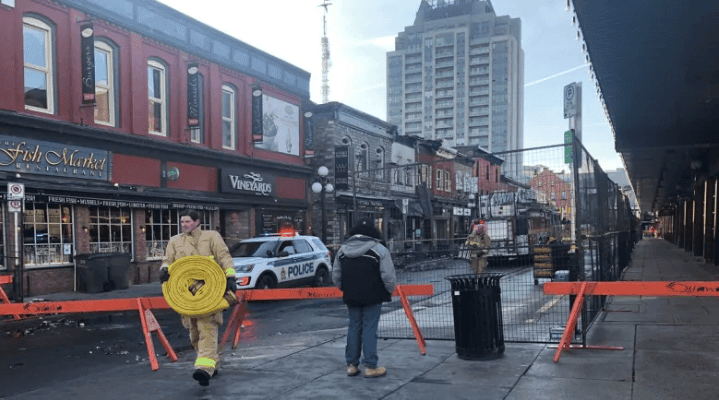
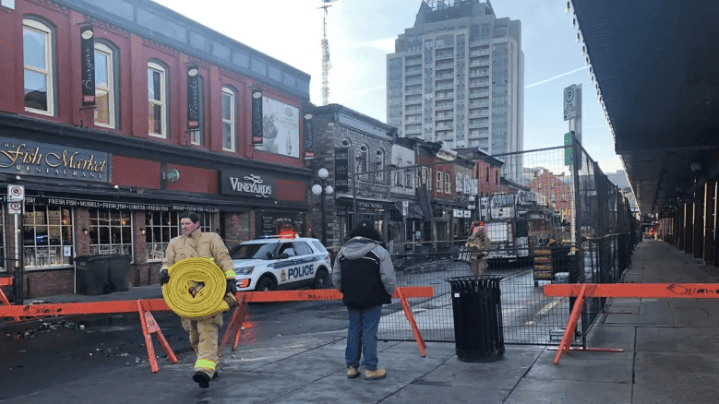
Firefighters and police were still at the scene on William Street in the ByWard Market Saturday morning after a devastating fire shut down businesses on April 12, 2019.

Owner of restaurant hit hardest says he’s ‘devastated’

Businesses in the ByWard Market are gradually reopening after a devastating fire Friday damaged shops and shut down the area’s main market building Friday. 

Emergency crews were called at 11:30 a.m. to Vittoria Trattoria, a restaurant in a century-old building at 35 William St., just before the fire spread to the buildings on either side.

A shroud of thick smoke covered the area, forcing an evacuation of the main market building at55 ByWard Market Square.

I’m just devastated, overwhelmed.- Domenic   Santaguida , owner of Vittoria Trattoria  

Domenic Santaguida, the owner of the restaurant, returned to the scene Saturday morning, where police and fire services were still present on the closed-off street. 

“I’m just devastated, overwhelmed,” Santaguida said. “I’m still in shock … there’s nothing we can do [except] wait for information and get ready to build and come back stronger.”

He said he hasn’t been told how bad the damage is yet, other than that the entire roof and parts of the second floor have collapsed. 

He said he isn’t sure when he’ll be able to return to the restaurant, which he co-founded in 1996. 

Domenic Santaguida, the owner of Vittoria Trattoria, says parts of the second floor and the entire roof of his restaurant collapsed in the fire at the ByWard Market Friday.

Most businesses reopen

In addition to Vittoria Trattoria, five other businesses remained closed Saturday morning. William Street will also remain closed until the evening, Ottawa police said.

Ottawa Markets, the arm’s-length city agency that runs publicly owned parts of the market, said yesterday that most of its vendors would reopen at 10 a.m. Saturday.

While most of the artisan vendors at the main market building were up and running Saturday, food-related businesses would have to wait for clearance from public health officials, said Jeff Darwin, the agency’s executive director. 

Darwin said it was surreal to watch employees running out of the fire-damaged buildings. 

“The ByWard Market is a mosaic and we need each other,” he said. “[The] loss of one affects us all.”

Jeff Darwin, the executive director of Ottawa Markets, said that food-related businesses in the main market building would have to wait for the go-ahead from Ottawa Public Health before reopening.

Cleanup continues

A team of remediation specialists will be in the main building for most of the day to help clean up, and air purification units will be used to remove the smell of smoke from the air, Darwin said. 

Ottawa Markets, the ByWard Market and Mayor Jim Watson have been encouraging people to visit the market to support the businesses after the fire.

Leonard Constant, who has lived near the ByWard Market for 35 years, said he visited the site of the fire twice to survey the damage and reflect on the loss.

“Every time a piece of our history is burnt away, I feel as though a part of me has been torn away,” he said.

Ottawa Fire Services said its initial damage assessment is estimated to be $2 million.

Investigators are still working to determine the cause of the fire.

Cabins nestled in B.C.’s Rossland Range share long, rich history

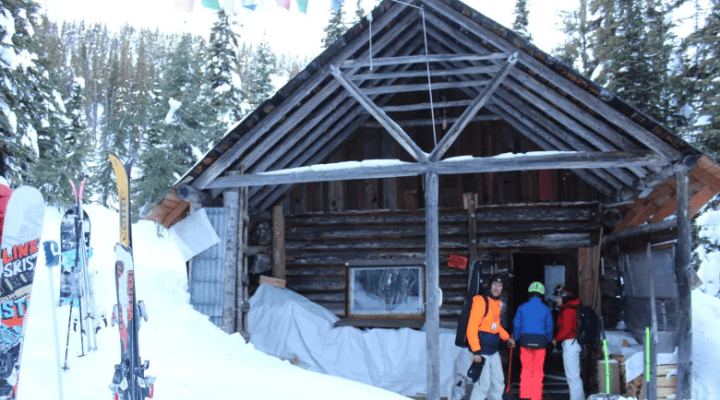
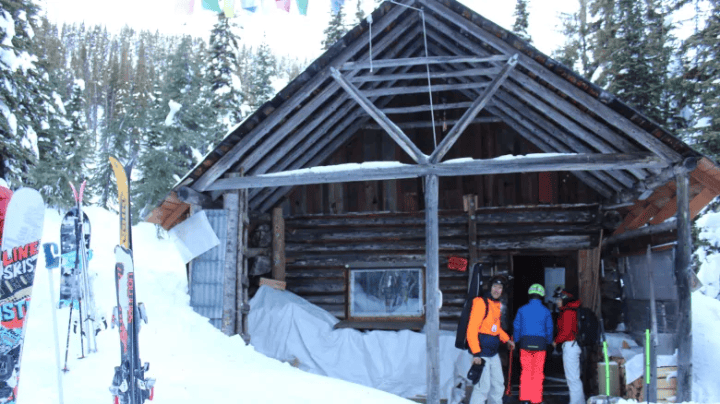
The Yodel Inn cabin has been a gathering spot for Wake Williams’ family since his father built it in 1944.

‘This is where I started and this is probably where I’ll end,’ says cabin owner

Deep in the backcountry, up in the mountains, near the the West Kootenay city of Rossland, sits a group of cabins in an area called the Rossland Range.

The Rossland Range is a recreational site that draws outdoor enthusiasts for hiking, snowshoeing and backcountry ski touring. To get to the cabins, you have to hike a trail in the Monashee Mountains between the Columbia River and Big Sheep Creek. 

For the people who  live there and take care of the area, the effort is worth it.

“To have this quality of cabins is quite remarkable,” said Laura Mackay, a director with Friends of the Rossland Range society.

“There’s really nowhere else probably in the world that has this.”

The society is a community of volunteers who look after the public recreational site.

Wake Williams spends nearly 200 days out of the year at his cabin, the Yodel Inn. He hopes he can continue doing it for the rest of his life.

“There is a long and noble history of the cabins dating back decades actually,” Mackay told CBC’s Kate Wiley.

In the 1930s, skiers and snowshoers, including well-known community member Cookie L’ecluse, used the area recreationally and then shared it with friends, said MacKay.

“[It] snowballed so to speak from there, and the next generation came along and picked that up and built cabins and renovated old cabins.”

Yodel Inn

Wake Williams has been taking care of the cabin his father built in 1944 for almost 50 years.

The 69-year-old now spends nearly 200 days out of the year at the Yodel Inn cabin.

“It’s an elemental part of my life,” he said. “Being able to hike, ski tour, snowshoe and just enjoy the special energy that you find up in the mountains and this area has a strong mountain culture.”

‘I start to look ahead and consider how much longer I can maintain this lifestyle, because you know just drawing water, chopping wood, hauling a pack up the mountain, that takes a fair amount of vitality…if I could I’d like to end my days here,’ said Williams, left.

Williams considers himself part of that culture, spending many days skiing and gathering for après ski parties with the community. 

“[This culture] speaks very strongly to the spirits of my mother and father and all of the other people of their generation who were up here in those years through the 1930s,1940s,” said Williams.

His parents honeymooned at the Yodel Inn cabin in 1948, and the following year, Williams was born.

“My good friend Leonard has said that he figures  my strong connection to the cabin is because I was conceived up here on their honeymoon,” he said.

“This is where I started and this is probably where I’ll end.”

The Kootenay Inn

Rob Campbell has been looking after the Kootenay Inn since he found it when he was 14, working with the ski patrol in the bush.

The cabin wasn’t being used and Campbell got informal permission to take it over. 

“I’ve had to work to keep it,” he said.

Rob Campbell, left, said he has been bringing his three kids to the cabin, including his daughter Dusty, right, since they were young.

In order to prove that he was taking care of the cabin, Campbell got skiers and locals in Rossland to sign a waiver vouching for him. He even got a lawyer involved and eventually got a land use permit for it.

Since then, he’s created many happy memories there. 

“[I had] good times with the boys when we were younger. We had to hike all the way from the bottom. It took half a day,” he said.

Campbell later spent time at the cabin with his wife and three kids.

His daughter, Dusty Campbell, describes it as “one of the coolest places in the world.”

She has many memories of the community having holiday parties and celebrating wintertime birthdays.

“We had a lot of really good times up here growing up. We loved the mountains and it just gives us a place to gather,” said Dusty Campbell. 

Trade rows cloud IMF summit as officials fret over economic slowdown

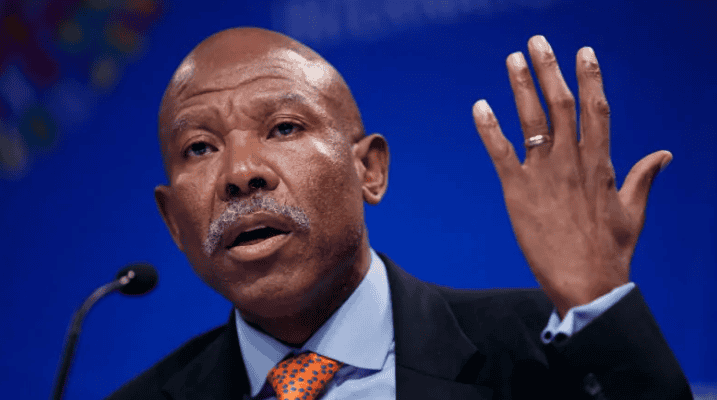
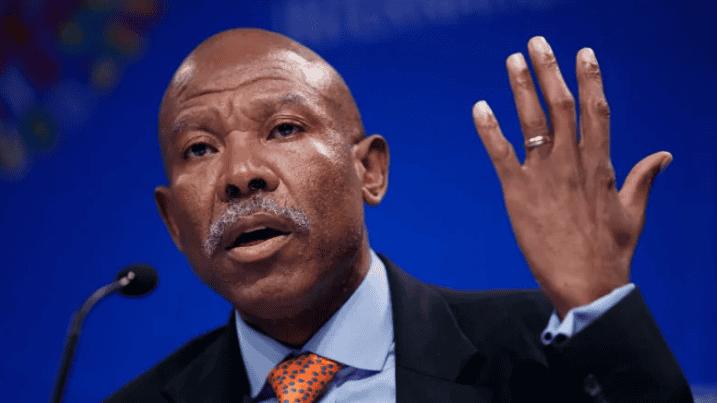
IMF chairman and governor of the South African Reserve Bank Lesetja Kganyago speaks to the media during a news conference in Washington on Saturday. He said trade tensions and geopolitical risks are putting a drag on growth.

Sober mood at meetings this week a stark contrast to the optimism of last year

Trade disputes and tighter financial conditions are among the top threats to a slowing world economy, global finance officials said on Saturday, urging countries to take steps to shore up growth.

The global expansion, now seen at its most sluggish pace in three years, is likely to firm up next year, but central banks and fiscal authorities have limited policy options to drive a rebound, officials said in the joint communiqué of the International Monetary Fund’s steering committee.

“While we expect to see a pickup [in growth] next year, trade tensions, geopolitical risks, political instability are among the challenges,” Lesetja Kganyago, the committee’s chairman and the South African Reserve Bank’s governor, said at a press conference after the panel adjourned its semi-annual meeting.

“We agreed we need to act promptly to protect the expansion.”

“Fiscal policy for example should remain flexible and growth-friendly, rebuild buffers, and strike the right chord between debt sustainability and supporting demand,” Kganyago said, capping the spring meetings of the IMF and World Bank in Washington.

The sober mood among finance leaders at the meetings this week was a stark contrast to the optimism that characterized the gathering one year ago when officials were heralding a rare period of robust and synchronized growth.

This week’s proceedings kicked off with the IMF cutting its global growth outlook for the third time in six months. The world economy will likely grow 3.3 per cent this year, the slowest expansion since 2016 and 0.2 percentage points below the global lender’s estimate from January.

Major central banks including the U.S. Federal Reserve have responded to the slowdown by putting policy-tightening efforts on hold. That has eased the pressures that global financial markets felt at the end of 2018, when tightening loomed.

Growth is projected to firm up in 2020, the IMF said, but some officials are worried the expected rebound will be threatened if the weakening in developed economies such as the United States, Japan and Europe worsens.

“Despite the expected improvement in global economic growth, if economic slowdowns in major economies feed into other economies, the prospects for growth might deteriorate, bringing uncertainty across the entire global economy,” Japanese Finance Minister Taro Aso said in his statement to the IMF committee.

There is some cause for optimism. In Europe, many of the global factors weighing on growth appear to be waning, keeping alive expectations for a recovery in the second half of the year, European Central Bank President Mario Draghi said at a separate press conference.

But he also warned that factors that undermine confidence, including the risk of a hard Brexit and a global trade war, continue to “loom large,” putting growth at risk.

U.S.-China talks

Trade disputes, especially the standoff between the United States and China, have been a central talking point at the meetings this week and have been widely cited as a primary driver behind the weakening of the global economy.

“If you model tariffs on a large portion of the goods that are traded, you take the entire volume of goods traded between the U.S. and China in particular, $500 billion [US], you apply tariffs to that, you are putting at risk 0.8 per cent of global growth,” IMF Managing Director Christine Lagarde said.

Earlier, China took a swipe at U.S. President Donald Trump’s “America First” policies at the centre of the trade dispute between the world’s two largest economies, including tit-for-tat tariffs on hundreds of billions of dollars of goods.

IMF Managing Director Christine Lagarde speaks during a news conference Washington on Saturday. She pointed to the U.S-China trade dispute as a risk factor.

“The protectionism of some countries has harmed mutual trust among countries, limited the scope for multilateral co-operation, and impeded the willingness to achieve it,” Chen Yulu, a vice governor at the People’s Bank of China,” said in a statement to the IMF.

U.S. Treasury Secretary Steven Mnuchin told reporters on the sidelines of the meetings that a U.S.-China trade agreement would go “way beyond” previous efforts to open China’s markets to U.S. companies and hoped that the two sides were “close to the final round” of negotiations.

Japan, which will kick off its own negotiations with the Trump administration in Washington on Monday aimed at averting automotive tariffs, also bemoaned the current state of trade.

“The prolonging of trade tensions and policy uncertainties pose a serious risk to the global economy by undermining private investment, disrupting global supply chains and weakening productivity growth,” Aso said.