Archives for April 13, 2019

AirCan CEO gets 28% raise

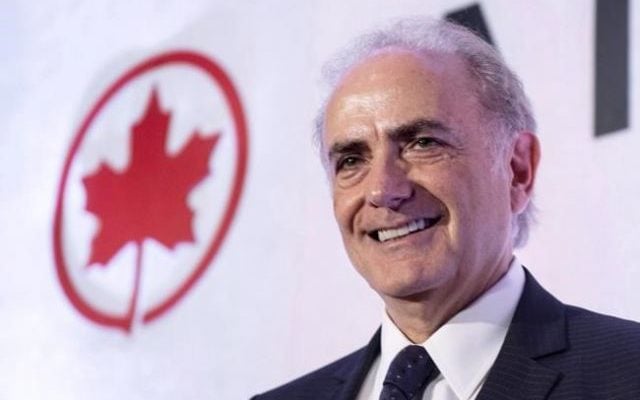
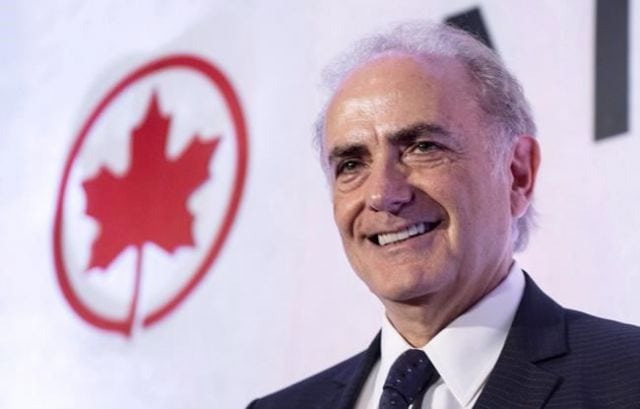
Air Canada chief executive Calin Rovinescu enjoyed a leap in total compensation to $11.5 million last year, up 28 per cent from $9 million in 2017.

Total compensation for the carrier’s top six executives reached $24.9 million in 2018, a 24 per cent jump from $20.1 million the year before, according to the proxy circular ahead of Air Canada’s May 6 annual meeting.

Rovinescu’s direct compensation amounted to $8.9 million, with a raise to $10.4 million planned for 2019.

The direct compensation comprised a base salary of $1.4 million, share-based and option-based awards of $5.6 million, and a pension value of about $1 million.

Rovinescu, who has headed the Montreal-based airline since 2009, also received a bonus of $3.5 million.

The pay bump came amidst record revenues of $18.07 billion in 2018, despite a plunge in net income to $167 million from $2.03 billion a year earlier.
Carbon taxes vs regulations

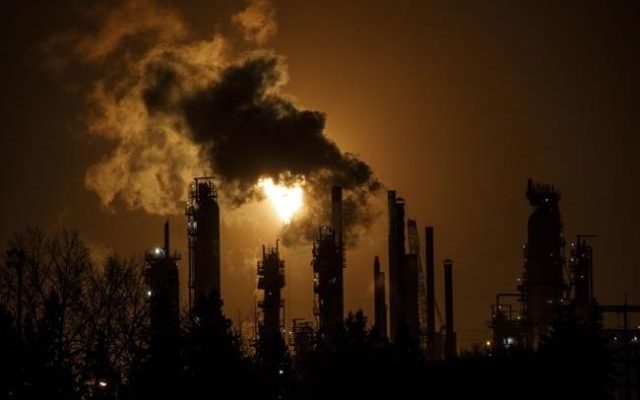
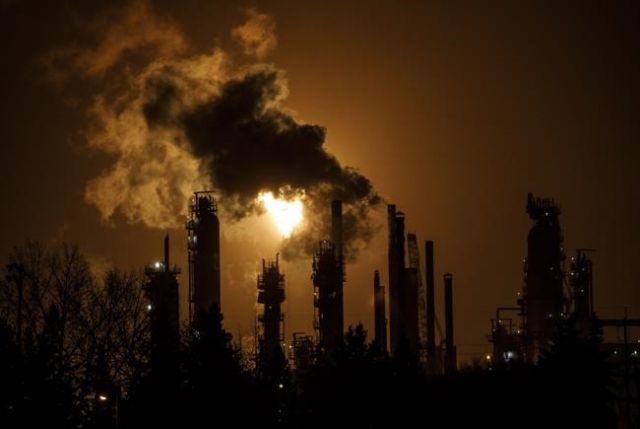
Between politicians who fog the truth and the ones just in a fog, Chris Ragan wants to fan fresh air into a carbon tax debate that is clouding Alberta’s provincial election and drifting into an upcoming federal campaign.

“It’s pretty clear this issue is warming up politically,” said Ragan, head of Canada’s Ecofiscal Commission, a non-partisan group of academics and business leaders focused on economic and environmental solutions.

“We have been sorry to see that there’s a bunch of stuff out there that is either misunderstood or poorly explained. There are a bunch of myths out there.”

The commission has just published a report on carbon tax misconceptions.

The worst, Ragan said, is that a carbon tax doesn’t work.

“If you look at B.C., if you look at California, if you look at the U.K, if you look at Quebec, these policies do work. What they don’t do is work overnight.”

At least five different published studies have found British Columbia’s carbon tax, introduced in 2008, has cut overall emissions, reduced per capita gasoline use by seven per cent, improved average vehicle efficiency by four per cent, cut residential natural gas use by seven per cent and diesel use by more than three per cent.

Meanwhile, the province enjoyed about three per cent annual economic growth between 2012 and 2017.

Other jurisdictions that have successfully used carbon taxes to reduce emissions include Sweden, Finland, Denmark, the Netherlands, several U.S. states, the U.K. and the European Union.

Three separate studies found B.C.’s tax either didn’t affect jobs or added them. A fourth found a small decrease in jobs for less-educated workers. Studies in the U.S. or the U.K. found little or no impact on job numbers.

The commission’s report finds that far from hurting families, 70 per cent of Canadian households will receive more in carbon tax rebates than they pay.

Energy economists such as Mark Jaccard at B.C.’s Simon Fraser University argue that regulations get faster, bigger results and are politically easier to enact. The big cuts to Canada’s carbon emissions, he said, have come from closing coal-fired power plants and clean fuel rules.

“Some people will tell you you have to have carbon pricing,” he said on a recent podcast. “That’s not true. You could do it all through regulations.”

You could, concedes Ragan. But that would cost the economy more. Besides, he said, bringing in carbon taxes gives governments an opportunity to cut other levies such as income tax.

Albertans who believe the province could escape a carbon tax by rescinding provincial legislation may also be mistaken.

Martin Olszynski, a University of Calgary law professor, said all Ottawa would have to do is pass an order in council to bring Alberta under the same federal tax that recently came into effect in Saskatchewan, Manitoba, Ontario and New Brunswick. None of those provinces had its own tax.

Incentives for more ECEs

British Columbia is expanding the number of bursaries offered to early childhood educators as it further commits to the goal of creating a universal, provincewide child-care system.

A $1.9-million investment through B.C.’s Early Learning and Child Care Agreement with the federal government will pay for the additional financial awards.

The extra funding adds to the roughly 1,100 bursaries and $10 million in funding approved last fall.

A news release from the Ministry of Children and Family Development and the Ministry of Advanced Education, Skills and Training says the investment is part of the recruitment and retention strategy for educators in early care and learning.

It offers increased supports for the child-care sector, including a $1 per hour wage enhancement for eligible early childhood educators and enhanced bursaries for students hoping to enter the field.

Katrina Chen, Minister of State for Child Care, says the profession was neglected for years so B.C. has a “lot of catching up to do.”

“We need to invest heavily in the early childhood education sector to keep up with the pent up demand for quality child care throughout the province,” Chen says in a news release.

The province is also spending $1.8 million to support an evaluation of its early care and learning strategy for the child-care sector.

Information collected will be used to support ongoing improvements aimed at attracting and keeping child-care workers, the release says.

The B.C. government and BC Green party caucus have set early childhood education as a shared priority and the province has pledged to invest more than $1.3 billion in child care over four years to lay the foundation for a universal child care system, the ministries say.

Fewer players in oil & gas

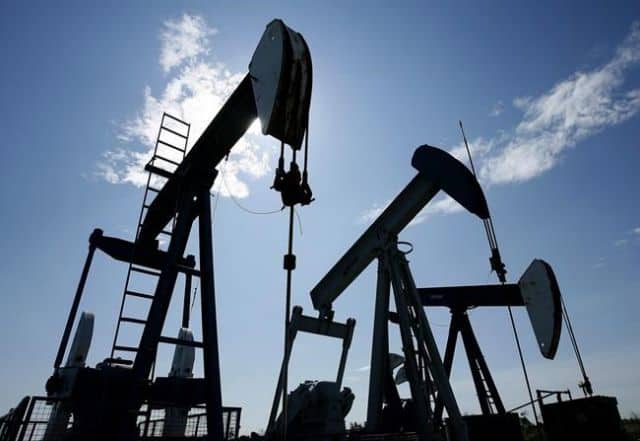
A lack of capital for drilling coupled with rising exploration costs make it unsurprising that fewer players are operating in Western Canada’s oil and gas fields, analysts say.

A study from consulting firm XI Technologies of Calgary finds that almost 300 names have disappeared from a roster of all companies producing oil and gas in Western Canada since global oil prices began crashing at the end of 2014.

A total of 1,334 active companies — privately held and foreign-owned entities as well as publicly traded firms — reported oil or gas production in Western Canada in December 2018, XI found.

That’s down 282 names or 17.5 per cent from 1,616 in the same month four years earlier, a shift that XI data solutions specialist Shovik Sengupta says points to a period of significant consolidation in the industry.

“There’s no capital,” said Tom Pavic, senior vice-president with Calgary-based Sayer Energy Advisors, when asked what he thinks is causing the shrinkage.

“There’s an uptick in oil prices but we’re not seeing it with the producers’ stock price on the exchange…. No one wants to touch Canada because of all the uncertainty as it relates to pipelines.”

Most of the missing names are likely to be small players who haven’t been able to win investor backing to pay for drilling expensive oil and gas wells in trendy unconventional resource oilfields like the Montney and Duvernay, added Sayer president Alan Tambosso.

The loss of producer names is more stark among publicly traded issuers.

As of Dec. 31, 2014, a total of 108 oil and gas companies with a market capitalization of $311 billion were listed on the Toronto Stock Exchange, while 229 smaller companies worth $5.1 billion resided on the TSX Venture Exchange.

Four years later, the number on the senior exchange had fallen by 31 per cent to 72 with a market cap of $214 billion, and venture listings were off by 44 per cent to 119 companies worth $3.9 billion.

The market for oil and gas corporate sales looked to be heating up last year but stalled on lower global oil prices over the summer and price discounts for western Canadian oil in the fall as production exceeded export pipeline capacity, said Stephanie Stimpson, a Calgary-based partner at law firm Torys LLP specializing in oil and gas mergers and acquisitions.

“It’s really is about the access to capital here,” she said.

“There are very few financings getting done. Certainly the junior sector is not able to raise capital now.”