
Archives for April 8, 2019

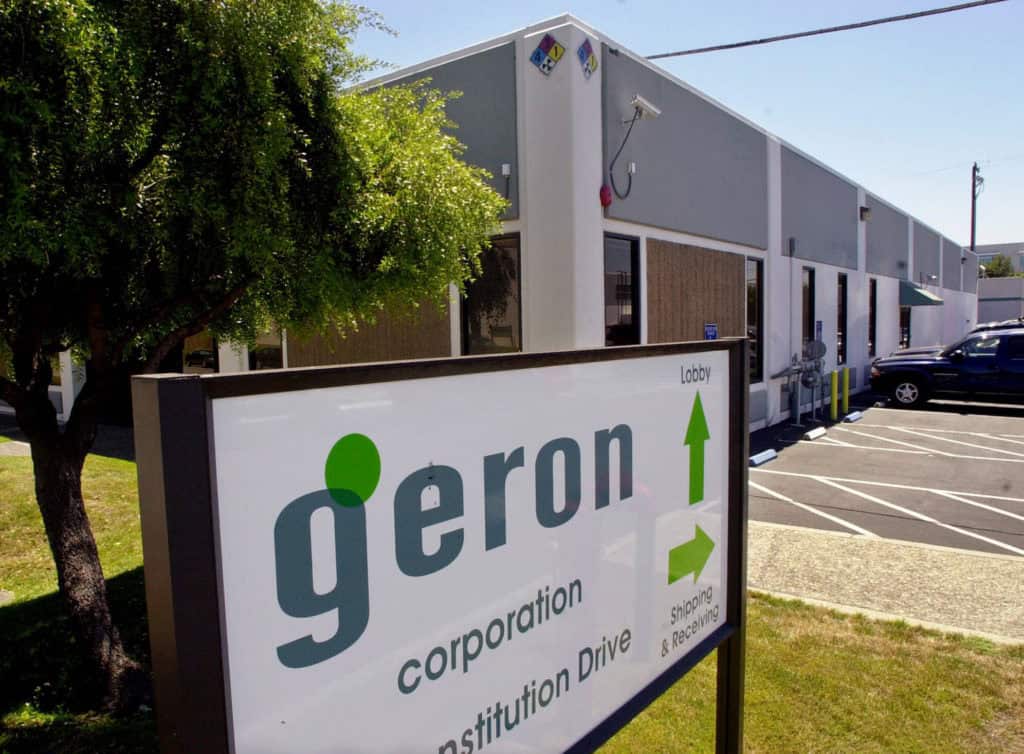
2 Stocks to Watch Today: Blue Apron Holdings, Inc. (APRN), Geron Corporation (GERN)

Blue Apron Holdings, Inc. (NYSE: APRN) experienced a high price of with a low value of $1.02 at the end of the last trading session, which followed after a gain of 5.88% and settled at $1.08 during the course of the last 24 hours for the day. Respectfully, the company now has 183.70M shares after the latest changes, so the present market capitalization sits at $198.40M. The trading volume of Blue Apron Holdings, Inc. shares went over 2,918,691 in a single day during the last trading session in comparison to the average volume of APRN, usually circulating around 4.09M.

During the course of the last year, the stock has touched a high of $4.15 and a low of $0.65, which as a result has the increased attention of top market experts who are tracking the progress of the asset as it is getting closer to a notable historic high price or low value.

Looking at the latest analyst forecasts, the current earnings-per-share (EPS) consensus estimate is sitting at -$0.20 per share. In the preceding year, the company reportedly generated EPS of -$0.63 per share of its common stock. The profitability indicators are showing that this organization has an operating margin of -17.10%, a profit margin of -18.30%, and a gross margin of 35.10%.

If we were to do a comparison between the current price and its previous movement in the market, we can easily conclude that the price went to a positive change, going up by +0.10 in the past five trading days, which resulted in a percentage change of +10.20% and a moving average of 1.02. In the past 20 days, its price changed by +0.12, which means that the stock’s moving average was 1.00. Looking back at a cycle of the last 50 days, shares of APRN changed by -$0.28 (which is -20.59%) and demonstrated a moving average of 1.20. Meanwhile, this stock’s MACD Oscillator was 0.05 over the past 9 days, and 0.05 over the past two weeks, also marking 0.05 in the period of the last 20 days.

Geron Corporation (NASDAQ:GERN)’s shares demonstrated a change of 2.82% during the most recent trading session, ending the trading day at the price of $1.82 with a 24-hour trading volume that reached 2,688,403 – compared to its average trading volume of as 3.17M, as recorded over the past three months. With that closing price, the market capitalization of this company is now sitting at $339.35M. The moving average for last 20 days of Geron Corporation is at 9.51%, while the average went up by 23.34% during the last 50 days with -26.13% recorded during the last 200 days. Additionally, this stock’s distance from its 52-week high price is currently down by -73.96%, while it’s sitting 90.64% away from its 52-week low price.

When you are considering investing in stocks, it is wise to consider counting in Wall Street analysts’ target prices, which should help you place a more profitable investment. The price targets can provide you with an idea of the predicted movement of stocks you are interested in. At the moment, the price target set for Geron Corporation is $3.63. It’s also helpful to look at the average analyst recommendation score – which is provided on a scale of 1 to 5 where 1 is “strong buy”, 2 is “buy”, 3 is “hold”, 4 is “sell” and 5 is a “strong sell”. Right now, the average analyst recommendation for GERN stands at 2.00.

Traders use the ATR to analyze potential exit and entry points, as it represents a useful tool in almost any trading strategy. ATR for this stock is sitting at 0.10. Beta tells us about a stock’s volatility, also known as its systematic risk, compared to the market overall. The current beta value for GERN is 2.92, while for the past seven days, this stock’s volatility was 6.18%, also recording 6.78% for the past 30-day period.

Professionals on Wall Street also frequently check the Relative Strength Index (RSI) of a potential investment, which tells us the speed and change of a stock’s price movement in the market. RSI is expressed on a scale of 0 to 100. If the indicators are set higher above 70, then the RSI factors are indicating that the stocks are overbought. The factors will indicate that a stock is oversold if the result is set below 30. Right now, Geron Corporation (GERN) has an RSI of 67.44 – indicating that the asset is being neither overbought nor oversold.


Two stocks To Watch For Long-Term Investors: Aevi Genomic Medicine, Inc. (GNMX), Cypress Semiconductor Corporation (CY)

Aevi Genomic Medicine, Inc. (NASDAQ: GNMX) experienced a high price of with a low value of $0.1891 at the end of the last trading session, which followed after a gain of 9.48% and settled at $0.21 during the course of the last 24 hours for the day. Respectfully, the company now has 59.05M shares after the latest changes, so the present market capitalization sits at $12.41M. The trading volume of Aevi Genomic Medicine, Inc. shares went over 6,963,184 in a single day during the last trading session in comparison to the average volume of GNMX, usually circulating around 2.22M.

During the course of the last year, the stock has touched a high of $1.93 and a low of $0.17, which as a result has the increased attention of top market experts who are tracking the progress of the asset as it is getting closer to a notable historic high price or low value.

Looking at the latest analyst forecasts, the current earnings-per-share (EPS) consensus estimate is sitting at -$0.33 per share. In the preceding year, the company reportedly generated EPS of -$0.50 per share of its common stock.

If we were to do a comparison between the current price and its previous movement in the market, we can easily conclude that the price went to a positive change, going up by +0.01 in the past five trading days, which resulted in a percentage change of +7.24% and a moving average of 0.20. In the past 20 days, the stock’s moving average was 0.21. Looking back at a cycle of the last 50 days, shares of GNMX changed (which is +1.06%) and demonstrated a moving average of 0.21. Meanwhile, this stock’s MACD Oscillator was 0.00 over the past 9 days, and -0.01 over the past two weeks, also marking -0.01 in the period of the last 20 days.

Cypress Semiconductor Corporation (NASDAQ:CY)’s shares demonstrated a change of 1.07% during the most recent trading session, ending the trading day at the price of $16.00 with a 24-hour trading volume that reached 3,896,768 – compared to its average trading volume of as 4.27M, as recorded over the past three months. With that closing price, the market capitalization of this company is now sitting at $5.77B. The moving average for last 20 days of Cypress Semiconductor Corporation is at 5.57%, while the average went up by 6.14% during the last 50 days with 7.80% recorded during the last 200 days. Additionally, this stock’s distance from its 52-week high price is currently down by -13.94%, while it’s sitting 36.17% away from its 52-week low price.

When you are considering investing in stocks, it is wise to consider counting in Wall Street analysts’ target prices, which should help you place a more profitable investment. The price targets can provide you with an idea of the predicted movement of stocks you are interested in. At the moment, the price target set for Cypress Semiconductor Corporation is $16.62.

Traders use the ATR to analyze potential exit and entry points, as it represents a useful tool in almost any trading strategy. ATR for this stock is sitting at 0.35. Beta tells us about a stock’s volatility, also known as its systematic risk, compared to the market overall. The current beta value for CY is 1.94, while for the past seven days, this stock’s volatility was 1.82%, also recording 2.17% for the past 30-day period.

Professionals on Wall Street also frequently check the Relative Strength Index (RSI) of a potential investment, which tells us the speed and change of a stock’s price movement in the market. RSI is expressed on a scale of 0 to 100. If the indicators are set higher above 70, then the RSI factors are indicating that the stocks are overbought. The factors will indicate that a stock is oversold if the result is set below 30. Right now, Cypress Semiconductor Corporation (CY) has an RSI of 63.92 – indicating that the asset is being neither overbought nor oversold.

Power restored for most

Electricity has been mostly restored on Vancouver Island after strong winds toppled trees and knocked out power lines Saturday, but some customers could be without power until today.

About 12,000 homes and businesses on the southern part of the island were affected at the peak of the power outage, but just under 1,800 customers remained without electricity as BC Hydro crews worked to restore power.

However, BC Hydro spokesman Kevin Aquino says about 200 customers on Quadra Island and Cortes Island could be without power for longer because ferry cancellations mean crews may not get to those communities.

He says a non-weather-related issue involving equipment failure had left about 2,300 customers without power in Surrey, but electricity has been restored there.

BC Ferries says wind warnings issued by Environment Canada have resulted in multiple sailing cancellations on seven routes, most of them on Vancouver Island.

Two sailings were also cancelled on the Horseshoe Bay route west of Vancouver for a ferry that travels to the Departure Bay terminal in Nanaimo, on the island.

Telemedicine dials up

Stick out your smartphone and say AHHHHH.

Although it’s early days for a new wave of telemedicine, some Canadians can now avoid trips to the doctor’s office by using their mobile phone’s video camera.

In March, Telus Health launched a new video link between patients and select doctors in British Columbia, the only province with a billing code to pay doctors for such visits.

Other companies are experimenting with similar services, but Telus has hopes of becoming the main player in Canada’s burgeoning market for consumer-oriented medical technology.

“I think we are far ahead of any competitors in this space in Canada,” Telus vice-president Juggy Sihota said in an interview from Vancouver.

Over the past decade, the owner of the Telus and Koodo wireless networks has spent $2.5 billion to build a national medical records business.

Telus Health estimates that more than 50 per cent of general practice doctors offices in Canada use the electronic medical records software at their office; more than 60 per cent of pharmacies use its pharmacy management software.

It’s now adding Babylon by Telus Health, which including video visits by smartphone, to its lineup.

“This is a key strategic priority for our organization and a key personal priority for (Telus CEO Darren Entwistle),” said Sihota, Telus’s vice-president of consumer health.

Telus is the Canadian partner of London-based Babylon Health — one of many companies that have developed smartphone apps that aim to help consumers diagnose their own symptoms.

What’s distinctive about the new Babylon by Telus service is its ability to connect by interactive video with doctors covered by B.C.’s health services payment system.

“It is as though you went into a walk-in clinic and see the doctor that’s there,” according to Sihota.

Patients aren’t required to use a Telus wireless phone and they won’t be charged for video doctor visits.

Eventually, Telus hopes to generate revenue by selling a technology platform to general practice doctors and other health professionals.

Dr. Ed Brown, who is chief executive officer of the Ontario Telemedicine Network, said forms of video doctor visits have been around for many years.

“For example, a patient living in a small town could go into a hospital and see a specialist that’s many, many miles away without having the make the trip.”

But Brown agrees that what Telus is doing “is a little bit different.”

For one thing, it’s using widely available mobile technology that patients can use anywhere there’s a fast enough wireless service. Babylon by Telus also connects with general practitioners, rather than specialists.

Brown said that Ontario’s health system doesn’t have a billing code to pay doctors for their telemedicine services, but OTN is working to overcome that barrier.

“We want to really make this part of mainstream health care,” Brown said

OTN is funding a pilot program with 277 physicians and 30,000 patients in five of Ontario’s 14 health care regions.

He said that seeing a new doctor each visit “is OK for some things but, for the most part, we also like people to have direct access to their own doctor.”

OTN — a provincially funded not-for-profit organization — is working with Novari Health and Think Research on a mobile phone connection between Ontario doctors and their patients.

“Patients are able to text their own doctor, and that can be escalated to a video or audio call if that’s required,” Brown said.

He said only a small percentage of patients in the pilot project use the video feature, relying mostly on text messages.

“Babylon may have some differentiating features that may give them an edge, here and there, but I think there’s a lot of competition in this space.” Brown said.

From Sihota’s point of view, video consultations offer big advantages over traditional visits to the doctor’s office.

For example, she said, patients can replay the virtual consultations with the Babylon doctor either for themselves, a trusted family member or personal doctor.

And if a general practice doctor refers a patient to a specialist, the service provides notifications along each step of the process and gives the patient opportunities to ask questions along the way.

Scheer promises SNC facts

Conservative Leader Andrew Scheer plans to present new documents related to the SNC-Lavalin controversy this afternoon.

His announcement is set for 2 p.m. eastern time at the National Press Theatre in Ottawa.

A Saturday afternoon release from the Conservatives offers no more details, and party spokespeople did not immediately respond to a request for comment Sunday morning.

The Tories have been hammering Prime Minister Justin Trudeau over the SNC-Lavalin affair since the Globe and Mail first broke the story in early February.

Citing unnamed sources, the newspaper reported that aides in the PMO and others had pressured former attorney general Jody Wilson-Raybould to intervene in the prosecution of the Montreal-based engineering and construction giant.

The director of public prosecutions decided last fall not to negotiate a deferred-prosecution agreement with the company, which is facing charges of bribery related to business in Libya.

Wilson-Raybould later resigned from cabinet, claiming she had been removed from her post in a January shuffle because she wouldn’t bow to the pressure from Trudeau and others.

Last week, Trudeau expelled Wilson-Raybould and Jane Philpott from the Liberal caucus for what he described as breaking the bonds of trust with their fellow MPs over the government’s handling of the SNC-Lavalin affair.

Albertans want more pipelines and a diversified economy, according to Vote Compass data

Respondents to Vote Compass want more pipelines, but they also think the economy is too dependent on oil and gas.

Online survey shows the economy and environment are top of mind

It should probably come as no surprise that a huge majority of Albertans strongly disagree with the statement that no new pipelines should be built here.

But it might come as a surprise that 70 per cent of Albertans say the economy is too dependent on oil and gas. 

Those are just two of the insights provided by data from Vote Compass, a tool designed by Vox Pop Labs for CBC News. 

Fully 62 per cent of those plugging answers into the online questionnaire strongly disagreed with the no-new-pipelines statement, while a further 17 per cent somewhat disagreed. 

Only eight per cent strongly agreed that Alberta should not build any more pipes. 

A majority disagree with the statement that no new pipelines should be built in Alberta.

Support for pipelines was varied but solid across age groups, sex, geography.

The biggest difference was the breakdown on voter intention, with only 38 per cent of Liberal supporters strongly disagreeing with the statement, followed by 44 per cent of NDP supporters, 69 per cent of Alberta Party supporters and 86 per cent of UCP supporters. 

Dependency 

On the other end of the equation, respondents were asked whether they agree or disagree that the provincial economy is too dependent on oil and gas. 

Only 33 per cent strongly agreed, but another 37 per cent somewhat agreed. Only nine per cent strongly disagreed that we’re too dependent.

A majority of respondents think Alberta’s economy is too dependent on oil and gas.

Again, the findings held across a broad spectrum of demographics, but it’s interesting to note that Albertans 55 years of age or older were more likely to think we’re too dependent. 

Party affiliation was also a divider in this category. 

While a huge majority of NDP supporters — 91 per cent — either strongly agreed or somewhat agreed that Alberta is too dependent, only 43 per cent of UCP supporters thought so. 

Liberals and Alberta Party supporters also leaned heavily toward the the notion we’re too dependent on oil and gas. 

The carbon tax

On whether Alberta should abolish its provincial carbon tax, 48 per cent either strongly or somewhat agreed that was the proper course, while 40 per cent either strongly or somewhat disagreed. 

Interestingly, Albertans 55 years or older were more likely to strongly support the carbon tax — with 31 per cent strongly opposed to its elimination — than other age categories. 

UCP supporters definitely want the carbon tax gone, a main plank of the party, with 75 per cent strongly agreeing that it needs to go. That number goes up to 89 per cent when counting UCP supporters who somewhat agree. 

A majority of respondents want the carbon tax scrapped.

Only 50 per cent of NDP supporters strongly disagreed with the statement, a figure that jumped to 75 per cent when counting those who somewhat disagreed. 

The majority of Liberals strongly or somewhat disagreed with getting rid of the tax, while Alberta Party supporters were just barely in the abolish camp. 

Regions also shape how Albertans view the tax, with 46 per cent of Albertans outside the two major centres of Calgary and Edmonton saying they strongly agreed the tax should be abolished. 

On the opposite spectrum, Edmontonian are its biggest supporters, with 36 per cent supporting the price on carbon.

Damage by oilsands

The questionnaire also asked respondents whether they think the environmental damage caused by the oilsands industry is exaggerated and a majority said yes. 

Thirty-one per cent said they strongly agreed it’s exaggerated, while 24 per cent somewhat agreed. 

Respondents 35 years or older were far more likely to agree with the statement, but a majority of those 18 to 34 years old also strongly or somewhat agreed. 

Along party lines, UCP supporters were far more likely to think the effects are overblown, with 61 per cent strongly agreeing and a further 25 per cent somewhat agreeing. 

Most respondents think the environmental damage caused by the oilsands is exaggerated.

On the other side, a majority of NDP supporters, 53 per cent, and Liberal supporters, 51 per cent, either somewhat or strongly disagreed that the damage was exaggerated. 

A majority of Edmontonians don’t think the claims are exaggerated.

86,513 respondents

The survey also covered whether Alberta should produce more energy from renewables, with 39 per cent saying Alberta should produce somewhat more, while 30 per cent said much more.  

It also revealed respondents think government should play the biggest role in solving environmental issues and that there was indifference mixed with support for the creation of new parks in Bighorn Country. 

Developed by a team of social and statistical scientists from Vox Pop Labs, Vote Compass is a civic engagement application offered in Alberta exclusively by CBC/Radio-Canada. The findings are based on 86,513 respondents who participated in Vote Compass from March 20 to March 31, 2019.

Unlike online opinion polls, respondents to Vote Compass are not pre-selected. Similar to opinion polls, however, the data are a non-random sample from the population and have been weighted in order to approximate a representative sample. Vote Compass data have been weighted by gender, age, education, language and region to ensure the sample’s composition reflects that of the actual population of Alberta according to census data and other population estimates.