Archives for April 3, 2019

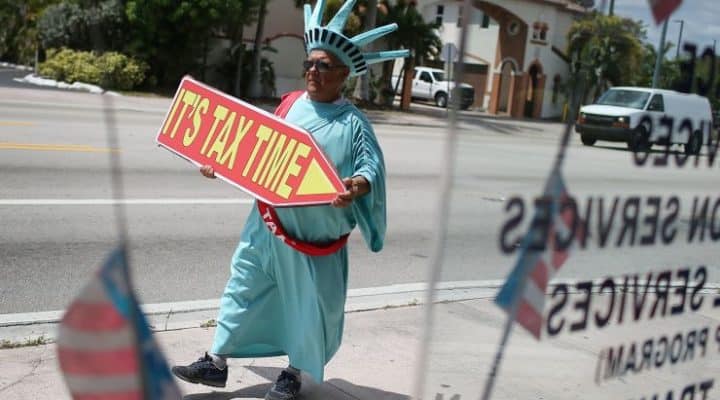
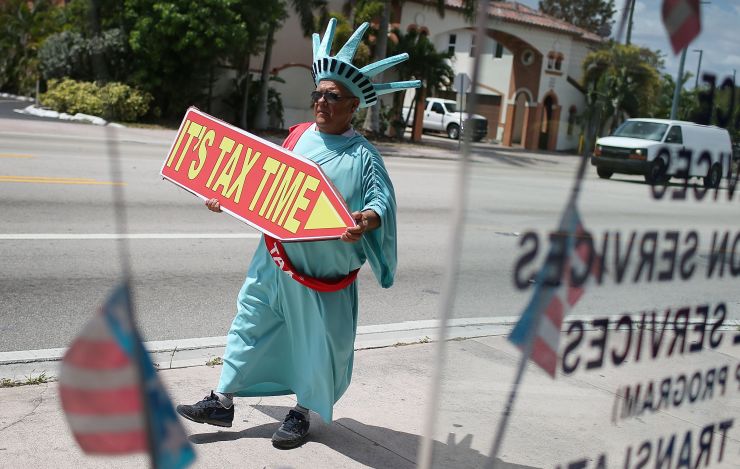
About 8 million individuals who received a tax refund last year may owe this time

With Tax Day around the corner, more people are able to answer the question: Will I get a refund or do I owe?

The big takeaway: You could be surprised at how the new Tax Cuts and Jobs Act affects your bottom line.

ln fact, almost one-third of taxpayers who must pay up to the IRS this year received a refund last year, a new survey from personal finance website NerdWallet found.

One in 5 individuals owe additional money to cover their tax bill this year, the survey found. And 32 percent of those people received a refund last year.

NerdWallet estimates that 7.9 million people who received refunds last year could owe this year. Those who do have to pay $2,119 on average.

But there is good news for people who are getting refunds: They may be higher than you expected.

The average refund is $2,697, NerdWallet found. That’s significantly higher than the $1,861 on average that individuals said they expected to get back in a separate poll in December.

About 60 percent of individuals who have prepared or filed their taxes will get a refund this year, according to NerdWallet.

Those who stand to get the biggest refund: millennials, who will get back $3,013 on average. In contrast, Gen Xers can expect to receive $2,944 and baby boomers should see $1,943.

One more reason to cheer: The government shutdown apparently has had no lingering effects on how quickly returns are being processed.

Of the individuals who have filed their returns, 41 percent received their money in two weeks or less. That should dissuade people from taking out so-called tax refund anticipation loans, which can come with unfavorable rates, according to Andrea Coombes, tax specialist at NerdWallet.

“If you just stick with the normal process and wait for your refund from the IRS, you’re likely to get it pretty quickly,” Coombes said.

Those who had the longest wait for their checks: parents of children under 18. That is because the IRS did not start processing refunds for those who claimed the earned income tax credit or additional child tax credit until Feb. 27.

While the tax law changes are prompting individuals to approach their taxes differently, there is one area where they are falling short.

Just 17 percent of those surveyed said they plan to revisit their tax withholdings after this year’s return.

“Getting a surprise tax bill is never fun,” Coombes said. “One of our key takeaways from this is to be sure to adjust your withholdings so you don’t get a tax bill next year.”

That also applies if you’re getting a refund this year. That sum could instead be coming to you over the course of the year.

A $3,000 refund, for example, could add up to $250 more per month in your bank account, according to NerdWallet’s calculations, after you adjust your withholdings.

Many individuals overlook those changes to the W-4 form, which Coombes called the “control tower to your finances.”

“It’s fun to get a refund,” Coombes said. “A lot of people like that windfall.

“But it’s really money you could have been using to set aside for savings, to pay down debt, all last year.”

NerdWallet’s online survey was conducted by The Harris Poll between Feb. 27 and March 1. It included 2,031 individuals ages 18 and up.

Parents are making this big money mistake with adult kids

Sometimes too much financial help Opens a New Window. is a bad thing.

A new study from Merrill Lynch shows that 79% of parents provide some financial support for their adult children. And Ramsey Solutions financial expert Chris Hogan said parents may actually be setting them up for failure.

“It’s so important for us to look at this….and realize this is an epidemic,” Hogan said on Tuesday to Maria Bartiromo Opens a New Window. . “You have a real problem whenever you have parents that mean well by trying to help their children. The problem is they aren’t helping themselves because the parents are setting themselves up to potentially to become a burden later in life.”

The same study also showed that 72% of parents are putting their adult children’s financial matters in front of their retirement savings. Hogan said because of this parents are also “setting themselves up for a potential nightmare later on in life” by trying to “save the day financially” for their kids.

Hogan said it’s important to not only train young people how to handle money but also have continued conversation on the matter.

“Sit down with them and talk about why they need to know how money works,” he said. “And more importantly show them how to begin to do it. Show them how to budget, show them how to attack debt.”

In Hogan’s opinion dealing with money is a core life skill and the conversation of money management needs to be had more than once.

There is a savings crisis and many Americans don’t know how to fix it. Here’s how

WHEN PARTS OF THE FEDERAL GOVERNMENT SHUT DOWNtoward the end of last year, many Americans went without a paycheck or two. Crisis followed.

A tax examiner for the IRS couldn’t afford to pick up his insulin prescription. A geologist for the Department of Interior was left with just $33. Some workers had to take on temporary jobs.

For a large swath of America, it was probably not a surprise that so many people became so vulnerable, so quickly. If their income was put on pause, or an unforeseen expense dropped into their lives, they’d be in a similar bind. Forty percent of people in the U.S. don’t have $400 set aside for an emergency, according to the Federal Reserve. Additionally, 25 percent of Americans have nothing saved for retirement.

APRIL IS FINANCIAL LITERACY MONTH, and policy experts, economists, business people and teachers are debating the extent to which personal finance education can reverse these grim statistics. Meanwhile, the ways in which people think about how we can become financially well are increasing and evolving.

In 2015, a study published in the Journal of Human Resources found little evidence that education intended to improve people’s financial decision-making is successful. “Policies to expand high school financial literacy education … may be misguided,” the researchers concluded.

Yet other experts argue that lessons on lending and credit are just as important as English or science classes — and the only chance to reach every child before he or she goes on to make life-defining financial decisions.

“The finding is not that we shouldn’t spend on financial education — we should actually try to make it better,” said Annamaria Lusardi, the director of the Global Financial Literacy Excellence Center at George Washington University.

Financial educators are also confronting their limitations in a society where wealth and income are so unevenly divided, said Billy J. Hensley, the president and chief executive officer of the National Endowment for Financial Education.

The three richest people in the U.S. — Bill Gates, Jeff Bezos and Warren Buffett — now own more wealth than the bottom half of the American population. As medical, childcare and college costs take off, wages have sputtered. The median family income, after accounting for inflation, was $59,039 in 2016, little different than in it was in 2000 ($58,544).

In a new CNBC Invest In You and Acorns Savings Survey, more than a third of respondents said they don’t make enough money to meet their needs and save.

“People may be blocked out of financial institutions, or their income is too low, and it’s hard to get that extra 2 percent into a retirement account,” Hensley said. “You have to be able to apply what you’re learning.”

STILL, BETWEEN THE RAPID RISE in borrowing among college students and the fact that workers are increasingly tasked with saving for their retirement, financial education is more essential now than ever, Lusardi said.

“There are these huge challenges in front of us,” Lusardi said. “We need to be better equipped.”

Efforts to improve the curriculum in schools are underway.

The George Washington University School of Business recently launched an online resource, Fast Lane, which provides certain people, including students and policy makers, specific directions for implementing high-quality financial literacy in their schools. Checkyourschool.org is another new project, by the non-profit Jump$tart Coalition, which invites parents and students to report how their school is faring when it comes to personal finance education.

“A lot of parents are very engaged and they’re natural activists,” said Laura Levine, president and CEO of the Jump$tart Coalition. “We want them to start the conversations at their school about introducing or augmenting financial education.”

Recently, more states are leading the effort to bring lessons on taxes and debt into their schools.

Alex Todd has taught a personal finance class at Elizabethtown High School in Kentucky for more than two decades. After the 2008 financial crisis, he began to hold more of the courses. “Parents said they wished they’d had this class in high school,” Todd said.

Last year, Todd worked with state representatives to pass legislation that will require every student in Kentucky who enters high school in 2020 to enroll in a course like his, which teaches students how to be skeptical consumers and smart savers.

A recent study found that in states where personal finance education is mandated, students go on to make better decisions about how to pay for college. For example, they don’t take on as much private debt.

“If every state in America would spend a little bit of time teaching financial literacy to high school students, we can begin to win a battle we’ve been losing for the last 40 to 50 years,” Todd said.

IMPROVING TECHNOLOGY HAS ALSO made its way into the financial literacy field.

Practical Money Skills, a financial literacy platform created by Visa, includes interactive tools such as Financial Football, a 3D game in which players learn personal finance lessons as they try to score touchdowns.

Financial literacy start-up Money Experience has created a simulator in which players need to make all of the various choices that crop up throughout life. Whom will they date? What college will they attend? When will they start saving for retirement?

“We’re trying to express to students that every decision you make has a financial component,” said Jeet Singh, founder and CEO of Money Experience. ’We don’t hide the consequences.”

The innovation is not just for kids. Researchers at Stanford University are leveraging virtual reality to show people their aging avatars, in the hopes that they develop empathy for their 70- or 80-year-old self.

“People view their future selves like a stranger,” said Sarah Raposo, a researcher at the Stanford University’s Life-span Development Laboratory. “If we could help people understand they’re preparing for themselves and caring for themselves, they might be more motivated to learn about financial planning.”

IT’S NEVER BEEN SO EASY TO FIND INFORMATION about paying off debt or investing. There are personal finance books, podcasts, television shows, YouTube series, blogs, news sites and Meetup events. The Reddit personal finance channel, in which people detail their financial circumstances and ask for advice, has more than 13.5 million subscribers.

“The personal finance education space is getting a lot more inclusive and friendly,” said Chris Browning, who hosts the podcast Popcorn Finance.

Browning created the series on tax tips and side hustles back in June of 2017 and releases an episode a week. Around 1,500 people currently listen in, he said, often while they’re driving to work or cleaning up the house.

“Talking about money gets kind of intimidating and pushes people away,” Browning said. “I try not to use a lot of jargon.

“People tell me they appreciate that it’s easy to understand.”

As personal finance advice proliferates, it also grows harder for people to pick out what’s actually good for them, said Hensley, the president of the National Endowment for Financial Education.

“There’s a lot of money to be made off of someone’s decision,” Hensley said. “Getting high-quality, vetted information is a challenge.”

TO THAT POINT, companies are moving beyond education, and streamlining the financial decision making process for their employees.

Nearly 75 percent of businesses today that offer a 401(k) plan already automatically enroll their workers. Research shows that few people opt out.

Up until recently, if an employee did drop out, that would be the end of their workplace retirement savings unless they signed up again. But now, some companies are auto-enrolling their workers more than once a year. (Nearly 10 percent of Prudential’s retirement clients do so today).

Prudential also now offers a way for workers to build up an emergency savings account at their jobs. The savings is an after-tax contribution that allows employees to automatically put money away in low-cost investments such as money market or so-called stable value funds.

“Education is important because people need to understand the context of their financial decisions,” said Vishal Jain, the head of financial wellness strategy and development for Prudential. “At the same time, its important to guide people to action.”

Steve Vernon, a retirement savings expert, also believes that information sessions on saving and spending can only go so far.

He is pushing for companies to offer a retirement income menu, in which workers could decide between a number of ways to receive their savings on a regular basis, say monthly or quarterly, as opposed to in one lump sum when they exit the workforce.

Vernon believes it’s unreasonable for companies to expect their employees to turn into an investment manager in their retirement. “That’s a complex task that most ordinary workers are not equipped to do on their own,” he said.

“You can educate people until you’re blue in the face,” Vernon added. “We need more.”

This is the thing most likely to cause you financial ruin — but few prepare for it

Health can destroy wealth. 

Just in the past year, Americans borrowed an estimated $88 billion to cover health care costs, according to a survey from West Health and Gallup, released Tuesday. What’s more, 45% of Americans are concerned that a big health event could cause bankruptcy.

They’re right to be concerned. More than two in three bankruptcies are caused by medical problems, either from bills, income loss due to illness, or both, according to data released this year in the American Journal of Public Health from more than 900 Americans who filed for personal bankruptcy between 2013 and 2016. Other surveys come to a similar conclusion, noting that medical issues are the No. 1 cause of bankruptcies.

Even insured and financially comfortable people aren’t immune. In fact, it’s mostly people who are middle class and have insurance who are filing for bankruptcy, David Himmelstein, the lead author of the study, tells MarketWatch.

“Unless you’re Bill Gates, you’re just one serious illness away from bankruptcy,” says Himmelstein, a distinguished professor at the City University of New York’s Hunter College and lecturer at Harvard Medical School, in a statement. “For middle-class Americans, health insurance offers little protection. Most of us have policies with so many loopholes, copayments and deductibles that illness can put you in the poorhouse. And even the best job-based health insurance often vanishes when prolonged illness causes job loss — just when families need it most.”

Consider this staggering fact: In 2018, the average cost of health care for the typical American family of four covered by an average employer-sponsored PPO plan was $28,166, according to the Milliman Medical Index. Every month, this rises roughly $100, the index found. And imagine how high these costs might go if you had a bad accident or prolonged illness that meant you couldn’t work, resulting in loss of your job and the insurance that came with it. “That’s the triple whammy,” says Himmelstein.

Medical issues are all too common, too. Indeed, 44% of Americans got hit with a medical expense they didn’t expect in the year prior. And for too many, it’s devastating: 530,000 families go bankrupt each year because of medical issues, the American Journal of Public Health revealed.

And yet, far too few of us have money saved to handle these issues. Four in 10 Americans don’t have the savings to cover an unexpected $400 expense, according to Federal Reserve data released in 2018 — and more than one in four skipped necessary medical care in 2017 alone simply because they can’t afford the cost. What’s more, research shows that FSAs are underutilized.

Why do we have so little savings for medical costs? “It comes down to human nature — a combination of being focused on other things that seem more urgent, and flat out being in denial that something will happen to them,” says certified financial planner Bobbi Rebell, host of the Financial Grownup podcast and co-host of the Money in the Morning podcast. Plus, she adds that “very few people take the time to actually comb through their insurance policies and look for the details of coverage each year” so they may be unaware of what’s not covered. For others, it’s simply “high cost of living and low salaries,” says Kimberly Foss, president and founder of Empyrion Wealth.

The good news: Many of us can start saving today to potentially fend off financial ruin because of medical costs. Rebell says that a good rule of thumb to start with is to save at least your out-of-pocket maximum. “That maximum out of pocket is your worst case scenario. After that the insurance company should pick up 100%,” she says. Of course, you could also lose your job and insurance, so it’s always a good idea to sock away even more. Foss recommends that everyone “should all aim to have about six months’ living expenses in savings.”

And if you’re nearing retirement, prepare for big medical bills then. Fidelity data shows that the average couple will need $280,000 in today’s dollars for medical expenses in retirement; that does not include long-term care. 

Open Curbs database could make it easier to catch an Uber

Coord’s Open Curbs would help cities and companies alike.

Curb data can be intensely useful to city planners and transportation companies alike, but it’s usually fenced off. What if everyone had access to it? They will now. Alphabet spinoff Coord has launched Open Curbs, a public repository for curb info like parking signs, fire hydrants and other vital details. The information could help cities identify safe places for delivery and ride hailing stops, not to mention aid in urban planning as the transportation grid evolves.

The initial data will include info from Coord’s own Surveyor augmented reality app, with initial city data for Denver, Los Angeles, Milan, Paris, San Francisco and Santa Monica. The company plans to support other forms of curb data in the future, however. If it takes off, it could quickly become a one-stop shop for anyone who needs to know about curbs when designing a product or the city itself. That could be particularly important for self-driving taxis, which wouldn’t have the luxury of a human driver to find a good pickup place.

Boston Dynamics’ acquisition will help its robots see in 3D

Its robots might find work in factories sooner rather than later.

While Boston Dynamics’ robots make for fascinating — sometimes disturbing — internet videos, they haven’t quite crossed into everyday life. That could change sooner rather than later. Boston Dynamics took a big step toward bringing its box-moving (and running, jumping, dishwashing) robots into the real world with its acquisition of Kinema Systems.

Kinema is a Menlo Park-based company that uses deep learning to give robotic arms the 3D vision they need to locate and move boxes. It can recognize different products and handle boxes of different sizes, even if they’re not perfectly level. With this purchase, Boston Dynamics now has the software it needs to make its bots practical outside of the lab, meaning we could see them in the warehouse before too long. First, it will integrate Pick into Handle, the robot we saw autonomously moving boxes in a warehouse last week.

The tool is agnostic, though, so we could see it in Boston Dynamic’s other robots. And while the company perfects Handle, it will sell the technology, as the Boston Dynamics Pick System, to third parties immediately. There’s no word on when the company will start selling Handle to manufacturers, but this acquisition should bring that date much closer.