Archives for March 22, 2019

Microsoft device stores digital info as DNA

It translated “HELLO” into DNA and back again — and it only took 21 hours.

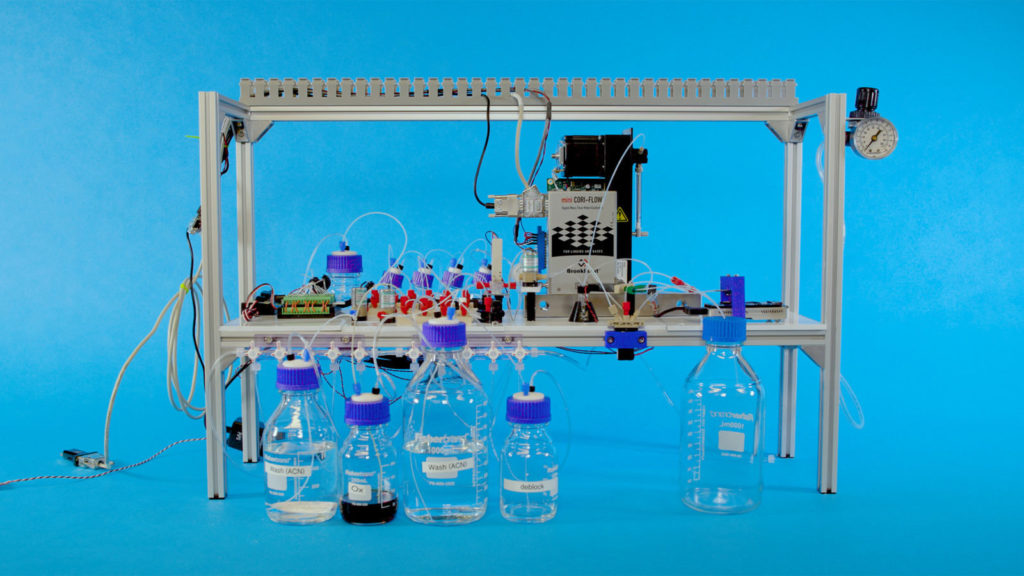
Microsoft is on its way to replacing data centers with DNA. The company and researchers from the University of Washington have successfully automated the process to translate digital information into DNA and back to bits. They now have the first, full end-to-end automated DNA storage device. And while there’s room for improvement, Microsoft hopes this proof-of-concept will advance DNA storage technology.

In its first run, the $10,000 prototype converted “HELLO” into DNA. The device first encoded the bits (1’s and 0’s) into DNA sequences (A’s, C’s, T’s, G’s). It then synthesized the DNA and stored it as a liquid. Next, the stored DNA was read by a DNA sequencer. Finally, the decoding software translated the sequences back into bits. The 5-byte message took 21 hours to convert back and forth, but the researchers have already identified a way to reduce the time required by 10 to 12 hours. They’ve also suggested ways to reduce the cost by several thousand dollars.

In nucleotide form HELLO (01001000 01000101 01001100 01001100 01001111 in bits) yielded approximately 1 mg of DNA, and just 4 micrograms were retained for sequencing. As Technology Review notes, at that rate, all of the information stored in a warehouse-sized data center could fit into a few standard-size dice. Once the technique is perfected, it could store data much longer than we’re currently able to. As Microsoft points out, some DNA has held up for tens of thousands of years in mammoth tusks and the bones of early humans. That’s why Microsoft and other tech companies are eying DNA as a way to solve looming data storage problems. As previously reported, Microsoft’s formal goal is to have an operational DNA-based storage system working inside a data center by the end of this decade.

DNA storage isn’t entirely new, but the novelty here is that this system is fully automated. Before it can succeed commercially, though, the cost to synthesize DNA and extract the information is stores needs to come down. In other words, we need a way to synthesize DNA cost-efficiently. While it may sound a bit sci-fi, we could all be storing data as DNA before we know it.

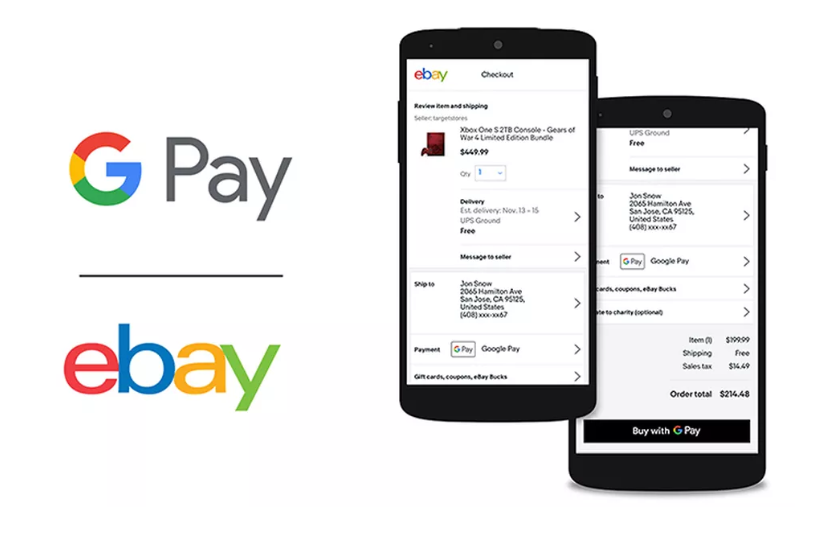
eBay is adding support for Google Pay

GPay comes to eBay

eBay is adding Google Pay as a payment option to its Android app, mobile web, and desktop site. The feature will begin rolling out in early April.

The announcement post cites Millennials and Generation Z shoppers who increasingly make purchases from their phones and digital wallets as a reason for the new addition. eBay has shifted away from its reliance on PayPal since the companies split apart in 2015, and is focusing on offering customers more choices in their payment options. The post further details that “eBay’s managed payments experience allows users to check out without leaving the platform,” unlike PayPal, which sends users to a different site to finish payment. Today’s move is part of eBay’s efforts to manage most of its own payments by 2021.

Google Pay will be joining Apple Pay, which became available as a payment option last year. Both options are only accessible from sellers enrolled in eBay’s new payments experience.

Robot servers, 3D menus

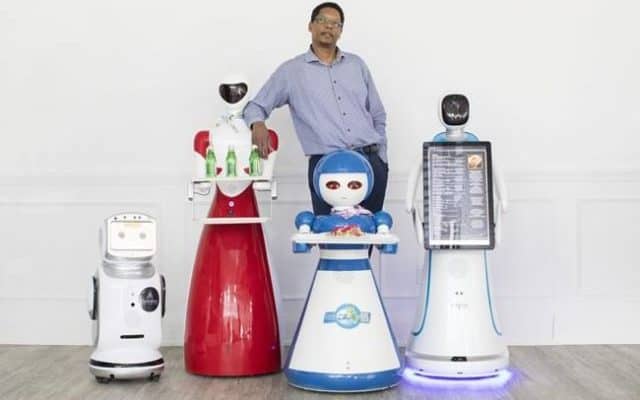
Patrons enter a cafe and pass by a hologram of coffee pouring from a carafe into a cup. They scroll through a three-dimensional menu and see exactly what each dish will look like to help them decide what to order. A small robot, arms fixed to a tray, delivers the meal to the table and says “Your food is here.”

That is what the restaurant of the not-too-distant future looks like, say those developing the technology, which they argue can boost company profits and lower labour costs.

But so far, only a few eateries in Canada have embraced robotics and other high-tech offerings, and more owners may be hesitant to do so due to high costs in a low-margin industry.

“I think the robot will be the future in our life,” said Fiona Jiang, a manager at Robo Sushi in Toronto that is staffed partly by robots.

At the restaurant, waist-high robots with two eyes and a smile permanently fixed on their faces guide patrons to empty seats. Guests order food using an iPad and a different style of robot zooms between the kitchen and tables, bringing guests rolls, nigiri and other items. It might utter “excuse me” when it slips past a human body or “enjoy your meal” to diners about to eat.

The restaurant opened last year and claims to be the first of its kind in North America. So far, guests seem excited by the artificial intelligence servers, sharing videos and photos of the robots on social media.

“Everyone loves the robots… They’re so cute,” Jiang said.

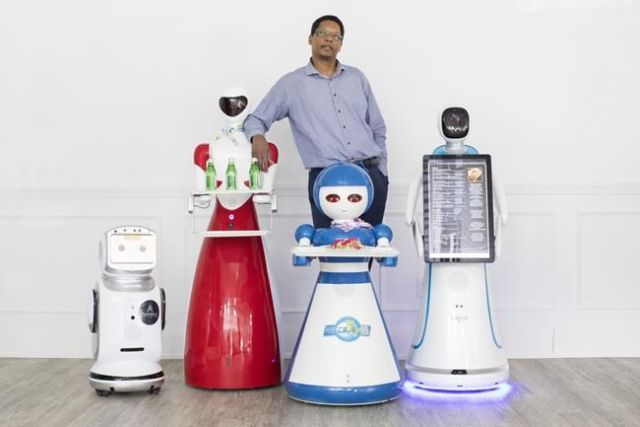
Autonetics Universe sells a number of machines that can greet customers, take orders, display prices and promotions, and carry food and drinks, among other tasks.

Based in Aurora, Ont., the company distributes robots purchased from one Chinese firm and another in Japan, but is also working to develop robots in-house.

“Why not jump on the cutting, the leading edge of what’s to come?” asked founder Ian McGowan when explaining why he decided to launch the company about two years ago.

So far, a restaurant is yet to purchase a service robot from Autonetics, he said. But he believes it won’t be long before one of his robots is greeting customers, taking orders or serving guests in a Canadian restaurant — though he said he can’t put a date on it.

He noted Canada is fairly new to incorporating robotics into retail, whereas he finds it’s more common in other countries. Part of the hesitation could come from sticker shock as money is the first factor Jiang points to as a reason more restaurants don’t deploy robots.

McGowan said the service robots Autonetics sells run from about $7,000 to $25,000 or higher, depending on what additional parts a buyer wants.

At this year’s RC Show, an annual trade and conference show put on by the industry association Restaurants Canada held in Toronto in late February, industry insiders marvelled at the robots McGowan displayed at his booth.

“No shortage of: ‘You guys are the coolest thing in the show,'” he said.

The restaurant of the future was a big theme at the annual show where Toronto-based 3D Food and Drink launched its new technology which allows customers to use their phones to see realistic, three-dimensional representations of menu items.

“It brings the menus to life,” said Alan Smithson, founder of Mississauga, Ont.-based Metavrse, which invested in the 3D-menu company.

McGowan also expects holograms — three-dimensional videos that don’t require any special glasses or technology to view — will soon be in more eateries as the technology sells itself and lures customers in. He recently sold one to a coffee shop, which might use it to display coffee being poured into a cup, for example.

“I think a lot of people are just going to come to the coffee shop just to see that thing.”

Pixel 4 XL leaked photo shows two rear cameras and hole-punch screen

Oh, and the fingerprint reader might be in the display.

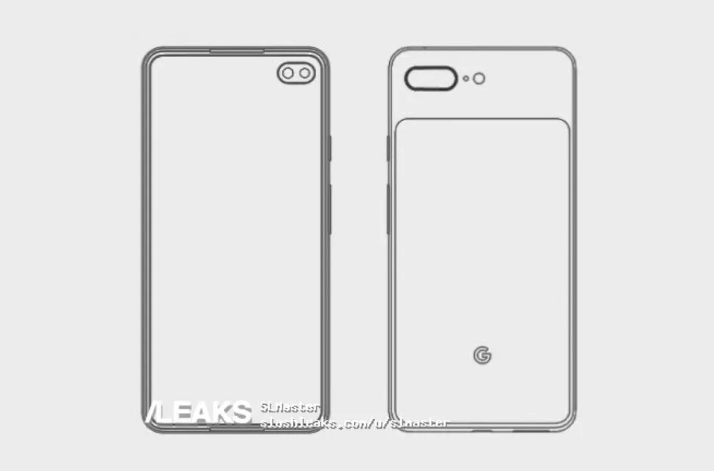
The next Google Pixel might be getting more cameras and a sleek design overhaul. According to a leaked photo posted on the site SlashLeaks on Wednesday, the Pixel 4 XL will have two cameras on the back instead of the single one found on the Pixel 2 XL and 3 XL.

Famously Google has had only a single rear camera on every Pixel model large and small. The company embraced using AI and machine learning to create photos that rival phones with two rear cameras like the iPhone XS or three back cameras like the Huawei P20 Pro. A second camera could be used for something other than photography like perhaps AR.

This drawing posted on SlashLeaks purportedly shows the Pixel 4 XL with dual rear and front facing cameras.

The drawings of the unreleased 4 XL also show an oval hole-punch display for two selfie cameras like on the new Galaxy S10 Plus. Famously, the Pixel 3 lacks a notch while the Pixel 3 XL has one of the largest found on any phone.

Curious enough the drawing doesn’t show a fingerprint reader on the back. This omission could indicate that the next Pixel phone will have an in-screen fingerprint reader like the OnePlus 6T and Galaxy S10.

Of course, the drawing hasn’t been verified so it should be taken with a grain of salt. That said, it’s still fun to think about.

Google didn’t immediately respond to a request for comment.

2 Stocks to Watch Today: Cabot Oil & Gas Corporation (COG), D.R. Horton, Inc. (DHI)

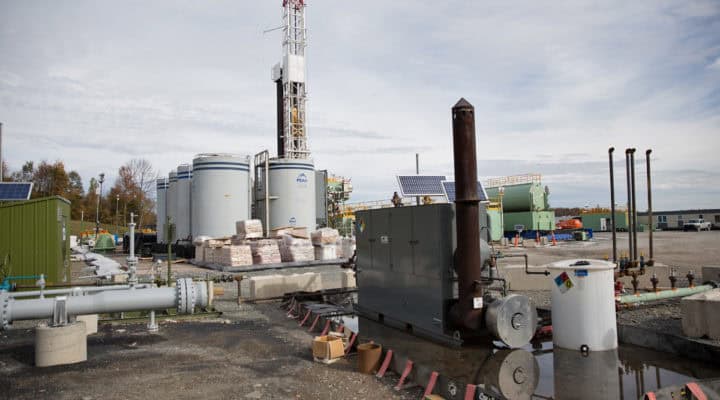
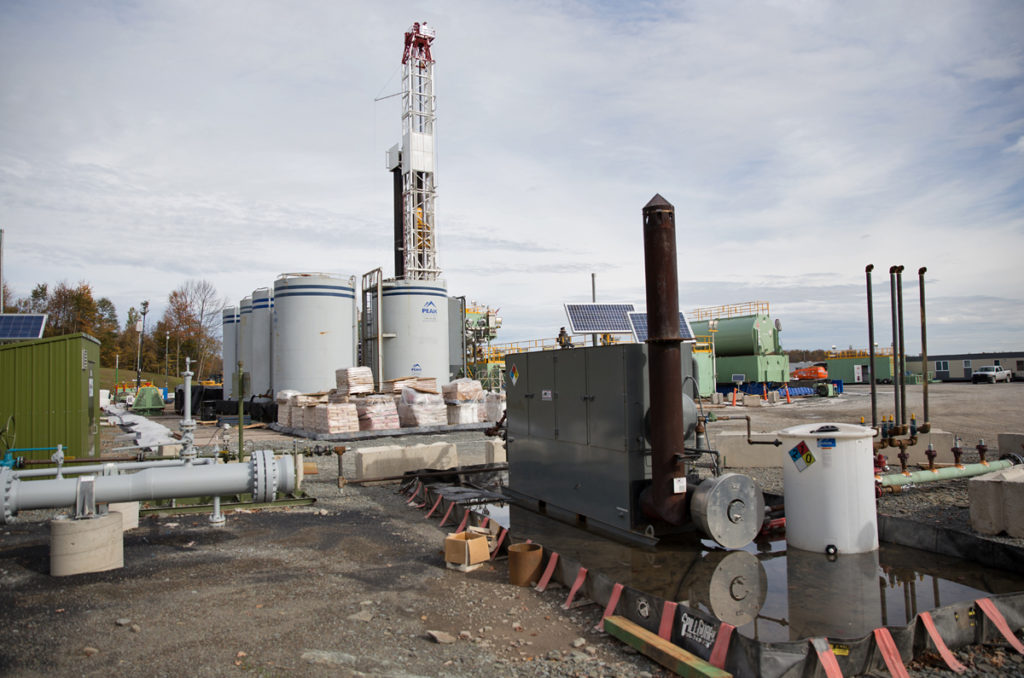
A gas production unit (foreground) cleans, depressurizes, and moderates gas temperatures at a Cabot Oil & Gas drill site in Kingsley, Pa.

Cabot Oil & Gas Corporation (NYSE: COG) experienced a high price of $26.665 with a low value of $25.85 at the end of the last trading session, which followed after a gain of 1.73% and settled at $26.41 during the course of the last 24 hours for the day. Respectfully, the company now has 425.33M shares after the latest changes, so the present market capitalization sits at $11.23B. The trading volume of Cabot Oil & Gas Corporation shares went over 7,053,419 in a single day during the last trading session in comparison to the average volume of COG, usually circulating around 6.39M.

During the course of the last year, the stock has touched a high of $27.40 and a low of $20.94, which as a result has the increased attention of top market experts who are tracking the progress of the asset as it is getting closer to a notable historic high price or low value.

Looking at the latest analyst forecasts, the current earnings-per-share (EPS) consensus estimate is sitting at $1.86 per share. In the preceding year, the company reportedly generated EPS of $1.23 per share of its common stock. The profitability indicators are showing that this organization has an operating margin of 35.30%, a profit margin of 25.50%, and a gross margin of 65.70%.

If we were to do a comparison between the current price and its previous movement in the market, we can easily conclude that the price went to a positive change, going up by +0.43 in the past five trading days, which resulted in a percentage change of +1.66% and a moving average of 26.06. In the past 20 days, its price changed by +1.46, which means that the stock’s moving average was 25.32. Looking back at a cycle of the last 50 days, shares of COG changed by $+2.34 (which is +9.72%) and demonstrated a moving average of 25.03. Meanwhile, this stock’s MACD Oscillator was 0.40 over the past 9 days, and 0.52 over the past two weeks, also marking 0.79 in the period of the last 20 days.

D.R. Horton, Inc. (NYSE:DHI)’s shares demonstrated a change of -0.93% during the most recent trading session, ending the trading day at the price of $39.21 with a 24-hour trading volume that reached 7,122,790 – compared to its average trading volume of as 6.37M, as recorded over the past three months. With that closing price, the market capitalization of this company is now sitting at $14.66B. The moving average for last 20 days of D.R. Horton, Inc. is at -2.51%, while the average went up by 0.45% during the last 50 days with -1.55% recorded during the last 200 days. Additionally, this stock’s distance from its 52-week high price is currently down by -16.57%, while it’s sitting 21.06% away from its 52-week low price.

When you are considering investing in stocks, it is wise to consider counting in Wall Street analysts’ target prices, which should help you place a more profitable investment. The price targets can provide you with an idea of the predicted movement of stocks you are interested in. At the moment, the price target set for D.R. Horton, Inc. is $44.38. It’s also helpful to look at the average analyst recommendation score – which is provided on a scale of 1 to 5 where 1 is “strong buy”, 2 is “buy”, 3 is “hold”, 4 is “sell” and 5 is a “strong sell”. Right now, the average analyst recommendation for DHI stands at 2.10, which indicates that analysts recommend investors to Buy their shares of DHI until the stock approaches its target price.

Traders use the ATR to analyze potential exit and entry points, as it represents a useful tool in almost any trading strategy. ATR for this stock is sitting at 1.06. Beta tells us about a stock’s volatility, also known as its systematic risk, compared to the market overall. The current beta value for DHI is 1.22, while for the past seven days, this stock’s volatility was 2.39%, also recording 2.53% for the past 30-day period.

Professionals on Wall Street also frequently check the Relative Strength Index (RSI) of a potential investment, which tells us the speed and change of a stock’s price movement in the market. RSI is expressed on a scale of 0 to 100. If the indicators are set higher above 70, then the RSI factors are indicating that the stocks are overbought. The factors will indicate that a stock is oversold if the result is set below 30. Right now, D.R. Horton, Inc. (DHI) has an RSI of 45.94 – indicating that the asset is being neither overbought nor oversold.

Two stocks To Watch For Long-Term Investors: Centennial Resource Development, Inc. (CDEV), The Wendy’s Company (WEN)

Centennial Resource Development, Inc. (NASDAQ: CDEV) experienced a high price of $9.26 with a low value of $8.9001 at the end of the last trading session, which followed after a gain of 0.78% and settled at $9.10 during the course of the last 24 hours for the day. Respectfully, the company now has 268.87M shares after the latest changes, so the present market capitalization sits at $2.45B. The trading volume of Centennial Resource Development, Inc. shares went over 2,819,341 in a single day during the last trading session in comparison to the average volume of CDEV, usually circulating around 3.74M.

During the course of the last year, the stock has touched a high of $23.12 and a low of $8.28, which as a result has the increased attention of top market experts who are tracking the progress of the asset as it is getting closer to a notable historic high price or low value.

Looking at the latest analyst forecasts, the current earnings-per-share (EPS) consensus estimate is sitting at $0.86 per share. In the preceding year, the company reportedly generated EPS of $0.74 per share of its common stock. The profitability indicators are showing that this organization has an operating margin of 31.70%, a profit margin of 22.40%, and a gross margin of 84.30%.

If we were to do a comparison between the current price and its previous movement in the market, we can easily conclude that the price went to a positive change, going up by +0.02 in the past five trading days, which resulted in a percentage change of +0.22% and a moving average of 9.10. In the past 20 days, its price changed by -4.00, which means that the stock’s moving average was 9.61. Looking back at a cycle of the last 50 days, shares of CDEV changed by -$3.58 (which is -28.23%) and demonstrated a moving average of 11.67. Meanwhile, this stock’s MACD Oscillator was 0.13 over the past 9 days, and 0.13 over the past two weeks, also marking -0.48 in the period of the last 20 days.

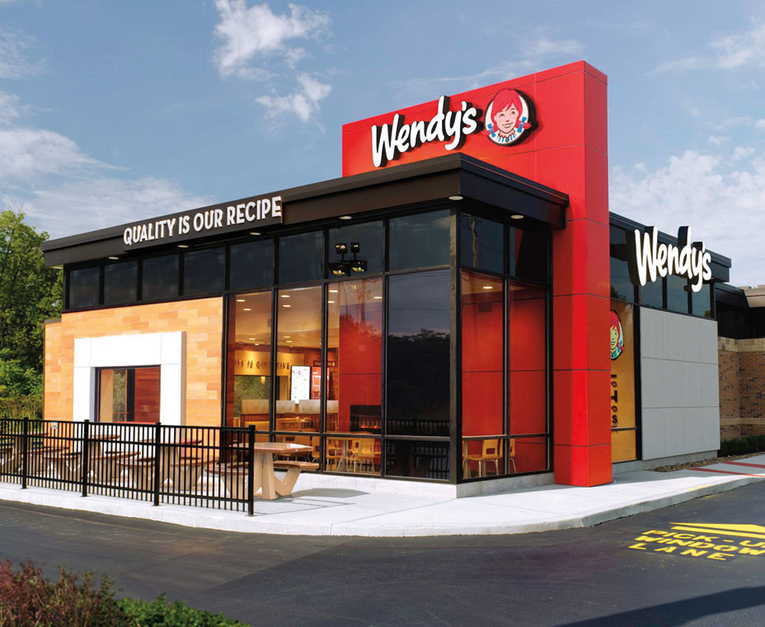
The Wendy’s Company (NASDAQ:WEN)’s shares demonstrated a change of -1.45% during the most recent trading session, ending the trading day at the price of $16.31 with a 24-hour trading volume that reached 3,474,722 – compared to its average trading volume of as 3.70M, as recorded over the past three months. With that closing price, the market capitalization of this company is now sitting at $3.79B. The moving average for last 20 days of The Wendy’s Company is at -4.20%, while the average went down by -4.51% during the last 50 days with -5.20% recorded during the last 200 days. Additionally, this stock’s distance from its 52-week high price is currently down by -12.71%, while it’s sitting 9.02% away from its 52-week low price.

When you are considering investing in stocks, it is wise to consider counting in Wall Street analysts’ target prices, which should help you place a more profitable investment. The price targets can provide you with an idea of the predicted movement of stocks you are interested in. At the moment, the price target set for The Wendy’s Company is $19.15. It’s also helpful to look at the average analyst recommendation score – which is provided on a scale of 1 to 5 where 1 is “strong buy”, 2 is “buy”, 3 is “hold”, 4 is “sell” and 5 is a “strong sell”. Right now, the average analyst recommendation for WEN stands at 2.10, which indicates that analysts recommend investors to Buy their shares of WEN until the stock approaches its target price.

Traders use the ATR to analyze potential exit and entry points, as it represents a useful tool in almost any trading strategy. ATR for this stock is sitting at 0.37. Beta tells us about a stock’s volatility, also known as its systematic risk, compared to the market overall. The current beta value for WEN is 0.76, while for the past seven days, this stock’s volatility was 1.62%, also recording 2.50% for the past 30-day period.

Professionals on Wall Street also frequently check the Relative Strength Index (RSI) of a potential investment, which tells us the speed and change of a stock’s price movement in the market. RSI is expressed on a scale of 0 to 100. If the indicators are set higher above 70, then the RSI factors are indicating that the stocks are overbought. The factors will indicate that a stock is oversold if the result is set below 30. Right now, The Wendy’s Company (WEN) has an RSI of 39.25 – indicating that the asset is being neither overbought nor oversold.