
Archives for February 3, 2019

It’s the Perfect Time for Baby Boomers to Take Advantage of Social Security’s Do-Over Clause

Few programs shoulder the importance that Social Security does. Each month, nearly 63 million people receive a benefit check, of whom 43.7 million are retired workers. Of these retirees, better than 60% rely on their payout to account for at least half of their income, with a third essentially leaning on the program for all of their income (90%-plus).

Even more telling, Social Security has done more than any social program to keep the elderly out of poverty. An analysis from the Center on Budget and Policy Priorities finds that the elderly poverty rate with Social Security income is around 9%. Remove Social Security from the equation, and the elderly poverty rate would more than quadruple to north of 40%.

Your claiming age has a big impact on your monthly and lifetime payout

Given how vital this program is, there’s arguably no decision seniors will make that’ll have a bigger impact on their financial well-being than their Social Security claiming decision.

As a refresher, there are four primary components that’ll influence what the Social Security Administration (SSA) will pay you when you reach your full retirement age, as determined by your birth year. The first two factors are inextricably linked: your earnings history and work history. When determining your payout, the SSA will account for your 35 highest-earning, inflation-adjusted years. This is why you’ll often hear the suggestion that you “work at least 35 years,” because each year less of 35 worked will result in a $0 being averaged into your total. As you might expect, earning as much as you can, up to the maximum taxable earnings cap in a given year ($132,900 in 2019), and working at least 35 years, is one aspect to netting the highest payout possible.

The third factor that matters is one we have absolutely no control over: our birth year. Our birth year determines our full retirement age, or the age at which we become eligible to receive 100% of our monthly payout. The simple rule is that if you claim benefits prior to reaching your full retirement age, you’re going to be accepting a permanent reduction in your monthly payout. Meanwhile, if you wait until after your full retirement age to begin taking benefits, you can actually receive more than 100%.

The fourth and final factor is your actual claiming age. Benefits can begin at age 62, or any point thereafter. There is, however, quite the incentive to hold off on taking your payout. Each year you hold off, your benefit will grow by approximately 8%, up until age 70. All things being equal — i.e., same earnings history, work history, and birth year — a retired worker claiming at age 70 could take home a 76% higher monthly payout than a retiree claiming at age 62.

Most retirees choose to claim early

Given this information about how the SSA calculates your retirement benefit, waiting is always the best move, right? Well, not exactly. There are a bounty of variables, including your health, financial, and marital status that need to be examined before deciding what claiming age is best for you. Nevertheless, it does demonstrate just how important your claiming-age decision is when determining your monthly and lifetime benefits.

According to an analysis by the Center for Retirement Research at Boston College, which culls data from the SSA, close to 3 out of 5 aged beneficiaries will claim their benefit prior to reaching age 65. By comparison, roughly 30% claim benefits around their full retirement age, and just 10% or so wait until after their full retirement age to begin their payout. This means a majority of retirees are all willing to accept a permanent reduction in their monthly benefit of up to 30%, depending on their birth year. If an aged beneficiary lives into their 80s, this reduced payout could wind up costing them a lot of money over the long run.

Why claim early then? Health is one factor, with chronic health conditions coercing some people to take benefits early. Filing early for lower-earning spouses can also make a lot of sense because it generates some income for the household while their partner’s benefit is allowed to grow even larger. A lack of gainful employment is another reason why seniors may seek a retirement benefit sooner rather than later.

However, this last point could prove to be an incredible opportunity for baby boomers right now.

Boomers should seriously consider making this Social Security move

Understandably, not all boomers are going to be in a position where their health will permit them to go back to work. But in those instances where boomers are healthy enough to work and have been receiving a Social Security benefit for less than a year, there are a couple of great reasons to consider filing Social Security Form SSA-521 (officially, “Request for Withdrawal of Application”) right now.

Form SSA-521 is essentially a Social Security do-over clause. If, at any time within 12 months of receiving your first benefit check, you regret your decision to claim benefits early and wish you’d have been able to let your payout grow, you can file this paperwork to undo your benefit application. Assuming the SSA approves your request, you’ll have to repay any benefits you’ve received. In doing so, it’ll be as if you never claimed your benefit in the first place, restoring your payout to roughly 8% annual growth, up until age 70.

Why now? The simple reason is that the job market has just about never been better. At 3.9%, the unemployment rate is just a stone’s throw above a 49-year low. There are more job openings than there are job seekers right now, which puts the ball into employees’ courts when negotiating wages or salary. Given that boomers likely have plenty of skills and experience from being in the workforce for decades, they’re the perfect candidates to reenter the labor force right now and command above-average earnings. These earnings could be more than enough to delay a Social Security benefit filing for a few more years, thusly allowing their benefit to grow.

Another good reason to consider this do-over clause is because boomers are poor savers. A November 2018 report from the Stanford Center on Longevity found that a third of boomers had no money saved in retirement plans, as of 2014. Without any savings, and expected to be reliant on Social Security as their primary source of income, these boomers are going to want to maximize their monthly payout from Social Security by waiting to claim until as late as possible. If any boomers with minimal savings have claimed early and they’re still within 12 months of their first payout, filing Form SSA-521 and reentering the workforce is possibly a smart solution.

Though each person’s situation is unique, these conditions appear perfect for recent filers to benefit from Social Security’s do-over clause.


These 3 Factors Should Influence When You File for Social Security

Chances are, Social Security will constitute a major income source for you in retirement, which is why the decision to file shouldn’t be taken lightly. Eligible seniors get an eight-year window to claim benefits that begins at age 62 and ends at age 70 (technically, you’re not forced to file by 70, but there’s no financial reason to wait past that point). Smack in the middle of that window is full retirement age, or FRA, which is the age at which you’re entitled to the full monthly benefit your earnings history entitles you to.

Many seniors prefer not to wait until FRA to claim benefits, and instead file as early as possible at age 62. Doing so, however, causes a reduction in benefits. In fact, for each month you file ahead of FRA, your benefits take a small hit. File well before FRA, and those benefits will take a pretty big hit — 30%, in fact, if you claim Social Security at 62 with an FRA of 67.

On the other hand, by waiting past your FRA to claim benefits, you’ll accrue delayed retirement credits that boost your benefits by 8% a year up until age 70, at which point those credits cease to accumulate. Filing for Social Security at 70 with an FRA of 67 will therefore boost your benefits by 24%.

Clearly, the age at which you sign up for Social Security will dictate how much monthly income you collect in retirement. As such, be sure to keep the following factors in mind when making that decision.

1. Your earnings level

You are allowed to collect a paycheck and receive Social Security benefits at the same time. But unless you’ve already reached FRA, doing so will reduce your benefits in two ways.

First, you’ll be hit with the general reduction that comes into play when filing before FRA. Secondly, if your earnings exceed a certain level, you’ll have a portion of your benefits withheld as a result (though not permanently — they’ll be added back into your monthly payments once you reach FRA). For the current year, that second part comes into play if your earnings exceed $17,640. If you’ll reach FRA later in the year, that earnings limit is higher — $46,920. Therefore, unless you really need the money from Social Security right away, it might pay to rely on your regular paycheck and let your benefits grow.

2. Your savings level

Social Security was never designed to sustain retirees by itself. That’s why workers are encouraged to build independent savings to ensure that they have enough money to pay the bills once they stop working. Many Americans, however, do a poor job of saving for the future, and thus enter retirement with little money socked away. If you’re one of them, then you’ll likely depend quite heavily on Social Security once your career comes to a close. And if that’s the case, it means you should make every effort to file as late as possible. That way, you’ll grow your benefits and secure the highest possible monthly payment based on your earnings record.

3. Your health

One interesting thing about Social Security is that it’s designed to pay you the same total lifetime benefit (meaning, the sum total of all of your monthly payments) regardless of when you file. Here’s how that works, in theory: Say your FRA is 67, but you file for Social Security at 62, thereby reducing your monthly payments by 30% but collecting 60 more in your lifetime. Conceivably, those two points should cancel each other out, thereby resulting in a break-even situation.

There’s just one catch: You need to live an average life expectancy for that formula to work. If you pass away sooner than the average senior, you’ll lose out on money by waiting to file, and you’ll come away with more money in your lifetime by taking benefits as early as possible. And if you pass away later than the average senior, you’ll get more out of Social Security by filing as late as possible.

Therefore, you’ll need to really evaluate the state of your health when deciding when to claim benefits. Though your health won’t be an absolute predictor of when you’ll ultimately pass, it can give you an indication as to whether or not you’re likely to live a long life, and from there, you can decide on the right time to file.

Think about your employment status and earnings, your savings level, and how healthy you are before taking the leap and signing up for benefits. The more thought you put into your decision to claim Social Security, the more likely you’ll be to land on the right age.

5 Tricks to Actually Saving Money

If saving money were an easy thing to do, many Americans would have much more in the bank than they have today. The sad reality, however, is that 40% of U.S. adults don’t have the cash on hand to cover a $400 emergency.

Without near-term savings, however, you risk racking up debt the moment an unplanned bill falls into your lap. And without long-term savings, you might struggle financially during retirement. So it’s crucial that you ramp up your savings game sooner rather than later. Here are five tricks that’ll help you accomplish that goal.

1. Follow a budget

It’s hard to save money when you have no idea how much you spend on different things. That’s why you need a budget. Setting one up will help you determine how much you spend on everything from housing to transportation to food to entertainment. And from there, you’ll be able to see where there’s room to reduce what you spend.

2. Choose one expense to cut back on

It stands to reason that if you were to cut back on every single item you’re currently paying for, you’d have a lot more money to stick in the bank. But depriving yourself of all of life’s luxuries is no way to live, so rather than do that, choose one expense to reduce or eliminate, and save the money that results. That one expense could be the cable plan you like having but don’t always watch, the takeout meals you enjoy but can prepare at home for a fraction of the price, or the gym membership you admittedly only use a handful of times each month. It doesn’t matter what expense you target, as long as it frees up a small chunk of cash to put away.

3. Automate your savings

It’s difficult to spend money you don’t know you have. If you want to do a better job of saving, arrange for a portion of each paycheck you receive to land automatically in either a bank account or a retirement plan, depending on which area you’re lacking in. If you allocate, say, $50 a month for savings, that’s $50 that won’t land in your checking account. It’s a start.

4. Pay for things with cash

Credit cards are great for racking up reward points and getting some degree of purchase protection for the items you buy. The down side, however, is that they make it easy to overspend, since you’re not handing over physical wads of cash, and they give you the option to not pay them in full when you’re unable to do so. A better bet, therefore, is to pay for the items you buy in cash. That way, you’ll be more likely to keep your spending in check. And the less you spend, the more you’re apt to save.

5. Avoid impulse purchases

Most Americans fall victim to impulse buys, whether they happen in stores or online. Avoiding them, however, will leave you with more money left over to save, so try implementing a 24-hour rule for unplanned purchases. The rule goes like this: The next time you’re tempted to buy something out of the ordinary (not groceries or toiletries but rather a new gadget or article of clothing you don’t actually need), force yourself to wait 24 hours before going through with that transaction. Chances are, much of the time, you’ll come to your senses and realize you can do without whatever that item is. Once that happens, you can put the money you would’ve spent on it into the bank.

The more savings you have, the more protection you buy yourself — both now and in the future. Adopt these money-saving tricks, and with any luck, your bank or retirement account will start looking much healthier in no time.

4 Jaw-Dropping Stats about Retirement

Retirement: It’s something everyone has to do eventually, and that many people look forward to. Unfortunately, retirement is also a major source of worry for millions of Americans — largely because of concerns about where, exactly, cash is going to come from during retirement.

Concerns about financial security in retirement are not unfounded. Many Americans are woefully unprepared for retirement, with too little savings, unrealistic ideas about when retirement will occur, and no clear plan for paying for healthcare in retirement. In fact, these four jaw-dropping stats about retirement show that Americans are in a whole lot of trouble when it comes to their post-working years.

Some jaw-dropping retirement stats

17%: That’s the number of workers very confident in their ability to live comfortably in retirement, according to the Employee Benefit Research Institute. While another 47% are “somewhat confident,” having money as a senior isn’t something you want to be unsure about. You need to become confident, by figuring out exactly how much money you’ll need for retirement and making a plan to save the necessary funds.

25%: That’s the percentage of current retirees who indicate some of their income comes from working for pay during retirement. It’s a problem that the number is this low, because two-thirds of current workers expect work for pay will be a major or minor source of retirement income. Unfortunately, you can’t count on your ability to continue to bring in a paycheck after you hit retirement age. Many people either are too sick to work, or struggle to find work, and have no choice but to live off their Social Security benefits and their savings. So, you need to make sure you have enough to support you without outside income. You also need to be aware that if you haven’t yet hit your full retirement age and you work while on Social Security, those benefits can be reduced — so even if you find a job, you may not be able to bring in much extra money.

40%: That’s the percentage of current retirees who indicate their healthcare costs have been higher than anticipated. For far too many retirees, healthcare expenses aren’t just a little higher than planned — the costs are in a whole different ballpark. In fact, future retirees responding to one Nationwide Retirement Institute survey thought they’d spend 20% of their Social Security benefits on healthcare, but the average retiree who claims Social Security benefits at 64 could actually end up spending almost 65% of Social Security benefits on medical expenditures.

65: This is the median age at which workers expect to claim Social Security benefits. But the median age at which current retirees claimed benefits was 63. If you end up claiming Social Security earlier than anticipated, this can cause some big problems. Benefits will be lower if you claim earlier, because you receive a reduction for each year you retire before full retirement age (which, for people born after 1960, is 67). There’s a big difference between claiming benefits at 62 versus at 65 — and if you’re planning on higher benefits but don’t get them, this could lead to a financial shortfall. To err on the side of caution, assume you’ll get the lowest possible benefits when factoring in how much income Social Security will actually provide you.

The numbers show: You need to know your retirement number

The only way to be confident about your retirement security is to know how much you’ll need to live on — including healthcare costs — and how much you need to save to produce the desired income. Then, save enough to hit your target number.

Plan for much of your income in retirement to come from investments, don’t plan to over-rely on Social Security, and start saving ASAP. That way, you can join the elite 17% who are confident about their financial futures as a retiree — and hopefully you can enjoy your golden years with no money worries at all.

Gmail may add Inbox-style reminders and pins

The Google Gmail mailing app is seen on an Android portable device on February 5, 2018. (Photo by Jaap Arriens/NurPhoto via Getty Images)

You might not suffer from Inbox withdrawal for much longer.

Google has assuaged Inbox fans by incorporating some of the defunct app’s features into Gmail, but some of the best additions might still be on the horizon. Reddit user moodio shared an apparent leak showing a test version of Gmail for Android with reminders, pinned messages and category bundles (which help you deal with multiple messages at once). You might even see a quick “mark all as read” button so that you don’t have to methodically select every message.

Moodio stressed that this was “very early,” and that there were “different design iterations” in progress. It might not resemble exactly what you see below, no matter how accurate the leak might be. It lines up with Google’s strategy of reintroducing Inbox features, though, and would be well-timed when the I/O conference takes place in May. If you’re still suffering from Inbox withdrawal, you might get your fix relatively soon.

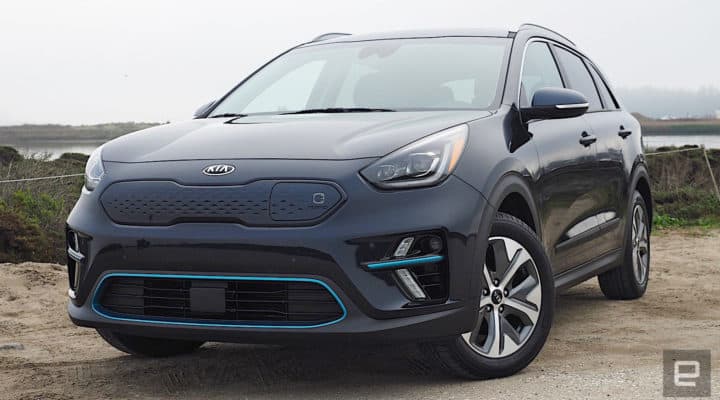
Kia’s 2019 Niro EV is an electric crossover for the people

It was bound to happen to EVs eventually. No matter how mind-blowingly, world-changingly incredible an idea starts out, it will invariably reach the realm of the mundane before too long. Just look at smartphones, maglev trains and avocado toast.

But that’s not necessarily a bad thing. In fact, it’s that vanillaness, that no-nonsense lack of flair, that makes the Kia Niro EV so great. I’ll tell you right now: it’s not going to turn heads (even when I honked), nor is it going to smoke sports cars off the starting line (unless you have a head start). What it is going to to do is get you, your friends and all of your gear where you’re going in relative comfort and safety without stomping all over your budget.

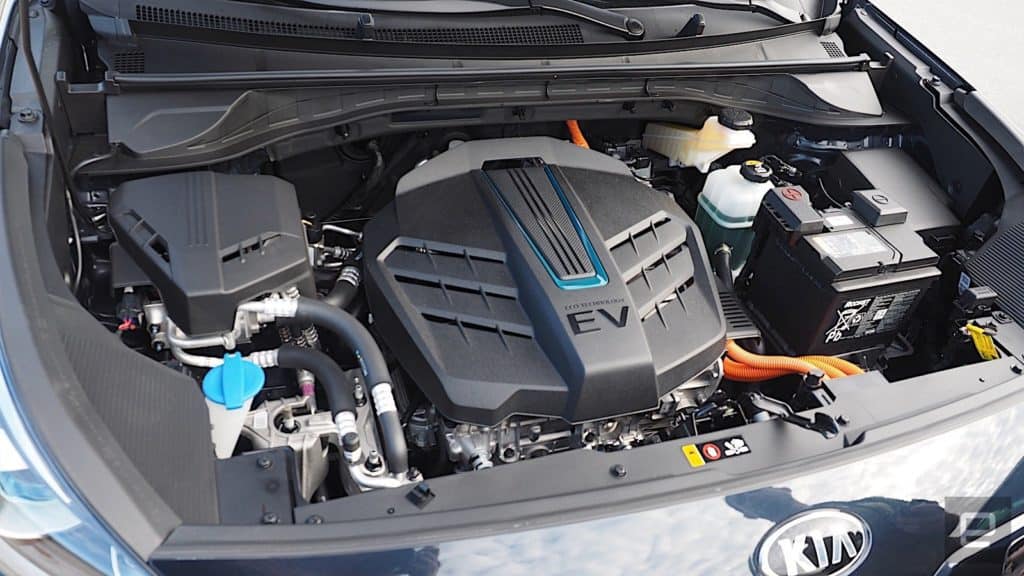
The Niro EV that we drove through the streets of Santa Cruz and Monterey, California was the same model that we first saw — and were rather smitten with — last November at the Los Angeles Auto Show. It’s got the same 64 kWh battery driving a motor putting out 200 hp and 291 lb/ft of torque. The Niro also sports an estimated 240 mile range thanks to its novel liquid-cooled battery design that keeps the vehicle’s 1,000-plus pounds of power packs at their most efficient operating temperature.

With a curb weight of 3,854 pounds, the Niro won’t be winning any drag races against Rivian’s offerings. It’s 0-60 notches a pokey 7.8 seconds, that’s 0.2 seconds slower than the official time of a similarly-equipped Hyundai Kona EV but still nearly a second faster than the 2019 Niro hybrid, go figure, and an electronically-limited top speed of 103 MPH.

Also, don’t go trying to take the crossover SUV offroading, not with that teensy 6.1 inch ground clearance (nearly 3 inches shorter than the 2019 Subaru Outback). It handled the deeply pitted and worn road leading to Moss Landing park with aplomb but you won’t be clamoring over snow berms in Tahoe with it unless you bring a shovel.

Still, the Niro EV is quick off the line — zippy, even — and offers plenty of kick to both keep up with traffic and overtake cars at will. It handled admirably in stop and go street traffic, though the regenerative braking system has a tendency to bite when you’re nearly stopped, causing the vehicle to jerk to a halt. I was especially impressed with its highway performance. It’s got enough power to quickly get you into the flow of traffic from an on-ramp or access road without forcing the line of cars behind you to ride their brakes.

And once you’re up to speed, this baby flies. There’s no engine vibration so whether you’re cruising at 65 or pushing 90 the car feels like it’s standing still. And since the electric drivetrain gives you all of the torque instantly, passing slower vehicles is a non-issue. Just push the accelerator down an extra quarter inch and suddenly the car you’re passing becomes the car you passed.

I was also very impressed with the Niro EV’s cornering ability. Curving through the hills of 17 Mile Drive, the vehicle stayed low in its center of gravity, rarely getting top heavy or making me feel like I’d need to slow down to avoid overshooting a turn — two niggling issues I noticed during the Kona EV drive.

Now, if that gets your blood pumping, don’t worry, Kia offers four drive modes to help blunt that effect. You’ve got Sport mode which prioritizes performance over battery charge. Then there’s Normal, which seeks to balance power output and battery capacity; and Eco mode which, as you’ve probably surmised, cuts into the fun in favor of maintaining a charge. During my test drive, we generally kept the vehicle in Eco or Normal for city driving but bumped it up to Normal or Sport for freeway jaunts.

The fourth mode is Eco+ and it is what you put the car into when you’ve been having too much fun in Sport, realize you’re nearly out of charge and are still 30 miles from your house. It is a glorified Limp mode that cuts power to non-essential systems like A/C and heat, limits the top speed to 60 mph, and boosts the regenerative braking to its maximum in order to wring out every last precious watt from the cells before they die and leave you standing on the side of the road.

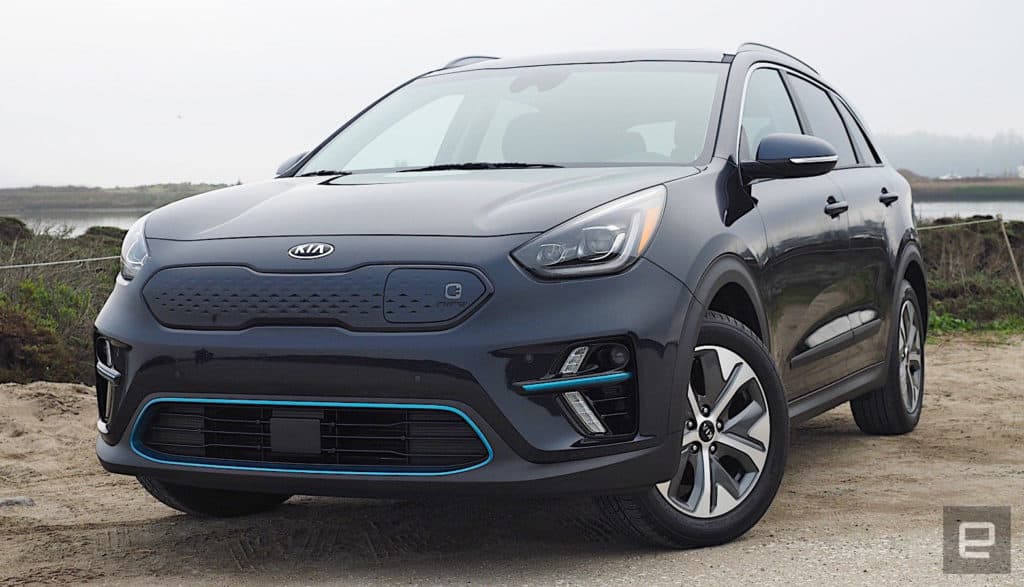
Now, don’t get me wrong, the Niro EV is in no way an unattractive car. This isn’t your Aunt Linda’s taupe-on-beige 1992 Toyota Camry LE. It’s a stylish crossover SUV — that just happens to look nearly identical to the existing Kia Niro hybrid. Still, there are a few cool accents that the EV team worked into the new model, such as full LED head and tail lights, turquoise accents around the bumpers (and, if you spring for the EX Premium package, throughout the interior as well). You’ll also notice an arrowhead motif in the wheel and turn signal designs if you squint just right.

But perhaps the most useful innovation is the front grille which holds the charging port. A bunch of existing EVs situated the port in the rear of the vehicle, forcing you to back into public charging spots like one of those people. You know, the guys that back in because they “might need to leave in a hurry.” With the Niro EV, you can park like a person who isn’t about to commit a felony in the next 20 minutes and still charge the vehicle’s battery. It’s a win-win.

That 7.2 kW charger behind the front grille can refill the battery to 80 percent capacity in anywhere from 1 hour using a 100W DC Fast Charging station to 59 hours with a standard 120 V wall outlet, though you’re looking at just over 9 hours for a level 2 AC charger. That’s even with the Kona EV’s charging requirements.

In short, the Niro EV provides drivers an economical and ecologically friendly means of porting themselves and their stuff through urban and suburban environments. This vehicle is ideal for errands and commutes. We drove from Santa Cruz to Monterey and back again and still had 134 miles of range to spare — it should be able to last a work week being driven round trip across town. And in terms of interior and cargo space, the Niro EV is pretty on par with its competition. The rear cargo area is 18 cubic feet, expanding to 53 cu ft if you fold the rear seats down. With about 40 inches of head and leg room, the driver and front passenger at least will have plenty of space to stretch out.

As you’d expect from a brand like Kia, the Niro’s interior is well appointed with a variety of high-tech features that people have come to expect. The base EX model offers a seven-inch color touchscreen/backup monitor with Bluetooth connectivity, Apple CarPlay and Android Auto integration, and Qi wireless device charging. Drivers will have access to Kia’s DriveWise driver-assist system in the Niro EV as well. You’ll get forward collision warnings, assisted emergency braking, blind spot monitoring, lane keeping assistance, smart cruise control and Level 2 highway autonomous driving, among others.

If you opt for the EX Premium, that seven-inch touchscreen grows by an inch, the steering wheel will come heated, the seats will come leathered, and Kia will even throw in some integrated mood lighting that bumps and pulses to the beat of the music coming out of the upgraded eight-speaker Harman/Kardon setup with amp and separate subwoofer.

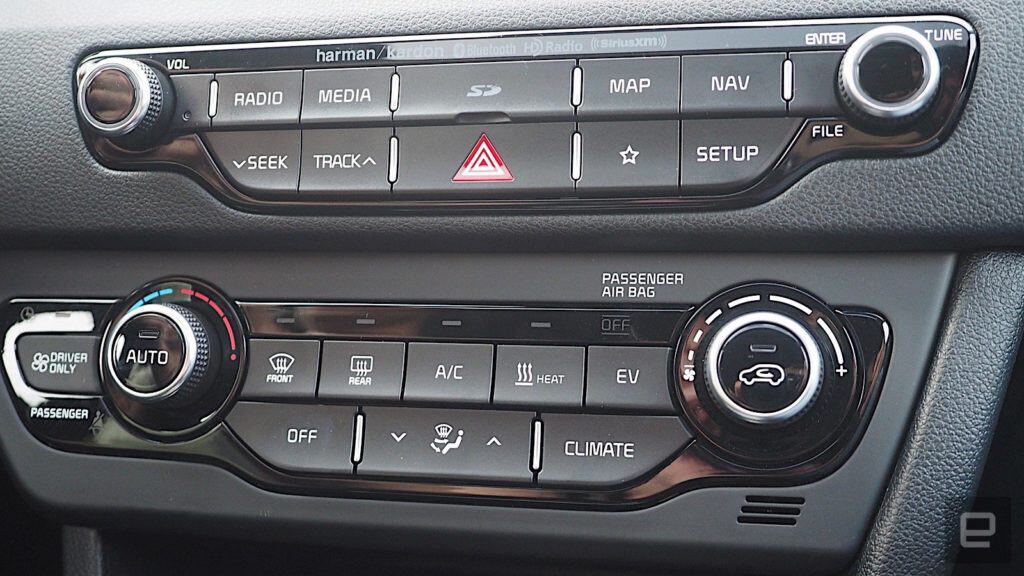
The Kia team couldn’t reveal pricing options for the Niro EV just yet, though they strongly suggested that it would be on par with Hyundai’s offering. That’s going to leave a lot of potential EV customers with a difficult choice on their hands. The vehicles share similar powertrain specs, though the Kona has a 20-mile advantage on range. On the other hand, the Kona’s center console looks like the helm from a Star Trek spinoff, which will likely be rather jarring to not-so-tech-savvy drivers. The Niro EV’s far more closely resembles the instrument clusters of existing vehicles, which means new owners will have more time to dig into, say, the various driver assist features rather than figuring out where the electronic parking brake release switch is.

The Niro EV isn’t trying to be fancy, is what I’m getting at. It’s not promising you Grizzly Adams backwoods adventures like the Rivian or admittance to the cool kids table like Tesla. It’s not even positioning itself as a luxury sports toy like the Audi E-Tron. No, the Kia Niro EV is meat and potatoes. It’s the people’s EV — a sleeper that will surprise you with its utility and value.