Archives for January 10, 2019

FenSens gives your clunker the same backup sensing as modern cars

And it only takes a few minutes to set up.

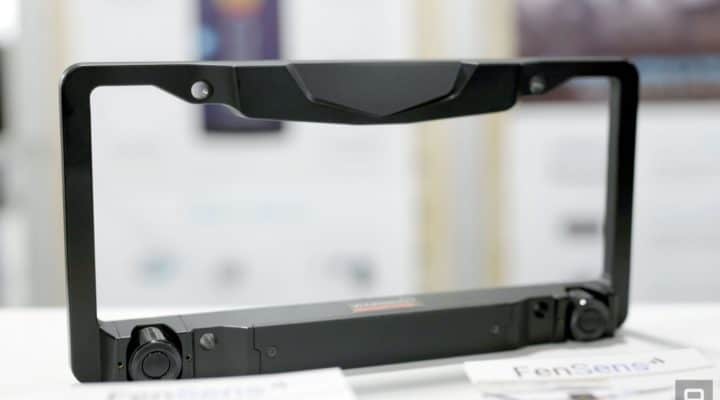
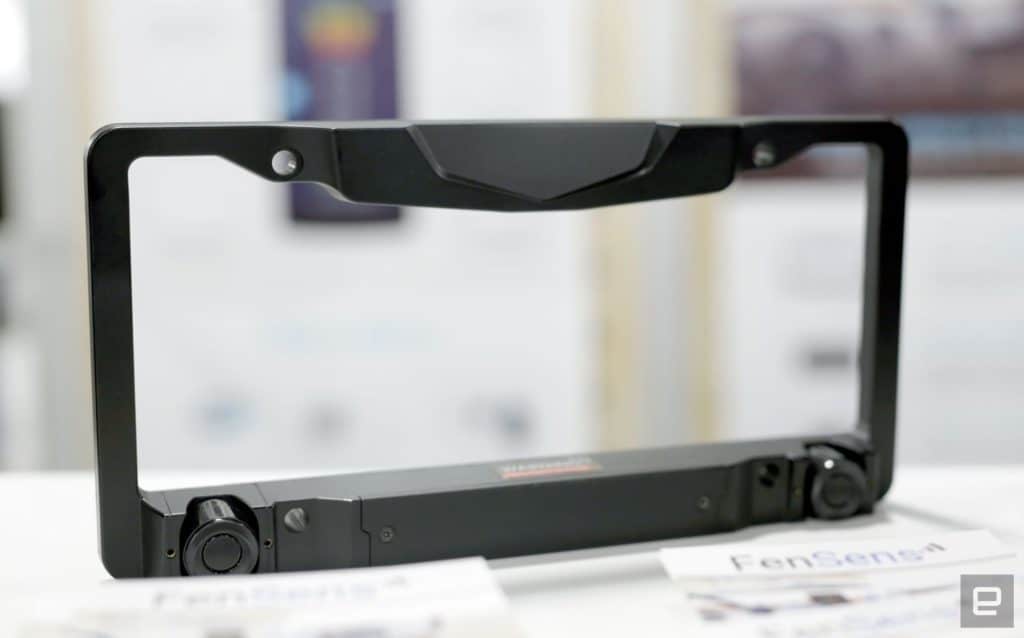
Remember when CES wasn’t flooded with car news? We don’t. None of us are about to complain about cars becoming more intelligent and customizable, but these advances to little to help people who have cars that are more than a few years old. That’s where FenSens comes in: this Seattle-based startup has developed an aftermarket rear sensor you can stick to the car of your car, just to make sure you don’t take anyone out when you’re about to leave the grocery store.

Fine, maybe “stick” isn’t the right word. FenSens’s sensor replaces the frame that runs around your license plate, and according to in-house designer Alex Shirazi, the process doesn’t take more than a few minutes. Once that’s done, data from the sensor is sent to a smartphone you’d ideally have mounted on your dash or air vent, so the app can provide you with audio, visual, and even haptic alerts to make sure everyone around the car is safe.

FenSens launched its backup sensor last year, and has spent its time in the interim prepping a new product — wireless backup cameras for vehicles big and small — in mid-2019. It’s heartening to see a startup make sure vehicles that aren’t necessarily shiny and new get modern features, but history has proven that this market is tougher to crack than some might expect. Pearl, another startup that built a similar wireless backup camera made headlines for the thoughtfulness of the experience, and because most of its employees had Apple pedigrees. That wasn’t enough to keep Pearl afloat, though — Axios reported that disappointing early sales and a high burn rate forced the company to shut down roughly a year after launch.

For what it’s worth, though, FenSens might not have to worry about some of those issues. The team is still rather small, so burn rate is probably less of a problem, and at $179, its backup detection system is far less costly than the Pearl and its $400 price tag. Ultimately, people who haven’t purchased cars in a few years deserve the same level of intelligence that makes new models so safe, so here’s hoping FenSens can manage its growth responsibly.
AMD’s CEO and CTO on Radeon VII, ray tracing and beyond

AMD isn’t too worried about NVIDIA’s RTX GPUs.

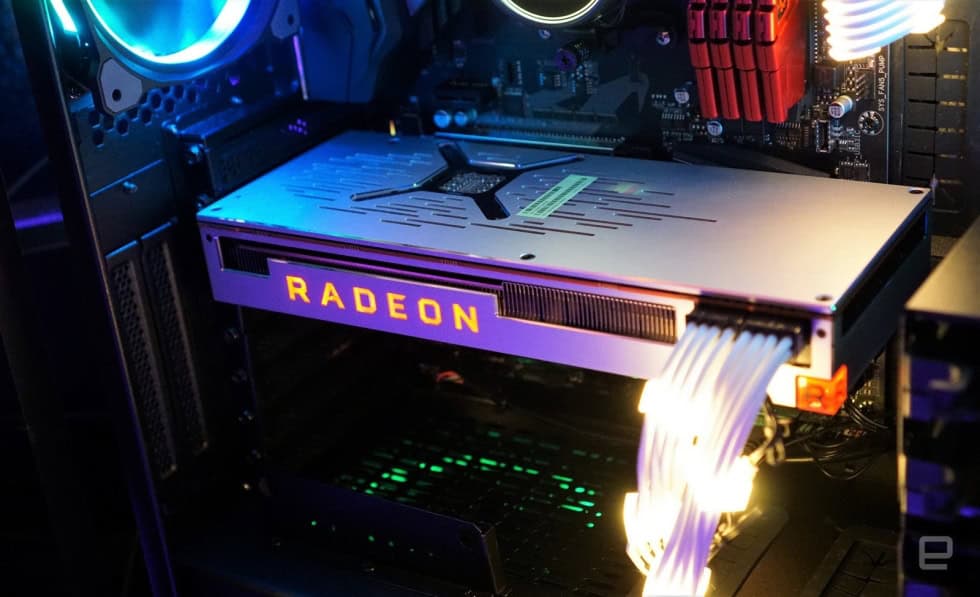
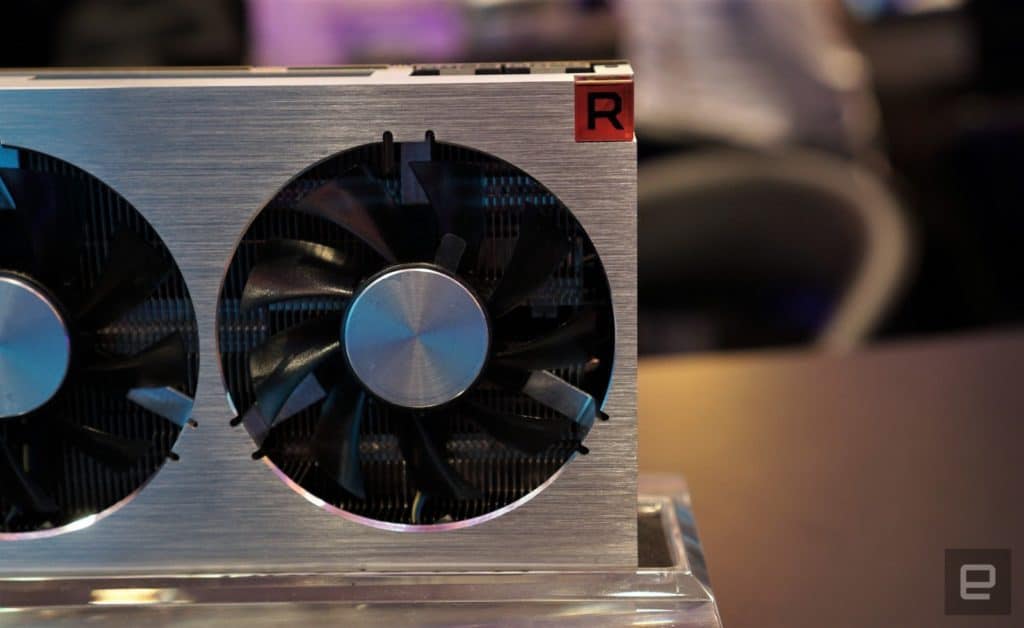
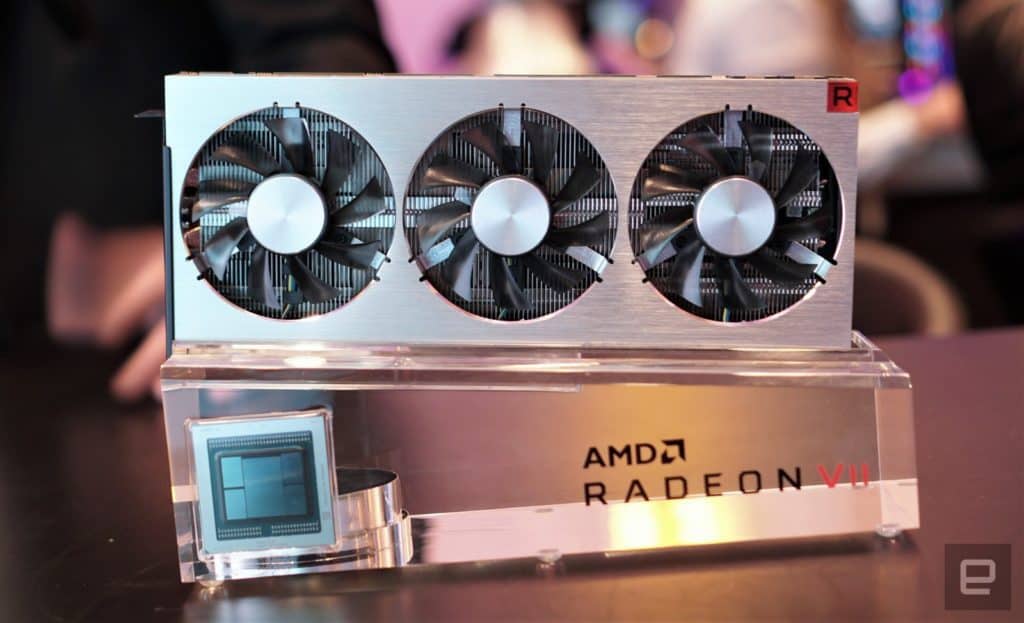
After lagging behind with Vega desktop GPUs for a few years, AMD announced a major upgrade today: the Radeon VII, the first 7nm GPU for gamers. It’s a powerful card capable of serious 4K performance. Its new architecture means it won’t use up too much power, while leaving plenty of room for overclockers to push it even further. But there’s no real-time ray tracing, a technology that NVIDIA has been pushing since last year, when it unveiled its RTX desktop GPUs. So where does this leave AMD?

“Our vision on gaming is very broad. We think about it across PCs, consoles, cloud and how we deliver content into all those pieces,” said AMD CEO Lisa Su in a conversation with journalists at CES. “I think ray tracing is an important technology, it’s something we’re working on as well from both a hardware and software standpoint. I think the important thing though — and that’s why we talk so much about the development community — is that technology for technology’s sake is okay, but technology done together with partners and really getting the development community fully engaged is really important.”

Su says we’ll be seeing more gaming talk from AMD this year and beyond. That’s not too surprising, as we’re expecting both Microsoft and Sony to start talking about their next generation consoles soon. Those systems, which are expected to launch in 2020, will likely rely on AMD’s custom graphics silicon, as we saw with the PlayStation 4 and Xbox One.

“We view it as a broad ecosystem, we don’t focus on just one technology, we need all this stuff to really come together,” Su said. That’s an understandable strategy for AMD. Even though NVIDIA has been talking about real-time ray tracing for the past year and just announced notebook RTX chips, there are still only a handful of games supporting that technology. And it didn’t help that the RTX 2070 and 2080 were much more expensive than the previous generation GPUs. (The recently announced RTX 2060 is its first “affordable” ray tracing card.) If you actually want consumers to see the value of ray tracing, it might make more sense to wait until there are games and plenty of developers using it first.

“Why we’re so excited with Radeon VII is it brings a phenomenal performance boost to gamers without any software modification required by our gaming developer partners,” said AMD CTO Mark Papermaster in an interview with Engadget. “What we try and do at AMD is being focused on delivering that value in an ecosystem that can be readily accepted…. Ray tracing is something that we believe the whole industry has to move to, there’s no question. But it has to go through that whole development cycle.”

During her CES keynote, Su also announced the 3rd generation Ryzen desktop processors, which are meant to compete with Intel’s new 9th generation chips, even the top-end Core i9-9900K. It’s also built on a 7nm architecture, which delivers the same benefits as the Radeon VII: a lower power draw while still delivering plenty of performance. Su also hinted that the upcoming Ryzen CPUs will pack in even more cores than what we saw her demo on stage. “There is some extra room on that package, and I think you might expect we’ll have more than eight cores,” she said.

At this point, AMD’s 2019 is already off to a more interesting start than 2018, where it didn’t have a new high-end video card. We were intrigued by the company’s Ryzen mobile chips, which packed in some decent Vega mobile graphics for casual gaming, but we didn’t see too many systems that took advantage of it. Su says AMD will be working more closely with manufacturers when it comes to marketing and designing those systems, which hopefully means more consumers will be aware of upcoming Ryzen mobile notebooks.

Toposens drew inspiration from bats for its low-cost sensors

Cars, robots, smart homes — the sensors could change the way all of these work.

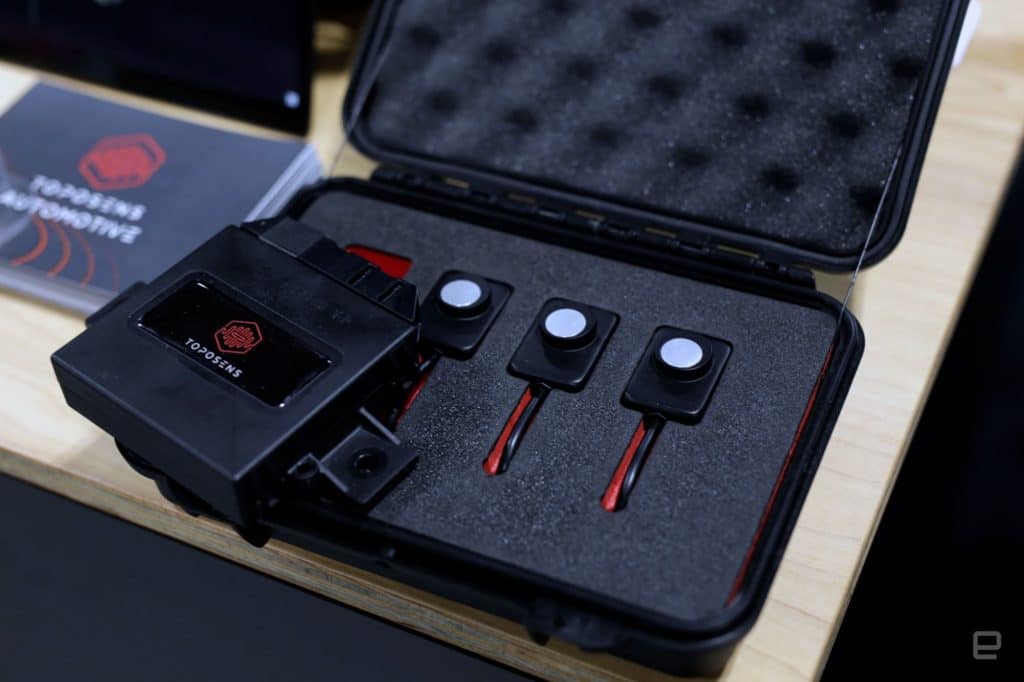
Stick with us here for a second: if you’re building a robot or an autonomous car, you’re going to need some sensors to help your creation “see” what’s around it. 3D-sensing cameras will do the trick, as will laser-based systems, but German startup Toposens is trying something a little different. Instead, Toposens has built (relatively) inexpensive sensors that map their surroundings using 3D ultrasound — a worldwide first, if they’re to be believed.

Aside from the fact that these sensors are in some ways tiny, digital bats, using ultrasound for object detection comes with a few notable benefits. It’s more resistant to environmental issues like bad lighting and rain, two factors that can do a number of vision-based recognition systems. They don’t draw much power, so they could be fitted on even the most barebones prototypes. And since these sensors can’t turn those ultrasonic waves into, say, faces, there’s a certain level of fundamental privacy at play here.

It certainly doesn’t hurt that these sensors are awfully small, so they could feasibly used for much more than just robots and cars. Toposens has said that its technology could fairly easily be worked into in-home devices — the sensors can capture objects in motion in enough detail that you could feasibly interact with smart home devices like connected televisions and new-fangled kitchen appliances. Honestly, it’s not hard to imagine how cheap, highly accurate sensors could work in a lot of different situations, and given enough time and development, they just might rewrite the way companies try to build autonomous machines. For now, though, Toposens wants to focus on a few things and get them right. Considering how much I would like to avoid being run over by a prototype self-driving car, that’s probably a very wise move.

Amazon’s Echo Auto accessory is making its way to customers

It’s still being sold on a pre-order basis, though.

Amazon wasn’t able to release Echo Auto before the 2018 holiday season like it did its other brand new Alexa-connected devices. According to TechCrunch, though, the company has already started shipping pre-orders for the $25 in-car Echo accessory — some early buyers even got theirs before Christmas.

The e-commerce giant officially started selling a bunch of its recently announced devices in late 2018, including the Fire TV Recast for DVR/streaming and the curious Alexa-powered microwave. But for some reason, the Echo Auto, which was announced with those products in September, remained invite only. In fact, you still can’t add one to your cart on Amazon’s website, and the only option available as of this writing is “Request an invitation.”
X

Alexa VP Steve Rabuchin told TechCrunch that Amazon “had over a million [pre-order] requests” for Echo Auto and admitted that it’s “just starting to ship.” He didn’t explain why it was delayed, however, and why the most you can do at the moment is send in your email in hopes of getting an invitation. (The email you’ll receive when you request for an invite reads “If selected, you’ll receive an email with an invitation to purchase.”) That said, the executive assured interested buyers that pre-orders continue to be fulfilled. If you’re interested, you may want to click on that invitation button ASAP: Amazon plans to send out invites over the coming months, and the devices will most likely be shipped on a first come first served basis.

Stocks To Watch This Week: Veru Inc. (VERU), CUI Global, Inc. (CUI)

CUI GLOBAL INC

Veru Inc. (NASDAQ:VERU) shares ended at $1.5 with 0.09 mln shares exchanging hands. That puts the market capitalization at $97.44 mln. It opened the session with a $1.55 price tag, later ranging from $1.4701 to $1.65, the range at which the stock has traded at throughout the day. The stock stands nearly -36.71% off versus the 52-week high and 28.21% away from the 52-week low. The number of shares currently owned by investors are 64.96 mln.

Sell-side analyst recommendations point to a short term price target of $6.83 on the shares of Veru Inc. (VERU). The consensus rating is 0, indicating analysts in general look favorably on the company’s future prospects.

The current price is staying above the SMA lines which signify strength and is generally healthy/positive and may provide the momentum for driving the share price higher. Current price places the company’s stock -14.13% away from its 200-day simple moving average, 8.44%, away from the 50-day average and also 9.21% away from 20-day average.

For this year, Veru Inc. (NASDAQ:VERU) is performing 7.14%. Over the past five trading sessions it is 7.14%; -0.66% for the month; 6.38% for the last quarter; -26.83% for the past six-months; and 1.35% for the last 12 months. The last close places the company’s stock about $0.87 off its 52 week high of $2.37 and $0.33 above the 52 week low of $1.17.

CUI Global, Inc. (NASDAQ:CUI) closed up +0.02 points or 0.98% at $1.54 with 0.07 mln shares exchanging hands. Current price level places the company’s stock about -53.05% from the 52-week high and 31.62% away from the 52-week low. Sell-side analyst recommendations point to a short term price target of $6 on the company shares. The consensus rating is 0, indicating analysts in general look favorably on the company’s future prospects.

CUI Global, Inc. (CUI) opened the session with a $1.56 price tag, later ranging from $1.54 to $1.73, the range at which the stock has traded at throughout the day. The stock stands nearly $1.72 off versus the 52-week high of $3.28 and $0.39 above the 52-week low of $1.17. The number of shares currently owned by investors are 28.53 mln. The current price change puts the market capitalization at $43.93 mln.

In an overview of the current analyst recommendations, Buy count is 3 and Overweight is 0 while the number of analysts recommending Sell and Underweight are 0 and 0, respectively. Also, the Hold rating count is 0 as of 1/8/2019. The analyst recommendations from a month ago are 3 Buy, 0 Overweight, 0 Sell, 0 Hold and 0 Underweight. Investors might also notice that three month ago the Buy recommendations (3) outnumbered Sell recommendations (0). The count of Hold ratings in that period was 0.

Over the past five trading sessions shares of CUI Global, Inc. (NASDAQ:CUI) are 25.2%; -3.75% for the month; -30% for the last quarter; -48.67% for the past six-months; and -42.32% for the last 12 months. The current price is staying above the SMA lines which signify strength and is generally healthy/positive and may provide the momentum for driving the share price higher. Current price places the company’s stock -33.45% away from its 200-day simple moving average, -3.49%, away from the 50-day average and also 10.11% away from 20-day average. The stock is performing 25.2% year to date.

Stocks To Watch This Week: Jianpu Technology Inc. (JT), Akoustis Technologies, Inc. (AKTS)

Jianpu Technology Inc. (NYSE:JT) shares ended at $5 with 0.4 mln shares exchanging hands. That puts the market capitalization at $772.45 mln. It opened the session with a $4.9 price tag, later ranging from $4.81 to $5.13, the range at which the stock has traded at throughout the day. The stock stands nearly -47.31% off versus the 52-week high and 43.27% away from the 52-week low. The number of shares currently owned by investors are 154.49 mln.

Sell-side analyst recommendations point to a short term price target of $6.29 on the shares of Jianpu Technology Inc. (JT). The consensus rating is 0, indicating analysts in general look favorably on the company’s future prospects.

The current price is staying above the SMA lines which signify strength and is generally healthy/positive and may provide the momentum for driving the share price higher. Current price places the company’s stock -4.29% away from its 200-day simple moving average, 7.74%, away from the 50-day average and also 25.06% away from 20-day average.

For this year, Jianpu Technology Inc. (NYSE:JT) is performing 19.9%. Over the past five trading sessions it is 19.9%; 16.55% for the month; 4.38% for the last quarter; -20.51% for the past six-months; and -26.47% for the last 12 months. The last close places the company’s stock about $4.49 off its 52 week high of $9.49 and $1.51 above the 52 week low of $3.49.

Akoustis Technologies, Inc. (NASDAQ:AKTS) closed up +0.19 points or 3.3% at $5.95 with 0.11 mln shares exchanging hands. Current price level places the company’s stock about -37.37% from the 52-week high and 75% away from the 52-week low. Sell-side analyst recommendations point to a short term price target of $9.29 on the company shares. The consensus rating is 1.9, indicating analysts in general look favorably on the company’s future prospects.

Akoustis Technologies, Inc. (AKTS) opened the session with a $5.82 price tag, later ranging from $5.8 to $5.9999, the range at which the stock has traded at throughout the day. The stock stands nearly $3.68 off versus the 52-week high of $9.5 and $2.42 above the 52-week low of $3.4. The number of shares currently owned by investors are 29 mln. The current price change puts the market capitalization at $172.55 mln.

In an overview of the current analyst recommendations, Buy count is 7 and Overweight is 0 while the number of analysts recommending Sell and Underweight are 0 and 0, respectively. Also, the Hold rating count is 0 as of 1/8/2019. The analyst recommendations from a month ago are 6 Buy, 0 Overweight, 0 Sell, 0 Hold and 0 Underweight. Investors might also notice that three month ago the Buy recommendations (4) outnumbered Sell recommendations (0). The count of Hold ratings in that period was 0.

Over the past five trading sessions shares of Akoustis Technologies, Inc. (NASDAQ:AKTS) are 19.72%; 15.53% for the month; -15.96% for the last quarter; -31.13% for the past six-months; and -11.85% for the last 12 months. The current price is staying above the SMA lines which signify strength and is generally healthy/positive and may provide the momentum for driving the share price higher. Current price places the company’s stock -7.42% away from its 200-day simple moving average, 22.34%, away from the 50-day average and also 12.33% away from 20-day average. The stock is performing 19.72% year to date.