
Archives for December 23, 2018

Imperial Capital Equities Analysts Boost Earnings Estimates for Discovery Communications Inc. (DISCA)

Discovery Communications Inc. (NASDAQ:DISCA) – Imperial Capital raised their FY2019 earnings per share estimates for shares of Discovery Communications in a note issued to investors on Tuesday, December 4th, according to Zacks Investment Research. Imperial Capital analyst D. Miller now forecasts that the company will earn $2.69 per share for the year, up from their previous estimate of $2.59. Imperial Capital has a “Inline” rating and a $31.00 price target on the stock. Imperial Capital also issued estimates for Discovery Communications’ Q1 2020 earnings at $0.71 EPS, Q3 2020 earnings at $0.82 EPS and FY2020 earnings at $3.38 EPS.

Several other brokerages have also recently issued reports on DISCA. Pivotal Research reaffirmed a “sell” rating and set a $27.00 price objective (up from $26.00) on shares of Discovery Communications in a report on Friday, November 9th. MKM Partners upped their price objective on Discovery Communications to $40.00 and gave the stock a “buy” rating in a report on Monday, November 5th. Zacks Investment Research raised Discovery Communications from a “hold” rating to a “buy” rating and set a $37.00 price objective on the stock in a report on Tuesday, November 13th. JPMorgan Chase & Co. upped their price objective on Discovery Communications to $38.00 and gave the stock an “overweight” rating in a report on Wednesday, October 10th. They noted that the move was a valuation call. Finally, Credit Suisse Group upgraded Discovery Communications from a “neutral” rating to an “outperform” rating and increased their price target for the company from $30.00 to $40.00 in a report on Wednesday, October 10th. Six analysts have rated the stock with a hold rating, thirteen have assigned a buy rating and one has issued a strong buy rating to the stock. The stock presently has a consensus rating of “Buy” and a consensus price target of $32.79.

Shares of DISCA opened at $25.05 on Thursday. The company has a market cap of $13.54 billion, a PE ratio of 11.18, a PEG ratio of 0.35 and a beta of 1.24. Discovery Communications has a 1 year low of $20.59 and a 1 year high of $34.89. The company has a debt-to-equity ratio of 1.61, a quick ratio of 1.01 and a current ratio of 1.01.

Discovery Communications (NASDAQ:DISCA) last issued its quarterly earnings data on Thursday, November 8th. The company reported $0.52 earnings per share (EPS) for the quarter, missing the Thomson Reuters’ consensus estimate of $0.62 by ($0.10). The firm had revenue of $2.59 billion for the quarter, compared to analysts’ expectations of $2.60 billion. Discovery Communications had a positive return on equity of 17.05% and a negative net margin of 8.52%. The firm’s revenue was up 57.0% on a year-over-year basis. During the same period last year, the company earned $0.43 earnings per share.

In other news, Director Kenneth W. Lowe sold 58,000 shares of the stock in a transaction on Tuesday, November 13th. The stock was sold at an average price of $28.88, for a total transaction of $1,675,040.00. Following the transaction, the director now owns 1,236,060 shares of the company’s stock, valued at approximately $35,697,412.80. The transaction was disclosed in a filing with the Securities & Exchange Commission, which is available through this link. Also, CFO Gunnar Wiedenfels sold 50,000 shares of the stock in a transaction on Monday, November 12th. The stock was sold at an average price of $29.47, for a total value of $1,473,500.00. Following the transaction, the chief financial officer now directly owns 10,000 shares in the company, valued at approximately $294,700. The disclosure for this sale can be found here. Insiders have sold a total of 178,740 shares of company stock worth $5,335,549 in the last three months. Corporate insiders own 6.73% of the company’s stock.

Hedge funds have recently modified their holdings of the stock. Truvestments Capital LLC bought a new stake in Discovery Communications during the third quarter valued at about $122,000. FNY Investment Advisers LLC bought a new stake in Discovery Communications during the third quarter valued at about $172,000. Dupont Capital Management Corp boosted its position in Discovery Communications by 108.8% during the second quarter. Dupont Capital Management Corp now owns 6,010 shares of the company’s stock valued at $165,000 after purchasing an additional 3,132 shares in the last quarter. Chicago Equity Partners LLC purchased a new stake in Discovery Communications in the third quarter valued at about $200,000. Finally, Engineers Gate Manager LP purchased a new stake in Discovery Communications in the third quarter valued at about $202,000. 41.82% of the stock is currently owned by institutional investors.

About Discovery Communications

Discovery, Inc operates as a media company worldwide. The company operates through U.S. Networks, International Networks, and Education and Other segments. It owns and operates various television networks under the Discovery Channel, TLC, Animal Planet, Investigation Discovery, Science Channel, Velocity, Discovery Family Channel, Destination America, American Heroes Channel, Discovery Life, The Oprah Winfrey Network, Eurosport, Discovery Kids, DMAX, and Discovery Home & Health brands, as well as other regional television networks.


Top Trade Idea for 2019: Long Pound, Short US Equities, Long Gold

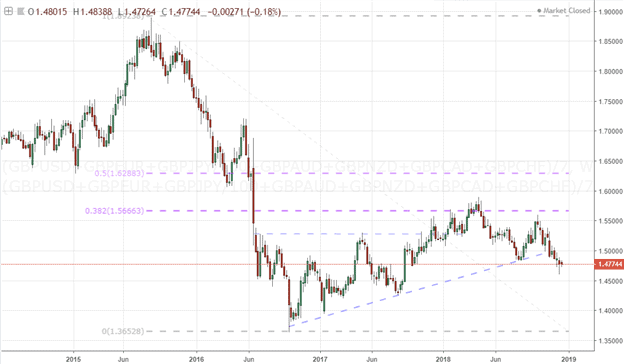
Often, I am asked where a currency or market will be at a specific date into the future. My response will almost always start with “I don’t know.” Everything in trading is a probability. There are no certainties, and to assume where a market will be and at a specific time is to whittle down the probabilities of success to almost ensure your assumptions will be disproven. That said, there are certain events with such significant weight that markets will inevitably change as they unfold or after they pass. Brexit is one of those events. Considering how volatile the discussions have been through 2018, it is reasonable to anticipate further switchbacks in these negotiations through the opening months of 2019. I have little interest in attempting to trade anything more than very short-term opportunities in the Sterling as they arise through that uncertainty. However, when there is a clear resolution, the lifting of uncertainty will allow for a trend – though that could be ambiguous to direction. A no deal will likely see the Sterling drop further, but once early trade deals are struck with key counterparts, the currency will start to recover from a further depressed level. If there is a compromise – and this is true of most scenarios in this middle ground – the Pound will start to rise over the subsequent months as it is implemented. If there is a second referendum, some degree of uncertainty will remain until the vote is tallied. Revoking the initial Brexit will lead to a Sterling rally while reaffirming the initial decision would push back the time frame for the eventual recovery – the only scenario I wouldn’t expect a more systemic Pound recovery. There are no explicit times or levels in this, but that is the nature of trading – the less obvious the key levels and timetable, the more significant the ultimate move. For pairings, my preference runs less towards those explicitly risk oriented and more dependent on liquidity: GBPUSD and EURGBP.

Chart of Equally-Weighted Pound Index (Weekly)

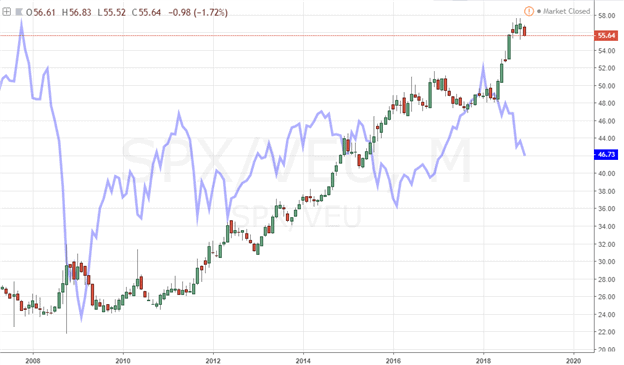
Outside of FX, I have a general expectation for risk aversion to take hold across the financial system in 2019. Looking back over this past year, we have seen a number of asset classes that are otherwise unrelated with the exception of their connection to sentiment slide significantly – such as emerging markets, junk bonds, commodities, many regions’ equities markets, etc. Yet, many have maintained a rosier assessment of the financial system than what this would tell us because they are reluctant to give up on the convenient complacency of the past decade which led to so many padded investment accounts. And for many, the source of their confidence has been US equity indices. They didn’t commit to the full course reversal that so many of their international counterparts had by the close of 2018. That said, they experienced frequent bouts of extreme volatility amid deeper fundamental concerns surrounding the strains of global monetary policy, slowing growth and trade wars. It is difficult to envision a genuine scenario for the year ahead that paints the US shares market as ‘oversold’ or ‘value’ – but there are many routes for which fear sweeps in. I will look for US indices to struggle. That can be through further breakdown of key levels – like the S&P 500 below 2,500 – but a more strategic approach would be to take a short view on the US markets relative to developed world counterparts (so a S&P 500 short to VEU all world ex US long would be a good reflection).\

Chart of S&P 500 to VEU All World Ex US Index Ratio Overlaid with VEU in Blue (Monthly)

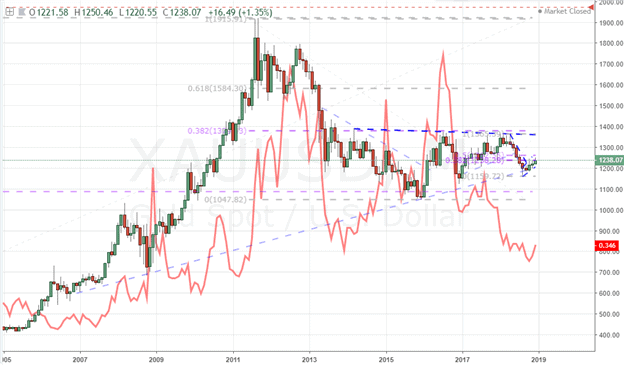
My concern over systemic tides converging is such that I feel much of the opportunity in the year ahead will be found in the best means to exploit the fallout. Short over-leveraged ‘risk’ assets is one way to express this view. However, I’m particularly interested in what Gold represents relative to this perspective. The metal is often considered a traditional safe haven and left at that. It certainly qualifies for this role, but its utility runs far deeper than that. Looking back to recent history, we find gold experienced a remarkable rally into 2011. This charge was the combination of an aversion to traditional risk paired by the active devaluation of all the major currencies in concert via stimulus programs. If we have another tip into recessionary fear, monetary policy will be a highlight once again – but not because of a sharp and deep dovish turn. The developed world’s central banks don’t have capacity to fend off such a tide should it form. Instead, the depreciation in traditional fiat currencies would arise from the recognition that easing has been rendered completely ineffective. A charge to $1,360 could occur through otherwise mundane circumstances. I would look for the move above $1,400 with such a convergence of misfortunes for the financial system.

Chart of Gold and Inverted US 10-Year Treasury Yield (Monthly)

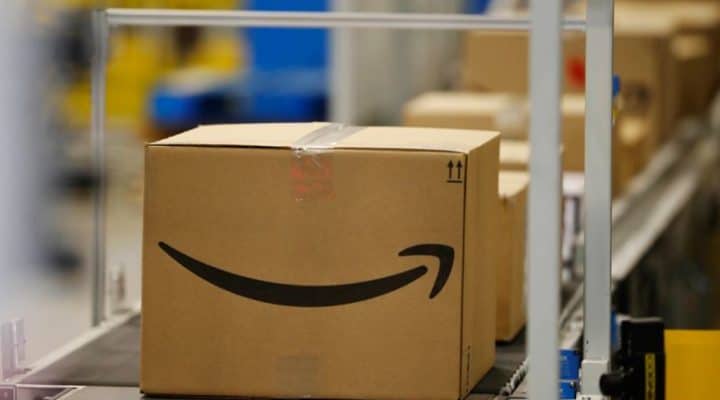
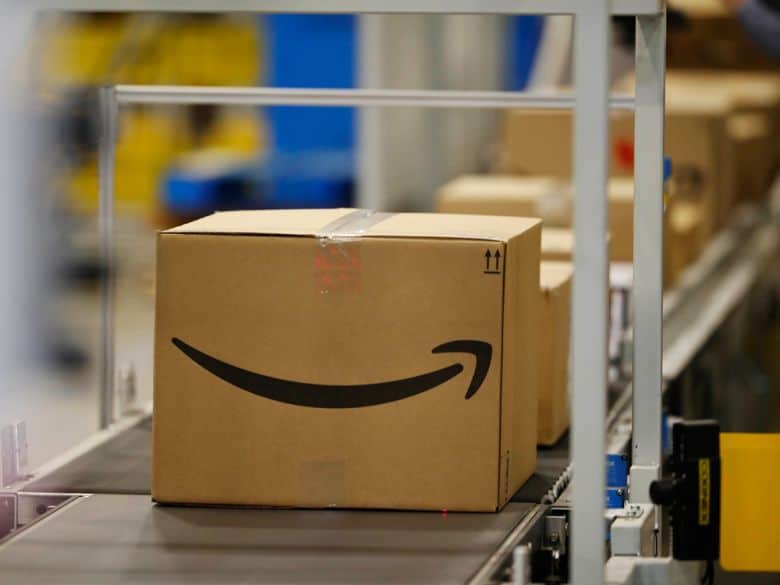
When it comes to buying last-minute gifts online, shoppers increasingly trust only Amazon to deliver

Amazon has lead people to expect near instant gratification.

This year, in the days leading up to Christmas, Amazon’s share of online sales will increase by almost 50 per cent while most rivals fade

SEATTLE — Olivia Zimmermann started her holiday shopping early this year, buying a Bluetooth speaker from Best Buy for her sister. It was supposed to arrive by Dec. 10, two weeks before Christmas.

The speaker never showed up — and the post office said it had delivered the package to a different town. Best Buy apologized and offered to reship it. But Zimmermann, who works in marketing in Chicago, was over it.

“I just want a refund,” she told the retailer, and then added: “At this point, I have already ordered from Amazon because I know for a fact it will be here when they say it will.”

Amazon is far and away the leader in e-commerce, outpacing competitors like Walmart, Target and eBay. But its dominance is never more pronounced than in the nail-biter last-minute sprint before Christmas.

The company, based in Seattle, has had a two-decade-long obsession with shrinking the time from click to doorstep. It has built warehouses in more than 30 states and a sophisticated web of delivery methods, giving it a logistical advantage.

Amazon has used that edge to lead people to expect near instant gratification that, for a while, only it could deliver. The company built trust in its delivery speed with its Prime membership, which costs US$119 a year and includes two-day shipping. This year, in the days leading up to Christmas, Amazon’s share of online sales will increase by almost 50 per cent — to about half of all digital sales — while most rivals fade, according to the market research firm Rakuten Intelligence.

“Amazon’s ability to fulfill more quickly and effectively than competitors has been a key differentiator back to the earliest days,” said Kenneth Cassar, an analyst with Rakuten Intelligence, which is an independent subsidiary of the Japanese e-retailer Rakuten.

Traditional retailers still enjoy strong sales when the holiday season begins around American Thanksgiving. They advertise widely, luring shoppers with doorbuster deals. The promotions also drive sales to their websites instead of Amazon. Around Thanksgiving, Amazon’s share of online sales can dip to as low as 20 percent in the United States, according to Rakuten.

But as November turns to December, and then into Christmas crunchtime, shoppers’ preferences change. Last year, Walmart and Target had their busiest online traffic of the month on Dec. 10. Amazon’s was eight days later, on Dec. 18, according to an analysis by Griffin Carlborg, a researcher at the digital intelligence firm Gartner L2.

“Amazon has just built up its reputation around rapid fulfillment incredibly well,” Carlborg said. “Customers really trust Amazon’s fulfillment offerings.”

Those shoppers include Carissa Vinovskis, 26, who puts in 12-hour days researching diabetes at Children’s Hospital Colorado. She used to shop for Christmas gifts in stores, but as she got busy with graduate school and later her job, she had less time and patience.

Panic set in fast in the middle of this month when Vinovskis realized she had just six days to get presents before visiting her parents. She found a few cute things on Etsy — “beautiful, handcrafted gifts,” she said — and then realized they would take about four weeks to arrive.

“I was like, welp, Amazon Prime it is!” she said.

An Amazon spokeswoman pointed to a statement in which the vice president who runs Prime, Cem Sibay, said, “We keep working to add faster and even more convenient delivery options.”

Amazon’s speedy delivery has been a key focus. In 2000, it invested US$60 million in Kozmo, a New York startup that delivered snacks, movies and other goods in less than an hour. About a year later, Kozmo shut down. But it remained an inspiration to Jeff Bezos, Amazon’s founder and chief executive, according to a former Amazon employee who heard him discuss the matter.

Bezos saw that quick delivery could change how people buy things. Price and selection have always been important in retailing, but delivery would surpass store location as another critical factor.

In 2005, Amazon began offering free two-day shipping for Prime members, which Consumer Intelligence Research Partners estimates covers more than two-thirds of U.S. households. Almost a decade later, it started Prime Now, which delivers goods in as little as an hour in 30 cities.

Amazon now has over 110 fulfillment centres in North America, more than 250,000 warehouse employees and dozens of its own planes. It is setting up warehouses that hold tens of millions of items closer to major cities, letting it offer free same-day and one-day shipping on more products.

Walmart and others have also made strides in catching the wave of shoppers moving online by making similar delivery promises without the cost of a Prime membership. (In the third quarter, Walmart’s online sales rose 43 per cent over the previous year.) A Google search for the retailer on Wednesday returned “Walmart Last Minute Gifts | Get ’em by Christmas | Free 2-Day Shipping” for the name of the company’s home page.

These traditional retailers are leveraging their physical stores — a key advantage they have over Amazon — and providing ways for people to order online and pick up in person. That is particularly powerful in the final days before Christmas, when shoppers return to stores.

“The biggest area that we’re playing offence right now is with our stores,” Marc Lore, who runs Walmart’s U.S. e-commerce business, told investors in October.

For some Walmart purchases, customers don’t need to leave their car to get their order — an employee will drop it into their trunk. Best Buy said more than 40 per cent of its online revenue is from orders that are now picked up in stores. And on Christmas Eve, people can order products online from store inventory as late as 5 p.m. and pick them up just an hour later.

Marshal Cohen, who advises retailers for the NPD Group, a market research firm, said three years ago, retailers rushed to match Amazon, offering free two-day shipping until just before Christmas — but didn’t have their delivery partners sufficiently prepared for the rush.

“They just clogged the system so badly and really disappointed a lot of consumers,” Cohen said. “That memory was pretty strong in a lot of consumers’ minds when it comes to thinking about shopping online.”

Building the technology and infrastructure to quickly and consistently fill orders is not cheap, and after years of breakneck expansion, Amazon has squeezed more productivity out of its investments. It picks, packs and mails items out of its warehouses in a day or less, and packages arrive at a customer’s doorstep about two days later, according Rakuten data. The data was based on electronic receipts and shipping notifications retailers sent to more than 5 million users who use Rakuten’s consumer apps.

Amazon is faster than every major competitor, though other retailers are speeding up. In 2016, Old Navy, which is owned by Gap, took about 10 days to deliver a package ordered during the week after Thanksgiving, Rakuten data shows. This year, its packages showed up about three days faster. Walmart cut its delivery time from more than a week to six days over the same period. And Best Buy said 80 per cent of its small packages now arrive in two days or under.

Yet most retailers still have to work to win people’s trust. Jessica Palazzo, who runs after-school programs near Hartford, Connecticut, bought her mother pajamas from Old Navy two years ago that were guaranteed to arrive before Christmas, but which didn’t appear until January. Old Navy offered her 10 per cent off her next order.

This year on Black Friday, she put a pair of Gap pyjamas into her online shopping cart — but then had a change of heart.

“That’s embarrassing if you come on Christmas and have nothing for somebody,” Palazzo said. She ended up buying running socks and a running ear warmer for her mother from Amazon.

The best and worst investments of 2018, from a soaring Goose to a dimming giant

Trade wars, rising interest rates and oil uncertainty all conspired to push markets to the brink of bear territory this year

Is that you, volatility? After a solid 2017, investors were reminded over the past year that, yes, it is possible for markets to go in directions other than up. Also, that they can do so in rapid fashion. Trade wars, rising interest rates and oil uncertainty all conspired to push markets on both sides of the border to the brink of bear territory in 2018. In the U.S., the Dow was down nine per cent for the year while the Nasdaq was off eight per cent — though both had fallen much more since their mid-year peaks. Closer to home, the S&P/TSX Composite Index was looking at an annual decline for the first time since 2015, when another bout of low oil prices weighed on Canada’s energy sector. Not even the stalwart FANG stocks and their ilk, which have driven out-sized tech gains for years, were spared. But not every investment has been a dog — with great volatility can come great opportunity. Here’s some of the best and worst investments of 2018.

WINNERS

Microsoft Corp.

The tech-lash hit hard over the past year, reversing gains that FANG stocks had been seeing earlier in the year. Microsoft, however, has held up better than most. As of Dec. 21, shares of the Redmond, Wash.-based company were up nearly 15 per cent for 2018, thriving in a year of Congressional hearings and growing concerns about data and privacy. In November, the company, once a source of frustration to investors for its flat returns, even managed to claim the mantle of world’s most valuable publicly traded company, knocking off former champ Apple Inc. Some of Microsoft’s success can be traced back to its shift into cloud computing and the steady stream of service revenues from its many business lines. Not being in the news for breaches of customer information or because of Russian meddling also helped.

Natural gas

This year demonstrated that not all fossil fuels are created equal. As of Dec. 21, the Nymex future contract for oil was down about 20 per cent year-to-date, while the one for natural gas was up more than 20 per cent for 2018. It has, however, been a bit of a U-shape for notoriously volatile gas. After a bump to start 2018, it was not until the fall that natural gas prices were jolted upward again by expectations of a chillier-than-anticipated winter and concerns over supply. The rapid rise also led to speculation of a short squeeze, with investors supposedly left scrambling to try to cover their positions. While 2018’s gains were welcome, there could be more good news ahead in 2019, as expanded LNG export capacity in North America could help chip away at the price differential with Europe, where gas is much more expensive.

Canada Goose Holdings Inc.

Despite a significant loss of altitude in December, the Goose was cooking in 2018. Shares of the Toronto-based parka producer opened the year at around $40 before climbing past $90 in November, for a gain of approximately 130 per cent at its peak. While the company, which has big ambitions in China, has suffered collateral damage following the dramatic arrest of a Huawei Technologies Co. executive in Vancouver this month— the shares were below $60 in Toronto — it was still one of the top performers on the battered TSX, up more than 40 per cent. Earnings that have managed to best analyst expectations for seven straight quarters, according to Bloomberg, plus expansion into new markets such as Hong Kong, were among the factors fuelling its surge. Once the current bout of geopolitical turbulence is over, the sky could once again be the limit.

The Jamaica Stock Exchange index

The good times continue to roll for the Jamaica Stock Exchange, which was the world’s best performing stock exchange this year, according to Bloomberg data. Favourable economic targets for the country, progress on a debt-reduction plan and plenty of investment by China all contributed to the positive vibes for investors, and helped push the JSE’s returns to nearly 30 per cent. Among the best-performing individual stocks was stockbroker Barita Investments Ltd., which has gained 500 per cent for the year, as well as bank/insurer/asset manager NCB Financial Group Ltd., which is up more than 45 per cent.

Tilray Inc.

The cannabis sector was full of wild rides for investors in 2018, and none more so than this Nanaimo-based licensed producer. If you bought it at its IPO price of $17 in July, you are likely still smiling. If you waited until Day 60 to hop on the rollercoaster, not so much. That was when the stock briefly cracked the US$300 level during a frenzied few days of trading in September, when it was one of the most-traded securities in the world. While it has come back to Earth since, and was trading at around US$75 in late December, Tilray appears poised to be a cannabis player for years to come. The pot producer has struck up a pair of partnerships with big-name players from more traditional businesses, such as a US$100-million joint venture with brewer Anheuser-Busch InBev NV and a worldwide team-up with pharma-firm Sandoz.

I don’t really give a s—.

JPMorgan Chase CEO Jamie Dimon, about bitcoin’s fall

LOSERS

Cryptocurrencies

The great Bitcoin bubble of 2017 turned into the great Bitcoin bust of 2018. According to Coinbase, the trailblazing cryptocurrency has fallen more than 70 per cent over the past 12 months, to around US$3,800 apiece, after nearing US$20,000 last December. Other cryptos have followed suit. Ethereum? Down more than 80 per cent over the past year. Litecoin? Nearly 90 per cent. Bitcoin cash? More than 90 per cent. The tumble has been blamed on technical issues, such as “forking” of currencies, in addition to the ever-present concern of legal and regulatory crackdowns on digital cash. While bitcoin has bounced back a bit over the past week, it has lost some of its world-shaking lustre. When asked in the fall again about bitcoin, the response from JPMorgan Chase & Co. CEO Jamie Dimon, never the biggest fan of the cryptocurrency, included an exasperated: “I don’t really give a s—.”

General Electric Co.

For the company of Thomas Edison, 2018 was a year of indignities. The once-storied conglomerate was forced to sell businesses and slash its precious dividend to a single penny after a series of massive charges and questions about its accounting practices put its future into doubt. Among them, a US$6.2-billion charge tied to long-term-care insurance contracts and another eye-watering US$22 billion writedown in connection with its power business. The stock has responded in kind: year-to-date, it has shed about 60 per cent of its value to below US$8 — a fall so steep the company was removed from the Dow Jones Industrial Average. Will last investor to leave please turn out the lights?

Freshii Inc.

Shares of Toronto-based health-focused food chain Freshii Inc. rang in 2018 nearly $4 below their January 2017 IPO price of $11.50. Things only went down from there. An earnings miss in August was followed up by a decision in November to pull its target of having as many as 760 stores by the end of 2019. The decision, it said, was due in part to the obstacles franchise partners faced in opening new locations, and an inability to formulate a new target with confidence. Investors lost their appetite, too. Trading at less than $2.50 in late-December, Freshii’s stock price is off more than 60 per cent for the year. The company is not throwing in the towel though, and has pointed to progress in its unique partnerships with companies such as Air Canada and Royal Dutch Shell Plc.

Turkey

The threat of presidential interference is not limited to U.S. markets. Like Donald Trump, Turkish President Recep Tayyip Erdogan spent time over the past year trying to jawbone his country’s central bank on the subject of interest rates. In May, Erdogan even referred to interest rates as “the mother and father of all evil.” Meantime, Turkey’s currency and stock market have been suffering. As of this month, the Borsa Istanbul 100 was down more than 20 per cent for the year, with the Turkish lira having weakened nearly 30 per cent against the U.S. dollar. As if the country needed anything else, concerns of an economic slowdown have emerged for what had been one of the more promising emerging markets coming into 2018.

Coffee

It was a rough year for commodities in general, but coffee prices could particularly do with some perking up. As of this month, the Intercontinental Exchange contract for coffee was down more than 25 per cent for 2018, as weak demand and abundant supply because of bumper crops in countries such as Colombia turned it into one of the worst-performing commodities of the year. Next year could be tough as well for anyone betting on an upswing. Some are predicting Brazil, the world’s biggest producer of coffee, will produce another big harvest. Bad news for coffee speculators, but good news for coffee drinkers.

Government Unlikely to Get Fully Back to Business for Days

The moon rises behind the North Portico of the White House, Saturday, Dec. 22, 2018, in Washington. The partial federal shutdown was expected to drag into Christmas as President Donald Trump and congressional leaders remained stuck in a standoff over the border wall with Mexico.

It looks like Christmas will be over and done with before the federal government will have a chance to get fully back to business.

WASHINGTON — The federal government is expected to remain partially closed past Christmas Day in a protracted standoff over President Donald Trump’s demand for money to build a border wall with Mexico.

With Trump’s insistence on $5 billion for the wall and negotiations with Democrats in Congress far from a breakthrough, even a temporary measure to keep the government running while talks continued seems out of reach until the Senate returns for a full session Thursday.

From coast to coast, the first day of the shutdown played out in uneven ways. The Statue of Liberty was still open for tours, thanks to money from New York state, and the U.S. Post Office was still delivering mail, as an independent agency.

Yet the disruption has affected many government operations and the routines of 800,000 federal employees. Roughly 420,000 workers were deemed essential and were expected to work unpaid. An additional 380,000 were to be furloughed, meaning they will stay home without pay. The Senate had already passed legislation ensuring that workers will receive back pay, and the House was likely to follow suit.

No one knew how long the closures would last. Unlike other shutdowns, this one seemed to lack urgency, coming during the long holiday weekend after Trump had already declared Monday, Christmas Eve, a federal holiday. Rather than work around the clock to try to end the shutdown, as they had done in the past, the leaders of the House and the Senate effectively closed up shop. But they didn’t rule out action if a deal were struck.

“Listen, anything can happen,” Senate Majority Leader Mitch McConnell told reporters after he closed the Senate’s rare Saturday session hours after it opened.

But after ushering Vice President Mike Pence through the Capitol for another round of negotiations, the Republican chairman of the Appropriations Committee, Sen. Richard Shelby of Alabama, said a quick end to the shutdown was “not probable.”

At the White House, Trump hosted a lunch Saturday with conservative lawmakers, including House Freedom Caucus chiefs Mark Meadows of North Carolina and Jim Jordan of Ohio, and several senators. Absent from the guest list were GOP leaders or any Democrats, who would be needed for a deal.

“I am in the White House, working hard,” tweeted the president, who canceled his Florida holiday getaway to his club Mar-a-Lago due to the shutdown. First lady Melania Trump was flying back to Washington to be with her husband.

Trump’s re-election campaign sent out a fundraising email late Saturday launching what he called “the most important membership program ever – the OFFICIAL BUILD THE WALL MEMBERSHIP.” The president urged donors to sign up.

With Democrats set to take control of the House on Jan. 3, and Speaker Paul Ryan on his way out, the shutdown was providing a last gasp of the conservative majority before the new Congress.

Trump savored the prospect of a shutdown over the wall for months. Last week he said he would be “proud” to close down the government. He had campaigned on the promise of building the wall, and he also promised Mexico would pay for it. Mexico has refused to do so.

In recent days, though, Trump tried to shift blame to Democrats for not acceding to his demand. He has given mixed messages on whether he would sign any bill into law.

After the luncheon at the White House, Sen. Lindsey Graham, R-S.C., said, “It’s clear to me he believes the additional funding is necessary.”

Senate Democratic leader Chuck Schumer of New York met with Pence on Saturday at the request of the White House, according to Schumer’s office. But the senator’s spokesman said they remained “very far apart” on a spending agreement.

Schumer said the “Trump shutdown” could end immediately if the president simply dropped his demand for money. “If you want to open the government, you must abandon the wall,” Schumer said.

Democrats said they were open to other proposals that didn’t include the wall, which Schumer said was too costly and ineffective. They have offered to keep spending at existing levels of $1.3 billion for border fencing and other security.

But Trump, digging in, tweeted about “the crisis of illegal activity” at American’s southern border is “real and will not stop until we build a great Steel Barrier or Wall.”

Republican leaders largely stayed in the background of the negotiations. McConnell acknowledged that any deal to reopen government would require Democratic support for passage and the president’s signature.

Senators approved a bipartisan deal earlier in the week to keep the government open into February and provide $1.3 billion for border security projects, but not the wall. But as Trump faced criticism from conservatives for “caving” on a campaign promise, he pushed to House to approve a package temporarily financing the government but also setting aside $5.7 billion for the border wall.

A test vote in the Senate on Friday showed that Republicans lacked the 60 votes needed to advance the House plan.

Pelosi, poised to become speaker, said in a letter to colleagues Saturday that “until President Trump can publicly commit to a bipartisan resolution, there will be no agreement before January when the new House Democratic Majority will swiftly pass legislation to re-open government.”

The impasse blocked money for nine of 15 Cabinet-level departments and dozens of agencies, including the departments of Homeland Security, Transportation, Interior, Agriculture, State and Justice.

Those being furloughed included nearly everyone at NASA and 52,000 workers at the Internal Revenue Service. About 8 in 10 employees of the National Park Service were to stay home; many parks were expected to close.

Some agencies, including the Pentagon and the departments of Veterans Affairs and Health and Human Services, were already funded and will operate as usual. Also still functioning were the FBI, the Border Patrol and the Coast Guard. Transportation Security Administration officers continued to staff airport checkpoints and air traffic controllers were on the job.

Many of Congress’ most conservative Republicans welcomed such a confrontation, but most GOP lawmakers wanted to avoid one because polling found the public opposed the wall and a shutdown over it.

Sen. Lamar Alexander of Tennessee said, “This is a complete failure of negotiations and a success for no one.”

Canada to Embark on Campaign to Win Release of Citizens

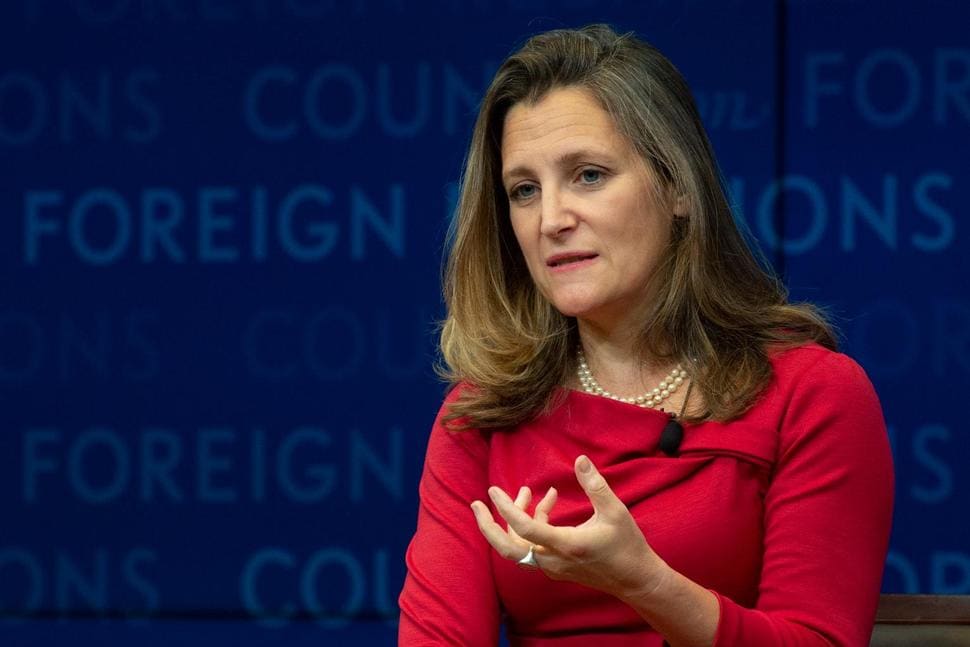
FILE – In this Sept. 25, 2018 file photo, Canadian Foreign Affairs Minister Chrystia Freeland participates in a discussion at the Council on Foreign Relations in New York. Freeland says China’s detention of two Canadian citizens in apparent retaliation for the arrest of a top Chinese tech executive is a worrying precedent that has resonated with allies. Freeland said Saturday, Dec. 22, on a conference call with reporters that it’s an issue that concerns partners around the world, and Canada will continue having discussions about it.

Canadian Foreign Minister Chrystia Freeland says that Canada will embark on a campaign to win the release of two citizens detained by China in apparent retaliation for the arrest of a top Chinese tech executive.

TORONTO — Canadian Foreign Minister Chrystia Freeland said Saturday that Canada will embark on a campaign to win the release of two citizens detained by China in apparent retaliation for the arrest of a top Chinese tech executive.

Freeland said on a conference call with reporters that the arrests constitute a worrying precedent that has resonated with the country’s partners.

“We’re going to keep working with a broad group of allies to raise this issue,” she said, noting that Canadian ambassadors will be reaching out to governments across the world.

Freeland said she spoke with China’s ambassador to Ottawa on Friday and made Canada’s first demand for the immediate release of ex-diplomat Michael Kovrig and entrepreneur Michael Spavor. The U.S., the U.K. and the EU also issued statements in support of Canada.

Meng Wanzhou, chief financial officer of Chinese telecommunications giant Huawei, was arrested while changing planes in Vancouver on Dec. 1 at the request of the United States, which wants her extradited to face charges that she committed fraud by misleading banks about the company’s business dealings in Iran.

Nine days later, the Chinese detained Kovrig and Spavor on vague allegations of “engaging in activities that endanger the national security” of China.

Freeland’s declarations mark a tougher tone from Canadian officials. Prime Minister Justin Trudeau has been criticized by the opposition for his largely muted response and for not phoning his Chinese counterpart.

Freeland said that that Canada is honoring its extradition treaty with the United States and emphasized that Canada has freed Meng on bail. “She has been given absolute access to due process and the independent Canadian judicial system,” Freeland said. “That is how Canada operates.”

Rob Malley, president of the nongovernmental organization that Kovrig worked for, the International Crisis Group, said the Kovrig case should concern anyone who engages with China.

“If China can arrest & detain someone, deny access to a lawyer, provide no justification — then why would a member of the business community, or an academic, feel safe travelling there?” Malley tweeted.

On Friday, the U.S. State Department reiterated a call for the Canadians’ release and British Foreign Secretary Jeremy Hunt said in a statement the U.K. is confident that Canada is respecting its extradition treaty with the U.S. and said he is “deeply concerned” that China may have detained the two Canadians for political reasons. The EU, meanwhile, issued a statement saying that the “declared motive” for their detention “raises concerns about legitimate research and business practices in China.”

The show of support from allies is significant for Canada, which has felt relatively isolated in recent months. In August, Saudi Arabia expelled Canada’s ambassador to the kingdom and withdrew its own ambassador after Canada’s foreign ministry tweeted support for an arrested Saudi activist.

The Saudis also sold Canadian investments and ordered their citizens studying in Canada to leave. No country, including the U.S., spoke out publicly in support of Canada.