Archives for November 25, 2018

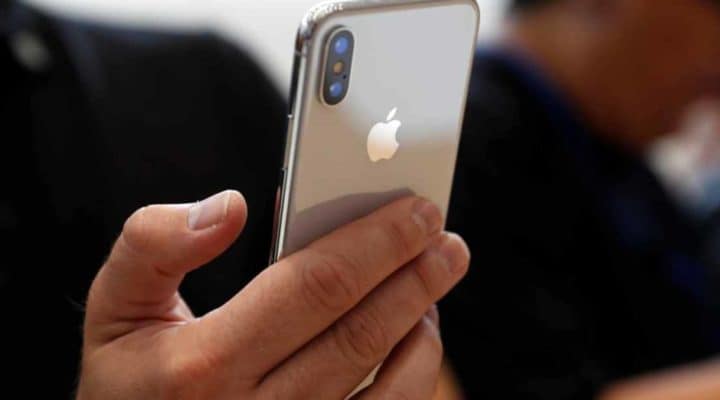
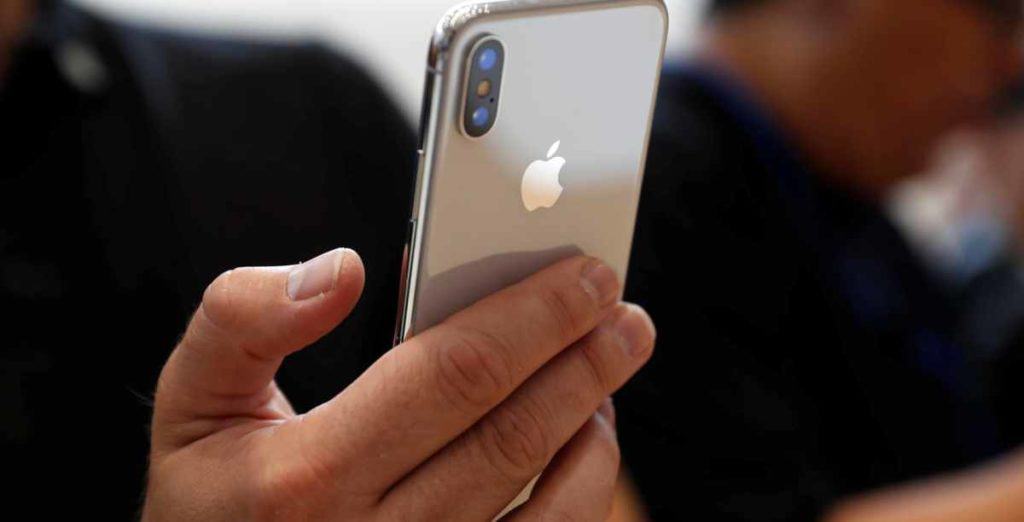
Apple restarts iPhone X production over poor iPhone XS, XS Max sales


Poor iPhone XS, XS Max sales force Apple to restart production of iPhone X

Apple had halted the production of its 10th-anniversary smartphone, iPhone X to make way for its three new iPhones for 2018 – the iPhone XS, iPhone XS Max, and iPhone XR.

However, Apple has restarted the production of iPhone X in ‘certain markets’ due to poor sales of iPhone XS and XS Max, according to a report by The Wall Street Journal. Apple has also decided to cut production on all new iPhones.

According to WSJ, Apple had agreed to purchase a certain number of OLED display panels from Samsung. However, weak sales of the iPhone XS and iPhone XS Max has forced Apple to resume production of the iPhone X so that the company can fulfill the terms of its agreement with Samsung.

In other words, Apple will use iPhone X to compensate for the OLED panel demand gap caused by the decrease in sales of iPhone XS and iPhone XS Max. Also, as iPhone X’s components and manufacturing equipment are older, production costs will be lower and cheaper than the iPhone XS series.

Apple’s iPhone XS and XS Max that were launched in September this year haven’t seen a good sale due to its hefty price tag. Also, the affordable iPhone XR has not fared well, which prompted Apple to cut production orders for iPhone XR.

This could be attributed to the low price and popularity of iPhone 8 even after a year of its release. In order to boost sales of iPhone XR in Japan, the Cupertino giant has already provided sales subsidies to Japanese telecom operators, which in turn should reduce the price of the smartphone.

With Apple looking to restart production of iPhone X, it remains to be seen if this move will help the company recover from the setback caused by poor sales of iPhone XS and XS Max.


LG, Huawei, and Samsung all think Flex is a great name for a foldable phone


Some of the big tech companies leading the way when it comes to foldable phones aren’t exactly flexing their creative muscles when it comes to choosing a name for their novel handsets.

Ok, granted, there are probably only so many naming conventions that accurately convey what you as a consumer are getting when you buy a phone with a bendable screen. Nevertheless, possible names for the first foldable handsets coming out of LG, Huawei, and Samsung have all started to leak out. None of those companies has made a firm decision yet, but it’s interesting that they’re all considering similar names for their devices. Like, really similar.

The common denominator across all three is Flex — “Flex,” in other words, being one of several possible names that LG, Huawei, and Samsung are all reportedly weighing. According to LetsGoDigital, LG has filed several trademarks with the European Union Intellectual Property Office that show it’s considering Flex, Foldi, and Duplex as possible names for its foldable handset.

Per Phone Arena: “All three are filed under the category ‘Smartphones; Mobile Phones,’ which removes any assumptions that LG might use one of those names for its flexible displays. It’s expected that LG will manufacture the displays for other brands that want to release a foldable phone, since the required technology is far too expensive for every phone maker to develop on its own.

“But let’s get back to the names. The first two, Flex and Foldi, are pretty straightforward and in sync with Samsung’s Galaxy F and Huawei’s Flexi/Flex trademarks. Duplex, on the other hand, is an interesting choice by LG, especially considering that Google is using the word for its AI call-making feature that just started rolling out to users.”

As we reported earlier this week, Samsung particularly likes Flex, and seems to be leaning toward “Samsung Flex” and “Galaxy Flex,” based on a variety of reports, for the name of its first foldable phone. Huawei, meanwhile, is reportedly considering four names for its first foldable. Based on some IP documents reviewed by AndroidHeadlines, the Chinese manufacturer is reportedly considering the names Mate F, Mate Flex, Mate Flexi and Mate Fold.

Flex, at least so far, certainly appears to be the most popular contender for the name of a device that will rank as one of the more interesting releases of 2019.

What To Expect For AI (Artificial Intelligence) In 2019


AI (Artificial Intelligence) continues to be red hot. Then again, every top tech company is investing heavily in the technology, such as Amazon.com, Facebook, Microsoft and Google.

But AI is more than just about big companies. Keep in mind that the technology is getting much easier and affordable to use.

“We are seeing the democratization of AI through open source algorithms, affordable computing power and AI specialized hardware,” said Roy Raanani, who is the CEO and founder of Chorus.ai. “Google TensorFlow released open source software to allow anyone to build on Google’s own machine learning algorithms. Also the introduction of AI specialized hardware by Apple, Google, Tesla and NVIDIA is increasing AI performance by tens to hundreds, and enabling that performance in smaller form factors.”

Then what may we see next year? What are some of the emerging trends?

Here’s a look:

Video and AI will Make Voice the Last Frontier in Business Communications

Santi Subotovsky, General Partner, Emergence:

“We’ve already seen a huge rise in revenue generating applications that combine voice and AI to improve human interactions, sales, and customer service. In 2019, we’ll see new applications that, among other capabilities, will allow enterprise users to employ voice, AI and video to capture and analyze content, interpret non-verbal cues, and quickly respond to queries for data needed in discussions. The increased productivity, efficiency and insights provided by these applications will shift the center of business communications from text to face-to-face meetings, bringing voice and video full circle from the first to the last frontier.”

AI Smart Features Will Improve Meetings

Oded Gal, Head of Products, Zoom Video Communications:

“We believe that in 2019, video meetings will surpass other means of business communications to become the de facto standard. Why? Because video communication has more AI-driven ‘smart’ features than ever and those technologies can dramatically improve meeting productivity and the user’s experience. For example, AI-based features such as voice-to-text transcription can take meeting notes, and soon, virtual personal assistants will record tasks and help set up meetings, and voice recognition will identify meeting participants and provide relevant details on their background. Together, we believe that these features will make many video meetings superior to in-person meetings.

“Additionally, we predict that AI-driven facial recognition will be used in video conference rooms for a variety of purposes. For example, insights into who has used the conference room, when, and for what purpose will also help IT and Facilities staff better plan space allocation and usage.”

Chief Analytics Officer (CAO) or Chief Data Officer (CDO) Roles Will Become More Prevalent

Candace Worley, Chief Technical Strategist, McAfee:

“There are myriad decisions that must be made when a company extends their use of AI. Implications exist for privacy regulation but there are also legal, ethical, and cultural implications that warrant the creation of a specialized role in 2019 with executive oversight of AI usage.

“In some cases, AI has demonstrated unfavorable behavior such as racial profiling, unfairly denying individuals loans, and incorrectly identifying basic information about users. CAOs and CDOs will need to supervise AI training to ensure AI decisions avoid harm. Further, AI must be trained to deal with real human dilemmas and prioritize justice, accountability, responsibility, transparency and well-being while also detecting hacking, exploitation and misuse of data.”

Trust AI the Same Way You Trust Your Doctor in 2019

Nick Caldwell, Chief Product Officer, Looker:

“In 2019, interpretability (the ability to understand how an AI system works) will become a nice-to-have. Think about it: when you visit the doctor’s office to get a diagnosis, you never once ask them to provide all their reference materials, case studies, comparative patient records, etc. to prove their point. At some level you accept that the doctor is an expert and you trust them. If that is okay, why do we hold AI to a higher standard of interpretability than we hold other humans? The reality is that over the past few years AI has begun to exceed human capabilities and 2019 is the year we will begin to accept it. As humans we do not need to fully understand why AI’s make decisions and maybe the systems can become better and faster when we decide to get out of the way.”

Cybersecurity firm acquired by BlackBerry focuses on the ‘unknown unknowns’


In its biggest deal yet, BlackBerry Ltd. is buying a cybersecurity company that boasts artificial-intelligence technology capable of predicting digital attacks that customers may not see coming.

Waterloo, Ont.-based BlackBerry announced Friday that it had agreed to buy Irvine, Calif.’s Cylance Inc. for US$1.4 billion in cash, in addition to taking on responsibility for unvested employee incentive awards.

Industry watchers had been expecting BlackBerry, the former smartphone giant that has shifted away from hardware and toward software, to make some kind of acquisition after the company won a US$940-million arbitration award last year in a fight over royalties with chipmaker Qualcomm Inc.

“This is the largest acquisition in BlackBerry’s history,” said John Chen, executive chairman and CEO of the company, during a conference call. The deal is expected to close before the end of the company’s current fiscal year in February 2019, pending regulatory approvals and other closing conditions.

BlackBerry noted the deal would particularly complement its QNX unit, which makes software for cars, and its UEM unit, which helps secure various devices, such as smartphones or laptops.

A presentation on the deal said that Cylance’s AI-backed products both predict and protect “against known and unknown threats.”

The private company and its approximately 900 employees, according to BlackBerry, can typically identify and analyze threats 25 months before they emerge. Cylance says it does its work by applying AI, algorithmic science and machine learning to cybersecurity.

“We prove every day that you can actually identify attacks long before they ever start,” said Stuart McClure, chairman and chief executive at Cylance. “What we call the unknown-unknowns, and we truly prevent them.”

Under the terms of the deal, Cylance would continue to function as an independent business unit, one that recently offered to provide antivirus software, free of charge, to all of the 2018 political campaigns in the U.S.

In an August press release, McClure said that “it is clear that malicious actors are ramping up their activity in advance of the midterms, and we know malevolent hackers will exploit any vulnerability at any level to undermine a candidate’s run for office.

“We want to do our part to protect the democratic process from interference however we can, wherever we can.”

There are no doubts in my mind that we are acquiring cutting-edge technology.

This month, Cylance also released a research report that it said “explores the identification and tracking of a new — and likely state-sponsored — threat actor.” That actor, the company added, had conducted a year-long espionage campaign aimed at Pakistan’s air force.

“Cylance calls the campaign Operation Shaheen and the organization The White Company — in acknowledgement of the many elaborate measures the organization takes to whitewash all signs of its activity and evade attribution,” the press release added.

Prior to that, in 2014, Cylance published a report alleging that there had been “coordinated attacks by hackers based in Iran on more than 50 targets in 16 countries around the globe,” a release said.

BlackBerry said the acquisition would bring in approximately 100 additional patents and patent applications in cybersecurity and machine learning.

Chen said that Cylance’s customer base would also complement that of his own company, which he noted includes clients in the financial service and government sectors.

“There are no doubts in my mind that we are acquiring cutting-edge technology,” he added.

Shares of BlackBerry rose following news of the deal, and closed up 1.46 per cent on Friday in Toronto, at $11.82.

Bank of America sees market decline next year: ‘There is now an alternative to stocks’

There is a good chance stocks stall out next year as credit conditions tighten and earnings growth slows, according to Bank of America Merrill Lynch.

“We believe the peak in equities is likely before the end of 2019,” wrote Savita Subramanian, equity and quantitative strategist at Bank of America Merrill Lynch, in a note this week. She sees the S&P 500 rising slightly to 3,000 before the end of this year and then falling 3 percent in 2019 to 2,900.

“Our rates team is calling for an inverted yield curve during the year, homebuilders peaked about one year ago and typically lead equities by about two years and our credit team is forecasting rising spreads in 2019,” Subramanian said. “Assuming the market peaks somewhere at or above 3000, our forecast is for modest downside in 2019.”

An inverted yield curve refers to when the yield on short-term sovereign debt, such as the two-year Treasury note, is higher than the rate on longer-dated paper such as the benchmark 10-year Treasury note. An inverted yield curve is typically followed by an economic recession.

Investors have been fretting this year about the Treasury yield curve possibly inverting. The spread between the 10-year and two-year yields was around 24 basis points on Friday. This has been happening as the Federal Reserve has hiked the overnight rate three times this year. The central bank is also expected to hike once more before year-end. The Fed also forecasts it will raise rates three times in 2019.

As the yield curve continues to flatten, Subramanian expects equity-market volatility to increase and for more of the firm’s “bear market signposts” to be triggered. Currently, 58 percent of these signals are triggered. In October 2007 — roughly a year before the financial crisis — all of the 19 signposts were triggered.

“Still-supportive fundamentals, still-tepid equity sentiment and more reasonable valuations keep us positive. But in 2019, we see elevated likelihood of a peak in the S&P 500,” the strategist notes, adding S&P 500 earnings growth will likely slow down to a crawl after a blockbuster 2018. S&P 500 earnings grew by 25 percent in the first three quarters of the year, boosted in large part by lower corporate taxes.

Cash as alternative
However, Subramanian says investors can now turn somewhere they have not been able to for a long time as stocks stall out: cash. “There is now an alternative for stocks,” Subramanian said, noting yields for cash are higher today than for 60 percent of S&P 500 companies. “Cash is now competitive and will likely grow more so … our Fed call puts short rates close to 3.5% by the end of 2019, well above the S&P 500’s 1.9% dividend yield.”

Many investors operated during this bull market under the mantra “There Is No Alternative” to stocks following the financial crisis as low Federal Reserve rates made assets like cash yield next to nothing, thus making them unattractive to investors.

Subramanian recommended investors buy stocks in the health care, technology and financials sectors.

On health care, she says it is “cheap” compared to historical levels and is trading at a discount to the overall S&P 500. She also notes fundamentals are strong for the sector and that more than half of the companies beat earnings and sales estimates during the third quarter.

Subramanian said tech is now “cheaper” and less crowded after a big sector reorganization moved Netflix and Facebook out of the sector. “Positioning risk is neutral to positive” now, she said.

Financials, meanwhile, should get a boost as companies in the sector ramp up their buyback programs. “Whereas other sectors have been buying back shares for almost a decade, Financials were disallowed until recently. But Financials’ share buybacks have ticked up substantially, and the sector has the second highest dividend growth in the S&P 500.”

Dow falls more than 150 points, posts worst Thanksgiving week decline since 2011

Stocks fell on Friday as some of the most popular technology shares were under pressure once again, while a steep drop in oil prices also weighed on equities.

The Dow Jones Industrial Average dropped 178.74 points to 24,285.95 while the S&P 500 pulled back 0.65 percent to 2,632.56. The Nasdaq Composite dipped 0.5 percent to close at 6,938.98. The Dow and S&P 500 posted their worst Black Friday performance since 2010. The Nasdaq had its worst Black Friday since 2011.

For the week, the major indexes all dropped more than 3 percent. They also had their biggest loss for a Thanksgiving week since 2011.

“I don’t think the bull run is over but I think we’re close to the end of the cycle,” said Mark Esposito, CEO of Esposito Securities. “It feels a bit unsafe.” Esposito cited slowing earnings growth, higher market volatility and slowing economic growth as signs the currency cycle may be ending.

Facebook, Amazon, Apple, Netflix and Google-parent Alphabet all fell on Friday. These stocks, which make up the popular “FAANG” trade, all fell at least 5.7 percent through Wednesday’s close.

Apple, which has fallen more than 25 percent since hitting an all-time high earlier this year, dropped 2.5 percent after The Wall Street Journal reported the company plans to cut prices for the iPhone XR in Japan because it’s not selling well.

Friday’s session ended early after the Thanksgiving holiday on Thursday, when U.S. markets were closed.

Stocks were also under pressure on Friday as crude oil prices plunged. West Texas Intermediate futures fell more than 6 percent to $51.03 per barrel, reaching their lowest level of the year.

“Tech stocks are under pressure once again but more troubling is that oil prices are collapsing,” said Peter Cardillo, chief market economist at Spartan Capital Securities. “Lower oil prices are not a good sight for the economy.”

“OPEC has indicated they’re going to cut [production], but that’s not helping. That’s a bad sign,” said Cardillo.

The drop sent the Energy Select Sector SPDR Fund (XLE) — which tracks the S&P 500 energy sector — down more than 3.1 percent. Shares of Concho Resources, EOG Resources and Devon Energy were among the biggest decliners in the XLE.

Crude’s decline comes at a time when U.S.-China trade tensions have raised concern of a possible economic slowdown. The two countries have imposed tariffs on billions of dollars worth of each other’s goods as the Trump administration takes on a protectionist stance on trade.

U.S. and Chinese leaders are expected to meet at a G-20 meeting in Argentina at the end of the month, though few economists expect the scheduled talks to resolve the trade dispute.

“A lot of the move have to do with tariffs and moves by the Fed,” said Greg Powell, CEO of Fi-Plan Partners. “Depending on what happens in those talks, that could change the whole dynamic in the market from a sentiment standpoint.”

China stocks fell on Friday in anticipation of the U.S.-China trade talks. The Shanghai Composite dropped 2.5 percent while the Shenzhen A Share index pulled back 3.7 percent.

Retailers bucked the negative trend, as the SPDR S&P Retail exchange-traded fund (XRT) rose 0.3 percent on Black Friday, one of the busiest shopping days of the year. Shares of Lands’ End and Etsy rose 5 percent and 2.8 percent, respectively, while L Brands gained 2 percent. Overstock, which is also in the XRT, surged more than 23 percent after its CEO said the company would sell its retail business to focus on crypto.