
Archives for November 21, 2018

Computer scientists use artificial intelligence to boost an earthquake physics simulator

A team of researchers from the Earthquake Research Institute, Department of Civil Engineering and Information Technology Center at the University of Tokyo, and the RIKEN Center for Computational Science and RIKEN Center for Advanced Intelligence Project in Japan were finalists for the coveted Gordon Bell Prize for outstanding achievements in high-performance computing. Tsuyoshi Ichimura together with Kohei Fujita, Takuma Yamaguchi, Kengo Nakajima, Muneo Hori and Lalith Maddegedara were praised for their simulation of earthquake physics in complex urban environments.

Earthquakes are a huge problem in many places around the world including, famously, Japan. They can be devastating and Ichimura’s team use coding prowess with the power of supercomputers to generate models for disaster mitigation and response.

Realistic earthquake simulations are difficult due to wide-ranging physical phenomena operating at different scales. This complex problem led the team to devise novel strategies involving artificial intelligence (AI) to model earthquakes in urban centers with a high degree of accuracy.

“In the field of computer science there is a big gap between AI and physics-based simulations,” said Ichimura. “We felt there was scope to enhance performance of our simulation by bridging this gap. And that feeling turned out to be true.”

Their mixed-methodology approach used AI and varying degrees of mathematical precision to create a completely new code for the simulation—with unprecedented efficiency. This new code achieved an almost fourfold increase in speed over the team’s previous incarnation.

Traditionally, physical simulations require great numerical accuracy to obtain results that correspond well with observed reality. To achieve this precision requires a lot of computing time, which consumes a great amount of power. What makes this new method unique is how the AI component of the system learns where precision is most useful and where it can be reduced without sacrificing overall accuracy, so the simulation can run in less time than if it lacked the AI.

The team’s code ran on the state-of-the-art Summit supercomputer at the Oak Ridge National Laboratory in the U.S. The researchers made this code adaptable for other uses and scalable for use on different computer systems such as the K computer at RIKEN and Piz Daint at the Swiss National Supercomputing Centre.

“Our code is an entirely new kind of problem solver, which is a frontier in this field,” concludes Ichimura. “We expect this new code will find its way into a new generation of physical simulators. We hope this helps people better understand, predict and prepare for earthquakes.”


Cloud Computing Retired to Spendthrift Farm

Classic winner and millionaire 3-year-old Cloud Computing has been retired from racing and will enter stud in 2019 at B. Wayne Hughes’ Spendthrift Farm near Lexington, the farm announced Nov. 20.

The dark bay colt will become the newest stallion to participate in Spendthrift’s “Share The Upside” program.

“Cloud Computing is one of those horses that sells himself immediately when you see him,” said Ned Toffey, Spendthrift general manager, of the Preakness Stakes (G1) winner. “He’s a classic winner, but he’s also the picture of what a classic horse is supposed to look like. For him to go on and win the Preakness over Classic Empire less than 100 days after making his debut, that’s pretty special, and it speaks to his quality. There’s a lot to like about Cloud Computing, and we believe breeders are going to love what they see.”

The 4-year-old son of Maclean’s Music is out of a grade 2-placed A.P. Indy mare Quick Temper. His second dam, Halo America, won the 1997 Apple Blossom Handicap (G1) and three other graded stakes.

The Share The Upside fee for Cloud Computing will be $8,500 for one year. Additionally, breeders must breed a mare in 2020 on a complimentary basis. After the breeder has a live foal in 2020, pays the stud fee, and breeds a mare back, he or she will earn a lifetime breeding right beginning in 2021. For breeders not interested in the Share The Upside program, Cloud Computing will be offered for $7,500 on a standard stands and nurses contract. As always, Share The Upside opportunities are limited and offered on a first-come, first-served basis.

Campaigned by Klaravich Stables and William Lawrence, Cloud Computing jumped straight onto the Kentucky Derby Trail with a runner-up finish in the Gotham Stakes (G3) three weeks after breaking his maiden. In his next start, he overcame a poor break and wide trip to rally for third in the Wood Memorial Stakes Presented by NYRA Bets (G2).

Despite qualifying for the Kentucky Derby Presented by Yum! Brands (G1), trainer Chad Brown instead pointed Cloud Computing to the Preakness because he had run three times in eight weeks. The colt rewarded his connections with their first classic victory when he ran down 2-year-old champion Classic Empire in the stretch and stopped the clock in 1:55.98. The 102 Beyer Speed Figure he earned for this performance—which matches the winning Beyer figures for recent Preakness winners American Pharoah and Lookin At Lucky —exceeds the Beyers earned by Justify and Exaggerator in the middle jewel of the Triple Crown.

The classic win—which was over a field that also included Kentucky Derby winner Always Dreaming and multimillionaire Gunnevera, among others—came only 98 days after Cloud Computing’s career debut, making him one of racing’s fastest millionaires in recent history.

“Cloud Computing is one of the best-looking horses I’ve ever had walk into my shed row,” said Brown. “We always had tremendous confidence in this horse, and he showed why in the Preakness. To give up so much seasoning to a champion like Classic Empire, he showed real brilliance to beat that colt. He’s my first classic winner, and he’s very special to us.”

Cloud Computing retires with earnings of $1,125,200. He was purchased by Mike Ryan as agent for $200,000 out of the Hill ‘n’ Dale Sales Agency consignment to the Keeneland September Yearling Sale, making him the highest-priced yearling from the first crop of Maclean’s Music.

“When I saw him at Hill ‘n’ Dale in August of 2015 right before the (Keeneland September) sale, I was awestruck. It was instant,” said Ryan. “In fact, I thought he was one of the best yearlings I had seen in 2015. He’s LeBron James. He’s got it all: size, strength, substance, quality, and tons of class.

“He’s such an outstanding physical specimen that I’d be very confident he will reproduce himself. You’ll go a long way before you find a better-looking horse than Cloud Computing. I think when people see him, they will be tremendously impressed with his physique and presence.”

Snap will reportedly release AR-enabled Spectacles with dual cameras

Snap Spectacles by Snap Inc. are displayed for a photograph in Universal City, California, U.S., on Wednesday, Feb. 7, 2018. Snap’s first earnings beat as a public company, prompted at least five upgrades from analysts after the social-media company reported fourth-quarter revenue and daily active users ahead of estimates. Photographer: Patrick T. Fallon/Bloomberg via Getty Images

Snap is reportedly set to release a new version of Spectacles with an aluminum design that packs in two cameras. Through the Snapchat app, you may be able to add augmented reality overlay effects in videos you capture with the updated Spectacles. The $350 frames will cost more than double the first version, which arrived in 2016, and will be on sale by the end of the year, according to Cheddar.

Following a $40 million write-down on the first version after Snap overestimated demand (it ordered around 800,000 pairs), it has been more conservative with orders of the device. For the second version of Spectacles, which were released earlier this year, Snap reportedly ordered 35,000 pairs, and 52,000 of a tweaked set it released in September. This time around, it’s hedging its bets further by ordering around 24,000, according to the report.

Snap is set to release its latest Spectacles after watching its stock price plummet 50 percent this year, and in the wake of a damaging report about how CEO Evan Speigel was “dismissive” to board members and spends much of his time during board meetings using Snapchat on his phone. The latest report indicates that Snap is willing to lose money on the Spectacles side of the business for now, with the hope of breaking even in 2020. Snap, meanwhile, is facing an investigation over allegations it misled investors over user metrics.

3 Reasons Why Artificial Intelligence Can Revolutionize Education

In 2017, over 1 crore students appeared for class 12 exams. These students are expected to grow up to be successful doctors, engineers, lawyers, or chartered accountants. In fact, right from school, they have faced relentless pressure to shine in their exams and secure a seat in ivy league colleges. However, a very small number of these students have had access to a quality education, knowledgeable and well-trained teachers, modern infrastructure, and up to date reference material.

Over the last decade, technology has seen unprecedented growth. Apart from social media apps, better mobile phone cameras, faster laptops, technology has solved problems that seemed unsolvable just a few years ago. One of these problems is providing access to high quality, personalised education to every student in India.

Over the last 5 years, edtech apps have been harnessing the power of Artificial Intelligence, Machine Learning, Big Data, and Natural Language Processing to completely revolutionise education. Here is how they do it:

1. Personalised learning and feedback:

We believe that every child is unique, and has a unique set of learning needs. If these needs are addressed, the child’s learning process sees a sharp, positive growth. However, a classroom teacher cannot teach a class of 60 in 60 different ways.

Advanced technology can be used to adjust the pace of learning content to suit the learning speed of individual students. Due to this, students will neither get bored by slow teaching nor will they play catch up with a fast-paced lecture.

Moreover, instead of simply awarding a grade, it can also be used to provide in-depth, insightful feedback to students at an individual level. It can provide a subject wise strength and weakness analysis, along with highlighting topics where they have been going wrong more often than others. It can also show classmates where they stand amongst their peers.

With enough time, it is capable of providing qualitative feedback for more complex answering formats like essays, long answers, and opinion articles. This will provide a big boost to their overall learning curve.

2. Adaptive learning paths:

Advanced technology can observe the learning pattern through the app and test the behaviour of every student. Through this data, it can gauge concepts that a student finds difficult or easy. It can use this data and various insights to restructure the learning direction based on the abilities of a student. It can create unique learning paths customised for every child.

This technology will also be capable of creating personalised improvement approaches to help students plan for competitive exams. It can personalise learning across any and every age group, IQ, and interest. Due to this, children will always learn in a format created for them, instead of trying to fit their learning technique into a predefined box.

3. 24*7 support to students:

Natural language processing (NLP) combined with optical character recognition (OCR) among other algorithms can solve any and every doubt raised by a student instantly, round the clock.

All a student has to do is click a photo of the doubt and send to a chat on the doubts app or helpline. The bot will then scan through millions of data points to either give an exact solution and explanation to the student, or that of a similar question.

The advantage of having such a bot is that it is steadily developing. It will understand and collect more information with every doubt and query uploaded by its students. This reduces the dependency of the availability of expert tutors. Advanced technology can provide reliable and precise answers in just a few seconds at any point in time.

Technology is set to dominate the way education is addressed. With its team of engineers and entrepreneurs, India can become a leading powerhouse in this field. It can use technology to ensure that within a very short span of time, high-quality education is available for any and every child in the country.

Dow finishes down 550 points as stocks erase 2018 gains

Dow, S&P 500 erase 2018 gains

U.S. stocks closed sharply lower Tuesday, extending a pre-Thanksgiving rout that has been fueled mostly by a selling in shares of technology and internet-related companies, but has now spread to ensnare the broader market. Sharp declines in Target and Lowe’s after disappointing earnings also contributed to the tone.

U.S. financial markets will be closed Thursday for the Thanksgiving Day holiday and see an early close Friday.

How did the benchmarks perform?

The Dow Jones Industrial Average DJIA, -2.21% fell 551.8 points, or 2.2%, to end at 24,465.64, and tumbled by as many as 648 points at the session’s lows. The S&P 500 index SPX, +0.86% was down 48.84 points, or 1.8%, at 2,641.9, while the Nasdaq Composite Index NQZ8, +0.85% was off by 119.65 points to 6,908.82, a drop of 1.7%.

The Nasdaq remains in correction territory, down more than 14% from August peak, while the S&P closed just 4 points shy of a correction, defined as a 10% decline from an index’s most recent highs.

The drop erased year-to-date gains for both the Dow and S&P 500, while the Nasdaq now clings to a 0.1% gain on the year. Month-to-date, the Nasdaq has fallen 5.4%, the S&P and Dow have retreated 2.6% in November.

Monday’s decline resulted in the S&P 500 and the Dow’s worst start to a Thanksgiving week since 2011, while the Nasdaq registered its worst such start since 2000, according to Dow Jones Market Data.

What’s drove the market?

U.S. investors continued to be plagued by doubts surrounding slowing global growth, U.S.-China trade relations, and the steady rise in interest rates that can be expected to continue into next year. These doubts have accumulated to induce fears that we are growing nearer to the end of the current economic expansion, strategists say.

The previously highflying technology sector has the most to lose from this change in sentiment. Tech stocks extended a decline that led the market lower Monday, with reports from China adding fuel to the day’s selling after officials in Beijing uncovered widespread evidence of anticompetitive behavior by Korean rivals. According to The Wall Street Journal, Beijing investigators implicated Samsung Electronics 005930, -1.64% SK Hynix 000660, +0.89% and Micron Technology MU, +2.44%

Market participants believe that China’s investigation may intensify festering issues around trade relations between China and other major counterparts, including the U.S.

Oil futures accelerated their decline, plunging 7%, with the U.S. benchmark finishing at a more-than-one-year low. The S&P 500 energy sector led decliners, falling 3.3%.

Tuesday’s selloff was broad-based, but this time led by the Dow, with all 30 components trading lower on the day, as negative sentiment and fears of growing macro headwinds spread from tech investors to traders of blue-chip stocks.

Meanwhile, Target Corp.’s TGT, +0.06% stock plunged Tuesday, after the discount retailer reported fiscal third-quarter earnings and same-store sales that missed expectations. The retailer’s loss helped spark a broader selloff in the retail sector, with the SPDR S&P Retail XRT, +1.86% falling more than 3%, nearly twice the loss suffered by the broader S&P 500 index.

What are strategists saying?

“For years, the tech sector has benefited from broad multiple expansion,” Dave Smith vice president of equity analysis at Bailard Inc., told MarketWatch. “And it was easy for investors to just ride that momentum.”

After November’s tech-heavy selloff that continued Tuesday, “tech multiples have contracted to be in line with the rest of the S&P 500, something we haven’t seen for years,” Smith said, adding that this creates buying opportunities those brave enough to wade into today’s choppy market.

“It’s so hard to say when sentiment is going to turn positive again,” Smith said. “The one thing I can say for sure is that we’re in for more volatility.”

“Economic data remain strong, but the trend in the trend is deteriorating,” Peter Lazaroff, co-chief investment officer at Plancorp, told MarketWatch. He made the case that the recent turn in sentiment is due to investors believing that we’ve already experienced the fastest rates of growth for both the U.S. economy and corporate earnings.

“Economic conditions are good, but the chances of economic conditions deteriorating over the next year or more is much higher than a surprise on the upside,” Lazaroff said.

At the same time, Lazaroff emphasized that volatility levels have merely returned to ordinary levels, whereas the low volatility that has characterized much of today’s bull market is the outlier. “This sort of price action is extremely normal,” he said. “What was strange was the outsize returns investors have earned in recent years with effectively no volatility.”

Which stocks were in focus?

Shares of Apple Inc. AAPL, +1.10% fell 8.9%, extending the previous session to leave the stock in bear-market territory, defined as a drop of at least 20% from a recent peak.

Shares of Kulicke & Soffa Industries Inc. KLIC, -4.57% rose 6.7% Tuesday, after the semiconductor-equipment maker beat fiscal fourth-quarter earnings expectations. The stock had been down roughly 12% at the start of trade, before reversing those losses Monday morning.

Lowe’s Cos.’s stock LOW, +1.26% fell 5.7%, after the home-improvement retailer reported fiscal third-quarter earnings that beat expectations but same-store sales that missed.

Target shares traded 10.5% lower Tuesday, after the retailer announced fiscal third-quarter earnings and same-store sales that came in below Wall Street estimates.

Cambell Soup Co. CPB, -0.96% shares rose 5.7% Tuesday, after a third-quarter earnings report that showed the firm beating earnings estimates, while the company affirmed its upbeat guidance for 2019.

Hormel Foods Corp. HRL, +1.49% closed down 1%, after missing revenue estimates in a Tuesday morning earnings report.

Shares of Kohl’s Corp. KSS, +1.66% fell more than 9%, even after the firm beat Wall Street estimates for earnings and profit and raised its full-year 2018 guidance. Shares of the discount retailer are still up 18.9% year-to-date.

Shares of Analog Devices, Inc. ADI, +0.52% closed higher, up 4.1% after beating analyst estimates for fiscal fourth quarter earnings and revenue in a Tuesday-morning earnings release.

Best Buy Co Inc. BBY, -1.10% stock rose 2.1%, following a Tuesday-morning earnings release that showed the firm beating earnings and revenue estimates.

Shares of L Brands Inc. LB, +5.68% closed down 17.7%, after the retailer announced Monday evening that it planned to slash its dividend.

Agilent Technologies Inc. A, +0.61% shares rose 7.8% Tuesday, after beating analysts estimates for profit and sales in the fourth quarter.

What data did investors watch?

Housing starts came in at a 1.228 million seasonally adjusted annual rate in October, while permits came in at a 1.263 million rate, with housing starts coming in just below consensus estimates per a MarketWatch poll of economists. Year-over-year, growth in housing starts has steadily slowed in 2018.

Investors are particularly focused on the housing market after a disappointing read in home builders’ confidence on Monday, which contributed to Monday’s decline.

How did other markets trade?

Stock markets in Asia traded lower Tuesday, with Japan’s Nikkei NIK, -0.35% losing 1.1%, Hong Kong’s Hang Seng Index HSI, +0.51% down 2%, and the China’s Shanghai Composite Index SHCOMP, +0.21% falling 2.1%.

European stocks declined Tuesday, with the Stoxx Europe 600 SXXP, +0.69% and Germany’s DAX 30 DAX, +1.05% ending the day down more than 1%. The FTSE 100 UKX, +0.99% closed Wednesday down 0.7%

Gold GCZ8, +0.50% declined 0.3% and the U.S. dollar DXY, -0.17% rose 0.5%.

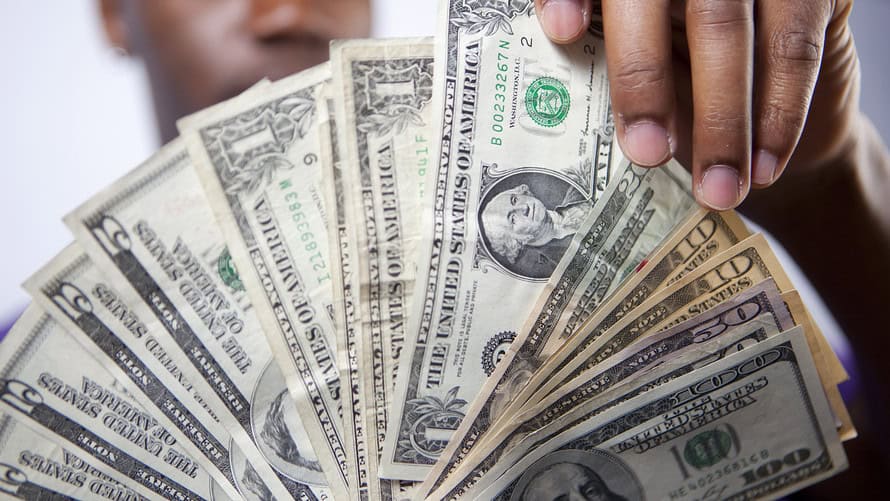
Dollar’s bounce drags rivals across the board

The U.S. dollar Tuesday bounced back from a modestly negative performance at the start of the week, in turn putting pressure on a pair of major rivals, the euro and British pound.

The ICE U.S. Dollar Index DXY, -0.21% was up 0.7% at 96.827.

Dollar strength weighed on risk-sensitive currencies, including emerging markets, which declined across the board. The Turkish lira USDTRY, -0.8870% saw the steepest decline, with one dollar buying 5.3875 lira, compared with 5.3136 lira late Monday in New York. In developed markets, the Australian dollar AUDUSD, +0.7624% — risk and global growth bellwether — was sharply down versus the buck, buying $0.7220, compared with $0.7293 late Monday in New York.

On the Brexit front, Bank of England Gov. Mark Carney testified before parliament on the U.K.’s inflation and economic outlook, saying that if there was a hard Brexit in March of next year, monetary policy considerations were secondary to the effect such an outcome would have on the economy.

“This is not the financial crisis round two, where the Bank of England and other central banks were center stage. This is a real economy shock and therefore central banks have a role but we’re more of a sideshow,” Carney said.

Meanwhile, Prime Minister Theresa May remains under pressure over her Brexit plan though after much drama and anticipation last week, she has yet to face a leadership challenge from within her own party.

Don’t miss: Here’s how Brexit turmoil could become a problem for U.S. and global investors

All this has been weighing on the pound GBPUSD, -0.0078% but with limited news flow, sterling was only slightly weaker, buying $1.2787, compared with $1.2851 late Monday in New York.

From the European point of view, the Brexit negotiations also got a bit trickier on Tuesday, as Spain, France and the Netherlands expressed concerns about the proposed Brexit deal. Spain in particular was worried about the treatment of Gibraltar, a peninsula on Spain’s southern coast that is a British territory. Spain has claimed sovereignty over Gibraltar.

The euro EURUSD, +0.2199% slipped to $1.1368 on Tuesday, versus $1.1455 late Monday. The impending European Commission response to Italy and its budget plan, which Brussels says violates EU fiscal rules, is due Wednesday. Italian bond yields rose Tuesday, leaving the closely watched spread with German bond yields near a five-year high, before pulling back.

Read: Italy is ‘the No. 1 risk factor in the fourth quarter’ for European investments

Elsewhere, Bank of Japan Gov. Haruhiko Kuroda said that negative interest rates were a necessary part of the central bank’s monetary policy, and that Japan was unlikely to hit its inflation target next year.

Japan is considered to be one of the last developed market central banks to normalize policy and abandon its ultralow interest rates.

The dollar hit a three-week low versus the Japanese yen USDJPY, +0.27% earlier in the session, before recovering, last fetching ¥112.73 from ¥112.55 late Monday in New York.