
Archives for November 19, 2018

Selfies will be used to automatically adjust the screen brightness on budget Samsung phones

To save a few dollars, Samsung doesn’t include an ambient light sensor in some of its budget handsets.

Samsung is adding a feature that will allow the front-facing camera to take a photo every time the phone is unlocked to adjust the screen brightness automatically.

To help grow its market share in regions such as India, Samsung produces budget smartphones that are more affordable to the ever-growing population. But to save money on the production side of the business, Samsung has to leave out certain hardware items such as the ambient light sensor.

The lack of this sensor means that customers lose the automatic screen brightness feature that so many of us have grown accustomed to. But that might be changing soon.

As you can see from the screenshot below that was acquired by SamMobile, a firmware update that’s currently rolling out to Galaxy J8 owners is introducing a new auto brightness mode. But as the attention card brings to the user’s attention, the phone will judge the ambient light around the phone by taking a photo with the front-facing camera.

The good news is that even though the phone will capture a photo using the front-facing camera every time it’s unlocked, the handset will not store the image at all. As soon as the device is done analyzing the environment (which should only take milliseconds), the photo will be erased permanently.

While Samsung hasn’t officially announced this new feature, it’s something we could see the South Korean company add to its other budget smartphones in the near future. The option to turn on the new auto brightness feature should be found in the phone’s display brightness settings menu when it makes its way to your phones.


Sorry Cortana, Microsoft Is Now Selling Alexa Devices

Microsoft’s Cortana assistant is reportedly becoming more of an assistance aide than a standalone service, being moved from Microsoft’s AI + Research department to its Experiences & Devices Team and working with Amazon to pair it with the latter company’s Alexa technology. Now, per Engadget, Microsoft seems to be encouraging customers to just buy Alexa-powered tech like the recently released Echo Dot and regular Echo and use Cortana through it.

Per Engadget, Twitter user Walking Cat and others noticed that both devices appear to be listed for sale in Microsoft’s online and retail locations. The site wrote that the tech giant appears to have conceded that most smart assistant users are going to use Alexa, not the notably less versatile Cortana, for routine purposes:

Where Microsoft originally pitched Cortana as a direct competitor to other mainstream voice assistants, it has shifted the AI helper’s focus toward chatbots and behind-the-scene tasks that are more useful to the corporate crowd than home users. The VP in charge of Cortana, Javier Soltero, is reportedly leaving Microsoft as the company moves its assistant from its AI team to its Experiences and Devices group. For now, Alexa appears to be Microsoft’s voice assistant of choice for everyday users.

As the Verge noted, Microsoft has been pivoting to uses for Cortana like smart chat bots for customer support, and it’s been retooling the way search functions in Windows 10 to have less of an emphasis on Cortana. Additionally, Slashgear noted that the partnership with Amazon also includes features like Skype calls via Alexa devices.

With Cortana now seemingly less of a priority for Microsoft, that leaves three major players in the voice assistant market: Alexa, Google Assistant, and Apple’s Siri. That’s not to say things are going flawlessly for everyone: Siri is the dumbest of all of them, with recent times it’s popped up in the news including erroneously announcing comics legend Stan Lee’s death and activating during a UK Parliament hearing on Syria. As for Alexa, no one seems to actually be using it to buy stuff, as its makers intended.

Sonos offers teaser for new line of products as shares rocket 10%

Promise of a line of products for outside the home welcomed by analysts who are worried about growing competition

Better-than-expected earnings and a teaser for a new product line sent shares of high-end speaker maker Sonos Inc. up 10% on Friday.

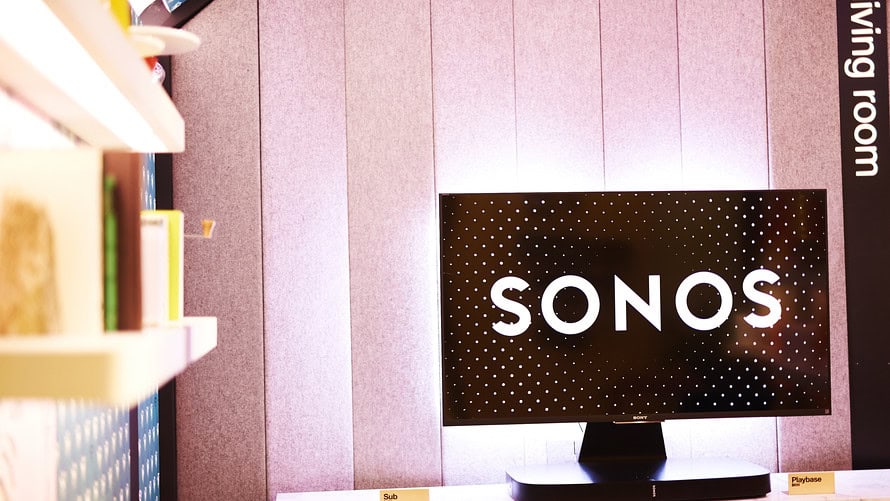
The company, which reported quarterly earnings late Thursday for the second time since going public, posted a smaller-than-expected loss and revenue that was about 10% higher than expected. Revenue was boosted by a strong launch for its Beam soundbar, a voice-enabled, smart speaker and music speaker that can enhance the sound quality of TVs. The Beam hit the market in July.

“Beam has and continues to exceed our expectations,” Chief Executive Patrick Spence told analysts on the company’s earnings call, according to a FactSet transcript.

In just a few months, the device became the leader measured by dollar share in the U.S. soundbar category, he said: “That’s unheard of for a $400 product. “

Sonos is confident heading into the crucial year-end holiday season that consumers are developing a taste for smart speakers, “and we kind of ride this wave that’s happening now around streaming music and all the activity that’s happening,” said Spence.

In its letter to shareholders, the company took aim at competitors who “flood the market over the holiday season” with cheaper devices that end up gathering dust in closets or drawers. Those products “do not meet the needs of Sonos’ target customer,” who tend to expand their Sonos systems over time and recommend them to friends.

The next frontier is developing a product to be used outside the home, where 50% of listening takes place.

“To be the leading sound experience company, we need to continue to offer differentiated listening experiences in the home while extending our platform and products to all the places and spaces our customers listen to the fantastic breadth of audio content available on demand today,” the company said.

On the call, Spence said Sonos has a three-year road map involving several products, one of which he expects to deliver in the next 12 months. The company also has high hopes for its partnership with home goods retail giant IKEA, which is now offering a home listening system using Sonos speakers.

Raymond James analyst Adam Tindle said he’s sticking with his outperform rating on the stock, praising strong upside to revenue growth and continued execution on cost, that helped drive a strong beat for adjusted EBITDA, or earnings before interest, taxes, depreciation and amortization.

“Profitable growth has been a key theme for us, and guidance suggests this will continue as adjusted EBITDA should grow about 20% in fiscal 2019,” he wrote in a note.

“We see SONO as a stock in which solid revenue growth, stable gross margin, and an improved operating structure should lead to meaningful EBITDA growth, and these tend to be winners,” said Tindle.

At Jefferies, analysts welcomed a “quality quarter,” but added, “we think competitive pressures are increasing and more clarity around future product releases are needed to become more constructive,” they wrote in a note. Jefferies is sticking with its hold rating on the stock.

Analysts have repeatedly cited concerns that Sonos’ loyal customer base and upscale products are not enough to avoid the fate of other hardware companies such as Fitbit Inc. and GoPro, both of which have experienced volatility with shares since their hot IPOs.

Amazon AMZN, -0.28% is making a push up the quality spectrum and smart digital displays are emerging, they wrote. For now, Sonos has not been challenged in the premium category, but big tech is looking at the space.

“Without additional product launches to spur growth (outside of home especially) we worry that Sonos could lose some market share to lower priced competitors,” they wrote.

Stifel analysts stuck with a hold rating on the stock, and also cited worries about competition.

“Product sell-through and mix will be key in the December quarter and will set the tone for all of FY19,” they wrote in a note.

Sonos shares have gained 22.9% in the last month, while the S&P 500 SPX, +0.22% has gained 0.5%.

Asian markets quiet as U.S.-China trade tensions linger

Asian stock markets were mostly calm Monday.

Nikkei up slightly, Hang Seng gives up early gains

Asian stock markets were subdued in early trading Monday, as investors remained cautious of tensions between the U.S. and China after a pan-Pacific summit ended without consensus on trade issues.

Japan’s Nikkei NIK, +0.65% rose 0.3% as the yen USDJPY, +0.00% bounced off some of its weakest levels of November versus the dollar. The dollar was at ¥112.80, versus a session low around ¥112.60. A report Monday found Japan posted a larger-than-expected trade deficit in October, mostly due to a surge in energy imports. Tokyo Electron 8035, +3.61% was up 3% while Murata Manufacturing 6981, +1.28% gained 1.6%. But life insurers were weak as some questions have emerged about whether the Fed will again hike rates next month and how many more may occur in 2019. Sony Financial 8729, -3.03% was down 3.8%.

Hong Kong stocks cooled after a strong early start, as the Hang Seng Index HSI, +0.72% approached negative territory. Internet heavyweight Tencent 0700, +0.28% was up slightly while smartphone-component maker AAC 2018, +4.67% rebounded 3%. Utilities were a sore spot.

Chinese stocks were little changed, with the Shanghai Composite SHCOMP, +0.91% up fractionally while the smaller-cap Shenzhen Composite 399106, +0.51% fell slightly. Large-cap financial and energy stocks were slightly higher while health care and materials were a touch lower.

South Korea’s Kospi SEU, +0.39% was about flat, as Samsung 005930, -0.80% fell almost 1%, while benchmarks in Singapore STI, -0.60% and Taiwan Y9999, +0.32% dipped.

Australia’s ASX 200 XJO, -0.64% fell 0.7% as energy stocks fell, and New Zealand’s benchmark NZ50GR, -0.19% sank as well.

Zuckerberg’s tougher management style drove away Facebook execs, raised tension with Sandberg: report

Mark Zuckerberg, chief executive officer and co-founder of Facebook Inc.

Facebook CEO reportedly on war footing as criticism toward the company mounts

Facebook Inc. Chief Executive Mark Zuckerberg has adopted a more aggressive management style in recent months, driving away a number of top executives amid sinking employee morale, according to a new report.

Zuckerberg also reportedly blamed Chief Operating Officer Sheryl Sandberg for the fallout of the Cambridge Analytica scandal, making her wonder if her job was secure.

The Wall Street Journal reported Sunday that facing increasing criticism from users, investors and lawmakers, Zuckerberg in June told top Facebook executives he was going to a war footing and would implement a tougher management style.

A New York Times report last week detailed missteps and inaction in the wake of a series of scandals over the past three years, and questionable tactics in going after critics of the social-media giant, spurring a new round of damage control.

On Thursday, Facebook’s board of directors called the Times story “unfair,” and during a question-and-answer session with employees Friday, Zuckerberg called the critical news reports “bullshit,” the Journal reported. The New York Times reported that at the same meeting, Zuckerberg warned that employees who speak to the media will be fired, and blamed leaks on bad morale.

About a dozen high-profile executives have left Facebook this year, the Journal noted, and in May Zuckerberg reshuffled top product executives.

Among other things, the Journal report said Instagram’s co-founders left the company over disagreeing with Zuckerberg’s efforts to share location data for ad purposes; the co-founders of WhatsApp left over clashes with Zuckerberg about how to better monetize the service; and Oculus VR’s co-founder left over a disagreement over the future of the virtual-reality headset.

In the spring, Zuckerberg took Sandberg to task for the public fallout of the Cambridge Analytica scandal, the Journal reported, and also said she should have been more aggressive in cracking down on objectionable content. Sandberg told friends she was rattled by the exchange, the Journal reported.

Facebook shares FB, -0.72% are down more than 20% year to date, compared to the S&P 500’s SPX, +0.22% 2% gain.

2 Superstar Stocks on the TSX Index to Watch for a Dip

Don’t let the bearish headlines trick you — the TSX index is alive and kicking and still packed with superstar dividend stocks soaring to all-time highs. The trick to investing for beginners lies in finding the healthiest tickers while you’re still trying to figure out how to invest in the stock market. The following two stocks to buy now for sturdy regular income are pre-packaged with defensiveness and decent dividend yields.

If you want to make money trading stocks, one of the simplest ways to do so is to buy and hold low-maintenance stocks with healthy balance sheets, some growth ahead, and a track record for paying sizable dividends. Let’s take a look at two tickers definitely worth a look if you are in the market to pad out a passive-income portfolio or bulk up a TFSA or RRSP; but be aware: some value indicators may suggest it’s best to hold off for a dip.

Thomson Reuters (TSX:TRI)(NYSE:TRI)

A classic Canadian stock, this news agency superstar is a massive 17 times over its future cash flow value, making it a $35 billion market capitalized TSX hero to watch for a dip. A one-year past earnings growth of 135% and five-year average past earnings growth of 8.6% make it a clear win for any growth investor, while a PEG of 1.6 times growth and low-enough debt of 58.7% of net worth round out a quick and positive value and quality appraisal.

With more inside selling than buying in the last 12 months, market watchers may be a little jittery, while a closer look at market variables such as a P/E of 26.6 times earnings and P/B of 2.2 times book suggest waiting for a dip may be prudent. A dividend yield of 2.92% and 16.5% expected annual growth in earnings make this a stock worth stashing and forgetting about.

CIBC (TSX:CM)(NYSE:CM)

Every now and then, CIBC hits the lists of TSX stocks to watch, though, to be honest, it deserves to be here constantly. A strangely unchanging Canadian stock, a market cap of $51 billion goes some way to explain its perennial presence in the press, while a one-year past earnings growth of 14.5% and five-year average past earnings growth of 10.3% show that CIBC is doing its bit to keep up the positive reputation of the Big Five Canadian banking stocks.

A PEG of 2.3 times growth seems a little high, though a P/E of 10 times earnings and P/B of 1.6 times book are nice and low, while a dividend yield of 4.75% is nice and high (though, obviously, not what you may call high yield). A so-so ROE of 15% is par for the course with Canadian financial stocks, while a 4.3% expected annual growth in earnings may look low but, in fact, signals a positive outlook for Canadian banking as a whole.

The bottom line

Both of the above TSX index superstar stocks are worthy of buying and stashing long term in our savings account of choice. Both offer assured and defensive dividends that can be fairly reliably counted upon. Those high valuations may be a cause for concern for value investors, but upside hunters and contrarians may be interested to see those share prices climbing.

You might be missing out on one of the biggest opportunities in Canadian investing history…

Marijuana was legalized across Canada on October 17th, and a little-known Canadian company just unlocked what some experts think could be the key to profiting off the coming marijuana boom.

Besides making key partnerships with Facebook and Amazon, they’ve just made a game-changing deal with the Ontario government.

One grassroots Canadian company has already begun introducing this technology to the market – which is why legendary Canadian investor Iain Butler thinks they have a leg up on Amazon in this once-in-a-generation tech race.

This is the company we think you should strongly consider having in your portfolio if you want to position yourself wisely for the coming marijuana boom.