
Archives for October 19, 2018

Oil tallies a two session decline of more than 4%

Have European refiners found substitutes for Iranian crude?

Weekly U.S. natural-gas supplies top 3 trillion cubic feet: EIA

Oil futures fell sharply Thursday to tally a drop of more than 4% in two sessions, as a fourth straight weekly climb in U.S. crude inventories helped ease concerns over tight global supplies, with the U.S. set to impose sanctions on Iranian oil next month.

Natural-gas prices, meanwhile, dropped almost 4% after data from the Energy Information Administration on Thursday revealed a weekly rise that generally met market expectations, but also showed that total supplies of the fuel in storage climbed to their highest level since late 2017.

November futures on the U.S. benchmark, West Texas intermediate crude CLX8, +0.36% fell $1.10, or 1.6%, to settle at $68.65 a barrel on the New York Mercantile Exchange, tallying a two-session loss of more than 4%. That was also the lowest finish for a front-month contract since Sept. 13. The global benchmark December Brent crude LCOZ8, +0.40% declined 76 cents, or nearly 1%, to $79.29 a barrel, on the ICE Futures Europe exchange, the lowest settlement since Sept. 21.

Among the products traded on Nymex, November gasoline RBX8, +0.62% fell 1.4% to $1.891 a gallon, while November heating oil HOX8, +0.31% lost 0.7% at $2.295 a gallon.

Oil also fell sharply Wednesday after the EIA reported a 6.5 million barrel rise in domestic crude inventories in the week ended Oct. 12, far larger than expected and the fourth consecutive weekly increase.

“The rise in inventories continues a recent trend that is signaling that supply is not an issue,” Brian Youngberg, senior energy analyst at Edward Jones, told MarketWatch.

A fall in crude exports led to an increase in net imports, boosting inventories despite a fall in production in the Gulf of Mexico due to Hurricane Michael.

“Concerns over U.S.-Saudi relations have had no material impact,” Youngberg said. “The thought that the impact from Iran sanctions will just be offset by production elsewhere is also causing bulls to retrench a bit.”

Analysts at Vienna-based consulting firm JBC Energy said the hit to global supply from Iran sanctions has already been largely factored into prices.

“Satellite ship-tracking services indicate that Turkey is the only regular European buyer of Iranian crude left, implying that EU refiners have already successfully reshuffled some 500,000 [barrels a day] of crude imports away from Iranian crude,” they wrote, adding that a deep discount for Urals NWE crude versus Brent indicates there is no particular shortage of medium-sour crude in Europe.

If Iranian crude exports stabilize at 900,000 barrels a day, it would make for a strong case that the peak bullish impact of the Iran sanctions has passed, potentially depriving the market “of a major pillar of support at a time when the demand and refining pillars are already teetering,” they said.

On the other side, Eugen Weinberg, head of commodity research at Commerzbank, said it appeared that hopes the shortfall in Iran exports would be offset by a resumption of oil output in the so-called neutral zone between Saudi Arabia and Kuwait “appeared to be coming to nothing.”

The neutral zone is a 2,230 square-mile area between the borders of the two countries that’s been left undefined since the border was established in 1922. S&P Global Platts reported earlier this week that talks between the two countries over two shared oil fields have broken down, shutting in around 500,000 barrels a day of anticipated oil production.

“Efforts to achieve this have failed for now,” Weinberg said, in a Thursday note. “The market therefore risks seeing supply tighten until year’s end, so we do not believe a Brent price below $80 is justified.”

The market has ‘already seen reduced exports from Iran, but increased production from the three largest producers, the U.S., Saudi Arabia and Russia.’
Brian Youngberg, Edward Jones

Youngberg also pointed out that the market has “already seen reduced exports from Iran, but increased production from the three largest producers, the U.S., Saudi Arabia and Russia.” So while supply looks robust, “a bigger question…is how global demand is holding up. It appears it is, but it is something markets are watching in coming months.”

In other energy news Thursday, the EIA reported that domestic supplies of natural gas rose by 81 billion cubic feet for the week ended Oct. 12. Consensus estimates called for build near 85 billion, according to Schneider Electric. Total stocks now stand at 3.037 trillion cubic feet, the highest level since late December 2017, EIA data show.

November natural gas NGX18, -0.69% lost 3.7% to finish at $3.198 per million British thermal units, slashing its week-to-date gain to 1.2%.


Half of Americans with this credit card regretted getting one

Retailers like Kohl’s entice shoppers to sign up for their store credit cards with attractive offers. But consumers should know what they’re getting into.

Some 88% of households with an annual income of $100,000 have had one of these cards

Next time the cashier at the checkout counter suggests signing up for a credit card to get extra savings, you may want to hold off.

Nearly half (47%) of Americans who have held a store credit card have regretted their choice to get one, according to a survey of 1,500 people conducted by LendingTree TREE, -2.08% subsidiary CompareCards. And wealthy Americans were most likely to get a store card — and regret it.

A staggering 88% of households with an annual income of $100,000 or more have had a store card at some point, compared with 75% of the general population. And 58% of these consumers regretted their decision.

Generation Xers, millennials and parents with children under the age of 18 were also more likely than the average American to feel remorse over getting a store card.

Consumers are easily burned by store cards’ interest rates
The average annual percentage rate (APR) for a store card is 24.97%, according to CompareCards. That’s higher than the average maximum APR across all credit cards, based on a recent report from CreditCards.com.

Retail cards that were co-branded — in other words, those that carry a Visa V, -2.22% Mastercard MA, -1.81% American Express AXP, -1.44% or Discover DFS, -1.25% logo — generally have a slightly lower APR on average at 23.20%. But cards issued directly by the retailers had a much higher average APR at 26.93%.

Only five retail cards carried minimum APRs below 13%: Bass Pro Shops Club Mastercard (9.99%), Dillards DDS, -0.69% Rewards American Express card (11.99%), Military Star credit card (12.24%), Nordstrom JWN, -0.50% Visa Signature (12.65%) and REI Co-op Mastercard (12.99%).

Meanwhile, four store credit cards — from Brandsource, Big Lots BIG, -7.73% Staples and Zales SIG, -2.66% — had minimum APRs at or above 29.99%.

Many retailers charge higher interest rates for their store cards because they do very minimal or no underwriting to determine whether a consumer is creditworthy. That means more people can get the cards, but those who carry a balance can easily be burned. Stores try to sweeten store card offers with deep discounts on purchases made with the cards.

“When it comes to store cards, the choice is simple: If you carry a balance month to month, you shouldn’t get one,” CompareCards chief industry analyst Matt Schulz said in the report. “Paying 25% on a balance to save 20% on a purchase doesn’t make any sense. As good as that offer might sound, if you can’t pay, stay away.”

But these high interest rates are just the tip of the iceberg when it comes to how store cards can negatively affect consumers. Some retailers offered deferred-interest cards that appear to be zero-interest cards. In reality, consumers are typically charged interest retroactively if they carry a balance at the end of the introductory offer period.

Many store cards are also closed-loop — meaning they can only be used at the retailer that offers them, making them less useful if a consumer doesn’t shop at the store often.

Why a store card can be worth it for some consumers
Many retail cards come with compelling offers. By signing up for the Kohl’s Charge card KSS, +0.86% consumers get 30% off their first purchase, plus 15% off another purchase when the card arrives in the mail. And Amazon AMZN, +0.30% offers a $70 Amazon gift card to shoppers when they’re approved for the Amazon Prime Rewards Visa Signature card.

The savings garnered through those offers can make a big difference, especially during the holiday shopping season, Schulz argued.

The key is not to bow to pressure. Rather than signing up for cards on the spot, consumers should ask for more information to take home.

“If the card offer still sounds appealing after you learn more about it, apply for the card the next time you go to that store,” Schulz said. “Chances are the offer will still be good on your next trip, and you’ll be able to make a much more informed decision.”

Mortgage: locked or not?

A for sale sign displays a sold home in a development in Ottawa on July 6, 2015. Homeowners with variable-rate mortgages have seen their rates rise over the past year as the Bank of Canada has raised its key interest rate target four times. THE CANADIAN PRESS/Sean Kilpatrick

Homeowners with variable-rate mortgages have seen their rates rise over the past year as the Bank of Canada has raised its key interest rate target four times.

And now, with economists expecting the central bank to raise its target interest rate again next week, those who have continued to stick with the variable-rate option may again be thinking about converting to a fixed-rate mortgage.

Scott Evans, a financial planner at BlueShore Financial in North Vancouver, B.C., says you should ask yourself why you decided to choose a variable-rate mortgage in the first place and if anything has changed.

“Was it something that you really thought about or was it something that you just chose because it was the lower rate at the time,” he said.

The Bank of Canada has raised its key interest rate target by a quarter of a percentage point four times since July 2017, increasing it by a total of one percentage point to 1.5 per cent.

Those moves by the central bank have prompted the country’s big banks to raise their prime lending rates, taking the amount charged on variable rate mortgages higher.

“Historically, you’ve been better off in a variable rate as far as rates go, but rates do fluctuate and if you see rates go up more of your payment will be going toward interest rather than principal,” Evans said.

“If that’s something that keeps you up at night then I think, yes, you should be looking at a fixed.”

Omar Abouzaher, regional vice-president at Bank of Montreal, says the majority of the bank’s customers go for fixed-rate mortgages, opting for the certainty they provide over the term of the loan.

“We are in a rising interest rate environment and it is always good to have a pulse check basically and have a mortgage review with your bank just to review where you are and assess your options,” he said.

Abouzaher said switching to a fixed-rate mortgage can give you peace of mind because you will know what the interest rate you will be charged for the term of your loan.

“You are not subjected to any fluctuations or surprises,” he said.

But converting to a fixed-rate mortgage does not come without down sides.

A fixed-rate mortgage will have a higher rate than you are currently paying. The savings come if rates continue to rise, but if you lock in and rates don’t continue to rise or even reverse course, you could end up paying more in interest than you would have if you stuck with the variable-rate loan.

The penalty to break a fixed-rate mortgage before it is up is also generally higher than the cost to get out of a variable-rate loan early.

“If you’re planning on selling your house and you’re planning on purchasing a new property, if you want to get out of your mortgage and break your mortgage, definitely the penalties are a bit cheaper on variable mortgages,” he said.

Evans, who locked his own mortgage in last year, noted that a lot of people locked in at the time in part because the difference between variable and fixed-rate mortgages as quite narrow.

“As rates have climbed we’ve seen that spread grow a little bit,” he said.

But Evans says you shouldn’t try to predict where interest rates are going to go because even the experts get it wrong.

“You shouldn’t be making your decision based on the outlook for interest rates that you’re reading in the newspaper, you should be making it on your own situation, your own personality, how it works with your overall financial plan.”

BC Fed boss stepping down

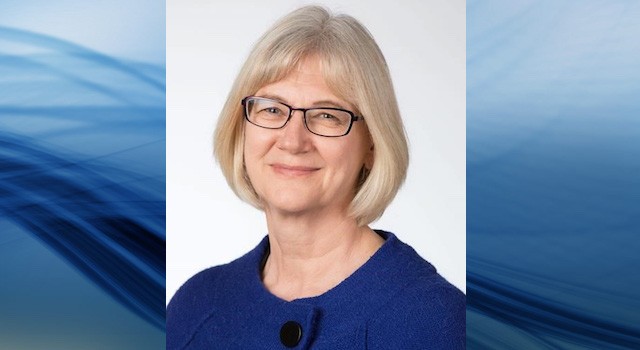
BC Federation of Labour president Irene Lanzinger has announced she will not seek a third term as leader of British Columbia’s largest organization representing workers.

Lanzinger says in a news release she will not run for another two-year term when the federation holds its convention next month in Vancouver.

The 63-year-old, who also served two terms as the federation’s secretary-treasurer in 2010 and 2012, was elected to the top job in 2014.

Lanzinger is the first woman to hold the post, guiding an organization that represents over 500,000 members from affiliated unions across the province.

She is also credited with spearheading the successful fight for a $15 minimum wage in B.C.

Lanzinger says now is a good time to make a transition in leadership because B.C.’s New Democrat government is ready to help workers.

“The labour movement is strong, vibrant and united, with a focused agenda to campaign for balanced labour laws, safer workplaces, and improved employment standards and skills training,” she says in the release.

Lanzinger is also a former president of the BC Teachers Federation and led the 41,000-member union during a relatively calm period in its history, from 2010 to 2013.

What’s Next for Paul Allen’s Big Investments? It’s Not Clear

FILE- In this Dec. 13, 2011, file photo Microsoft co-founder Paul Allen looks across at a model of a giant airplane and spaceship he plans on building, during a news conference about the plane in Seattle. Prior to his death on Monday, Oct. 15, 2018, Allen invested large sums in technology ventures, research projects and philanthropies, some of them eclectic and highly speculative. Outside of bland assurances from his investment company, no one seems quite sure what happens now.

What’s next for Paul Allen’s technology, research and philanthropy commitments? It’s not clear.

SEATTLE — Prior to his death on Monday, billionaire Microsoft co-founder Paul Allen invested large sums in technology ventures, research projects and philanthropy, some of it eclectic and highly speculative. What happens to those commitments now?

Outside of bland assurances from his investment company, no one seems quite sure.

Allen died in Seattle from complications of non-Hodgkin’s lymphoma, according to his company Vulcan Inc. He was 65. He never married and had no children, and details of his estate aren’t known.

Forbes recently estimated Allen’s net worth at $20.3 billion. He used much of the money he made from Microsoft — whose Windows operating system is found on most of the world’s desktop computers — for a “second act” as a sports-team owner, prolific investor and philanthropist after leaving the tech giant in 1983, when he resigned after being diagnosed with Hodgkin’s disease.

Allen’s technology interests ran a wide gamut, from space travel and new energy sources to more conventional ventures such as Uber, Spotify and smaller companies focused on financial technology and artificial intelligence. Allen previously invested more than $20 million in SpaceShipOne, the first privately financed and manned rocket to reach the edge of space (though not Earth orbit). It accomplished that feat in 2004.

One of Allen’s more esoteric ventures is Stratolaunch, which is building an enormous twin-fuselage jet aircraft designed to launch satellites from high altitudes. The vehicle has yet to make its first flight, although the company hosted Vice President Mike Pence at its Mojave, California, hangar during a 2017 visit.

But Stratolaunch isn’t commenting on its post-Allen future. A representative for the company declined comment, saying “now is the time to focus on Paul’s life and allow his family and friends to grieve.”

Vulcan likewise declined comment beyond this reassurance offered in a statement: “Paul thoughtfully addressed how the many institutions he founded and supported would continue after he was no longer able to lead them.” Company representatives declined to discuss specifics given his recent passing but said there are no imminent changes planned for the number of institutions and programs that Allen led and funded.

In the world of big-ticket philanthropy, meanwhile, it’s rare for a foundation to have no obvious next-generation heirs, said Amir Pasic, dean of the Lilly Family School of Philanthropy at Indiana University.

“Clearly, there wasn’t a preprogrammed plan to institute on day one after his passing,” Pasic said.

Allen was tied to many high-profile endeavors, including commercial real estate work redeveloping Seattle’s South Lake Union neighborhood for Amazon.com’s urban campus, ownership of the NFL’s Seattle Seahawks and the NBA’s Portland Trail Blazers, and even funding underwater expeditions that made important shipwreck discoveries.

Around town, his legacy is etched on a portfolio of research institutes, museums, school buildings, endowments and programs. Allen over his lifetime had given more than $2 billion to efforts aimed at improving education, science, technology, conservation and communities. He tackled climate change, advanced brain research and supported his native Seattle through funding for homelessness services and cultural institutions.

Allen was a strong backer of Bill Gates and Warren Buffett’s “Giving Pledge” to donate the majority of their wealth to charity, said Jon Lazarus, a friend of Allen’s for more than three decades who collaborated with him on a number of technology projects.

Allen’s “tactical” investments in brain science and artificial intelligence research, where he provided guidance as well as money, were particularly notable, Lazarus said. Allen specified that the results of the brain research, for example, should remain publicly available.

Allen’s sister, Jody Allen, co-founded their 30-year-old Paul G. Allen Family Foundation. She’s listed as its director and president on the private nonprofit foundation’s latest IRS tax filing from the 2016 fiscal year, which indicates it held net assets worth $756 million, much of it from investments.

The next step is for the board to vote on a new chairman and any changes to the endowment or structure are likely to appear in the next month or so, which could be very significant in terms of direction and approach, said Jacob Harold, president of Guidestar, an organization that evaluates nonprofits.

“Paul Allen had some very creative philanthropy that’s somewhat nontraditional,” Harold said. “His personal stamp was more in his philanthropy than is true for many wealthy individuals.”

In comparison to other name-brand philanthropists, it’s unclear if Allen intended for his wealth to be vigorously spent down in order to accelerate the programs he believed in — like his Microsoft counterpart Bill Gates has pledged to do. The alternative would be for his money to perpetuate through investments so that his foundation could live on indefinitely, as steel tycoon Andrew Carnegie ordered more than a century ago.

CPR record revenues

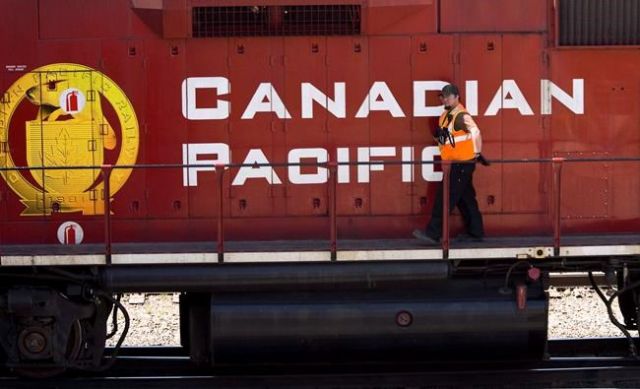
Canadian Pacific Railway Ltd. says it earned the highest adjusted per-share profits and revenues of its 137-year history last quarter, helping the country’s second largest railroad to overcome the impact earlier this year from service interruptions tied to labour action.

The Calgary-based railway earned $4.35 per diluted share for the quarter ended Sept. 30, compared with $3.50 per share for the same period a year earlier. Its operating income hit $790 million, a 27 per cent year-over-year increase.

Adjusted earnings rose to a record $4.12 per diluted share, two cents better than it forecast earlier this month. The earnings marked a 42 per cent leap from $2.90 per share a year earlier, beating the expectations of analysts polled by Thomson Reuters Eikon.

Third-quarter revenues grew 19 per cent to $1.9 billion from $1.6 billion.

The company is also reporting a record-low quarterly operating ratio, which measures its efficiency, of 58.3 per cent.

CP Rail says it expects adjusted diluted earnings per share to grow more than 20 per cent this year, up from an earlier guidance of low double-digit growth.