Archives for June 24, 2018

‘An archive of colours’: Decades of history preserved in historic cabin on North Shore
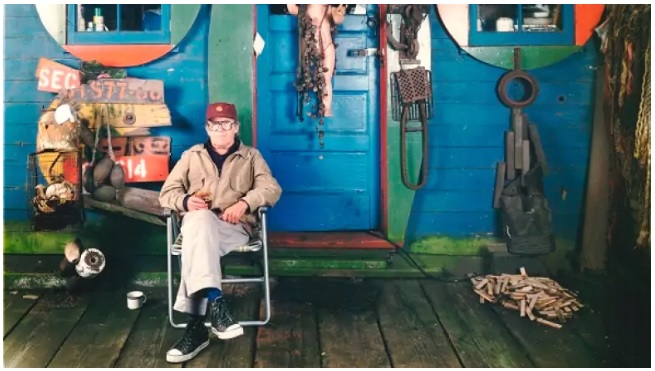
More than 50 layers of paint are visible after careful restoration of old squatters’ home

Jazz pianist Al Neil on the deck of the Blue Cabin near Cates Park in Dollarton. Neil died at the age of 93 in 2017. (Jim Jardine/Grunt Gallery)

The last of the historic squatters’ cabins that once lined North Vancouver’s Maplewood Mudflats has been lovingly restored by the arts community, which hopes to use the space as an artists’ residence.

The Blue Cabin, as it is lovingly known, was originally built as a floating home in the 1920s by a Norwegian immigrant who was living in Coal Harbour, according to Jeremy Borsos, an artist who worked on the restoration.

By 1932, the cabin’s original owner had floated the cabin to the Maplewood Mudflats, a community near the Old Dollarton Highway and not far from the cabin’s current home at Maplewood Farm.

That’s where Borsos and his wife have been working tirelessly on the tiny building’s restoration to save it from being demolished.

“It had plywood on the floor,” he said. “Most of the walls we gone when we arrived.”

‘Archive of colours’

Despite the state of the cabin when the work began, Jeremy Borsos and his wife were able to preserve much of the tiny home’s history by embracing layers of paint that were added by decades of occupants.

“It’s an archive of colours,” said Borsos.

“I’ve counted them up and there’s close to 50 different determined colours…. We’ve taken off what was loose, hand sanded everything and sealed what stayed on the surfaces, so that actually is a record of all of the different people that have been in here.”

Former occupants include artists Carol Itter and her partner Al Neil, an accomplished jazz pianist and co-founder of Vancouver’s iconic Cellar Jazz Club.

Their time in the cabin solidified it as an “iconic” place in the local arts community, Borsos said.

The shape of Neil’s piano remains visible through the layers of paint, as it was too difficult to move in the small home and was painted around for years.

“There it is in silhouette,” admired Borsos, touring the cabin with CBC story producer Margaret Gallagher.

Despite missing most of its interior walls, the cabin provided a unique glimpse into the past through the newspapers its occupants stuffed in its crevices to keep out drafts.

“They tell us the winter of 1937-38 must have been pretty darn cold because that’s the era most of the papers came from. In 1950, a family moved in so there’s an array of newspapers from 1950,” said Borsos.

The Blue Cabin is at the centre of an exhibition at Maplewood Farms which runs until the end of July.

A speaker series will run throughout the exhibition, featuring a conversation with Carol Itter on July 7, 2018 and a presentation by the group of artists working alongside the Grunt Gallery to maintain the cabin as a floating artist residency.

P.E.I. Rum Runners donate $50K to make children’s wishes come true

Old-timers hockey team made up of Islanders has raised $1.3M over 13 years

The P.E.I. Rum Runners hockey team has been raising funds for the Children’s Wish Foundation in P.E.I and Calgary for 13 years. (Submitted by Children’s Wish Foundation of Alberta and Northwest Territories)

A big donation is on its way to the P.E.I. Chapter of the Children’s Wish Foundation from a group of Islanders who now live in Calgary.

The P.E.I. Rum Runners, a Calgary hockey team made up of Islanders, are donating $50,000 to help children’s wishes come true. They raised the money at their annual summer golf tournament fundraiser.

The remaining $50,000 raised will go to the Calgary chapter of the Children’s Wish Foundation.

The idea to raise funds for the Children’s Wish Foundation came from Wayne Stewart, who is originally from West Point, P.E.I., and plays on the hockey team.

He said the old-timers hockey team got its start in the late 1970s.

“It’s a bunch of guys originally from Prince Edward Island that moved to the west and just started playing some hockey together and it’s still going,” he said.

From a get together to a tournament

The team was getting together to play golf and have a barbecue so Stewart said he suggested they have a fundraiser to benefit a children’s charity.

“When I asked, there were lots of guys on board to jump on the committee and do what we could.”

That was 13 years ago and Stewart said while their initial fundraising goal was small, they quickly set it higher after a visit to the Calgary chapter.

Amount growing

That first year they raised $40,000 and that amount has been growing ever since, with one year’s total reaching $154,000. After 13 years, the group has raised $1.3 million.

Stewart said knowing the money is helping children makes it worthwhile.

“It sends chills down your spine when you start talking about it,” Stewart said.

“We usually have a wish child at the event, and the family speaks and, you know, tells their story and what it’s all about … You want to see a room full of 150 guys with a few tears in a room. You just need to be at one of these events.”

Engineering design to begin on Sydney harbour sewage cleanup

‘It’s a multi-year endeavour that will be complicated, but I think we’ll be all right’

An engineering design consultant is expected to begin work this year on the Sydney Harbour West sewage cleanup project. (Holly Connors/CBC)

A project to stop raw sewage from flowing into part of Sydney harbour is going to get underway this summer, three years after it was first announced.

Cape Breton Regional Municipality is hiring an engineering design consultant for what is called the Sydney Harbour West project, which was approved in June 2015.

The estimated $58-million cost is being split equally by the municipality and the provincial and federal governments, said Matt Viva, CBRM’s manager of wastewater operations.

The work will include building collector lines and a new sewage treatment plant in Sydport Industrial Park for waste flowing from homes and businesses in Sydney River, Westmount, Coxheath and the industrial park.

Viva said the project was approved three years ago but was put on hold by the municipality because of the cost.

“Part of the delay since 2015 and part of council’s concern was that at the time, there were more federal funding programs being issued by the government of Canada. One of them had a more attractive cost-share, which was 50 per cent federal, 25 per cent provincial and 25 per cent municipal,” he said.

“The hope was to get this project to fall under that funding formula and make it a little easier on CBRM’s end. But we were unsuccessful so the project will continue as a third, a third, a third.”

The work was also delayed over budget concerns because a new treatment plant could cost millions of dollars to operate.

Viva said the design consultant will be expected to keep the project within the originally estimated capital cost and will be expected to include energy-saving features that will keep the operating costs down.

The Sydney Harbour West collection and sewage treatment project is expected to cost $58 million and be divided equally between the municipality and federal and provincial governments. (Tom Ayers/CBC)

Construction should start in about two years, he said.

Municipal wastewater treatment systems are ranked depending on the severity of their pollution effects. The Sydney Harbour West project is in the medium category, and has to be completed by 2030, said Viva.

“Municipal wastewater effluent is a serious problem from coast to coast, actually,” he said.

“It’s a national problem. In fact, municipal wastewater effluent is the highest source of pollution to receiving waters in Canada. Within Sydney harbour, we’re not aware of any deleterious effects on aquatic life or anything like that.”

The municipality completed a sewage collection and treatment system on the east side of the harbour in 2014. Once the west project is done, Viva said CBRM will have to work on the lower-risk problems in the harbour from raw sewage outfalls in North Sydney, Sydney Mines and New Victoria.

Complicated endeavour

The municipality also has several other communities that need wastewater upgrades to eliminate raw sewage from going into the ocean.

Viva said most of the work on the Sydney Harbour West project will be done in the area between the Dobson Yacht Club and the industrial park. But it is complicated by two inlets, so some of the work will run along the shore, but lift stations will also have to be added to move sewage uphill and around the inlets to get to the treatment plant.

“It could be dangerous working below sea level adjacent to the harbour, so it’s certainly not an easy fix,” he said. “It’s a multi-year endeavour that will be complicated, but I think we’ll be all right.”

Sask. students among 50 in Canada to receive $100K scholarships
Schulich Leader Scholarship is for students in the fields of science, technology, engineering, math

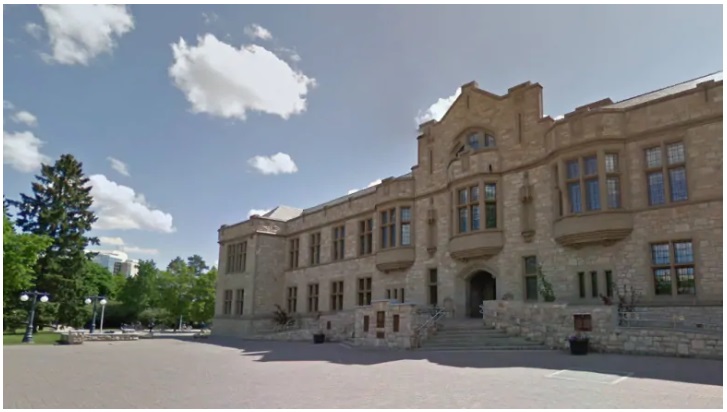
Three students from Saskatchewan, and an Ontario student who attends the University of Saskatchewan, were awarded the student scholarships. (Google Street View)

Saskatchewan students are among 50 in Canada to receive $100,000 scholarships in the STEM fields — science, technology, engineering and math.

The Schulich Leader Scholarship is awarded annually to 50 high school graduates enrolling in STEM undergraduate programs at 20 partner universities across Canada.

The recipients — chosen from 1,400 nominations — include University of Waterloo student Robin Wen of Saskatoon, University of Calgary student Rylan Marianchuk, from Humboldt, Sask., and University of Saskatchewan student Lanke Vaidehee, from Saskatoon.

University of Saskatchewan student Joel Pollak, who is originally from Ontario, also earned a scholarship.

Fund established by philanthropist

The $100-million scholarship fund was established in 2012 by businessman and philanthropist Seymour Schulich.

He said the selected students will be among the next generation of technology innovators.

“These students will make great contributions to society, both on a national and global scale,” said Schulich.

“With their university expenses covered, they can focus their time on their studies, research projects, extracurricular and entrepreneurial ventures.”

Every high school in Canada can submit one nominee for the scholarship based on their academic excellence, entrepreneurial leadership and financial need.

World’s tiniest ‘computer’ makes a grain of rice seem massive


You didn’t think scientists would let IBM’s “world’s smallest computer” boast go unchallenged, did you? Sure enough, University of Michigan has produced a temperature sensing ‘computer’ measuring 0.04 cubic millimeters, or about a tenth the size of IBM’s former record-setter. It’s so small that one grain of rice seems gigantic in comparison — and it’s so sensitive that its transmission LED could instigate currents in its circuits.

The size limitations forced researchers to get creative to reduce the effect of light. They switched from diodes to switched capacitors, and had to fight the relative increase in electrical noise that comes from running on a device that uses so little power.

The result is a sensor that can measure changes in extremely small regions, like a group of cells in your body. Scientists have suspected that tumors are slightly hotter than healthy tissue, but it’s been difficult to verify this until now. The minuscule device could both check this claim and, if it proves true, gauge the effectiveness of cancer treatments. The team also envisions this helping to diagnose glaucoma from inside the eye, monitor biochemical processes and even study tiny snails.

Why the air quotes around computer, then? The tiny size is leading the University to question what a computer is. This does have a full-fledged processor (based on an ARM Cortex-M0+ design), but it loses all data when it loses power, just like IBM’s device. That might be a deal-breaker for people who expect a computer to be more complete. Still, this pushes the limits of computing power and suggests that nearly invisible computing may be relatively commonplace before long.

This article originally appeared on Engadget.

Scientists are building a DNA database to fight illegal logging
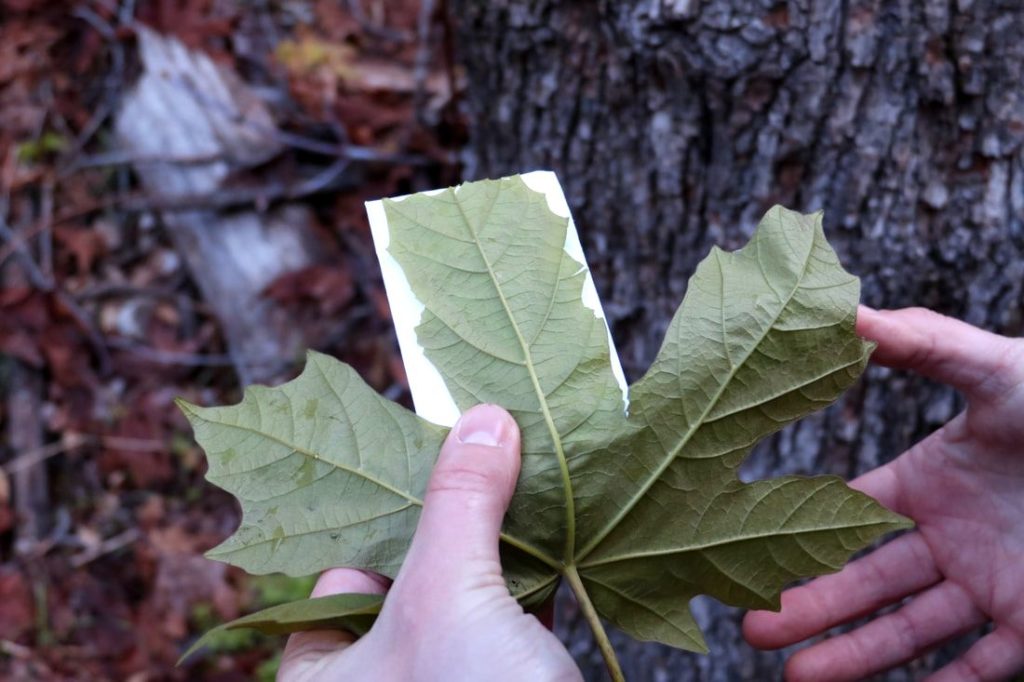
DNA evidence could put criminals behind bars, but only if there’s something to compare it to. That’s why a project that aims to combat illegal logging is now building a DNA database of trees, which could help authorities determine if logs being sold on the market were taken from protected areas. The initiative, a collaboration between the Norwegian government and United States Forest Service’s international program, will initially focus on creating a database for the bigleaf maple tree on the West Coast. And the great thing about it if you’re someone who’s passionate about helping the environment is that you can help gather samples for DNA testing.

Wood from the bigleaf maple fetches top dollar, making the trees a natural target for poachers. In fact, it was at the center of a controversial case back in 2015, wherein a sawmill owner admitted that he had suspicions that the logs he was buying weren’t legally obtained. Authorities used DNA testing to prove that the logs were indeed taken from a national forest. While the US Forest Service had to gather a team of experts for that incident, this initiative relies on volunteers and citizen scientists.

If you’re interested, you’ll have to complete a training course online and pass a test to show that you understand how to collect samples. In addition to taking a leaf or a piece of the tree’s wood with you, you’ll also have to use an app, which asks a number of questions about the specimen, while in the field. The hope is that the samples volunteers collect can serve as vital DNA evidence for any future illegal logging cases.

Norway and the US Forest Service believe that the project could eventually expand to cover more species and more regions around the world. They’re planning to launch a similar effort in Indonesia — they’re also eyeing Peru — where illegal logging is extremely rampant.

This article originally appeared on Engadget.