Archives for May 27, 2018

How GDPR is affecting the games you love

The tech world has been bracing for a new set of European privacy rules that go into effect: the General Data Protection Regulation, better known as GDPR. Companies will have either changed how they handle their EU users’ personal data or face serious fines. The regulations are intentionally broad, which has led them to affect industries that aren’t typically thought of as trafficking in user information — like gaming. That means gamers are protected by GDPR while playing online or posting in forums. But in complying with the EU regulations, gaming companies are nervous that they’ll inadvertently run afoul of the new law’s vaguely written rules.

The GDPR replaces the 1995 EU Data Protection Directive, forcing every company around the globe to abide by strict rules when handling European subjects’ personal data. The regulations were adopted to protect EU residents and arm them with awareness about how companies use their information. While GDPR addressed tech companies that have dealt with and make money off user data, like Facebook and Google, the expansive definition of “personal data” — everything from names and email addresses to biometrics and IP addresses — means that gaming companies have had to comply, too. And that has cost them time and money to avoid incurring fines.

This is good for gamers in the EU, who will have a much better idea what information is collected when they play, buy products or use services. Game enthusiasts outside Europe will benefit, too, as some organizations, like Razer, treat the GDPR as a privacy bellwether and adopted it globally.

Like most protective measures, we might never know if adopting new regulations ends up preventing a disaster. “One of the things that GDPR may do is head off potential future privacy scandals that might not even happen because of the law,” said Jay Stanley, senior policy analyst at the National ACLU. He cited Vizio’s incident using smart TVs to track users’ behavior without their knowledge as an example, a scandal that cost the company a $2.2 million fine from the FTC.

“Like all programs and apps, there’s potential in games for mischief when it comes to collecting valuable personal information for users,” he said. “We don’t know exactly how much this European law will affect the practices in America, but it can’t hurt, and there’s a good chance it’ll offer some protections.”

It’s unclear how much effort it’s taken the gaming industry to adapt to GDPR: No companies contacted by Engadget disclosed how much it cost to comply. Like other tech companies, though, they’ve had to understand how user data moves through their operations, adjust their permissions to explicitly ask for consent when collecting info and in some cases, appoint their own data-protection officer.

“Companies have to document their data flows, register with privacy shield, get an EU representative, set up a bunch of updated data-processing agreements, get trained on how to respond to consumer requests that include GDPR jargon, etc…,” privacy lawyer Shaq Katikala wrote in a Reddit AMA last month. In his job working for law firm Morrison/Lee, he’s helped shepherd companies and studios through the GDPR compliance process. “The vast majority of the GDPR work I do for clients isn’t fixing terrible scandals, it’s all this administrative stuff that GDPR requires.”

(Uber Entertainment)

Some older services and long-running games have been closed after companies determined the costs to update them outweigh the benefits. Uber Entertainment’s Monday Night Combat made just enough money to keep its servers going, but upgrading the Ubernet-based back-end to comply with GDPR wasn’t worth the cost, the game’s company CEO Jeremy Ables told Engadget. The company chose to shut the game down.

Likewise, Edge of Reality’s free-to-play shooter Loadout was shuttered because the company lacked the resources to update the aging game. Online gaming company WarpPortal announced it would close off service to EU players for the 16-year-old MMO Ragnarok Online on May 25th. And keeping them online without complying with GDPR is risky: Under the new regulations, authorities can fine offenders up to €20 million or 4 percent of the company’s annual global turnover, whichever is larger.

GDPR was adopted by the European Parliament in April 2016, giving companies two years to either comply or cancel services in the EU. In some cases, companies are buying themselves a bit more time by temporarily suspending European operations until they’ve gotten all their operational ducks in a row, said Katikala.

“My biggest concern with GDPR is that it’s moving very fast and the terms still need to be defined,” Katikala told Engadget. “Without answers, even honest companies can only go so far without further guidance.”

Even outfits within the EU had trouble working out how to comply with GDPR. Scandinavian game companies met in Helsinki several times to navigate compliance, according to Jari-Pekka Kaleva, senior policy analyst at Finnish trade association Neogames. “I think everyone now is starting to be aware of GDPR and what it means, but there are still companies that have open questions they need to understand. So it’s a step-by-step process,” he told Engadget last week.

(Edge of Reality)

That confusion has ratcheted up anxiety in gaming companies. Studios have scrambled to make sure they’re compliant by mapping their flow of user data and updating their terms of service (ToS). Some very small indie game-making outfits never even had a ToS document, so they’ve needed to create one. More established companies like NVIDIA have updated their privacy centers and policies with clearer language and new features, as the regulations require. A few, like peripheral and computer maker Razer, have launched dedicated GDPR resource sites for consumers to understand their expanded data rights under the new law.

But complying with GDPR hasn’t been significant enough to do more than kill a few old games, so your favorite publisher is probably safe. Some game studios, especially those producing offline single-player games, haven’t had to do more than tweak their ToS. Large game publishers and companies that do deal with personal data have teams of lawyers that have been working behind the scenes for months, if not years.

Still, the games industry will have to continue reckoning with privacy regulations as other countries outside the EU are considering adopting their own versions of the GDPR. Gamers will have more access to and a better understanding of how companies use their information. But the new regulations’ effects on actual games will likely be subtle. For one, it will be much harder for companies to use player info to study or market to them without their knowledge.

Big studios sometimes collect information on how players move in their games and use that to refine gameplay, which is called telemetrics. GDPR’s new transparency requirements will require companies to be more explicit about how they’re studying gamer activity. But most of GDPR’s benefits to players may be invisible to them. The rules apply to any entity that handles personal data, which means game companies are theoretically on the hook for third parties they provide player data to. Studios have had to audit hosting providers and advertisers, and dropped those that might violate the new regulations, Katikala said. This could prevent players’ information from being resold by unscrupulous companies.

Gaming companies probably weren’t the GDPR’s first target, but given the law’s broad language, they’ve also needed to comply to do business with EU users. The result is better privacy protections for gamers both in and out of Europe, and clarity on how their data works. But if these new policies end up guarding information from falling into the wrong hands, it will have been worth the effort for the gaming industry to avoid a data breach.

Buskers in London are the first to accept tap-to-pay cards

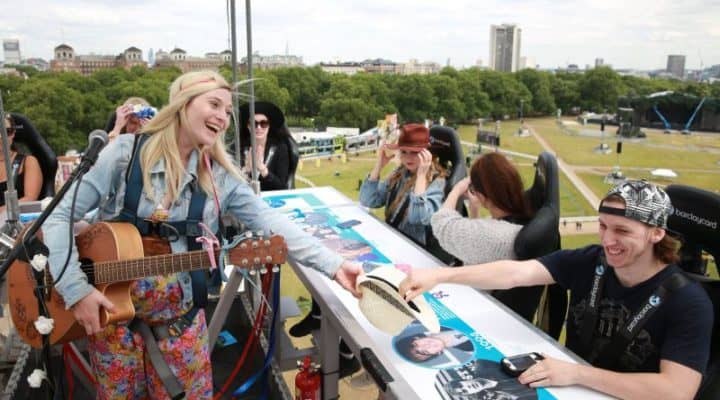
The move toward a cashless society has created a problem for buskers: how do they get paid when many listeners won’t have physical currency? There’s now a solution on hand. The Mayor of London’s office and iZettle (which was recently snapped up by PayPal) have partnered on a first-ever initiative that lets buskers accept tap-to-pay contributions. Participants plug special card readers into their smartphones and set a fixed donation amount — after that, you just have to wave your card (or a compatible NFC device) to ensure a street performer gets paid.

The service has already been in trials for a while by artists like Charlotte Campbell (above), but it should roll out to buskers in all of London’s 32 boroughs in the months ahead. And from early tests, it appears to have a meaningful effect — Campbell touted a “significant” improvement in her income during the test run. It’s not certain when the technology might spread elsewhere in the world, although PayPal’s acquisition might help.

For London, this may be as much a cultural necessity as anything else. If there aren’t enough cash-carrying residents, buskers may have to take ordinary day jobs — and that means fewer up-and-coming artists in a city that depends on them for some of its economic success. The tap-to-pay option may not be as easy or affordable as leaving a guitar case open, but it could easily pay for itself if it keeps musicians active well into the future.

This article originally appeared on Engadget.

This Muslim youth help line received 2,000 Ontario calls last year

Societal pressure, Islamophobia and addictions are among the reasons for calls

The help line weekday hours between 6 p.m. and 9 p.m. will start earlier at about 3 p.m. and operate on weekends. (iStock)

The growing number of Muslim youth turning to a help line tailored to their needs has prompted officials to extend its hours of operation.

Naseeha — meaning ‘advice’ in Arabic — received about 2,000 calls from Ontario residents in 2017. Overall, there were 18,000 calls made.

That number is projected to double in 2018.

“People can call in and speak to a [Muslim peer counsellor] who they may not know, but may have a better understanding of the background of where they’re coming from culturally and religiously,” said outreach manager Huma Saeedi.

“It’s really important in today’s day and age with youth that are struggling with their identity being Canadian and Muslim,” she said.

Ontario youth are calling for spiritual and psychological help, specifically related to mental health, faith and sexual orientation. In the last year, Saeedi said most callers have been between 21 and 30 years old.

‘There’s still a lot of taboo’

Despite the numbers, mental health continues to be a highly stigmatized topic in Muslim households, said Saeedi, who also works for the Centre of Addiction and Mental Health.

Peer counsellors being trained. The non-profit is headquartered in the Greater Toronto Area. (Naseeha help line)

“There’s still a lot of taboo,” she said, adding that the issues Muslim youth face are similar to the ones non-Muslims face.

“The issues are just magnified when you’re part of a smaller, marginalized community where often the parents may not have that support available to provide to their children,” she said.

“Whether it be due to limited understanding of what mental health is about or limited time because they’re immigrant families.”

With those issues come added stresses like Islamophobia, discrimination and racism — which is the third reason why Ontario callers pick up the phone.

Saeedi said it’s important to note that the trained counselors based in the GTA don’t chime in on issues related to Islamic law. Those calls are referred to local religious leaders or institutions.

“We’re there not to provide any type of judgment, not to give any opinions from our own selves, or what we believe the religion may or may not say about it. We’re there for them to provide them support through what they’re struggling with,” she said.

There are 30 peer counselors that include people from London. Starting in July, the weekday hours between 6 p.m. and 9 p.m. will start earlier at about 3 p.m. and operate on weekends.

Top 5 reasons for Ontario calls:

  • Spiritual and Psychological: Mental health, faith, sexual orientation
  • Relationships: Boyfriend-girlfriend, friends, co-workers, marriage/divorce, parent-youth conflict
  • Societal Pressures: Islamophobia, discrimination, racism, bullying, peer pressure, body image
  • Crisis: Suicide, sexual abuse, child abuse, domestic violence
  • Addictions: Drugs, alcohol, pornography, masturbation

Province to build youth mental health centre in Calgary

New facility will offer walk-in service and comprehensive care in the city’s northwest

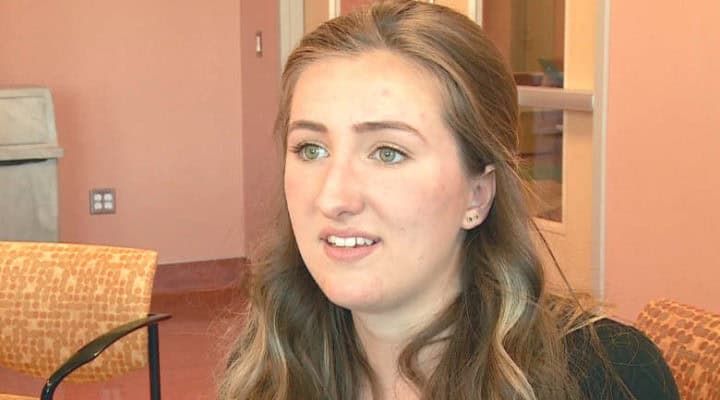
Julia Caddy says she has struggled with her mental health and is hopeful that the new centre will help others. (Terri Trembath/CBC)

A new centre dedicated to youth mental health is planned for Calgary.

Alberta Health Services and the Alberta Children’s Hospital Foundation have partnered to build the facility, which will be in the northwest community of Hounsfield Heights. It’s expected to open in around 2021.

“AHS is grateful for the partnership we have with the Alberta Children’s Hospital Foundation to build the first stand-alone centre for child and adolescent mental health in Calgary,” said Dr. Verna Yiu, president and CEO of Alberta Health Services, in a news release.

“The foundation’s commitment will help us provide the best care possible to children and youth in our community who experience mental health issues.”

Walk-in service

The centre will allow youth and their families to access what AHS calls “new and enhanced services” and will include specialized triage and “the opportunity for immediate referrals to programs at the site.”

There will be a walk-in service as well as intensive outpatient therapy and a day hospital program.

“Mental health is such a significant issue for young people and we all need to play our part and work together to reduce suffering for kids and families,” said Saifa Koonar, president and CEO of the Alberta Children’s Hospital Foundation, in a news release.

“The community helped build the Alberta Children’s Hospital, the best facility possible for children with physical health issues. And now, together, we’re going to do the same thing for young people struggling with mental health issues.”

‘Can’t escape the problem anymore’

Julia Caddy, 19, suffered with mental health and says it’s good to see the province act.

“We can’t escape the problem anymore. The society we live in is essentially fostering a lot of mental distress and we have yet to fully figure out a solution for our young people who are in such a critical stage of their life,” she said the announcement of the centre.

“I’m so happy to be living my life in this moment. I want all youth to be able to get to that point, and this centre is that chance — and that gives me so, so much hope.”

AHS says the new centre will free up hospital space.

Construction is expected to begin in the fall of 2019.

Increasing health concerns around reno of Summerside school

Government says air quality within Health Canada guidelines, but hasn’t released results

Renovations at Three Oaks High School in Summerside began in March 2017, and are expected to continue until March 2019. (Tom Steepe/CBC)

The Official Opposition pressed the P.E.I. government once again Friday to release air quality testing results from Three Oaks High School in Summerside, claiming the number of students suffering adverse health effects and missing classes as a result of ongoing renovations is growing.

The Opposition also said one student suffered a fractured knee when a temporary construction wall fell on her. The Public Schools Branch confirmed a student was injured in September by a piece of falling drywall.

“One boy has missed six weeks of school. One girl has missed four weeks of school,” Opposition Leader James Aylward told the House. “One girl has missed 30 days since Christmas. Another girl suffers from chest pains, fatigue, shortness of breath, poor concentration, headaches.”

Education Minister Jordan Brown acknowledged there was an increase in early April of students coming forward to indicate “they were experiencing health concerns related to their school environment.”

Education Minister Jordan Brown acknowledged there was an increase in students coming forward with health concerns in early April. He said air quality testing that month came back within Health Canada guidelines. (Province of P.E.I.)

“We would certainly acknowledge that there are students that would have greater reactions than others to air quality amongst other things,” he said. Brown said great steps had been taken “to ensure that the students are as comfortable as possible, including offering to have them make alternative arrangements such as go to other schools if they so desired.”

‘Not right’ to put kids through construction, says mom

Three Oaks parent Samantha MacPherson was in the gallery of the Legislature Friday. She told CBC her Grade 10 daughter has been diagnosed with an unspecified pulmonary disease since the renovations began, and now uses an inhaler. MacPherson said she’s moving her daughter to a new school this September.

“She’s been having a lot of breathing issues, to the point that she just can’t seem to catch her breath,” she said. “It causes her anxiety,” she said, noting her daughter’s sense of well-being and school performance have both suffered. “I feel bad that they’ve put the teachers and the kids through this construction. It’s not right.”

Samantha MacPherson says her Grade 10 daughter has been diagnosed with an unspecified pulmonary disease since renovations began, and will move to another school for September. (Randy McAndrew/CBC)

Transportation and Infrastructure Minister Paula Biggar told the House extra air quality and exhaust systems have been installed at Three Oaks. She said results from air quality tests conducted in April came back within Health Canada guidelines.

But Kensington-Malpeque MLA Matthew MacKay pointed to a request he made April 10 asking for results of all air quality tests to be made public, something he said parents at the school have also been asking for.

“You gave concerned parents only one day of test results for only one area of the school taken on March 28,” he said. “Students have been experiencing environmental health issues for months for areas all over the school.”

Asbestos, lead paint removed
John Cummings, director of corporate services with the Public Schools Branch told CBC News via email “the branch has been working with the Department of Transportation, Infrastructure and Energy to ensure proper safety protocols are being followed on the Three Oaks renovation project. The branch and school have been working with students and parents to address any individual concerns that have been brought forward.”

‘Several breaches in protocol’ during asbestos, lead removal at Three Oaks school
As part of the renovations, hazardous materials have been removed from the school, including asbestos and lead paint. Internal emails from branch officials show there were three breaches where staff did not follow proper protocols in removing some of the hazardous materials, but the education department said staff and students were not at risk.

Friday was the last day of classes for students at Three Oaks, with exams continuing until June 1. Classes are shutting down early to accommodate the ongoing construction, which is expected to continue until March 2019.

Mi’kmaq youth encouraged to reach for the stars as astronaut helps open maker lab

Spaces for youth to tinker with technology to open in 13 First Nations in Nova Scotia

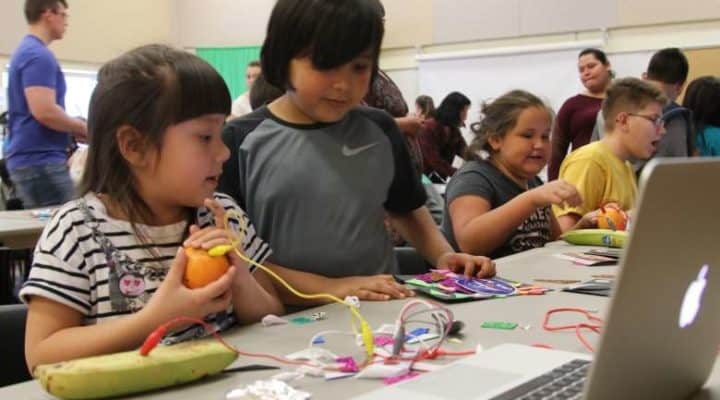
STEM maker labs are being rolled out at 13 First Nations schools in Nova Scotia. (Luke Yoho/CBC)

Mi’kmaq youth in Nova Scotia will have the chance to let their imaginations run wild in new science and technology labs being introduced to every First Nation in the province.

Canadian astronaut Col. Jeremy Hansen and Ulnooweg Development Group Inc. unveiled a new educational space at the L’nu Sipuk Kina’Muokuom (LSK) School in Sipekne’katik First Nation on Thursday. It’s the first of 13 maker labs, spaces which will allow children to develop science, technology, engineering and math (STEM) skills.

Maker labs aim to encourage youth to tinker and experiment, using technology in creative ways.

Canadian astronaut Col. Jeremy Hansen unveiled the new maker lab at LSK School in Sipekne’katik First Nation in Nova Scotia on Thursday. (Kaitlyn Swan/CBC)

“I want to make a space city on the moon,” said Mi’kmaq student Robert Paul.

Classmate Robert Sack described his own path to one day exploring the cosmos.

“It depends if I go to the correct college,” he said. “If I make it past all the grades or not, which I probably will.”

Hansen spoke at the event and cut the ribbon.

“A maker lab allows [students] to take a little bit of knowledge, and right away put it into action, figure it out for yourself,” he said.

“People that can teach themselves will be able to offer the most in society.”

Hansen speaks to students at the school. (Luke Yoho/CBC)

The lab at LSK will offer students several STEM-related resources that include coding through robotics, animation, 3D tech design and artificial intelligence. The classroom also includes an elder’s circle for students to connect with traditional Mi’kmaq knowledge and histories, as well as for the elders to learn a few new skills themselves.

Hansen added that much can be learned from Indigenous Peoples’ traditional knowledge.

“I’ve been enriched by Indigenous culture,” he said.

“What I’ve come to recognize is traditional knowledge is very, very rich.”

Ulnooweg’s Chief Operating Officer, Chris Googoo, said he hopes that programs like the maker labs will help Mi’kmaq children excel scholastically and beyond.

“Our approach is to bring the knowledge of the private sector into the schools,” said Googoo,

“Honestly, the ultimate goal would be to launch the first Mi’kmaw astronaut.”

Googoo said the development group was inspired to create the labs after an evaluation showed the need for more STEM education opportunities in First Nations communities in order to compete in tomorrow’s job market.

The next maker lab will be opened at Mi’kmawey School at Nova Scotia’s Potlotek First Nation on June 7.