Archives for April 1, 2018

4 Reasons You Shouldn’t Sell NVIDIA on Driverless Fears

Shares of NVIDIA (NASDAQ: NVDA) recently tumbled after a double whammy of bad news. First, one of Uber’s driverless vehicles, which was powered by NVIDIA’s chips, hit and killed a pedestrian. Uber and NVIDIA both suspended their driverless tests after the accident.

Many investors seemingly saw the news as an indicator that NVIDIA’s entire automotive chip business, one of its pillars of growth, was falling apart. But if we take a closer look at the situation, we’ll notice that the situation isn’t really that dire, for four simple reasons.
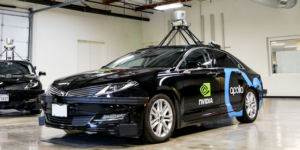
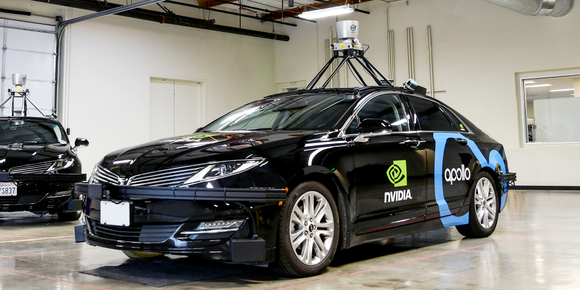
One of Baidu’s Apollo driverless cars running on NVIDIA’s chips.

1. The automotive business is still small

NVIDIA talks a lot about driverless cars, but its automotive revenues only grew 3% annually to $132 million last quarter and accounted for 5% of its top line. Those revenues mainly came from sales of its Tegra CPUs to automakers for their infotainment and navigation systems, as well as its Drive PX “supercomputer” and its new Xavier AI chip for autonomous cars.

That business grew much faster in the past, but the infotainment chip market, where it competes against other players like Intel and Qualcomm (NASDAQ: QCOM), is being commoditized. Those systems are also being replaced by next-gen AI cockpit systems and top to bottom self-driving platforms built on NVIDIA hardware and software.

Therefore, the slowdown is cyclical, as NVIDIA transitions between infotainment systems and end-to-end solutions. If NVIDIA maintains its first mover’s edge in the auto market — which already won over customers like Audi, Mercedes-Benz, Toyota, Tesla, and Uber — its automotive revenues should rebound in the near future.

Last quarter, NVIDIA CFO Colette Kress stated that over 320 companies and research institutions now use its Drive PX platform — a 50% increase from a year ago, including “virtually every car marker, truck maker, robo-taxi company, mapping company, center manufacture and self starter in the autonomous vehicle ecosystem.”

2. Uber wasn’t using Drive PX

Initial reports suggested that Uber’s cars used NVIDIA’s Drive PX platform — which bundles the chipmaker’s real-time sensor fusion, HD mapping, and path planning technologies together — to convert traditional vehicles into autonomous ones. NVIDIA CEO Jensen Huang recently shot down those reports at the company’s GPU Technology Conference in San Jose.

The Drive PX platform.

“Uber does not use Nvidia’s Drive technology,” said Huang. “Uber develops their own sensing and drive technology.” Uber’s platform is powered by NVIDIA’s chips, but the problem which caused the fatal crash was likely caused by Uber’s software.

Therefore, Uber’s accident doesn’t mean that automakers will abandon ship and flock toward rival platforms like NXP Semiconductors’ (NASDAQ: NXPI) BlueBox. Qualcomm is notably trying to buy NXP to challenge NVIDIA, but that deal remains in limbo.

3. Its driverless fleet is tiny

NVIDIA’s suspension of its own self-driving tests sounds like big news, but the chipmaker’s driverless fleet consists of just five to six vehicles. The suspension merely means that NVIDIA wants to understand what happened at Uber, and how it can avoid similar accidents.

This doesn’t mean that Drive PX is flawed, or that NVIDIA’s customers are halting their tests or pulling their orders for its automotive chips. Instead, automakers with a long-term view of driverless cars will likely keep buying NVIDIA’s chips.

4. NVIDIA has plenty of bigger growth engines

NVIDIA’s soft growth in automotive chips last quarter was easily offset by massive demand for its GPUs for gaming, professional visualization, and data centers. Its sales growth across those three categories boosted its total revenues by 34% last quarter. Wall Street still expects NVIDIA’s revenue and earnings to rise 27% and 35%, respectively, this year.

Once the current news cycle about Uber and driverless safety dies down, investors should realize that NVIDIA’s sell-off was overdone. The automotive business just generates a small percentage of its total revenues, NVIDIA is still the “best in breed” play in both driverless cars and AI, and the chipmaker has plenty of other growth engines which should help it generate double-digit sales and earnings growth for the foreseeable future.


Every Media Company Is Going Direct-to-Consumer

If cord-cutting weren’t enough trouble for media companies, they’re now facing pressure from another direction. Last year, TV ad spending decreased for the first time since 2009, and that decline is expected to continue over the next five years, according to estimates from eMarketer.

As more consumers cut the cord and ratings continue to fall for even the most promising live events — like NFL games — ad dollars are starting to jump from television to digital. Digital ad spending is expected to climb another 19% this year, according to eMarketer’s estimate.

Advertising represents a significant portion of revenue for major media companies like Walt Disney (NYSE: DIS), Twenty-First Century Fox (NASDAQ: FOXA), Time Warner (NYSE: TWX), CBS (NYSE: CBS), and Viacom (NASDAQ: VIA). Constrained by cord-cutting and decreasing ad spend, media companies are looking for new avenues of growth over the next few years. One promising solution is the direct-to-consumer model.

A person lying on a couch holds a tablet playing a video

Going direct-to-consumer

In an effort to combat cord-cutting and the shift of ad dollars to digital, many media companies are working on direct-to-consumer streaming products.

CBS was one of the first media companies to offer a direct-to-consumer service, CBS All Access. Management says it already has about 2.5 million subscribers about three years after launching.

Time Warner has offered HBO Now for some time, but it doesn’t show advertisements on that network. The company picked up a 10% stake in Hulu, which is co-owned by Disney, Fox, and NBCUniversal, and is expected to produce over $1 billion in ad revenue this year, up 13% from last year.

Most recently, Time Warner announced the launch of the Bleacher Report Live sports streaming service. The service capitalizes on Time Warner’s existing relationship with sports leagues and offers customers the option to pay per game, or even pay for parts of games.

Disney has big plans for a direct-to-consumer offering. It will launch ESPN+ in the coming month, and it has a Disney-branded service set to launch near the end of 2019. Disney’s forthcoming acquisition of Fox will make available a huge trove of content for the service and provide greater control over Hulu.

Viacom is planning to launch its own ad-supported streaming service before the end of its fiscal year in September. Viacom generates a majority of its revenue from advertising, unlike most other cable network companies, so the shift to digital is an even bigger threat.

Is there enough room for everyone?

Consumers have been saying for a long time that they want some form of a la carte TV, but the actual offerings may prove to be just as expensive and even more of a mess than the traditional cable bundle. Every major TV network will have a direct-to-consumer streaming service by 2022, The Diffusion Group predicts.

Customers may go without channels they’d watch occasionally if they were in a bundle, but won’t pay $5 per month for unlimited access to live-streaming and on-demand content. They’ll only pay for content they really want.

That bodes well for Disney, which has tremendous brand strength, but Viacom may find it more of a challenge to win subscribers. That’s likely why Viacom is considering an ad-supported version of its service in order to subsidize subscription pricing, if it were to go that route. CBS took a similar approach with All Access, and that’s worked well so far.

Risky business

There’s an additional risk for media companies going direct-to-consumer. Historically, networks have generated additional revenue by licensing content to other streaming services or other networks for syndication. But in order to increase the value of a direct-to-consumer service, a network needs to retain more content for itself.

That would mean media companies will slowly replace a guaranteed source of revenue with a source of revenue that depends on their capability to sell subscriptions or otherwise monetize that content themselves (with ads, for instance). That could make earnings a lot more volatile for media companies, especially more concentrated companies like Viacom or CBS.

Is This Oil Stock’s Recent Sell-Off a Buying Opportunity?

This week was an interesting one for investors in Concho Resources (NYSE: CXO). The Permian Basin producer stunned the oil market by announcing that it had agreed to acquire fellow Permian driller RSP Permian (NYSE: RSPP) in a $9.5 billion deal. While that news sent its target up about 15%, Concho’s stock went in the opposite direction, sinking more than 9% on the announcement. That sell-off, according to analysts, looks like a big mistake.

Price is what you pay

Investors shuddered at what Concho had to pay to seal the deal with RSP Permian. The transaction, which came at a 29% premium to RSP Permian’s prior trading price, was even richer when considering how much it valued RSP’s land in the oil-rich Permian. According to an analyst at Jefferies, Concho is effectively paying $76,000 per acre for RSP’s holdings in the region, well above the value of other recent deals. Last August, for example, Concho spent $600 million for 12,400 acres of land, implying a $48,400 per-acre value. Before that, the company paid $1.625 billion for 40,000 acres, or roughly $40,500 apiece.

Pump jack backlit by the setting sun after the rain.

Meanwhile, this acquisition was also well above other notable third-party transactions. One of the most recent came last December when Oasis Petroleum (NYSE: OAS) paid roughly $46,600 an acre for land in the basin in a widely panned deal due to the price. The transaction is also well ahead of the $58,500 an acre RSP Permian paid to acquire privately held Silver Hills in 2016 as well as the roughly $45,000 an acre Noble Energy (NYSE: NBL) paid when it bought Clayton Williams Energy for $3.2 billion early last year.

Value is what you get

That high price, however, could be worth it in the long run because there are “a lot of synergies that make sense,” according to an analyst at RBC Capital, who thought the 29% premium was “reasonable.” In the immediate term, Concho expects to capture at least $60 million in annual corporate savings from the combination. However, future corporate and operational synergies could exceed $2 billion as the company uses its greater scale to optimize well designs to drill longer ones, which boost returns.

In addition, the companies can share infrastructure, which should reduce costs. That ability to capture greater value from the combined company’s assets is why an analyst from Williams Capital also thought the deal made sense. Another noteworthy aspect of this combination is that Concho can leverage its larger scale to potentially get better pricing on equipment and services in the region, which have inflated in recent months due to rising demand.

That added scale has been a game-changer for Noble Energy in the Permian. The company was able to reduce its drilling and completion costs by a double-digit rate on a per-foot basis, which when combined with other factors, has yielded a 20% improvement in the underlying value of its acreage in the region. Contrast that with Oasis Petroleum’s Permian land grab last year, which lacked any potential synergies. The company, which until that point had focused solely on North Dakota’s Bakken Shale, wants to cash in on the higher returns drillers are earning in the Permian. However, it will take the company time to build out its operations in the region, including the necessary infrastructure to develop the field. That’s why analysts gave its high-priced purchase the thumbs down.

The Concho-RSP Permian deal could have farther-reaching benefits beyond just those realized by the combined company. “Even if Concho ends up having overpaid with its stock, if a less-fragmented Permian yields a more efficient one, then it would take shale’s competitive challenge to the likes of OPEC to another level,” according to a writer with Bloomberg. That’s because the deal could spark additional M&A in the region, leading adjacent producers to link up to improve development efficiency so they can lower costs and boost returns.

Taking the long view could earn a rich reward

There’s no denying that Concho Resources paid a hefty premium to gain control of RSP Permian, which is why its stock tumbled this week. However, the deal has the potential to pay big dividends down the road as Concho works to maximize the value of the combined company’s assets. If it’s successful, and oil prices hold up, this week’s sell-off could end up being an excellent starting point for investors with an ultra-long-term mindset.

Digital Advertising Will Account for the Entire Industry’s Growth

Marketers will spend about $70 billion more on digital advertising in 2020 than they did last year, according to estimates from Zenith. Meanwhile, global ad spend across newspapers, magazines, television, radio, cinemas, and outdoor billboards will combine to grow just $1.6 billion during that same period.

As consumers spend less time watching television, reading newspapers and magazines, and listening to the radio, they spend more time streaming media on YouTube or browsing articles found on Facebook (NASDAQ: FB). The ad dollars are following. And, as you might expect, two big companies are poised to benefit from the growth more than any others: Facebook and Google, the Alphabet (NASDAQ: GOOG) (NASDAQ: GOOGL) subsidiary.

A bar graph graphic overlayed on top of a tablet computer, sitting on a table next to a teacup and glasses

The two fastest-growing digital ad formats

Zenith expects social display ads and video display ads to grow at least twice as quickly as any other format.

Medium           2017 Spend Estimate            2020 Spend Estimate        Average Growth Rate

Search                       $86.4 billion                          $109.6 billion                           8.24%

Social display          $48.1 billion                           $76.2 billion                             16.6%

Video display             $26.8 billion                          $43.2 billion                            17.25%

Classified                    $18.6 billion                          $23.1 billion                               7.4%

Other display              $23.6 billion                         $21.7 billion                           (2.86%)

Data source: Zenith.

YouTube has historically been strong on mobile, where its 1.5 billion users spend over 1 hour per day streaming video on average.

During Alphabet’s fourth-quarter earnings call, management repeatedly called out the growth of YouTube on television sets. Google CEO Sundar Pichai said, “People are thinking of YouTube more as a key part of their TV viewing experience.” He later added, “Our growth has been significant there.” The growth of YouTube both on TV sets and off offers an excellent opportunity for advertisers to find an audience amid declining television viewership.

Facebook, meanwhile, is also investing in video content, which it intends to monetize with interstitial advertisements. But it also stands to benefit from the growth in social display advertising over the next three years. Social advertising spend is set to grow more on an absolute basis than any other advertising medium, and Facebook is still winning the lion’s share of social ad spending. Most of that growth will come from Instagram and its other apps as growth on the flagship app slows.

Search is still king

Despite the rapid growth expectations for social and video advertising, search advertising remains the king of digital advertising, with expectations that total search ad spend surpasses $100 billion next year. Google remains the king of search (outside of China), accounting for 87% of all internet searches worldwide.

Search advertising is being driven by mobile, as consumers now have a constant internet connection in their pockets. Google is even more dominant on mobile, taking 95% of the global market. That said, Google pays more, on average, for searches on mobile due to higher traffic acquisition costs (TAC) for things like placement as the default search engine in mobile browsers.

Alphabet has seen traffic acquisition costs as a percentage of revenue climb recently. TAC grew from 21.2% of Google sites revenue in 2016 to 22.7% in 2017. CFO Ruth Porat said she expects TAC’s growth as a percentage of revenue to slow after the first quarter.

Google is well-positioned to win most of the growth in search advertising, but that growth is more expensive to acquire than its desktop ads.

The duopoly isn’t going anywhere

It’s hard to see smaller competitors making a significant dent in Google and Facebook’s dominance of global advertising. While the two may see a small decline in their share of U.S. advertising spend over the next couple years, they’re still experiencing plenty of growth outside of the U.S. to make up for it. The numbers from Zenith indicate there’s still plenty of room for both companies to keep growing, and investors bullish on the global economy long-term would do well to follow the ad money.

PS4’s revamped video section focuses on shows over apps

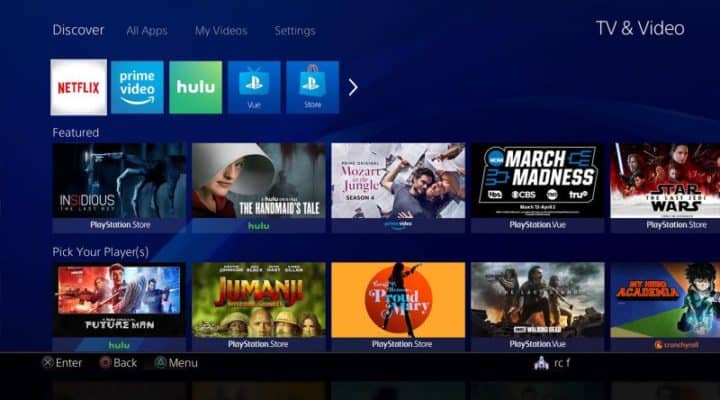
If you have a PlayStation 4, there’s a good chance you use it as a video viewer. However, you’ll also know that it isn’t ideal for that role — you have to hop between apps just to see what shows are worth watching. Sony is aiming to fix that. American users now have an overhauled TV & Video section that shows new and trending video from a range of services, including live channels on PlayStation Vue. It’s much like the carousel interface you see in apps for Netflix or Amazon Prime Video, complete with featured and themed sections. You can still launch the apps first if you prefer, but it’s now much easier to skip directly to what you want to watch.

You’ll also see personalized recommendations, starting with YouTube. Link your YouTube account to PSN and you’ll see suggested videos right on your PS4’s home screen. Other services are “coming soon,” Sony said.

There’s no word on international expansion, although that’s likely a question of “when” rather than “if.” Even if PlayStation Vue never goes beyond US borders, Sony still has incentives to both promote its original PlayStation TV shows and convince PS4 owners that their console is more than just a game machine. The more capable the PS4 is, the more likely you are to choose it over a rival like the Xbox One or a a media-focused hub like a Roku player.

This article originally appeared on Engadget.

Tapster’s robots are built to poke touchscreens

The CEO and COO are at their desks when I knock on the door, intently assembling robots to fulfill the company’s latest order. Tapster is about as lean as startups get. Founded three years ago (on Star Wars Day), the company’s two-person staff is half the size it was at its height, but a third employee moved on, and the fourth was more of an intern, really.

It’s a humble operation headquartered in nondescript strip of stores in Oakpark, a quiet suburban village just outside of Chicago. Inside, a row of desktop 3D printers churn away on the products. Pieces of future robots are strewn about the desks, pulled from nearby shelves stocked with bins full of parts.

To their right, crumbling wooden prototypes stand as a kind of museum to the humble company’s even humbler origins. An accidental startup of sorts, Tapster formed was while Jason Huggins was working as CTO of his previous company, Sauce Labs — a Selenium testing startup.

Burned out from software, the story goes, he enrolled in a laser cutting class at bygone maker space chain, Tech Shop. With those newfound skills, he built a button-clicking robot, and then, eventually, one capable of playing Angry Birds — all the rage back in 2011.The project gave Huggins a smalll YouTube hit and earned him speaking gigs at various tech conferences.

It also managed to grab the attention of a Mercedes Benz. The luxury car maker was searching for an automated device to help test a self-parking app on its in-car touchscreen displays.

“They got a price quote from an industrial robotics company, and the quote was about $100,000,” says Huggins. “They have lots of money and they could have bought it, but they had to get like ten of them. The traditional robotics market is buying one big machine to do something precisely. We’re coming in and making the robots cheaper, so you can buy more of them.”

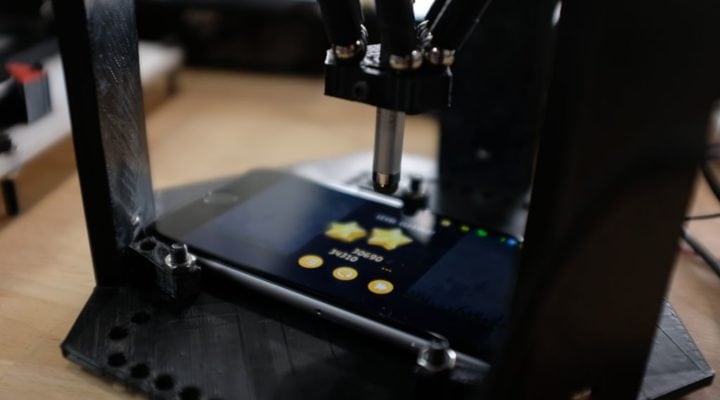
A few months prior to officially founding the company, Huggins began work on his order for the car maker — 10 small robots designed to automate the testing of touchscreens by repeatedly and systematically tapping the hell out of them.

“Right before they found us, they were going to buy a LEGO Mindstorm kit and have two engineers work on it for five of six months and figure out what they could come up with,” Huggins adds. “Often our competition is do-it-yourself. They’re trying to bubblegum and duct tape something together.”


Granted, Tapster’s own processes aren’t too far removed. Huggins is a former Google Tester who’s become something of a full-time tinkerer, building robots from LEGO kits and self-modeled 3D printed parts. He’s shows me a prototype of the company’s latest robot, which stands of a pair of Ronald McDonald feet.

“I couldn’t find clown shoes on Thingiverse,” he tells me, excitedly. “So I made them. If you look up ‘Clown Shoes,’ you’ll find mine.”

These sorts of automated robotics are common for hardware manufacturers looking to test touchscreens. And while Tapster’s offerings are admittedly less sophisticated that the single service industrial robotics being deployed by larger organizations, Tapster is able to deliver their highly specialized product for a fraction of the cost.

Huggins hopes to one day make Tapster the go-to product for automated touchscreen testing, but for now, it’s baby steps. To date, the startup has functioned on a combination of self-funding, product sales and $100,000 in backing from Indie.vc, a micro venture firm that invests in, “Real businesses want to stay in business, not run for the exit.”

“This is my second startup, and I’m really intentional about bootstrapping for as long as possible,” says Huggins. “I’m not anti-VC, but I’m definitely pro-having leverage. When you can walk in there say, ‘this is a train leaving the station and money can accelerate these trend lines,’ I’d like to be in that situation. That means I have to do more things longer. I’m not going out there and raising a seed round and hiring. I want to have a solid business I can hire into.”

This article originally appeared on TechCrunch.