Archives for November 28, 2017

Elon Musk: In a few years, robots will move so fast you’ll need a ‘strobe light’ to see them

Tech executive and billionaire entrepreneur Elon Musk took to Twitter Sunday night to say the future potential of robots will be surprising and potentially scary, so lawmakers need to regulate artificial intelligence.

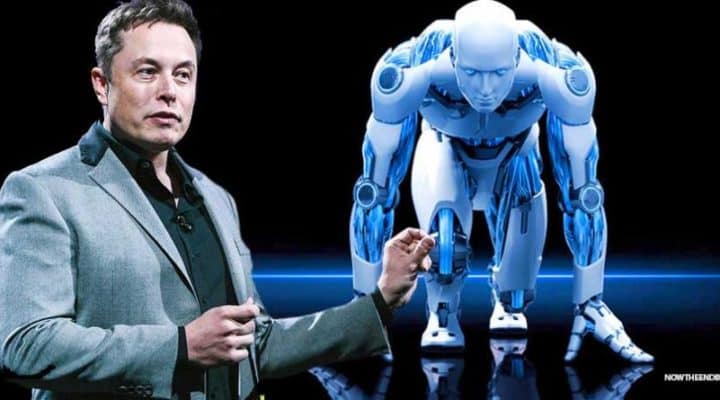
In response to a twitter post of a humanoid robot made by Boston Robotics jumping up on raised surfaces with the caption, “we dead,” Musk responded with a warning:

“This is nothing. In a few years, that bot will move so fast you’ll need a strobe light to see it. Sweet dreams…”


This is not the first time the billionaire tech exec has hammered home the frightening potential of AI. But Robots being able to move quickly is not all scary — it is also a valuable productivity tool, according to Musk. At the beginning of November, on a conference call with investors discussing Tesla ‘s third quarter financial results, Musk said the production of Tesla cars will depend on robotics working quickly.

“It’s remarkable how much can be done by just beating up robots…adding additional robots at choke points and just making lines go really, really fast. Speed is the ultimate weapon,” says Musk.

Also on Sunday evening, Musk tweeted a reminder that artificial intelligence needs to be regulated by federal lawmakers.

“Got to regulate AI/robotics like we do food, drugs, aircraft & cars. Public risks require public oversight. Getting rid of the FAA [wouldn’t] make flying safer. They’re there for good reason,” Musk writes. He published the comment with a link to the music video “Regulate,” a rap song released in 1994 from the artists Warren G and Nate Dogg.

“AI is a rare case where I think we need to be proactive in regulation than be reactive,” according to Musk, speaking to the National Governors Association in July.

His call for regulation is because he says the potential for robotics, if let to develop unchecked, threatens human existence.

“I have exposure to the most cutting edge AI, and I think people should be really concerned by it,” says Musk. “AI is a fundamental risk to the existence of human civilization in a way that car accidents, airplane crashes, faulty drugs or bad food were not — they were harmful to a set of individuals within society, of course, but they were not harmful to society as a whole.”

Not all tech executives are so dire in their warnings. Facebook founder and CEO Mark Zuckerberg , for example, has said that artificial intelligence will improve life in the future.

“I have pretty strong opinions on this. I am optimistic,” says Zuckerberg . “I think you can build things and the world gets better. But with AI especially, I am really optimistic. And I think people who are naysayers and try to drum up these doomsday scenarios — I just, I don’t understand it. It’s really negative and in some ways I actually think it is pretty irresponsible.”

Hackers can easily tap into an office phone and listen to everything you’re saying — here’s how

Hackers can easily tap into an office phone and listen to everything you’re saying — here’s how


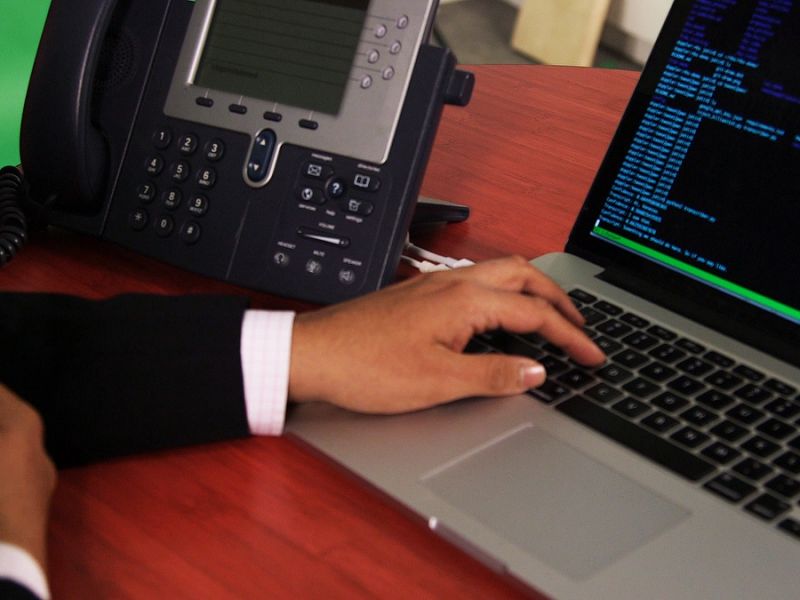
Many offices have IP phones, but did you know that they might be vulnerable to hackers? Depending on the phone, someone could use the device to spy on you remotely. We spoke with Ang Cui, cybersecurity expert and founder of Red Balloon Security, who discovered the exploit in a Cisco phone. Here’s a look at what someone might be able to do with it and what you can do to protect yourself. Following is a transcript of the video.

Ang Cui: A hacker can actually listen to everything that’s going on in the room that the phone is in regardless of whether you are on the phone call or not.

Hello, my name is Ang Cui. I am the founder and chief scientist of Red Balloon Security.

So we took a Cisco phone. We took it apart, and we looked at it not like a telephone, but like a computer. It has a handset, it has a screen, and it has a bunch of numbers you can dial, but it also runs a whole lot of very vulnerable software.

We extracted the firmware that runs on that computer, and we systematically mapped out things that look like vulnerabilities. And over the course of two and a half months, we figured out exactly where the vulnerabilities are in a portion of the system that we can reach as an attacker.

So what can someone do if they were able to exploit the software and firmware running inside your phone? Well they can certainly listen to you when you’re making phone calls. They can probably figure out who you’re calling and when. But it goes way beyond that.

The microphone never turns off, so the hacker can listen to every single thing that the phone hears one hundred percent of the time, without stop.

In order to pull out of this attack and a lot of the other attacks we’ve disclosed over the years on IP phones, you don’t need physical access. You can hit this vulnerability over the network, remotely. In fact, a few years ago, we made a demonstration at DEFCON, where we got a resume to hack a printer, and then we got the printer to hack a router, and then we got the router to hack a phone. And this was all done automatically in real-time, live on stage. So it is certainly possible for an attacker to exploit the IP phone sitting on your desk behind a firewall from somewhere else on the internet.

After we got access to the microphone, we decided to do something more fun, and we feed all that data into a speech-to-text engine, and we Tweet out the output of that. So instead of having to listen to all these conversations, you can just read it on Twitter.

So this demo was producer as part of a greater research into embedded device vulnerability. And we’re happy that we work very closely with Cisco in order for us to hand over the vulnerability.

We disclosed it to them, and they were able to very quickly turn around and issue a patch that fixed this specific security problem. I’m really happy to say that Cisco has updated the firmware on those phones, so that specific vulnerability is no longer there, in the IP phones that have been updated.

So there a few problems with this. One: according to the research that we put out, very few people update firmware. This is not … hopefully this isn’t news to you. You probably, like everyone else, don’t want to update all of the devices’ firmware as soon as they come out. And, in fact, the world is really bad at keeping the firmware of embedded devices up-to-date.

So even if the vendor issues is a security patch for the Cisco phone, the chances that all of the world have applied this patch is very low. The second thing is this is not a special case. We looked at a number of other IP phones, and we did not find a single IP phone that didn’t fundamentally have security vulnerabilities that could allow the attacker to achieve exactly where you’re seeing here on those phones. So if you have an IP phone on your desk right now, chances are there are known vulnerabilities that will allow an attacker to do exactly what we’re showing you as possible on the Cisco phone.

Electric-car start-up Lucid Motors moves to bigger headquarters in Tesla’s backyard

Potential Tesla competitor Lucid Motors is moving from its current headquarters in Menlo Park, California, to a new facility in the nearby city of Newark.

Electric-car start-up Lucid Motors is doubling the size of its offices and is moving into Tesla ‘s neighborhood.

The company, which is not yet selling any cars, is moving from its current headquarters in Menlo Park, California, to a new facility in the nearby city of Newark.

Lucid Motors announced the move on its blog on Monday.

The new offices will be located near Lucid’s prototype design shop, Lucid said.

Newark borders Fremont, where Tesla builds its cars.

Lucid revealed its first planned production model, the Lucid Air, at a private event in 2016. The car made its auto show debut at the New York International Auto Show in April. The electric sedan is a shot across the bow at Tesla. Lucid says the car is smaller than a Tesla Model S but offers as much interior space as a large Mercedes S-class sedan.

Lucid’s chief technology officer is Peter Rawlinson, who had formerly been a Tesla vice president and chief engineer on the Model S. Despite the fact that the Lucid Air is billed as a high-performance luxury electric sedan, Rawlinson has said he thinks the company’s true competitors are the high-end German automakers.

Those companies, such as Audi , Mercedes and BMW , are all working on their own electric cars that would also conceivably compete with Tesla.

There have been some reports in 2017 that Lucid has fielded offers from potential buyers, including Ford , according to Recode.


Maybe you shouldn’t catch ’em all — A new study links ‘Pokémon Go’ to traffic deaths, injuries, and vehicle damage

  • A new study from Purdue University indicates that in Tippecanoe County, Indiana, “Pokémon Go” may have led to two deaths, 31 injuries, and nearly $500,000 in vehicle damage.
  • The study tracked the frequency of traffic accidents that occurred within the vicinity of PokéStops during the months before and after the game’s release.
  • The researchers estimated that “Pokémon Go” may have led to hundreds of additional deaths and thousands more injuries nationwide.

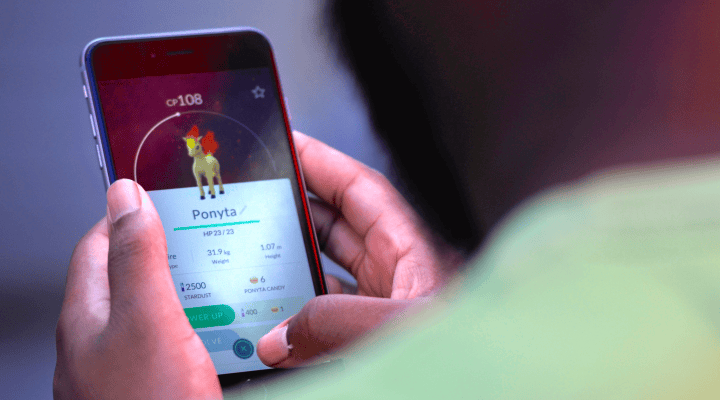
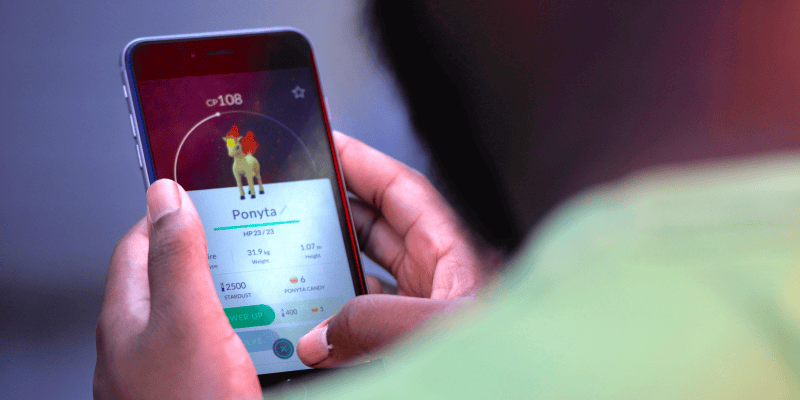
“Pokémon Go” became a global gaming phenomenon after it launched last year. It also might have become a traffic menace.

Looking at data from Tippecanoe County, Indiana, a new study out of Purdue University found that traffic accidents rose sharply in the areas near PokéStops, real-world destinations where game players collect virtual Pokémon characters. The study suggests that “Pokémon Go”-associated traffic accidents in the county could have caused two deaths, 31 injuries, and nearly $500,000 in vehicle damage.

“We determine that users playing the virtual reality game ‘Pokémon Go’ while driving gave rise to a disproportionate increase in vehicular crashes, injuries, and fatalities in the vicinity of PokeStops,” Mara Faccio and John McConnell, both professors of finance at Purdue’s Krannert School of Management, wrote in their report. They added: “However measured, the costs are significant.”

In their study, Faccio and McConnell examined thousands of traffic reports in Tippecanoe County before and after the launch of “Pokémon Go.” By comparing accident reports to the location of PokeStops, the researchers discovered a correlation — more than one hundred traffic accidents had occurred in the vicinity of PokeStops in the five-month period following the app’s release.

The researchers also estimated the effect the game might have had on traffic accidents throughout the United States. Extrapolating from their Tippecanoe County data, Faccio and McConnell estimated that the game could have been responsible for 256 deaths and 29,370 injuries nationwide during the same five-month period on which they focused. They also estimated that the game could have led to $2 billion and $7.3 billion worth of traffic-related damage.

“Pokémon Go” is a kind of augmented reality treasure hunt. Users play the game by walking or driving around in the real world while staring at their screens, looking for virtual objects and characters. The app uses geo-location to direct players to spots where they can capture Pokémon characters.

Concerns have been raised about the game almost since it’s release, with reports linking use of the app to criminal behaviortraffic accidents, and isolated injuries. Because the app requires players to move among a number of locations in order to play, it’s been speculated that the game could pose as a potential driving distraction.

“Pokémon Go” developer Niantic attempted to quash app-related traffic accidents by first issuing a warning to players in moving vehicles and later by making the game virtually impossible to play when users were traveling at high-speeds.