
Archives for September 18, 2017

S&P, Dow set to open at record highs as North Korea tensions ease

A trader works on the floor of the NYSE in New York
A trader works on the floor of the New York Stock Exchange (NYSE) in New York, U.S., September 8, 2017. REUTERS/Brendan McDermid

By Sruthi Shankar

(Reuters) – The S&P and the Dow were set to open at record highs on Monday as appetite for riskier assets improved on easing tensions on the Korean peninsula and ahead of the Federal Reserve’s meeting that could unveil plans to trim its bloated balance sheet.

A relatively quiet North Korea and U.S. Secretary of State Rex Tillerson’s comments on “peaceful solution” over the weekend have calmed investors.

However, the tensions could be back in focus with U.S. President Donald Trump set to address world leaders at the United Nations on Tuesday.

The Federal Open Market Committee’s two-day meeting starting on Tuesday is unlikely to result in an interest rate increase, but investors will focus on how Fed Chair Janet Yellen views recent inflation readings for clues on the timing of further rate hikes.

The central bank is also expected to announce plans to begin unwinding its $4.2 trillion portfolio of Treasuries and mortgage-backed securities, nearly a decade after the global financial crisis.

“Traders are coming in optimistically given no new geopolitical issues concerning North Korea. They are looking forward to the Fed meeting,” said Andre Bakhos, managing director of Janlyn Capital in Bernardsville, New Jersey.

Persistently weak readings of inflation that have remained below the Fed’s 2 percent target rate have been a concern for policymakers.

However, a stronger-than-expected rise in consumer prices in August triggered a more than 50 percent rise in the odds of a December rate hike, according to CME Group’s FedWatch tool.

At 8:30 a.m. ET (1230 GMT), S&P 500 e-minis <ESc2> were up 4 points, or 0.16 percent, with 103 contracts changing hands.

Nasdaq 100 e-minis <NQc2> were up 3.5 points, or 0.06 percent, in volume of 23 contracts.

Dow e-minis <1YMc2> were up 60 points, or 0.27 percent, with 15 contracts changing hands.

On Friday, the benchmark S&P 500 index closed at a record high, hitting the 2,500 level for the first time, largely helped by a rebound in technology stocks.

The S&P’s record came less than four months after it closed above 2,400 and brought 2017’s gain to nearly 12 percent.

“Investors are looking at equities as the best game in town for returns,” Bakhos said.

Economic data in the day includes a report on NAHB Housing Market Index at 10 a.m. ET. The index, a measure seen as a proxy on domestic housing starts, is expected to edge down to 67 for September, from 68 in August.

In merger news, Orbital ATK <OA.N> jumped 20 percent in premarket trading after Northrop Grumman <NOC.N> said it would buy the missile and rocket maker for about $7.8 billion in cash. Northrop’s shares rose 1.64 percent.

Shares of Nabriva Therapeutics <NBRV.O> more than doubled after the company said its drug to treat community-acquired bacterial pneumonia met the main goal of a late-stage study.

Caterpillar <CAT.N> was up 1.6 percent, following an upgrade from UBS to “buy” from “neutral”.
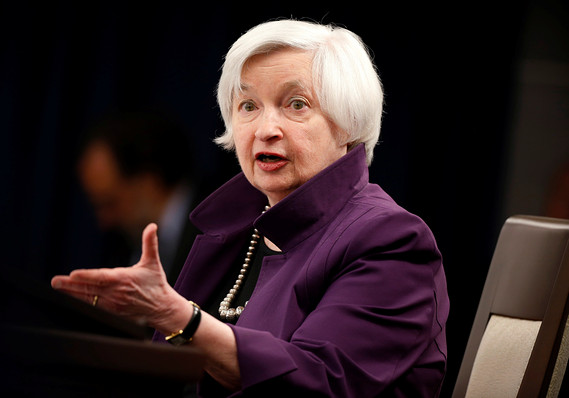
Fed to take historic leap into the unknown

Move to sell assets from its balance sheet is a turning point for monetary policy

The Federal Reserve is set to take a leap into the unknown this week by beginning to sell some of the roughly $3.7 trillion of bonds and mortgage securities it amassed during the financial crisis.

The Fed will meet on Tuesday and Wednesday and is widely expected at the end of the meeting to announce it plans to allow the run-off of its massive balance sheet beginning sometime in October. Fed Chairwoman Janet Yellen will hold a press conference afterwards to explain the decision.

“It will be an historic day” for the Fed, said Lewis Alexander, chief U.S. economist at Nomura Securities, one the central bank has long thought about but was unsure when it would come.

And still the final destination is unknown.

“We are heading for a place that is very different from where we are now. It will take years to get there and figure out where we are,” Alexander said.

Trying to keep financial markets calm, the Fed is not celebrating this turning point. Officials have openly admitting they have designed the first steps to be so small it will be like watching paint dry.

But economists have no doubt that bond yields will eventually move higher.

“The Fed is just hoping desperately it has been transparent enough so that the adjustment will be orderly,” said Jim Glassman, head economist for the commercial bank at J.P. Morgan Chase.

The central bank is trying to avoid a repeat “taper tantrum,” the swift run up of nearly 1 percentage point on the yield of the 10-year Treasury in 2013 after then-Chairman Ben Bernanke discussed the tapering of bond purchases for the first time.

Fed officials have known they would have to reverse course eventually. Hawks and doves agree the policy is not sustainable over the medium term because it potentially adds too much stimulus to a healthy economy.

Fed officials have concluded the economy is strong enough to withstand the tighter policy stance.

The Fed has put off the a key decision on how small the massive $4.5 trillion balance sheet should eventually be. This impacts the mechanics of how the Fed will conduct monetary policy in the future.

A small balance sheet would allow the Fed to return to the policy practice in place since the 1980s to target the Fed funds rate. The central bank would make small adjustments in reserves to fine-tune the federal funds rate..

A larger funds rate means the Fed has to use a reverse-repo rate to set a floor for policy.

A reverse repo is when the Fed accepts cash from counterparties such as banks and money-market funds on an overnight basis in return for a security. The Fed effectively uses the transactions to set a floor for rates.

Dudley said he expects the Fed will ultimately favor maintaining a floor-system. The temporary reverse-repo program had initially been seen as temporary but may be a permanent aspect of the operating regime.


‘Age in place’: How self-driving cars will transform retirement

The U.S. is, slowly but surely, inching closer toward seeing the self-driving car on the road. Just Wednesday, the House of Representatives passed the SELF DRIVE Act to expedite the introduction of autonomous cars.

Beyond the obvious perks they would bring like fewer accidents, decreased traffic, and more free time, there are vast implications for housing — particularly housing for the elderly. In fact, the SELF DRIVE Act specifically cites the potential to help seniors and those with disabilities live more independently as a primary benefit of self-driving vehicles.

A major win for the elderly

The number of Americans age 65 and older will increase to more than 71 million by 2030 – when the senior population will reach its peak, according to U.S. Census Bureau data. Plus, it turns out that more than 20% of seniors age 65 and older – nearly 7 million people – do not drive at all.

“The aging of the population converging with autonomous vehicles might close the coming mobility gap for an aging society,” Joseph Coughlin, the director of the Massachusetts Institute for Technology AgeLab, told The New York Times.

Autonomous vehicles (AVs) would “enable the elderly to stay in their existing home while aging in place, maintaining independence despite losing their driving rights,” writes Rick Palacios, Jr., director of research at John Burns Real Estate Consulting Group, in a new research note. In turn, the repair and remodel industry could benefit from the elderly staying in their existing homes, according to Palacios.

Companies like Home Depot (HD) and Lowe’s (LOW) already profit from the fact that owners are choosing to renovate and expand rather than move.

Since 2008, the average time homeowners have stayed in their houses before selling has doubled to nearly eight years, according to Attom Data Solutions. Garages can be converted to living spaces, whether they be in-home fitness centers or additional bedrooms, requiring complete makeovers, according to Palacios.

For seniors, staying at home can also require extensive remodeling. Citing grab bars, slip-resistant flooring, and wider doors and hallways to accommodate wheel chairs, Palacios says many remodeling projects can enable the elderly to stay in place and navigate their own homes.

Of course, elders choose to move to independent living facilities for reasons beyond losing the ability to drive. Even if older folks can get around, they may not be able to maintain their homes and might not need as much space if their kids have moved away.

Optimizing prime real estate

In addition to accommodating the elderly, autonomous vehicles will be a huge game-changer for developers. Builders will have more access to prime real estate, as previously vital parking lots, auto dealerships and gas stations fade into oblivion, according to Palacios.

“Additional supply in historically supply constrained locations will likely dampen home price appreciation and alleviate housing shortages in many cities,” he says.

At first, there may be less demand for outlying locations because of increased housing supply in central areas. However, self-driving cars could ultimately help consumers accept longer commutes.

“AVs will transform billions of commuting hours into time that can be reclaimed for remote working or personal recharging, which should boost in-office productivity too,” Palacios says.

Efficiency is key

Palacios says to bid adieu to wide streets, massive driveways and three-car garages. “Consumers will be buying a home where 100% of the square footage is truly livable,” he says.

Self-driving cars won’t just benefit car owners. People can forgo ownership completely and rely entirely on ride-hailing services like Uber and Lyft as self-driving capabilities may make them more ubiquitous.

In fact, developers like Florida East Coast Realty’s Jerry Hollo say they’re already starting to reward residents who don’t own cars. Tenants get $1000 annual credit toward their rent if they do not own a car and therefore don’t need a parking spot.

“This is the question — do we have to continue to provide parking as we see people move away from driving themselves? We’re definitely amid this push-and-pull situation,” he told Yahoo Finance.

While there’s still a long runway ahead until there’s mass adoption of self-driving cars, it’s clear that the proverbial American dream is quickly evolving. A beautiful home with a white picket fence and two-car garage will become a thing of the past as self-driving cars upend the way we live.

Scrapped Flights Risk Reviving Ryanair’s Bad-Boy Image

Scrapped Flights Risk Reviving Ryanair’s Bad-Boy Image

Ryanair Holdings Plc risks reviving its reputation for slack customer service with a move to scrap hundreds of flights through the end of October because of poor planning amid aggressive expansion. The cancellations could leave hundreds of thousands of passengers in the lurch, undermining efforts by Europe’s biggest discount airline to improve its image and woo more lucrative customers. Ryanair began its Always Getting Better program in 2014 to make flying with the no-frills carrier less onerous, introducing faster boarding for business travelers, discounts for children and sleeker aircraft cabins. “It is the potential for long-term damage that concerns us,” Damian Brewer, an analyst with RBC Capital Markets, said Monday in a note to clients.

While the scrapped flights account for only about 2 percent of normal daily operations, the cause was avoidable and stems from the company’s aggressive management style. As it ramped up capacity, Ryanair overscheduled its crews, which has led to a vacation backlog as it scrambles to meet holiday requirements by Irish authorities.

“We were trying to give too many pilots blocks of four weeks leave,” said O’Leary. “We have mismanaged that process.”

Image-Improvement Project

The fiasco undermines O’Leary’s efforts to improve Ryanair’s image and woo more lucrative customers. Ryanair began its Always Getting Better program in 2014 to make flying with the no-frills carrier less onerous, introducing faster boarding for business travelers, discounts for children and sleeker aircraft cabins.

“It is the potential for long-term damage that concerns us,” Damian Brewer, an analyst with RBC Capital Markets, said Monday in a note to clients. “The poor PR could deter future bookings and may well put off more time-sensitive higher yielding demand, like business trips, if the carrier is seen as unreliable and less punctual.”

Ryanair shares dropped 1.9 percent to 16.76 euros as of 2:04 p.m. in Dublin. That pared the stock’s gains this year to 16 percent, valuing the company at 19.9 billion euros ($23.8 billion).

The budget carrier plans to release the full list of affected flights by Tuesday. The company worried millions of customers by announcing on Friday that it expects to cancel 40 to 50 flights a day for the coming six weeks. Some 162 flights were dropped between Saturday and Sunday, with another 164 due to be cut through Wednesday.

97% Full

Ryanair has been running its system at the limit, with 97 percent of seats occupied in August, when the carrier flew 12.7 million passengers. Flights are operating as usual for customers who haven’t received emails from the carrier.

The airline is mandated by the Irish Aviation Authority to bring staff time-off in line with the calendar year from Jan. 1, requiring it to distribute the backlog before the end of 2017. That left the carrier without enough pilots and flight attendants to operate its full fleet of Boeing Co. 737s until the start of its winter timetable in November.

“My apologies to our investors but also primarily to our customers for any uncertainty or any inconvenience we’ve caused you over the weekend,” O’Leary said. “It wasn’t done lightly, it wasn’t done out of some dismissive or ‘don’t-care’ attitude.”

Bitcoin needs to be worth $1,000,000 to be a legitimate currency

Think bitcoin is in bubble territory? You ain’t seen nothing yet, says one cryptocurrency expert, who believes its value needs to surge by about 300 times over the next several years to be considered a legitimate currency or risk retreating into obscurity and obsolescence.

Bitcoin, the No. 1 cryptocurrency, has drawn outsize attention over its parabolic rise—and the recent, brutal plunge it has been enduring in recent trade.

Some market participants, however, make the case that despite its roughly 260% year-to-date rise BTCUSD, +8.85% it has to clear a far more stratospheric value hurdle to evolve into a practical form of money alongside fiat units like the U.S. dollar DXY, +0.03% Europe’s euro EURUSD, +0.0837%  or British poundGBPUSD, -0.2575%

A single bitcoin was worth about $3,568 in recent trade, off lows of the past few days, according to data site Coindesk.com, amid regulatory headwinds in China and critical comments from Wall Street pros like J.P. Morgan Chase & Co.’s CEO Jamie Dimon.

Still, a bitcoin would need to be worth a stunning $1,000,000 to be a bona fide monetary unit, says Iqbal Gandham, U.K managing director at eToro, a trading platform.

In other words, the digital currency would need to see a 300 fold run-up from its current level. To be sure, Gandham isn’t making a prediction; though he believes the currency has the ability to scale such lofty levels, Gandham thinks that bitcoin needsto climb to such a level to be truly viable as a monetary unit.

To understand why is to understand the tiniest component of bitcoin—the Satoshi. Named after the purported creator of bitcoin, Satoshi Nakamoto. A Satoshi is equal to 0.00000001 bitcoin.

Put another way, one bitcoin contains 100 million Satoshis.

Satoshi’s value in dollars equated to $0.0000356819 at last check. Gandham argues that a Satoshi needs to be equivalent to a single penny, which it would when one bitcoin is worth $1,000,000.

“It is the Satoshi with which people will buy a cup of coffee,” Gandham told MarketWatch. He said using bitcoin now to purchase goods and services, as one would with dollars, isn’t feasible because bitcoin hasn’t reached the necessary economies of scale.

An actual Satoshi note that is redeemable for real money.

“People don’t use a bar of gold to buy things, they use subdivisions of gold,” he said, saying that using bitcoin now to purchase items is like using a bar of gold to purchase a beverage or a meal.

Gandham also said bitcoin really needs to get to that million-dollar mark in the next few years. Some are already wagering that it will get close: John McAfee, founder of his namesake antivirus software company says bitcoin is headed to the $500,000 level within three years.

“It needs to get there in the next few years if it is really going to work,” Gandham said. “People will only spend the subdivision of bitcoin—and you can only spend the subdivision—if they are of reasonable value,” he said.

Bitcoin has been in the buzzy consciousness of average folks for the better part of the past decade. Created at the height of the financial crisis, it has emerged for some as among the clearest alternatives to government-backed currencies.

Bitcoin bulls argue that much of the modern currency world is a product of a manufactured economy, in which central banks print money to boost economic growth, putting bitcoin and other digital currencies, like Ethereum, in position to be considered on par, if not better than, their fiat counterparts in terms of their economic utility.

Against the backdrop of easy-money policies, the Dow Jones Industrial AverageDJIA, +0.29% the S&P 500 index SPX, +0.18%  and the Nasdaq Composite IndexCOMP, +0.30%  are all at their highest levels in history, while the 10-year Treasury note TMUBMUSD10Y, +0.84% with prices moving inversely to yields, seeing yields near historic lows.

Because bitcoin is decentralized from central banks or governments, individuals can conduct transactions without an intermediary. That is part of the appeal of bitcoin.

What’s more, digital currencies are underpinned by the so-called blockchain, a digital ledger that cannot be altered. For many, the blockchain—the promise of and applications that can run atop these computerized ledgers, such as innovative ways to execute and record stock trades, document loans or track property records—are the most crucial and lucrative aspects of the digital-currency realm.

So far, the ambitions of bitcoin cheerleaders haven’t translated in to a killer application, as Apple Inc.’s AAPL, +0.27% founder Steve Jobs would say. Meanwhile, growing scrutiny over bitcoin activity in China and comments from Dimon, who called the currency a “fraud,” has proved the biggest drag on so-called cybercurrencies.

Vitalik Buterin, the creator of the No. 2 digital currency, Ether on Ethereum’s blockchain, recently sounded warnings about the current hype and rapid rise of digital currencies on financial site Financial Magnates.

“I indeed think that we are in a bubble because all the cryptocurrencies are rising and people have a feeling that they will always continue to rise. A lot of projects are raising more money than what they would be able to in the normal VC market, and sometimes there is no match between the necessity and usefulness of the project and its ability to raise money. Additionally, this market is still young and people still don’t know how to differentiate between projects that will exist in the long term and those that won’t.

If bitcoin, and other digital currencies, can surmount its obstacles, it could take off, says Gandham.

That is because there are finite number of bitcoins that can be digitally mined, as is done by “miners” using powerful computers solving complex problems to create the crypto units and support the blockchain infrastructure.

Only about 21.5 million bitcoins will ever exist, based on its underlying code. It is estimated that about 16 million bitcoins have been mined so far, with only a portion of those in current circulation. Market participants also estimate that bitcoins will max out in 2141, about 124 years from now.

That is a relatively tiny number of bitcoins for a currency with ambitions of being a global currency. That is also why the value of Satoshis carry such significance. By comparison, there are approximately 1.56 trillion Federal Reserve notes in circulation as of July 12, according to the Federal Reserve. There are about $13.6 trillion dollars in circulation, according to the Fed, as of August 2017.

While bitcoin cannot be increased once developers and miners hit the limit, Gandham says, subdivisions can be increased to, say, a conversion rate of 500,000,000 Satoshis to every one bitcoin, for example, greatly expanding the supply of Satoshis.

That level of growth may help smooth out bitcoin trading, and perhaps make it less volatile on a day-to-day and intraday basis.

“If bitcoin is at a million dollars the day-to-day valuation change will be insignificant to the actual value,” Gandham said.

Three areas that could make early cannabis investors even richer

Photo: Testing, research and extraction technologies are one of three prime areas where the massive Cannabis boom is being felt immediately. We’ve singled out Abattis Bioceuticals Corp. (OTC: ATTBF) (CSE: ATT) as an example company that cannabis minded investors can get in on ahead of the crowd.


After what was easily the hottest year for cannabis stocks, expectations on the legal marijuana related sector are higher than ever.

Of the dozen main players in the space, the average marijuana stock is up 332% over the past year.1

What savvy investors are focussing on now is how this rapidly developing sector can support what looks to be massive growth into the future. Apart from the obvious legalization, three areas are emerging that will be critical in the bid to ensure the sector’s meteoric rise: Better Testing and ExtractionMore Medical Uses and Ensuring Adequate Supplies.

Companies who can deliver on these promises stand to make Cannabis investors a lot of money.

One company that appears to be well situated to capitalize on the Research, Testing and Extraction segment is Abattis Bioceuticals Corp (CSE: ATT – OTCQB: ATTBF), which we discuss below, along with a few other key players positioned for success.

The overall optimism led researchers at New Frontier Data to project that the cannabis industry will have created a whopping 283,422 jobs, grow to and generate $2.3 Billion in tax revenue—both by 2020.2

The same study predicted that the sector as a whole will grow to $24.1 Billion by 2025.

But in order to maintain the course in order to get to $24 Billion, companies will need to meet the demands of these three key developing areas:

– Our first and favorite sector may surprise you since it is not actually the cultivation, it’s going to be way bigger, and we’ve found a company that is widely undiscovered as noted below in our first example:


  1.  BETTER TESTING AND EXTRACTION

    Company: Abattis Bioceuticals Corp (CSE: ATT – OTCQB: ATTBF)

    Mkt Cap: $15.21M

    Still very early in its company’s story, Abattis has wisely burst onto the scene as a tester.  Wasting no time in getting its cannabis testing facility opened in Langley, BC, ahead of Canada’s full-scale legalization4 of cannabis expected by July 1, 2018, Abattis swiftly got itself into the game and already has garnered revenues.

    Abattis Bioceuticals’ subsidiary Northern Vine Labs opened its doors in May 2017, to serve the rising demand for cannabis testing. The company had been pursuing that license since 2014, and officially became licensed in October 2016.

    What is cannabis testing?

    In order to maintain quality control, and meet both regulatory, and market demands, cannabis laboratories test for potency, purity, and details such as terpene counts. Testing also protects the consumer by screening for contaminants such as bacteria, heavy metals, and unapproved pesticides.

    (For more information on Health Canada’s mandatory testing on medical cannabis click here. )

    For the 52 licensed producers in Canada, Health Canada introduced random testing to address these issues. Abattis’s facility is just 1 of 30 approved facilities in Canada, and one of the eight in BC’s lower mainland. Even better, Abattis is the only company available on the public markets, making it a solid choice in this sector. Once recreational cannabis becomes available in mid-2018, everyone will have to use a facility like what Abattis already has a leg up on, so keep that in mind while the PPS is low here.


    “Abattis Bioceuticals is one of very few publicly listed companies with comprehensive testing and extraction capabilities. They are also one of only 30 Health Canada approved labs able to handle cannabis for all forms of testing.”


    Demand for cannabis testing is big and getting bigger fast.

    The global cannabis testing market is expected to grow at a compound annual growth rate of 11.5%, culminating towards a $1.42 billion market by 2021.5

    In order to hit the shelves, producers will need to have an accurate depiction of the drug’s potency, including the levels of the most sought after medicinal components of cannabis, THC and CBD. To do that, even the mega producers will require a third party to test their product before it goes to market.

    Abattis is smartly staking itself as a leader in the testing field, having built a lab, and staffed it with industry experts to ensure the quality standard they promise the sector.

    The Northern Vine Labs facility will not just be used for testing, however. Another major component to the facility will be in extraction and formulation.

    This means that the company will be involved in innovation of methods to extract medicinal components from cannabis on a massive industrial scale, and to formulate them for consumer products.

    As a cooperative arm of the company to run in conjunction with Northern Vine Labs, Abattis has formed another subsidiary called Vergence, in order to market and sell natural, safe, and effective health products.

    Those products will target reducing pain caused from inflammation, boost immunity, and increase nutrient absorption. As natural remedies, these products will likely reach the market faster than a pharmaceutical product would, without the lengthy and costly clinical trials.

    According to the CBD Report published by The Hemp Business Journal, the US hemp-derived CBD market will total approximately $115 million this year, with an estimate to grow to $2.1 billion by 2020.6

    Abattis is tight-lipped about its ability to extract cannabinoids and terpenoids from cannabis at its facilities, however, it hasn’t been shy about hinting that it aims to be a leader in the extraction space. There’s a possibility that extraction will overtake testing as the company’s primary revenue model in the future.


  2.  MORE MEDICAL USES

    Company: Cara Therapeutics (CARA)

    Mkt Cap: $495M

    After a wild month that saw Cara Therapeutics rise to $26 per share, and plummeting to $12 per share within a week, this giant is on its way back to stardom.

    The bounce back came on the announcement of encouraging data from its phase 1 trials of oral CR845, as a treatment for pain and itching in patients with chronic kidney disease and undergoing hemodialysis. All tested doses were well tolerated when administrated daily.

    This came as a relief for shareholders after they saw the value of the company drop upon the same drug’s treatment for patients with osteoarthritis (OA) of the hip or knee. Lower doses achieved statistical significance. Only the highest dose received statistical significance. It’s still possible based on those results to test higher doses for significance.

    Medical marijuana sales, from pharmaceutical extracts to medically cultivated flowers, currently make up the lion’s share of the cannabis sector. Medical sales in 2017 are projected to grow to $5.3 billion in 2017, and account for 67% of total cannabis sales.2

    That means that medical cannabis patients are outspending adult-use consumers at a nearly 3 to 1 basis.

    While medical sales are projected to exceed $13.2 billion by 2020, the medical share of the total cannabis sales is expected to drop to 55% of all sales as well.

    Much of that has to do with the recreational legalization in larger states, like California, and in holiday states like Nevada.

    As cannabis stocks fly, the developers of new medicinal applications and products stand to make the most gains.

    While Cara fluctuated during its trials, new drug development was the reason that AXIM Biotechnologies (NASDAQ: AXIM) absolutely crushed it in 2016-17.

    As stated earlier, the average marijuana stock rose 332% over the last year.

    Much of that increase is skewed by the meteoric rise of AXIM Biotechnologies, whose year-over-year increase was 2,363%.

    You read that right.

    A large portion of that success can be attributed to the development of AXIM’s CanChew Plus Chewing Gum, used for the treatment of irritable bowel syndrome—or IBS. Used as an alternative delivery system to inhalation, CanChew tapped into the act of chewing which bypasses the gastrointestinal system and improves the bioavailability of cannabinoids.3

    Because medical uses for cannabis are still in their infancy, there are plenty of repeatable AXIM-like stories out there yet to be told.


  1. ENSURING A SUPPLY CHAIN SURPLUS

          Aurora Cannabis – ACBFF, ACB

          Mkt Cap: $941.6M

Second only to Axim over the last year was top performer Aurora Cannabis (NASDAQ:ACBFF)(TSX: ACB), which grew 465% year-over-year, rising from a low of $0.30 to $2.59 and a market cap just a shade under a Billion, at $941.6 million.

The company’s well deserved move to the TSX from the TSX venture this week is a pat on the back for a solid year that included record yields at Aurora’s Mountain View County production facility, and on the anticipation of the opening of its 100,000+ kg Aurora Sky facility to be located near the Edmonton International Airport.

With the nearing completion of a third production facility in Pointe-Claire, Quebec, Aurora’s production capacity is skyrocketing.

But supplies are still lagging in the market as a whole, especially after shelves emptied rapidly in Nevada after the state began adult-use sales on July 1.

Supply issues reached such dire levels, that Nevada Governor Brian Sandoval had to issue a state of emergency to allow state officials to decide on new rules to ease the shortage.7

As Canada (where Aurora is headquartered) inches closer to nation-wide marijuana legalization, it’s doubtful that the country will encounter the same scale of supply problems that hit Nevada.8 Especially with massive production coming from companies such as Aurora.

With other major Canadian producers, such as Canopy Growth Corp. (TSX: WEED) growing for both the North American and German markets, it’ll be interesting to see how supplies meet demand on a global scale.

CAPTURING THE TREND

Cannabis has still not been registered as a medicine in any country, and only a small number of cannabinoid medicines have reached the market.

With over 100 cannabinoids, and over 700 other compounds such as flavonoids and terpenes, the cannabis plant is still barely understood, as the legality over researching it, and testing its benefits has provided hurdles until recently.9

Hence the need for new, better and more abundant research and testing capabilities to keep pace with the industry’s growth.


“In order to maintain this growth pattern, industry players will need to provide the market with More Medical Uses, Better Testing and Extraction, and to Ensure Supplies.”


Public perception of the drug has changed significantly over the past decade, with it being seen more favorably than ever.

According to a survey2 done by New Frontier Data and Full Circle Research this January, 55% of respondents believed “cannabis should be legalized, regulated and taxed like cigarettes and alcohol”, and an additional 26% believed it should at least be “legal for medical use with a doctor’s recommendation.”

In fact, only 9% responded that cannabis should be illegal. Overall, 63% of those surveyed believed that the federal government should legalize cannabis, and 86% believed it has valid medical uses.

In 2016, 4 out of the 5 US states that voted on adult-use of cannabis passed legalization initiatives, with an average adult-use vote of 53% in favour. And all 4 states that voted on medical use passed their initiatives, with an average medical use vote of 62%.

For those that still hold doubt to the growth potential of the cannabis sector, there’s really nothing that will convince you. Sales are growing significantly for retailers, even as more retailers hit the scene.

In order to maintain this growth pattern, industry players will need to provide the market with More Medical Uses, Better Testing and Extraction, and to Ensure Supplies.

If, as all of the indicators suggest, the industry continues on its staggering growth, the opportunity to take advantage of the emerging trends is here, now. The benefactors of the impact like Abattis Bioceuticals, stand to make huge gains, while the leaders like Aurora Cannabis and Axim can build an even bigger lead against competitors who must surely emerge.


For American News Group

By G. Joel Chury

Edited by; American News Group Editorial Staff


FOOTNOTES:

1 – Motley Fool (July 2017) – The Average Marijuana Stock is up 332% over the past year

https://www.fool.com/investing/2017/07/24/the-average-marijuana-stock-is-up-332-over-the-tra.aspx?yptr=yahoo

2 – New Frontier Data – The Cannabis Industry Annual Report: 2017 Legal Marijuana Outlook

https://newfrontierdata.com/wp-content/uploads/2015/11/CIAR_Webinar_FINAL.pdf

3 – YAHOO! Finance – AXIM Biotech: Cannabinoid Potential Worth the Complexity

https://finance.yahoo.com/news/axim-biotech-cannabinoid-potential-worth-130000914.html

4 – Toronto Star – Trudeau government to legalize marijuana by Canada Day 2018: reports

https://www.thestar.com/news/canada/2017/03/26/trudeau-government-to-legalize-marijuana-by-canada-day-2018-reports.html

5 – Markets and Markets (March 2017) – Cannabis Testing Market by Product & Software (LC, GC, Spectroscopy (MS, Atomic), Column, Standards, Accessories, LIMS), Service (Potency, Pesticides, Heavy Metal, Genetic Testing), End User (Lab, Pharmaceutical, Research) – Global Forecast to 2021

https://www.marketsandmarkets.com/Market-Reports/cannabis-testing-market-46932450.html

6 – Hemp Business Journal – The CBD Report

https://www.hempbizjournal.com/the-cbd-report/

7 – Fox News (July 2017) – Nevada marijuana supply running low, state of emergency declared, governor says

https://www.foxnews.com/us/2017/07/11/nevada-marijuana-supply-running-low-state-emergency-declared-governor-says.html

8 – Fortune Magazine – Here’s Why Nevada’s Marijuana Supply Can’t Keep up with Sales

https://fortune.com/2017/07/12/nevada-marijuana-taxes-shortage/

9 – The Medicine Maker (June 2017) – Cannabis Complex

https://themedicinemaker.com/issues/0617/cannabis-complex/


Disclaimer: Nothing in this publication should be considered as personalized financial advice. We are not licensed under securities laws to address your particular financial situation. No communication by our employees to you should be deemed as personalized financial advice. Please consult a licensed financial advisor before making any investment decision. This is a paid advertisement and is neither an offer nor recommendation to buy or sell any security. We hold no investment licenses and are thus neither licensed nor qualified to provide investment advice. The content in this report or email is not provided to any individual with a view toward their individual circumstances. Americannewsgroup.com is a wholly-owned subsidiary of Market IQ Media Group, Inc. (“MIQ”). MIQ has been paid a fee for Abattis Bioceuticals Corp. from the company direct of ten thousand canadian dollars, as well as two hundred and fifty thousand free trading shares of ATT.CN for advertising and digital media. There may be 3rd parties who may have shares of Abattis Bioceuticals Corp., and may liquidate their shares which could have a negative effect on the price of the stock. This compensation constitutes a conflict of interest as to our ability to remain objective in our communication regarding the profiled company. Because of this conflict, individuals are strongly encouraged to not use this newsletter as the basis for any investment decision. We have no intentions of selling any shares within the next 72 hours of this publishing date (August 9, 2017), but reserve the right to buy and sell shares thereafter without any further notice.
While all information is believed to be reliable, it is not guaranteed by us to be accurate. Individuals should assume that all information contained in our newsletter is not trustworthy unless verified by their own independent research. Also, because events and circumstances frequently do not occur as expected, there will likely be differences between the any predictions and actual results. Always consult a real licensed investment professional before making any investment decision. Be extremely careful, investing in securities carries a high degree of risk; you may likely lose some or all of the investment