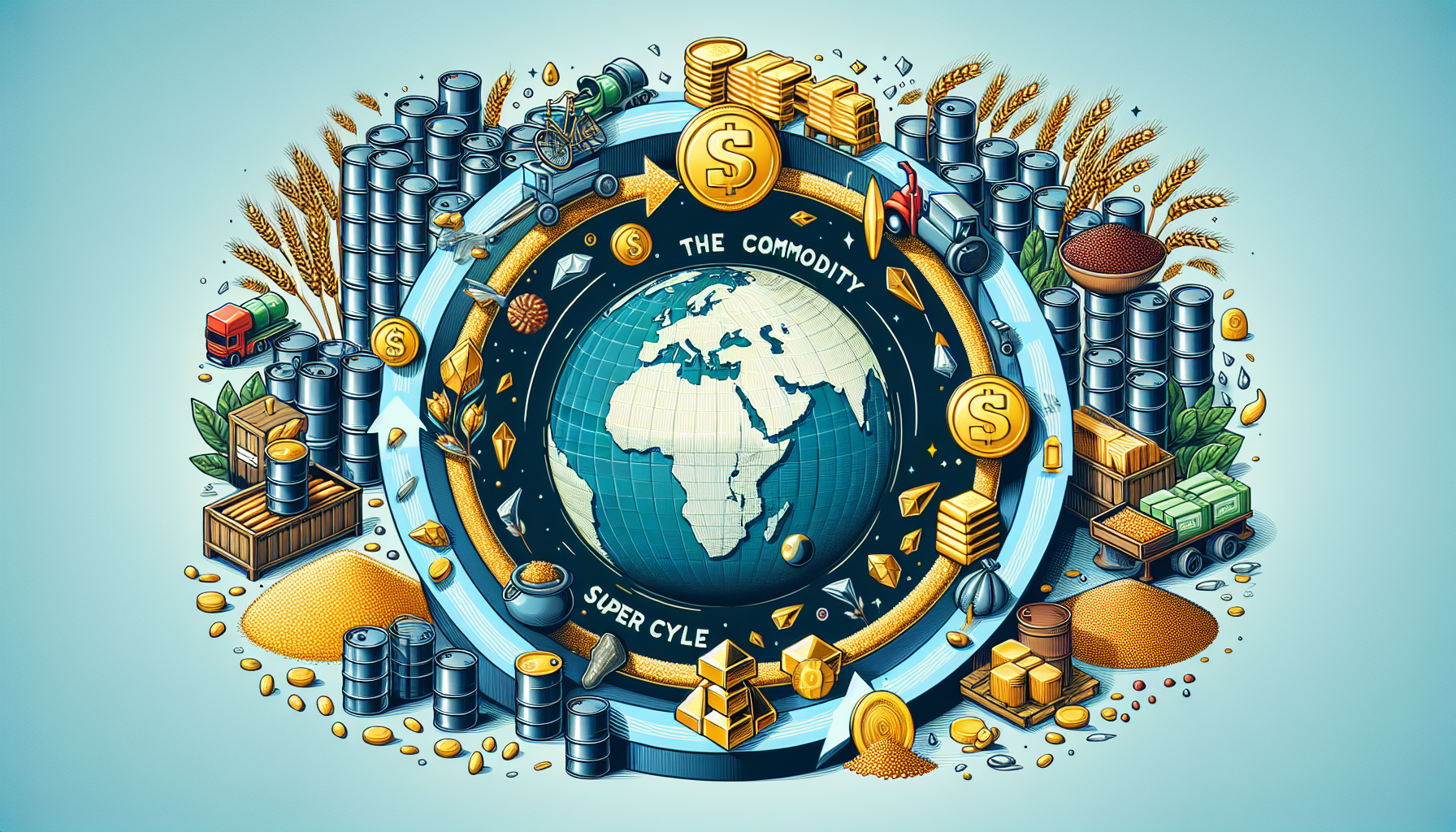
Canada finds itself at the epicenter of a powerful economic phenomenon that’s capturing attention from Bay Street to Main Street. The current commodity super cycle is transforming the nation’s economic landscape in ways not seen since the early 2000s, driving everything from soaring resource stock prices to renewed infrastructure investments across provincial boundaries.
The magnitude of this commodity super cycle becomes clear when examining the numbers. Canadian mining companies have reported record-breaking quarterly earnings, with copper producers seeing profit margins expand by over 200% compared to pre-cycle levels. Oil sands operations that faced uncertainty just years ago are now operating at full capacity, while lithium and rare earth metal deposits previously considered economically unviable are attracting billions in development capital.
What makes this cycle particularly significant for Canada is the nation’s unique positioning as a resource-rich democracy in an increasingly unstable world. Global supply chain disruptions have highlighted the importance of reliable commodity sources, and Canada’s political stability combined with its vast natural resource endowments makes it an attractive alternative to traditional suppliers. International buyers are actively seeking long-term partnerships with Canadian producers, creating a foundation for sustained demand that extends well beyond typical boom-bust cycles.
The ripple effects of this commodity super cycle extend far beyond resource extraction companies. Canadian railways are experiencing unprecedented freight volumes, with CN Rail and CP Kansas City reporting capacity constraints on key corridors. Port facilities in Vancouver and Thunder Bay are undergoing major expansions to handle increased export volumes. Even Canadian technology companies are benefiting, as mining operations invest heavily in automation, artificial intelligence, and environmental monitoring systems.
Regional impacts vary dramatically across the country, creating both opportunities and challenges for provincial governments. Alberta is experiencing a renaissance in its energy sector, while British Columbia sees surging demand for its forestry products and mining assets. Saskatchewan’s potash producers are commanding premium prices as global food security concerns drive fertilizer demand. Meanwhile, Ontario and Quebec are positioning themselves as critical mineral processing hubs, adding value to raw materials before export.
The current commodity super cycle differs from previous ones in several crucial ways. Environmental, social, and governance (ESG) considerations now play a central role in commodity investment decisions, pushing Canadian producers to adopt cleaner extraction methods and more transparent reporting practices. This ESG focus actually strengthens Canada’s competitive position, as the country’s regulatory framework and environmental standards align with global investor expectations.
Labor markets across resource-dependent regions are tightening rapidly, with skilled trades workers commanding salaries that haven’t been seen in over a decade. Universities and technical colleges are scrambling to expand programs in mining engineering, geology, and petroleum engineering as enrollment surges. Indigenous communities, many located near resource deposits, are negotiating more favorable partnership agreements and taking equity stakes in major projects.
Currency implications add another layer of complexity to Canada’s commodity story. The strengthening Canadian dollar, partly driven by resource demand, makes Canadian exports more expensive while reducing the competitiveness of manufacturing sectors. The Bank of Canada faces the delicate task of managing monetary policy during a period when different sectors of the economy are experiencing vastly different growth trajectories.
Looking ahead, the sustainability of this commodity super cycle will depend largely on global economic conditions and the pace of energy transition initiatives. While renewable energy adoption threatens long-term demand for fossil fuels, the massive infrastructure requirements for solar panels, wind turbines, and battery storage systems are driving unprecedented demand for critical minerals that Canada possesses in abundance.
The current commodity super cycle represents more than just another resource boom for Canada—it’s a fundamental shift that could define the nation’s economic trajectory for decades. With careful policy management and strategic investment in value-added processing capabilities, Canada has the opportunity to leverage this cycle into lasting economic diversification and prosperity. The question isn’t whether this cycle will impact Canada’s future, but rather how effectively the country will capitalize on this once-in-a-generation opportunity.