Archives for March 13, 2020

Windows 10’s Your Phone app will let you copy-paste to Samsung devices
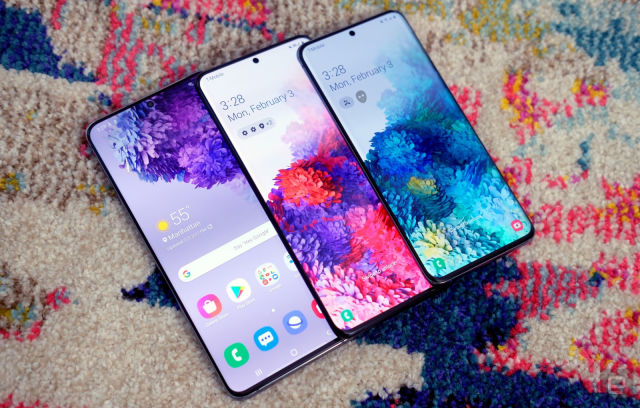
The feature will work between a Windows 10 PC and a Samsung Galaxy S20 or Z Flip device.

Microsoft is working on at least a couple of big features for Windows 10’s Your Phone app, and Insider Preview users will be able to test them out after installing the latest test build. One of those features is the ability to copy-paste text and images between a phone and PC — for this particular iteration, however, the capability will only work between a Samsung Galaxy S20, 20+, S20 Ultra or Z Flip device and a PC that’s running Windows 10 version April 10, 2018 or newer.

To activate the feature, a user simply has to toggle it on in Settings. Once it’s on, they can copy-paste text and images by using the familiar CTRL+C and CTRL+V commands or by tapping and holding the phone’s screen.

Microsoft

In addition, users can now switch off their mobile device’s display while using the app’s phone screen feature on their PC. Microsoft calls it the “black screen” function, and it kicks in the moment a session is initiated and dismisses itself after it ends. Users can dismiss black screen by pressing the power button, swiping the screen and activating Bixby, as well.

Finally, the Your Phone app now also supports RCS messages for Galaxy S20 users and can see when their messages get marked as “Read.” Again, only Insider Preview users in the Fast ring can access these features at the moment — those who aren’t part of the program will have to wait for their wider release.

Washington state approves stronger facial recognition regulations

They’re ‘one of the first and most comprehensive laws to regulate facial recognition technology.’

Washington officials have approved a set of stronger facial recognition regulations for the state. Members of the state’s House of Representatives and the Senate have reached a final compromise on the rules designed to regulate the use of facial recognition. Since Washington often leads the way in tech-related laws — it was the first state to pass its own net neutrality law — this sounds like an auspicious development for privacy advocates across the nation.

The House and the Senate originally couldn’t agree on the language used for Senate Bill 6280. After a series of negotiations, though, they were able to decide on a final version of the bill, which the lawmakers say is “one of the first and most comprehensive laws to regulate facial recognition technology in the nation.”

Under the bill, facial recognition technologies have to be tested for fairness and accuracy, since they’ve been proven to show bias against women and people of color. Law enforcement agencies would have to secure a court order or a warrant to be able to use them, and Washington state has to form a task force to study how public agencies should use and deploy facial recognition technologies.

Rep. Debra Entenman (D-Kent), one of the bill’s sponsors, said in a statement:

“The agreement we reached is a sensible compromise. I am confident that this bill now provides adequate guardrails for this emerging technology. It will mandate community input in how facial recognition technology is used and ensure that any use by the government is thoroughly vetted for accuracy, necessity, and fairness.”

Now that both the House and the Senate have approved the amended bill, the only thing it’s waiting for is the governor’s signature.

Microsoft issues emergency Windows 10 patch for leaked vulnerability
It disclosed the critical, “wormable” bug earlier than it wanted.

Microsoft has released an unscheduled patch for a security bug that it accidentally disclosed during the release of its March 2020 patch several days ago. While difficult to exploit, the vulnerability is “critical” because it could allow malicious code to automatically spread from one machine to another. By releasing the fix now, Microsoft aims to avoid a chain reaction scenario that played out with the WannaCry and NotPetya viruses in 2017.

The security hole exists in Microsoft’s Server Message block (SMB) protocol on recent 32- and 64-bit versions of Windows 10 both on the client and server sides. Researchers from Microsoft and elsewhere labeled it critical because the compromise of a single machine could compromise others on the same network. Microsoft said that there’s no evidence so far that the flaw is being actively exploited, but said it’s “more likely” than not to happen in the future.

An attacker who successfully exploited the vulnerability could gain the ability to execute code on the target server or client. To exploit the vulnerability against a server, an unauthenticated attacker could send a specially crafted packet to a targeted SMBv3 server. To exploit the vulnerability against a client, an unauthenticated attacker would need to configure a malicious SMBv3 server and convince a user to connect to it.

Windows 10 has strong defenses that make that scenario unlikely, but motivated and skilled attackers could likely engineer successful attacks. To prevent against that, users (especially those on networks) should install the KB4551762 security update as soon as possible or follow Microsoft’s mitigation advice. Most folks should get the patch installed automatically via Windows Update.

Google explains the complex tech behind the Pixel 4’s gesture radar
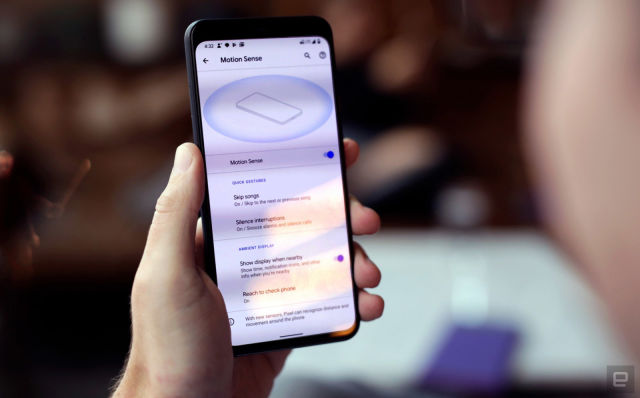
Getting Soli to work took a lot of volunteers and deep learning.

The Pixel 4’s radar-powered Soli motion-sensing system now lets you play and pause music with a swipe, which might seem like a simple thing to implement. According to a new explainer post by Google, however, Soli doesn’t work exactly how you might expect, and required a lot of new deep learning tech and training to make it work.

Soli’s short-range radar can essentially do two things: detect your presence to prepare the screen for face unlock, and read swiping or tapping gestures performed in the air above the phone. However, in order to make the antennae small enough for a smartphone, the radar is geared to detect motion rather than shapes.

That has the added advantage of privacy. Since Soli can’t form a well-defined image, there’s “no distinguishable image of a person’s body or face” that can be generated or used by Google, the researchers wrote.

The challenge for Google was to quickly and accurately interpret these temporal motions in order to figure out what the user is doing. At the same time, it had to account for movement of the phone when you’re walking, for instance, or vibrations when music is playing.

To do that, Soli sees the world as a sort of 3D graph, with the distance of the subject on the vertical axis, the velocity moving toward or away from the phone on the horizontal axis, and the brightness of each pixel representing the relative size of the object detected. The resulting data is shown above.

Using that data, the researchers created an AI model and trained the system using millions of gestures recorded from thousands of volunteers. Those were compared against radar recordings to create AI models using Google’s TensorFlow machine learning framework. The whole thing was optimized to run on the Pixel 4’s custom digital signal processors at up to 18,000 fps.

While Soli can only interpret relatively simple gestures for now, Google has high hopes for what it’ll do in the future. It believes the tech could one day be used on smaller devices like smartwatches where gestures would be more useful, or put to service for security, entertainment, education and more.

United Technologies (NYSE:UTX) Stock Price Down 9.9%
United Technologies Co. (NYSE:UTX)’s stock price was down 9.9% on Wednesday . The stock traded as low as $106.78 and last traded at $107.51, approximately 10,271,190 shares changed hands during trading. An increase of 99% from the average daily volume of 5,156,556 shares. The stock had previously closed at $119.37.

Several equities analysts have weighed in on UTX shares. Argus restated a “buy” rating and set a $170.00 target price on shares of United Technologies in a report on Wednesday, January 29th. Benchmark started coverage on shares of United Technologies in a report on Friday, January 31st. They set a “buy” rating and a $186.00 target price for the company. UBS Group raised their target price on shares of United Technologies from $157.00 to $170.00 and gave the company a “buy” rating in a report on Wednesday, January 15th. Credit Suisse Group dropped their target price on shares of United Technologies from $177.00 to $172.00 and set an “outperform” rating for the company in a report on Monday, February 24th. They noted that the move was a valuation call. Finally, ValuEngine upgraded shares of United Technologies from a “sell” rating to a “hold” rating in a report on Friday, February 28th. Four analysts have rated the stock with a hold rating and thirteen have assigned a buy rating to the company. United Technologies currently has a consensus rating of “Buy” and an average price target of $163.00.

The firm has a market capitalization of $103.29 billion, a PE ratio of 15.99, a P/E/G ratio of 1.78 and a beta of 1.26. The company has a quick ratio of 0.77, a current ratio of 1.08 and a debt-to-equity ratio of 0.90. The business’s fifty day moving average price is $145.11 and its 200 day moving average price is $143.37.

United Technologies (NYSE:UTX) last issued its quarterly earnings results on Tuesday, January 28th. The conglomerate reported $1.94 EPS for the quarter, topping analysts’ consensus estimates of $1.84 by $0.10. The business had revenue of $19.55 billion during the quarter, compared to the consensus estimate of $19.34 billion. United Technologies had a net margin of 7.19% and a return on equity of 16.60%. The company’s quarterly revenue was up 8.4% compared to the same quarter last year. During the same period in the previous year, the firm posted $1.95 earnings per share. As a group, sell-side analysts forecast that United Technologies Co. will post 8.28 earnings per share for the current fiscal year.

The company also recently declared a quarterly dividend, which was paid on Tuesday, March 10th. Stockholders of record on Friday, February 14th were issued a dividend of $0.735 per share. The ex-dividend date of this dividend was Thursday, February 13th. This represents a $2.94 dividend on an annualized basis and a dividend yield of 2.87%. United Technologies’s dividend payout ratio (DPR) is presently 35.59%.

Several hedge funds and other institutional investors have recently modified their holdings of the company. Bangor Savings Bank grew its holdings in United Technologies by 18.2% in the fourth quarter. Bangor Savings Bank now owns 6,995 shares of the conglomerate’s stock valued at $1,047,000 after purchasing an additional 1,078 shares during the period. Cannell Peter B & Co. Inc. grew its holdings in United Technologies by 1.7% in the fourth quarter. Cannell Peter B & Co. Inc. now owns 55,864 shares of the conglomerate’s stock valued at $8,366,000 after purchasing an additional 912 shares during the period. Windsor Group LTD grew its holdings in United Technologies by 5.9% in the fourth quarter. Windsor Group LTD now owns 7,978 shares of the conglomerate’s stock valued at $1,195,000 after purchasing an additional 448 shares during the period. Mitchell Sinkler & Starr PA grew its holdings in United Technologies by 7.7% in the fourth quarter. Mitchell Sinkler & Starr PA now owns 14,004 shares of the conglomerate’s stock valued at $2,097,000 after purchasing an additional 1,000 shares during the period. Finally, CCG Wealth Management LLC purchased a new stake in United Technologies in the fourth quarter valued at approximately $226,000. Institutional investors and hedge funds own 82.01% of the company’s stock.

About United Technologies (NYSE:UTX)

United Technologies Corporation provides technology products and services to building systems and aerospace industries worldwide. Its Otis segment designs, manufactures, sells, and installs passenger and freight elevators, escalators, and moving walkways; and offers modernization products to upgrade elevators and escalators, as well as maintenance and repair services.

Analysts Anticipate Lennar Co. (NYSE:LEN) Will Post Earnings of $0.83 Per Share

Analysts expect Lennar Co. (NYSE:LEN) to post earnings per share of $0.83 for the current fiscal quarter, Zacks Investment Research reports. Four analysts have issued estimates for Lennar’s earnings. The highest EPS estimate is $0.84 and the lowest is $0.82. Lennar reported earnings per share of $0.74 during the same quarter last year, which would indicate a positive year over year growth rate of 12.2%. The company is expected to announce its next earnings report before the market opens on Thursday, March 19th.

According to Zacks, analysts expect that Lennar will report full-year earnings of $6.19 per share for the current financial year, with EPS estimates ranging from $5.95 to $6.45. For the next fiscal year, analysts anticipate that the company will report earnings of $6.69 per share, with EPS estimates ranging from $6.22 to $7.17. Zacks Investment Research’s earnings per share averages are an average based on a survey of analysts that cover Lennar.

Lennar (NYSE:LEN) last issued its quarterly earnings data on Wednesday, January 8th. The construction company reported $2.13 EPS for the quarter, topping analysts’ consensus estimates of $1.90 by $0.23. Lennar had a net margin of 8.31% and a return on equity of 12.00%. The firm had revenue of $6.97 billion for the quarter, compared to analyst estimates of $6.60 billion. During the same quarter in the previous year, the business posted $1.96 EPS. The firm’s revenue was up 7.9% compared to the same quarter last year.

A number of equities analysts have commented on LEN shares. Bank of America lowered shares of Lennar from a “buy” rating to a “neutral” rating and cut their price objective for the stock from $78.00 to $66.00 in a report on Thursday. BTIG Research boosted their price objective on shares of Lennar from $75.00 to $78.00 and gave the stock a “buy” rating in a report on Thursday, January 9th. They noted that the move was a valuation call. Goldman Sachs Group started coverage on shares of Lennar in a report on Friday, December 6th. They issued a “buy” rating and a $71.00 price objective on the stock. Wedbush reiterated a “buy” rating and issued a $72.00 price objective on shares of Lennar in a report on Monday, December 30th. Finally, Barclays reiterated a “buy” rating and issued a $78.00 price objective on shares of Lennar in a report on Wednesday, February 19th. One equities research analyst has rated the stock with a sell rating, four have given a hold rating and thirteen have given a buy rating to the company’s stock. The company has an average rating of “Buy” and an average price target of $64.50.

Shares of LEN stock opened at $46.42 on Tuesday. Lennar has a 12 month low of $43.74 and a 12 month high of $71.38. The company has a debt-to-equity ratio of 0.49, a current ratio of 14.37 and a quick ratio of 1.15. The firm has a market capitalization of $18.75 billion, a P/E ratio of 8.06, a P/E/G ratio of 0.94 and a beta of 0.98. The company’s fifty day moving average price is $66.45 and its two-hundred day moving average price is $59.77.

In related news, Director Scott D. Stowell sold 300,000 shares of the business’s stock in a transaction dated Friday, January 24th. The shares were sold at an average price of $67.20, for a total transaction of $20,160,000.00. Following the completion of the sale, the director now owns 201,978 shares of the company’s stock, valued at approximately $13,572,921.60. The sale was disclosed in a legal filing with the SEC, which is available through this link. Also, insider David M. Collins sold 10,000 shares of the business’s stock in a transaction dated Wednesday, January 15th. The shares were sold at an average price of $62.54, for a total transaction of $625,400.00. Following the sale, the insider now directly owns 116,631 shares of the company’s stock, valued at approximately $7,294,102.74. The disclosure for this sale can be found here. Insiders sold a total of 360,000 shares of company stock valued at $23,840,200 in the last three months. Insiders own 8.60% of the company’s stock.

Several large investors have recently made changes to their positions in LEN. Allred Capital Management LLC acquired a new position in Lennar during the 4th quarter valued at about $31,000. Benjamin F. Edwards & Company Inc. acquired a new position in Lennar during the 4th quarter valued at about $78,000. CSat Investment Advisory L.P. boosted its stake in Lennar by 11.3% during the 4th quarter. CSat Investment Advisory L.P. now owns 1,528 shares of the construction company’s stock valued at $85,000 after purchasing an additional 155 shares during the period. Evoke Wealth LLC acquired a new position in Lennar during the 3rd quarter valued at about $106,000. Finally, Penserra Capital Management LLC lifted its stake in shares of Lennar by 38.0% in the 3rd quarter. Penserra Capital Management LLC now owns 2,065 shares of the construction company’s stock worth $114,000 after acquiring an additional 569 shares during the period. 84.21% of the stock is owned by institutional investors and hedge funds.

About Lennar

Lennar Corporation, together with its subsidiaries, operates as a homebuilder primarily under the Lennar brand in the United States. It operates through Homebuilding East, Homebuilding Central, Homebuilding Texas, Homebuilding West, Lennar Financial Services, Lennar Multifamily, and Rialto segments. The company’s homebuilding operations include the construction and sale of single-family attached and detached homes, as well as the purchase, development, and sale of residential land.