Archives for December 31, 2019

Samsung may unveil a true ‘zero bezel’ TV at CES 2020
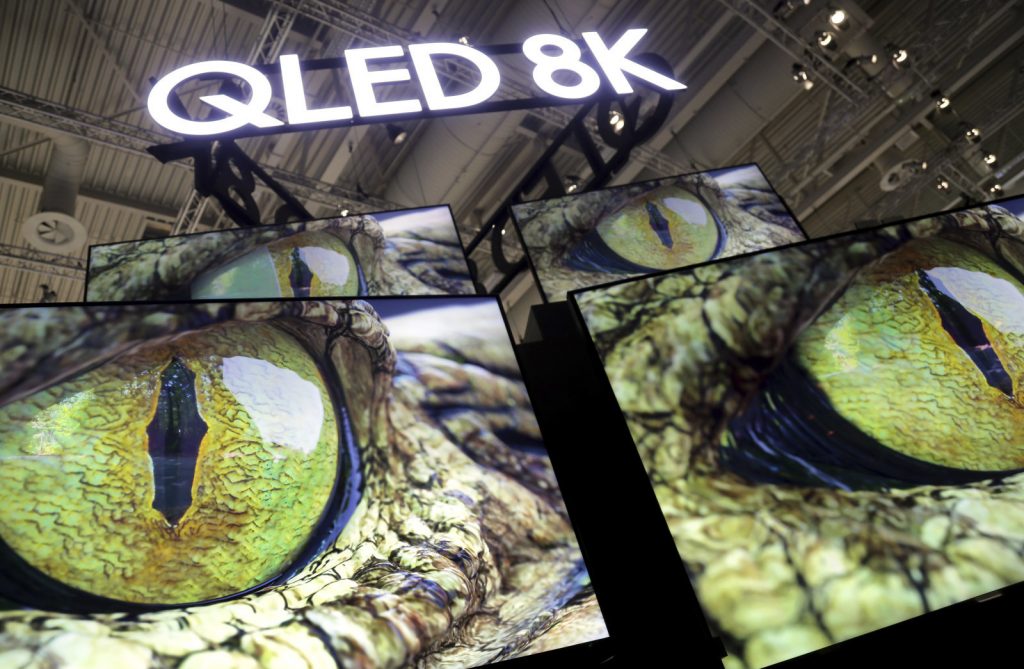
You’d get a truly frame-free picture.

Samsung might soon make good on its promise of bezel-free TVs. The Elec sources say the company plans to introduce a zero bezel TV at CES 2020 in early January, with mass production starting in February. While the finer details aren’t available, the design reportedly welds the display and main body “more closely” to eliminate the usual borders on sets 65 inches and larger. And we do mean eliminate — this supposedly “really doesn’t have a bezel,” one source said.

The company hasn’t confirmed anything, and we’d take the claim with a grain of salt. However, there are reasons to believe this might be more than just speculation. On top of Samsung’s earlier work, the company trademarked the “Zero Bezel” brand name earlier in the year. Neither is a guarantee you’ll see something at CES. The trade show is often Samsung’s preferred venue for TV introductions.

It’s safe to presume that any possible bezel-free TV would be expensive. Samsung developed the necessary chip with 8K in mind, and the combination of an exotic design with a large panel could make even ‘ordinary’ 8K TVs seem like bargains. Much like other flagship TVs of years past, you might be paying as much for bragging rights as you are for the underlying technology.

Update: Right on time, Samsung has posted a vague teaser for its CES event January 6th, teasing an empty shape and “The Age of Experience.” Whether or not that age is bezel-less, we’ll find out in Las Vegas.

Sonos gives a lame reason for bricking older devices in ‘Recycle Mode’
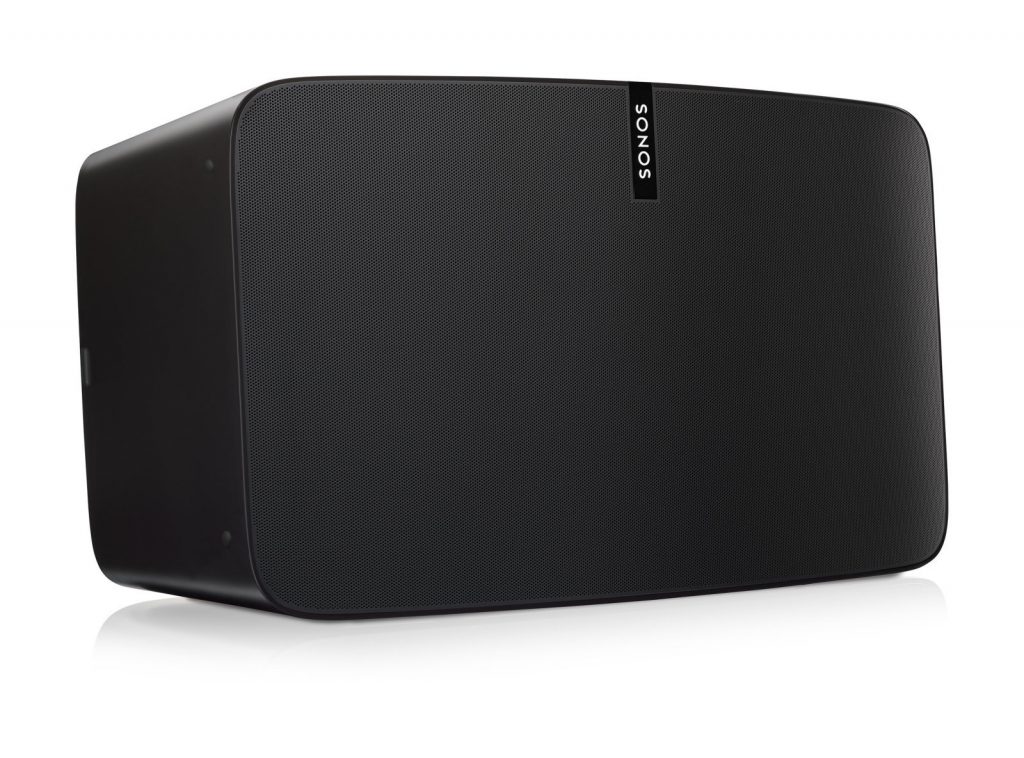
The practice has irked buyers and redefined “programmed obsolescence.”

Sonos has a good reputation for building quality speakers, but its latest move has disappointed some buyers. Recently, the company offered a trade-up program, giving legacy customers 30 percent off the latest One, Beam or Port. In exchange, buyers just had to “recycle” their existing products. However, what Sonos meant by “recycle” was to activate a feature called “Recycle Mode” that permanently bricks the speaker. It then becomes impossible for recycling firms to resell it or do anything else but strip it for parts.

Sonos suggests that after bricking the device in Recycle Mode, users drop it off at a recycling facility or give it to Sonos to do the same. However, those facilities are unable to resell the products, which could bring around $200 to $250 in good condition.

The problem was brought home by Twitter user @atomicthumbs, who works at an e-recycling facility. “This is the most environmentally unfriendly abuse and waste of perfectly good hardware I’ve seen in five years working at a recycler,” he said in a series of tweets. “We could have sold these and ensured they were reused, as we do with all the working electronics we’re able. Now we have to scrap them.”

To get the 30 percent deal, buyers select a device to trade in. Once confirmed, the app places the old device into recycle mode, starting a 21 day countdown timer. After that time, the device is “permanently deactivated” with no way to recover it, according to Sonos. Gadgets eligible for upgrades that would be bricked include the Connect, Connect:Amp, ZP90, ZP80, ZP100, ZP120, and Play:5 (Gen 1).

Sonos tried to defend itself in a way that might sound familiar to Apple users. “The reality is that these older products lack the processing power and memory to support modern Sonos experiences,” the company told The Verge.

Over time, technology will progress in ways these products are not able to accommodate. For some owners, these new features aren’t important. Accordingly, they may choose not to participate in the Trade Up program.

But for other owners, having modern Sonos devices capable of delivering these new experiences is important. So the Trade Up program is an affordable path for these owners to upgrade. For those that choose to trade-up to new products, we felt that the most responsible action was not to reintroduce them to new customers that may not have the context of them as 10+ year old products, and that also may not be able to deliver the Sonos experience they expected.

Sonos is justifying this in terms of the customers experience, but the brutal reality is that many of these devices will be stripped down, using energy. They’ll also add to the problem of plastic waste, when they could have enjoyed a much longer life. It’s particularly disappointing considering that Sonos products do last a long time, with the company claiming that 92 percent of them ever sold are “still in use today.”

Many Sonos forum users were disappointed to hear about the practice. Some of the bricked products have also been resold, with the buyers losing any money they paid. On top of that, some owners have bricked devices by accident, transforming them into recycling fodder.

“Anyone even remotely familiar with recycling can tell you the mantra ‘reduce, reuse, recycle,” tweeted @atomicthumbs. “Recycling takes energy and, while it saves materials, reuse is always better. Sonos is throwing any claimed environmental friendliness in the trash in order to sell more speakers.”

ProtonMail debuts an encrypted calendar app
It’s currently available in beta for paid users.

ProtonMail is known for its encrypted email service, which it offers as a more secure alternative to products like Google’s Gmail. In recent years, the company started by CERN researchers has begun to branch out further, offering encrypted contacts through its mobile app and a free VPN service. Now, it’s offering another privacy-focused Google alternative with the launch of an encrypted calendar.

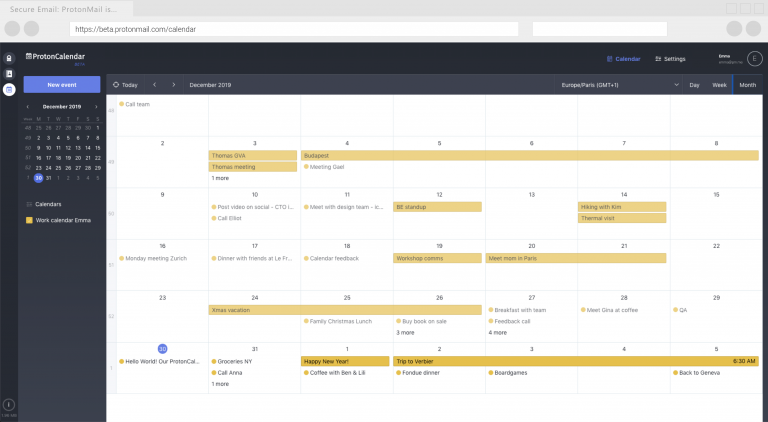
ProtonCalendar uses end-to-end encryption to keep your data private, with no third parties including ProtonMail able to see your events. It has the standard calendar features you would expect, such as the ability to create and delete events, to set reminders and to have events repeat daily, weekly or monthly.

The calendar is available online, but the company says it’ll launch dedicated iOS and Android apps next year. The web version is currently in beta mode, but it will be available to all users, including free users, once it leaves beta.

ProtonMail says it is also working on a secure cloud file storage service called ProtonDrive, coming soon. For now, paid ProtonMail users can access the calendar by logging in to the Beta site.

Smoke app brings the Steam store to your Apple Watch
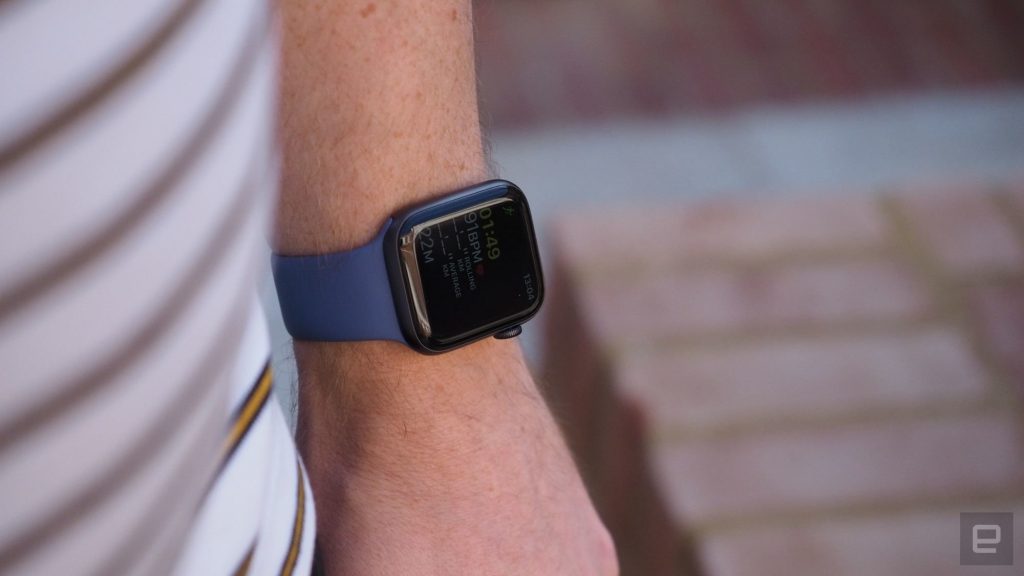
But, alas, you can’t play Goose Game on your wrist.

If you can’t bear to be away from Steam for a moment least you miss one of its famously great sales, then Smoke, a new app for the Apple Watch, has you covered.

Smoke advertises that it “brings parts of Steam” to the Apple Watch. The hardware is obviously pretty limited, so don’t expect to be purchasing or launching games from your wrist. You will be able to view your games and achievements, view store information and see if your friends are online and what they’ve been playing though.

Perhaps the most useful feature is the ability to view Steam news articles, which can alert you about sales and updates for your favorite games. You can also tap a news article to save it to your phone, but this feature is only available to paid users.

The Smoke app page notes that for most of the features to work, your Steam profile needs to be set to public. If that’s ok with you, you can download Smoke for Steam for free from the App Store.

Boise Cascade Co (NYSE:BCC) Short Interest Update
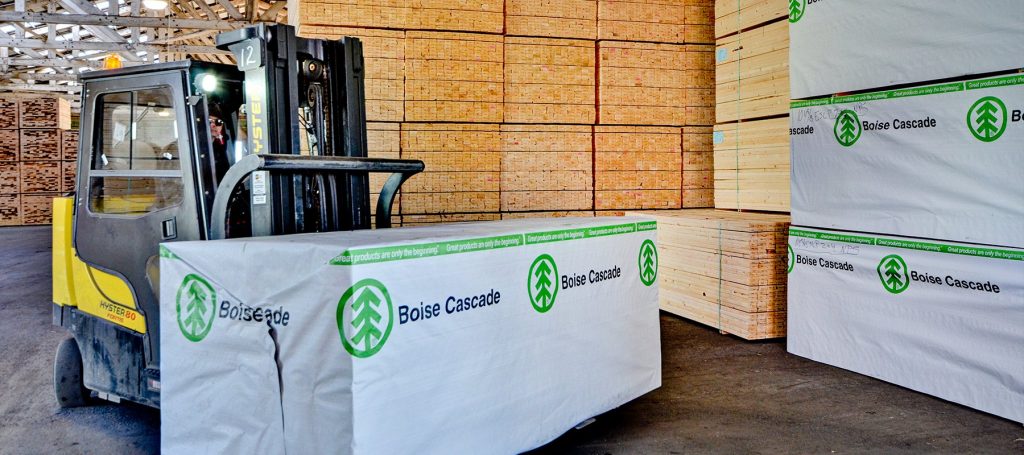
Boise Cascade Co (NYSE:BCC) was the target of a large growth in short interest during the month of December. As of December 13th, there was short interest totalling 1,390,000 shares, a growth of 6.1% from the November 28th total of 1,310,000 shares. Approximately 3.6% of the shares of the company are short sold. Based on an average daily volume of 305,300 shares, the short-interest ratio is presently 4.6 days.

A number of equities research analysts recently commented on BCC shares. ValuEngine lowered Boise Cascade from a “hold” rating to a “sell” rating in a research report on Friday, December 13th. DA Davidson lowered Boise Cascade from a “buy” rating to a “neutral” rating and set a $40.00 price target on the stock. in a research report on Friday, November 8th. Vertical Research lowered Boise Cascade from a “buy” rating to a “hold” rating in a research report on Monday, November 11th. Finally, Zacks Investment Research lowered Boise Cascade from a “buy” rating to a “hold” rating in a research report on Tuesday, November 12th. Two research analysts have rated the stock with a sell rating, four have given a hold rating and one has assigned a buy rating to the company. Boise Cascade presently has an average rating of “Hold” and an average price target of $32.40.

NYSE:BCC opened at $37.10 on Tuesday. The stock’s fifty day moving average price is $37.99 and its two-hundred day moving average price is $32.15. Boise Cascade has a 52-week low of $22.10 and a 52-week high of $40.13. The company has a debt-to-equity ratio of 0.72, a quick ratio of 1.42 and a current ratio of 2.53. The company has a market cap of $1.46 billion, a price-to-earnings ratio of 16.20 and a beta of 2.05.

Boise Cascade (NYSE:BCC) last posted its quarterly earnings data on Thursday, November 7th. The construction company reported $0.69 earnings per share (EPS) for the quarter, topping the consensus estimate of $0.68 by $0.01. Boise Cascade had a positive return on equity of 8.10% and a negative net margin of 0.13%. The firm had revenue of $1.27 billion for the quarter, compared to the consensus estimate of $1.27 billion. During the same quarter in the prior year, the business earned $0.76 EPS. The business’s revenue for the quarter was down 5.2% compared to the same quarter last year. On average, equities analysts predict that Boise Cascade will post 1.94 EPS for the current fiscal year.

The company also recently disclosed a quarterly dividend, which was paid on Monday, December 16th. Shareholders of record on Monday, December 2nd were issued a dividend of $0.10 per share. This is an increase from Boise Cascade’s previous quarterly dividend of $0.09. The ex-dividend date of this dividend was Friday, November 29th. This represents a $0.40 annualized dividend and a yield of 1.08%. Boise Cascade’s dividend payout ratio is currently 17.47%.

In other Boise Cascade news, insider Stewart David purchased 196,000 shares of the firm’s stock in a transaction that occurred on Wednesday, October 16th. The shares were acquired at an average cost of $0.23 per share, for a total transaction of $45,276.00. Also, EVP Dean Michael Brown sold 2,529 shares of the stock in a transaction that occurred on Monday, November 11th. The stock was sold at an average price of $37.64, for a total value of $95,191.56. Following the sale, the executive vice president now owns 26,667 shares in the company, valued at $1,003,745.88. The disclosure for this sale can be found here. Insiders have sold a total of 58,940 shares of company stock valued at $2,248,861 in the last three months. 1.50% of the stock is owned by insiders.

Large investors have recently bought and sold shares of the business. Nuveen Asset Management LLC acquired a new position in shares of Boise Cascade in the 2nd quarter valued at $19,081,000. BlackRock Inc. raised its stake in Boise Cascade by 4.1% during the 2nd quarter. BlackRock Inc. now owns 6,503,241 shares of the construction company’s stock worth $182,807,000 after buying an additional 259,027 shares during the period. Man Group plc raised its stake in Boise Cascade by 150.6% during the 2nd quarter. Man Group plc now owns 257,269 shares of the construction company’s stock worth $7,232,000 after buying an additional 154,600 shares during the period. Marshall Wace North America L.P. raised its stake in Boise Cascade by 1,022.9% during the 2nd quarter. Marshall Wace North America L.P. now owns 143,530 shares of the construction company’s stock worth $4,034,000 after buying an additional 130,748 shares during the period. Finally, Macquarie Group Ltd. raised its stake in Boise Cascade by 7.0% during the 2nd quarter. Macquarie Group Ltd. now owns 1,927,804 shares of the construction company’s stock worth $54,191,000 after buying an additional 126,776 shares during the period. 92.37% of the stock is currently owned by hedge funds and other institutional investors.

Boise Cascade Company Profile

Boise Cascade Company manufactures wood products and distributes building materials in the United States and Canada. It operates in two segments, Wood Products and Building Materials Distribution. The Wood Products segment manufactures laminated veneer lumber and laminated beams used in headers and beams; I-joists for residential and commercial flooring and roofing systems, and other structural applications; and structural, appearance, and industrial plywood panels.

ZIOPHARM Oncology (NASDAQ:ZIOP) Shares Down 7%

Shares of ZIOPHARM Oncology Inc. (NASDAQ:ZIOP) dropped 7% during trading on Monday . The stock traded as low as $4.78 and last traded at $4.79, approximately 2,477,495 shares traded hands during trading. An increase of 45% from the average daily volume of 1,712,115 shares. The stock had previously closed at $5.15.

ZIOP has been the topic of several recent research reports. Zacks Investment Research raised shares of ZIOPHARM Oncology from a “hold” rating to a “buy” rating and set a $5.50 target price on the stock in a report on Saturday. HC Wainwright reaffirmed a “buy” rating and set a $6.50 target price on shares of ZIOPHARM Oncology in a report on Tuesday, December 10th. BidaskClub raised shares of ZIOPHARM Oncology from a “sell” rating to a “hold” rating in a report on Tuesday, October 29th. Raymond James set a $6.50 target price on shares of ZIOPHARM Oncology and gave the company an “outperform” rating in a report on Tuesday, December 10th. Finally, ValuEngine lowered shares of ZIOPHARM Oncology from a “sell” rating to a “strong sell” rating in a report on Wednesday, October 2nd. One equities research analyst has rated the stock with a sell rating, one has issued a hold rating and five have assigned a buy rating to the company’s stock. The company has an average rating of “Buy” and an average price target of $6.60.

The firm has a market cap of $921.44 million, a P/E ratio of -9.98 and a beta of 2.60. The company has a current ratio of 10.34, a quick ratio of 10.34 and a debt-to-equity ratio of 0.01. The business’s fifty day simple moving average is $4.93 and its 200-day simple moving average is $5.02.

ZIOPHARM Oncology (NASDAQ:ZIOP) last announced its quarterly earnings results on Thursday, November 7th. The biotechnology company reported ($0.43) earnings per share (EPS) for the quarter, missing analysts’ consensus estimates of ($0.09) by ($0.34). Analysts anticipate that ZIOPHARM Oncology Inc. will post -0.33 earnings per share for the current year.

In other ZIOPHARM Oncology news, CAO Kevin G. Lafond sold 11,667 shares of the firm’s stock in a transaction on Tuesday, November 26th. The shares were sold at an average price of $5.25, for a total value of $61,251.75. Following the sale, the chief accounting officer now owns 97,222 shares of the company’s stock, valued at approximately $510,415.50. The sale was disclosed in a legal filing with the SEC, which is available through this hyperlink. 2.00% of the stock is owned by company insiders.

A number of institutional investors have recently made changes to their positions in the business. Prudential Financial Inc. grew its holdings in ZIOPHARM Oncology by 18.8% in the 2nd quarter. Prudential Financial Inc. now owns 16,673 shares of the biotechnology company’s stock worth $97,000 after acquiring an additional 2,640 shares during the last quarter. Parametric Portfolio Associates LLC lifted its position in shares of ZIOPHARM Oncology by 10.7% in the 2nd quarter. Parametric Portfolio Associates LLC now owns 28,011 shares of the biotechnology company’s stock worth $163,000 after purchasing an additional 2,703 shares during the period. California State Teachers Retirement System lifted its position in shares of ZIOPHARM Oncology by 1.2% in the 3rd quarter. California State Teachers Retirement System now owns 250,124 shares of the biotechnology company’s stock worth $1,071,000 after purchasing an additional 2,988 shares during the period. United Services Automobile Association lifted its position in shares of ZIOPHARM Oncology by 17.1% in the 2nd quarter. United Services Automobile Association now owns 22,182 shares of the biotechnology company’s stock worth $129,000 after purchasing an additional 3,246 shares during the period. Finally, Aperio Group LLC purchased a new stake in shares of ZIOPHARM Oncology in the 2nd quarter worth about $35,000. 45.63% of the stock is currently owned by institutional investors and hedge funds.

About ZIOPHARM Oncology (NASDAQ:ZIOP)

ZIOPHARM Oncology, Inc, a biotechnology company, focuses on acquiring, developing, and commercializing a portfolio of immuno-oncology therapies for treating heterogenous solid tumors and unknown antigens. The company develops two immuno-oncology platform technologies, including Sleeping Beauty (SB), which is based on the genetic engineering of immune cells using a non-viral transposon/transposase system to reprogram T-cells outside of the body for infusion; and Controlled IL-12, which delivers interleukin 12 or IL-12, a master regular of the immune system, in a controlled and safe manner to focus the patient’s immune system to attack cancer cells.