Archives for July 22, 2019

Elon Musk promises longer, curved tunnel for future Hyperloop contests
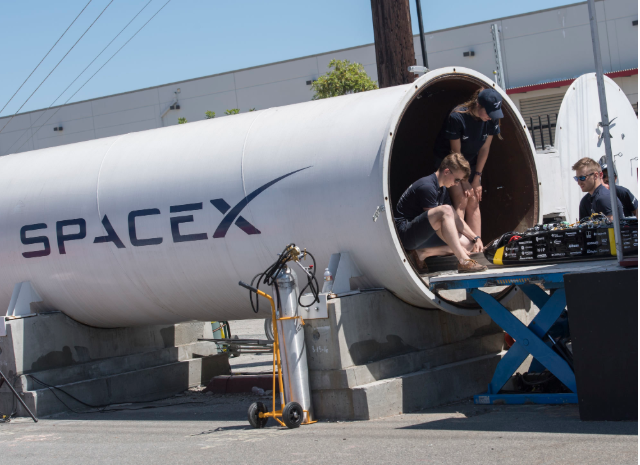
The student engineering challenge is getting even harder.

In a departure from previous years, next year’s Hyperloop competition will be held in a six mile curved vacuum tunnel. Previously, the competition was held in a straight ¾ mile test tunnel which is located at SpaceX’s headquarters in Hawthorne, California.

Elon Musk made the announcement on Twitter shortly after the 2019 Hyperloop Pod competition.

The Hyperloop competition is a student engineering challenge where teams are invited to design and build a prototype vehicle to travel in the potential Hyperloop network. The vehicles must be self-propelled and achieve maximum possible speeds without crashing.

At this year’s competition, in which a team from Technical University of Munich (TUM) reached a top speed of 288 miles per hour before damage occurred and an emergency stop had to be performed, Musk mentioned the possibility of expanding the competition to include tunneling as well.

“We’ll consider a tunneling competition,” Musk said at a Q&A about the competition, TechCrunch reports. “I think a tunneling thing would be pretty exciting. Because as I just articulated the primary challenge is how do you tunnel effectively, especially how do you put in the reinforcing segments and get the dirt out effectively — it’s harder than it seems.”

In 2017, the TUM team won the competition with a small electric vehicle that achieved 200 miles per hour, and Musk said he believed that speeds of up to 500 or 600 miles per hour were possible. The same team won again in 2018, this time getting up to 290 miles per hour.

Tunneling has been one of the big issues for the Hyperloop project. Between problems getting permits to dig and the need to reinforce the tunnels to stop them collapsing, building the infrastructure for the project has been as much of a challenge as designing the vehicles.

Even digging a six mile test tunnel will take a lot of time, so it remains to be seen whether Musk and co. will be able to build a tunnel of that length in time for next year’s competition. We don’t know exactly when the next competition will be held, but based on previous years we can expect it in summer 2020.

How HoloLens is helping advance the science of spaceflight
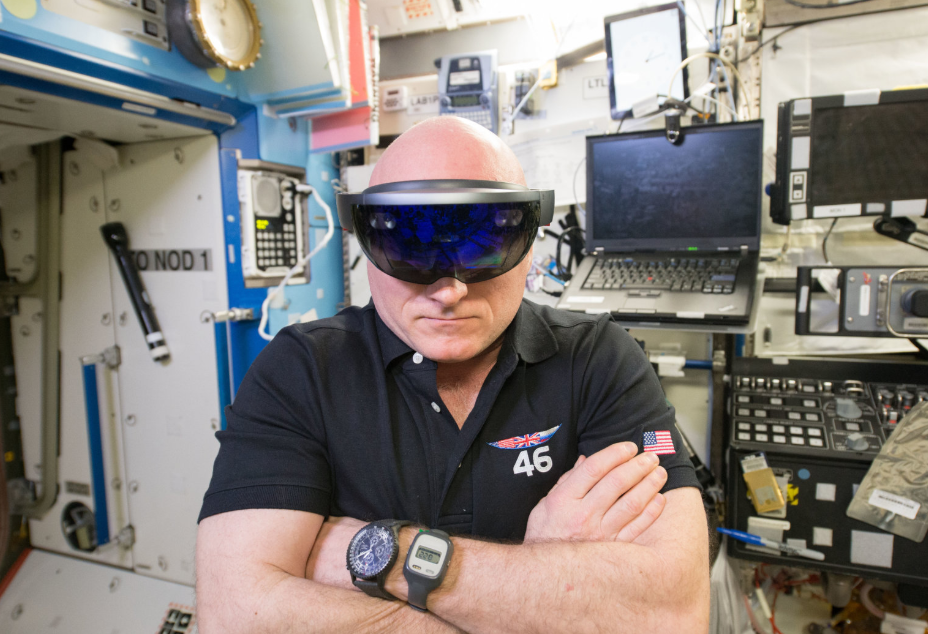
Microsoft’s AR headset is making an impact both on and off the planet.

AR headsets haven’t exactly caught on with the general public — especially after the Google Glass debacle. Mixed reality technology has garnered a sizable amount of interest in a variety of professional industries, though, from medicine and education to design and engineering. Since 2015, the technology has even made its way into aerospace where NASA and its partners have leveraged Microsoft’s HoloLens platform to revolutionize how spacecraft are constructed and astronauts perform their duties while in orbit.

Microsoft and NASA’s partnership began on June 28th, 2015 as part of Project Sidekick when a SpaceX supply rocket docked with the ISS and delivered the headsets to the waiting astronauts. “HoloLens and other virtual and mixed reality devices are cutting edge technologies that could help drive future exploration and provide new capabilities to the men and women conducting critical science on the International Space Station,” Sam Scimemi, director of the ISS program at NASA said in a 2015 press release. “This new technology could also empower future explorers requiring greater autonomy on the journey to Mars.”

Aboard the ISS, crews utilized the HoLolens’ “Remote Expert Mode” in many of their tasks. Remote Expert connects the wearer with an Earth-based technician from the flight control team via Skype, allowing them to see what the astronaut is seeing and advise accordingly. The headsets could also be deployed in Procedure Mode, which played locally-stored animated holographic illustrations for times when an expert wasn’t available.

Project Sidekick was short lived, only running until the following March. However, a few months later in the summer of 2016, NASA’s Kennedy Space Center Visitor Complex in Florida launched “Destination: Mars,” a mixed reality guided tour of the Red Planet narrated by none other than Buzz Aldrin. Visitors were taken on a walking tour of several Martian sites using images captured by the Curiosity Mars Rover.

“This experience lets the public explore Mars in an entirely new way. To walk through the exact landscape that Curiosity is roving across puts its achievements and discoveries into beautiful context,” said Doug Ellison, visualization producer at JPL, said in a press release at the time. The OnSight application, which actually stitched those captured images together, went on to win NASA’s 2018 Software of the Year award.

asdf

Augmented reality has also found its way into spacecraft design and production with incredible results. Take the Orion Multi-Purpose Crew Vehicle, for example. It’s currently being developed by NASA and the ESA and built by Lockheed Martin. The 4-person crew capsule is designed to ride atop the Space Launch System during the Artemis lunar exploration missions as well as to Mars.

It’s also a fantastically complex piece of engineering. The Orion’s assembly manual alone is a 1,500 page behemoth, requiring technicians to constantly flip back and forth between the instructions and the task at hand. But that’s where the HoloLens comes in.

asdf

“Manufacturing was a good place to start because it’s easier to quantify what we’re seeing in terms of a comparison between traditional methods and what AR helping would take,” Shelley Peterson, the principal engineer for Augmented & Mixed Reality at Lockheed Martin Space, told Engadget.

Using the same Procedure Mode as aboard the ISS, Lockheed’s teams were able to drastically reduce the amount of time needed to assemble the spacecraft’s various systems. The team was able to cut down the time spent joining components and torquing bolts to precise specifications by 30 to 50 percent. Rather than having to thumb through the instructions to know how many pounds of pressure a specific bolt requires, that information is displayed directly atop the bolt by the HoloLens, Peterson explained.

“More recently, we’ve been working with position alignment of objects,” she continued. It really just changes things when you can see within your environment where you’re needing to place an object, instead of having to measure or use other methods. It’s a fantastic way to represent the data.”

asdf

What used to take a technician a full 8-hour shift to complete can now be done in 15 minutes, Peterson said. What would take a pair of technicians three days to do can now be done by a single technician in two and a half hours. “At Kennedy Space Center, we had an activity that normally takes eight shifts,” Peterson said. “They completed it in six hours.”

The HoloLens doesn’t just reduce the amount of time (and money) spent putting the Orion together, it also helps to mitigate uncertainty in the manufacturing process and prevent costly mistakes. “If [the technicians are] trying to interpret a 2D drawing or 3D model on a 2D screen, and make that mental translation to what it means to the object in the room, there’s still some questions,” Peterson explained, “and they’d like to be absolutely certain when they’re working on the spacecraft.”

asdf

Peterson also points to the headsets’ ease of use. A technician typically needs less than a half hour to get orient themselves with the system before jumping into their tasks. “They’re able to put it on and just start working,’ she continued. The current iteration of the HoloLens is still a bit heavy to be worn all day, though technicians can wear them for up to three hours before tiring, or simply pop the headset on and off as needed throughout the day.

The only major sticking point that Peterson notes is the difficulty in entering data. “We need a better way to type or to take the place of typing — voice doesn’t quite do it just yet,” Peterson said. “There’s times where we need to enter data, or capture data as we’re working and they have to move across to a Bluetooth keyboard.” That takes the technician out of their workflow, which is what the HoloLens was designed to minimize in the first place.

Lockheed isn’t the only organization leveraging AR technology in its manufacturing process. Rival aerospace company BAE has also paired with Microsoft, using HoloLens to eliminate the need for paper assembly manuals in its electric bus division, while a team of researchers from Johns Hopkins University Applied Physics Laboratory (APL) have used the tech to design their Dragonfly rotorcraft lander.

The Dragonfly will be heading deep into our solar system when it launches towards Saturn’s moon, Titan, in 2025. It’ll take a whopping nine years to get to the moon’s surface but once there, the Dragonfly’s exploration will help unlock the mysteries of our home system and maybe even — fingers crossed — give us our first glimpse at extraterrestrial life.

Cannondale’s electric mountain bikes offer more power for the trail

The Moterra and Habit NEO can handle rougher rides.

Cannondale has electrified a significant chunk of its bicycle lineup, and now it’s determined to conquer the mountain biking world in earnest. The company has unveiled a redesigned Moterra e-bike for the harsher climbs and a brand new Habit NEO (below) that’s designed for “fast and flowy” rides — say, a trip through a winding forest instead of an arduous hill climb. Both bikes aim to make electric riding easier than before, including through raw power.

The Moterra and Habit NEO share a new 250W Bosch drive unit that promises more torque and overall power even as it reduces the weight. Cannondale hasn’t shared range figures, but it’s betting that the 500Wh and 625Wh batteries will ease range fears.

After that, changes mostly come down to purpose. Moterra riders have 160mm of travel, 29-inch wheels and “beefier” components, with the descent-focused Moterra SE packs a 180mm fork, a Super Deluxe Piggyback Shock and stickier Maxxis Assegai tires. You won’t have quite as rough a ride down the hill, then. The Habit NEO shares the same wheel size, but switches to 140mm front and 130mm rear suspension to make it nimbler. All of the new bikes tout carbon fiber frames and a “proportional response” suspension that changes with the size of the frame.

You’ll have to wait until the fall to pick up one of Cannondale’s new offerings, and it’s clear that high-performance mountain e-bikes don’t come cheap. The Habit NEO ranges from $5,500 to $7,000, and you’re looking at between $6,000 to $9,000 for the Moterra line (the Moterra SE costs $8,500). These are for riders determined to overcome most any terrain and don’t mind paying a premium.

Cannondale Habit NEO electric mountain bike

Google Pixel 4 leak fuels rumors of hand gesture control

Who needs more screen when you can wave your hand?

Those rumors of the Pixel 4 sporting hand gesture control just became more tangible. Ice Universe has obtained photos that reportedly show the detached bezels for the Pixel 4 and Pixel 4XL, including a rather conspicuous ovoid hole on the right side. Given that this hole hasn’t been visibly occupied by cameras or other visual sensors in previous leaks, this appears to be a cutout for the Project Soli radar that would let you perform gestures without poking at the screen.

The other holes are effectively spoken for. You could expect dual selfie cameras on both Pixel models, a central speaker and what’s believed to be a face recognition or depth sensor.

Outside of Google’s teaser, you’re unlikely to hear official news about the Pixel 4 and its sensor layout until early fall. Should this leak prove accurate, though, it could represent one reason why notched displays appear to be vanishing on higher-end Pixels — the sheer number of sensors makes it impractical. Any aesthetic improvement would represent a mere bonus.

Stocks To Watch: Therapeuticsmd Inc (TXMD)

After a recent look at shares of Therapeuticsmd Inc (TXMD), we have seen that the Percentage Price Oscillator Histogram level is under zero. Traders following the indicator may be using the reading to identify a possible sell.

Investors often have to face the issue of risk when dealing with the stock market. Creating portfolios that have the largest probability of attaining personal goals might be the course of action for many investors. Realizing that risk is a large part of the investment process can help the investor think realistically. Although completely eliminating risk is not reasonable, taking steps to reduce risk with proper portfolio management is well within reach for any investor. When first starting out, investors may be tempted to follow strategies from friends or colleagues that have dabbled in the markets with some success. Although using someone else’s strategy could work, chances are that eventually each investor will need to tweak the process in order to maximize their chances for success. Often times these lessons may end up being learned the hard way. With proper planning and execution, the hope is that the investor will arm themselves with enough knowledge to avoid mistakes early on.

{csv|m:199|id:590|s:Name}} (TXMD) presently has a 14-day Commodity Channel Index (CCI) of -181.39. The CCI was created to typically stay within the reading of -100 to +100. Traders may use the indicator to determine if a stock is trending or to spot overbought/oversold conditions. A CCI reading above the +100 level would suggest that the stock is overbought and possibly primed for a correction. On the other hand, a reading of -100 would indicate that the stock is oversold.

The Williams Percent Range or Williams %R is another technical indicator worth checking out. Therapeuticsmd Inc (TXMD) currently has a 14 day Williams %R of -91.38. The Williams %R fluctuates between 0 and -100 measuring whether a security is overbought or oversold. The Williams %R is similar to the Stochastic Oscillator except it is plotted upside-down. Levels above -20 may indicate the stock may be considered is overbought. If the indicator travels under -80, this may signal that the stock is oversold. Chart analysts may also use the indicator to project possible price reversals and to define trends.

Investors might be looking to rebuild the portfolio as we move into the second half of the year. New investors can be tempted to try to maximize returns by owning one specific sector or be exposed to a fairly large single investment. By diversifying the portfolio, investors might be able to protect themselves from a sudden move against the position. Finding the correct portfolio balance is how many investors choose to approach the markets. This may take some time to master, and there may be some bumps along the way. Investors managing their own money may want to make sure that they know exactly what stocks are in the portfolio at all times. Keeping tabs on portfolio performance can also be a good way to make sure that it is weighted properly.

The Relative Strength Index (RSI) is a momentum oscillator that measures the speed and change of stock price movements. The RSI was developed by J. Welles Wilder, and it oscillates between 0 and 100. Generally, the RSI is considered to be oversold when it falls below 30 and overbought when it heads above 70. RSI can be used to detect general trends as well as finding divergences and failure swings. The 14-day RSI is presently standing at 30.60, the 7-day is 20.19, and the 3-day is resting at 3.03.

A widely used tool among technical stock analysts is the moving average. Moving averages are considered to be lagging indicators that simply take the average price of a stock over a certain period of time. Moving averages can be very helpful for spotting peaks and troughs. They may also be used to help the trader figure out reliable support and resistance levels for the stock. Currently, the 200-day MA is sitting at 4.43.

The Average Directional Index or ADX is technical analysis indicator used to discern if a market is trending or not trending. The ADX alone measures trend strength but not direction. Using the ADX with the Plus Directional Indicator (+DI) and Minus Directional Indicator (-DI) may help determine the direction of the trend as well as the overall momentum. Many traders will use the ADX alongside other indicators in order to help spot proper trading entry/exit points. Currently, the 14-day ADX for Therapeuticsmd Inc (TXMD) is 29.62. Generally speaking, an ADX value from 0-25 would indicate an absent or weak trend. A value of 25-50 would indicate a strong trend. A value of 50-75 would signal a very strong trend, and a value of 75-100 would indicate an extremely strong trend.

As the markets continue to charge to new heights, investors may be trying to calculate where the markets will be moving in the next few months. Many market enthusiasts will be monitoring the current round of company earnings reports. A better than expected earnings period may help give the stock market another boost to even greater levels. At this point in time, investors may be a bit more cautious with stock selection. With so many names near all-time highs, investors may need to crunch the numbers to evaluate which stocks are still a good buy even at current price levels. Investors may also want to zoom out to the sector level and see if they can determine which sectors may be poised to outperform the overall market coming in to the second part of the year. Investors may also be looking at the overall economic conditions and striving to gain a sense of whether everything will align to keeping the bull run going.

Stocks to Watch: Duke Energy Corp (DUK)
After a recent look at shares of Duke Energy Corp (DUK), we have seen that the Percentage Price Oscillator Histogram level is under zero. Traders following the indicator may be using the reading to identify a possible sell.

Investors often have to face the issue of risk when dealing with the stock market. Creating portfolios that have the largest probability of attaining personal goals might be the course of action for many investors. Realizing that risk is a large part of the investment process can help the investor think realistically. Although completely eliminating risk is not reasonable, taking steps to reduce risk with proper portfolio management is well within reach for any investor. When first starting out, investors may be tempted to follow strategies from friends or colleagues that have dabbled in the markets with some success. Although using someone else’s strategy could work, chances are that eventually each investor will need to tweak the process in order to maximize their chances for success. Often times these lessons may end up being learned the hard way. With proper planning and execution, the hope is that the investor will arm themselves with enough knowledge to avoid mistakes early on.

{csv|m:199|id:590|s:Name}} (DUK) presently has a 14-day Commodity Channel Index (CCI) of -55.35. The CCI was created to typically stay within the reading of -100 to +100. Traders may use the indicator to determine if a stock is trending or to spot overbought/oversold conditions. A CCI reading above the +100 level would suggest that the stock is overbought and possibly primed for a correction. On the other hand, a reading of -100 would indicate that the stock is oversold.

The Williams Percent Range or Williams %R is another technical indicator worth checking out. Duke Energy Corp (DUK) currently has a 14 day Williams %R of -63.99. The Williams %R fluctuates between 0 and -100 measuring whether a security is overbought or oversold. The Williams %R is similar to the Stochastic Oscillator except it is plotted upside-down. Levels above -20 may indicate the stock may be considered is overbought. If the indicator travels under -80, this may signal that the stock is oversold. Chart analysts may also use the indicator to project possible price reversals and to define trends.

Investors might be looking to rebuild the portfolio as we move into the second half of the year. New investors can be tempted to try to maximize returns by owning one specific sector or be exposed to a fairly large single investment. By diversifying the portfolio, investors might be able to protect themselves from a sudden move against the position. Finding the correct portfolio balance is how many investors choose to approach the markets. This may take some time to master, and there may be some bumps along the way. Investors managing their own money may want to make sure that they know exactly what stocks are in the portfolio at all times. Keeping tabs on portfolio performance can also be a good way to make sure that it is weighted properly.

The Relative Strength Index (RSI) is a momentum oscillator that measures the speed and change of stock price movements. The RSI was developed by J. Welles Wilder, and it oscillates between 0 and 100. Generally, the RSI is considered to be oversold when it falls below 30 and overbought when it heads above 70. RSI can be used to detect general trends as well as finding divergences and failure swings. The 14-day RSI is presently standing at 47.80, the 7-day is 41.06, and the 3-day is resting at 29.20.

A widely used tool among technical stock analysts is the moving average. Moving averages are considered to be lagging indicators that simply take the average price of a stock over a certain period of time. Moving averages can be very helpful for spotting peaks and troughs. They may also be used to help the trader figure out reliable support and resistance levels for the stock. Currently, the 200-day MA is sitting at 87.40.

The Average Directional Index or ADX is technical analysis indicator used to discern if a market is trending or not trending. The ADX alone measures trend strength but not direction. Using the ADX with the Plus Directional Indicator (+DI) and Minus Directional Indicator (-DI) may help determine the direction of the trend as well as the overall momentum. Many traders will use the ADX alongside other indicators in order to help spot proper trading entry/exit points. Currently, the 14-day ADX for Duke Energy Corp (DUK) is 8.49. Generally speaking, an ADX value from 0-25 would indicate an absent or weak trend. A value of 25-50 would indicate a strong trend. A value of 50-75 would signal a very strong trend, and a value of 75-100 would indicate an extremely strong trend.

As the markets continue to charge to new heights, investors may be trying to calculate where the markets will be moving in the next few months. Many market enthusiasts will be monitoring the current round of company earnings reports. A better than expected earnings period may help give the stock market another boost to even greater levels. At this point in time, investors may be a bit more cautious with stock selection. With so many names near all-time highs, investors may need to crunch the numbers to evaluate which stocks are still a good buy even at current price levels. Investors may also want to zoom out to the sector level and see if they can determine which sectors may be poised to outperform the overall market coming in to the second part of the year. Investors may also be looking at the overall economic conditions and striving to gain a sense of whether everything will align to keeping the bull run going.