Archives for September 1, 2018

Tesla makes inroads in Canada with new dealerships and charging stations

Though the company’s cars are still priced at the luxury end of the market, Tesla is softening the ground for next year’s planned Model 3—and beyond

Driving a Tesla for the first time is a bit disappointing, to be honest. You go in expecting a magical experience, but it’s actually lot like…well, driving any old car.

That’s apparently the point, according to the Tesla representative who joined me for a spin in a Model S last week. The biggest obstacle the Palo Alto, Calif.-based company has to overcome, she said, is convincing potential buyers that its cars are more or less just like regular cars.

If so, then mission accomplished – at least from my perspective.

After meandering around on a few side streets near the company’s just-opened dealership in Oakville, Ont., we zipped out onto the highway, which is where it became apparent that the Model S feels just like any other vehicle.

The din of the highway rushing by helped to fill in the noiseless gap that’s otherwise noticeable at slower speeds. I felt very much like I was driving my regular gas-guzzling Subaru.

The noise, or overall lack thereof rather, was actually the most surprising part of the experience.

Back in the dealership parking lot, before we got going, the rep had just finished explaining the various functions and controls of the large iPad-like console sitting to my right. She told me to shift into reverse and I foolishly said I had to turn the car on first. She dryly replied, “It’s already on.”

I wasn’t aware that the car actually automatically starts up once it senses your key is near, so it’s instantly ready to go when you get in. The door handles also smoothly emerge from the body as you approach, then retract once you get moving. It’s supposedly for aerodynamics, but I suspect the feature is really there to add coolness.

As we’re getting off the highway, I tell the rep I’m a bit disappointed with the Model S feeling like a regular car. She tells me to floor it around the next turn, so I do – and I see what she means.

The car jumps forward smoothly and instantly like it’s on turbo boost, a display of Tesla’s vaunted super speed-up. The company did just beat a Motor Trend acceleration record, after all.

Okay, so the whole experience wasn’t disappointing. It was actually quite impressive. There’s a lot to like about the Model S and if Tesla is the future of cars, then drivers have much to look forward to.

For the time being, there’s no doubt Tesla cars are a futuristic luxury that’s out of reach for the average driver. The Model S sells for close to $100,000 in Canada, while the larger Model X SUV is closer to $125,000.

The upcoming Model 3, which the company plans to start shipping in 2018, will be more within reach at $35,000 (U.S.), but it’ll still be pricier than many mid-range vehicles.

Nevertheless, Tesla is putting effort into expanding within Canada. The Oakville dealership, opened earlier this month, is the company’s third in the Greater Toronto Area and eighth in Canada.

The company has also installed 22 “superchargers,” which deliver about 270 kilometres of range in 30 minutes, across the country. There are also hundreds of “destination charging” setups, or chargers that Tesla owners can use, scattered about at hotels and other public locations.

The charging network supports the electric vehicles, which don’t have as much range or “refuelling” options as regular gas-driven cars. Tesla says the Model S has a range of 539 kilometres and that its network should be enough to help Canadians get to wherever they need to go.

Looking at the network map, that’s probably true – except for the Prairies. With no superchargers between Ontario and Alberta and only a handful of destination chargers, a cross-Canada trip still isn’t advisable for Tesla owners.

Canadians are also going to have wait on Tesla’s Autopilot mode, which regulators haven’t cleared for usage here yet. The self-driving function lets drivers take their hands off the steering wheel when on the highway.

The company rep wasn’t able to say when the feature might get regulatory blessing in Canada, but with the country finally getting on board the autonomous driving party, it hopefully won’t be long.

Ford appoints special advisor on uploading control of Toronto’s subways to the province
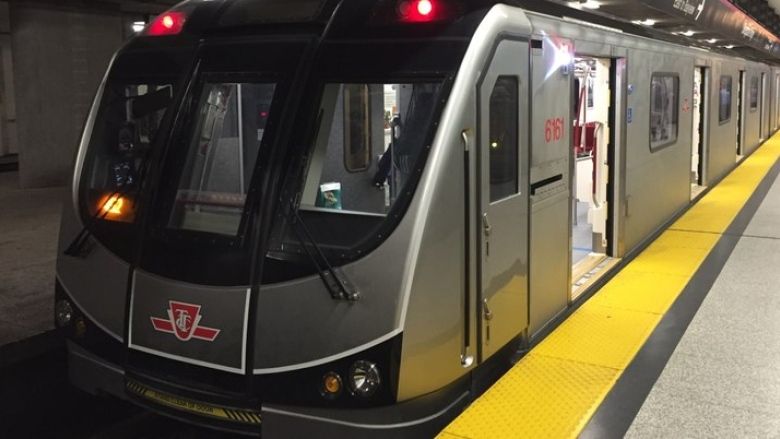
Premier Doug Ford has taken another step toward actualizing his campaign promise of uploading responsibility for Toronto’s subways to the province, announcing Friday that a special advisor has been appointed to head up the effort.

Michael Lindsay, a former vice president of commercial projects at Infrastructure Ontario — where he, according to the province, worked to modernize public assets — will serve in the advisor’s role. He also has extensive experience in the private sector.

Lindsay will head up a panel of three experts that will help him to “efficiently and effectively deliver” a plan to transfer responsibility for building and maintaining new and existing subway lines to the provincial government. Ford said during the spring election that Toronto will continue to operate the system and keep the revenue it generates.

“The Toronto subway system is critical for the economic success of the region. An upload of the subway would help the province to implement a more efficient regional transit system, reduce costs and build transit faster,” the province said in a news release.

“It could also allow the province to fund and deliver additional transit projects sooner.”

The release provides no project timeline for how long this phase of the process may take.

Mayor John Tory said earlier this month that any such plan will require “robust consultation” with the public, city staff and council and the Toronto Transit Commission.

In a statement released on Friday, Tory said he will wait to hear more from the province about the terms for the advisory panel and “what it means for our city.”

“I have been clear that any decision about our subway system needs to be in the best interests of the people of Toronto and Toronto must be completely involved and consulted,” he said.

“We need to get transit built, and we need to do it faster. I’ve spent the last four years working with the provincial and federal governments to get this done and I am determined to keep doing that because that is the only way we will keep building transit.”

Idaho Dairy Industry Watching Last Minute Trade Talks With Canada

Trade talks between the U.S. and Canada are down to the wire. The Trump Administration set the final day of August as a deadline for our northern neighbor to sign on to a tentative agreement with Mexico and the U.S. Idaho dairy

The CEO of the Idaho Dairymen’s Association, Rick Naerebout, says the dairy industry as a whole is watching the negotiations in Washington, D.C. with bated breath. Those in the sector are hoping to see a deal with Canada come along addressing two main issues.

Naerebout says one revolves around the very concept of free trade with Canada.

“We don’t have access to the Canadian market for our U.S. dairy products, so it flies in the face of calling it a free trade agreement,” says the CEO.

The second issue is more technical and relates to Canada’s strict quota system that keeps its dairy supply tight. Naerebout says it arose when Canada raised its quota for cream and butter.

“So what Canada has been doing the last few years is they are encouraging the increase in production domestically – using the cream that they need – but then making skim milk powders and nonfat milk powders that they are dumping onto the world market at below market prices,” says Naerebout.

Earlier this week the U.S. and Mexico established a conceptual framework for a bilateral trade agreement. Naerebout says he applauds the Trump Administration forging a deal, but he says true free market access isn’t in place yet.

The U.S. still has tariffs on Mexican aluminum and steel products, and Mexico continues to put tariffs on American dairy items.

Income Investors: 2 High-Yield Stocks With Growing Distributions

Rising interest rates are starting to push GIC returns off their multi-year lows, but many income investors are still not getting the yield they need from their savings.

Interestingly, the rising interest rate environment has taken some of the wind out of the sails of REITs and dividend stocks, giving income investors an opportunity to pick up some quality names at more reasonable prices.

Let’s take a look at two Canadian companies that could be interesting picks today.

RioCan Real Estate Investment Trust (TSX:REI.UN)

RioCan owns shopping malls across Canada. As soon as investors hear that, they tend to take a step back. The retail sector is certainly changing, and there is no shortage of news around store closures, especially in the department store segment. However, RioCan continues to see strong demand for its space, and the company’s transition to being an owner and operator of mixed-use properties might not be getting the attention it deserves.

RioCan is monetizing properties in secondary markets to the tune of $2 billion. These funds are being used to shore up the balance sheet and fund ongoing developments in the company’s six core markets. In the next decade, RioCan intends to build up to 10,000 residential units at the company’s top urban locations. The first projects are already nearing completion in Toronto.

Income investors like RioCan because it pays a monthly distribution that currently provides an annualized yield of 5.7%. The units have enjoyed a solid recovery off the low of $23 in April to the current price near $25, and more gains should be on the way.

BCE (TSX:BCE)(NYSE:BCE)

BCE currently trades at $53.50 per share compared to its 12-month high near $63. Pundits say the pullback was long overdue, given then lofty multiple the market was giving the stock relative to its growth outlook, but the drop might be getting overdone.

BCE is a market leader with a wide moat and access to millions of homes and businesses across the country through its state-of-the-art mobile and wireless networks. The company is expanding its offerings to customers, including security services. In addition, people are embracing BCE’s app-based products that allow them to turn on the lights or monitor the activity of the family cat from work or while on vacation.

Data demand continues to rise, and BCE has the power to raise prices when it needs to boost revenue. The company is targeting single-digit revenue and free cash flow growth in 2018, which isn’t overly exciting, but it’s still good enough to support ongoing dividend increases that should trend about 5% per year. At the time of writing, the stock provides a yield of 5.6%.

At some point, the broader market is going to hit a rough patch, and BCE tends to hold up relatively well when corrections occur. In addition, there is a chance that future rate hikes could come at a slower pace than expected or even get put on pause next year. This would likely bring some money back into the go-to dividend names that have taken a hit in 2018.

The bottom line

Income investors can pick up RioCan and BCE at decent prices today and lock in above-average yields.