
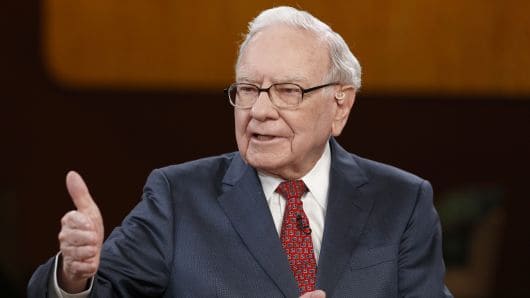
Warren Buffett long ago provided a piece of investing advice that could have helped investors in the most recent stock whipsaw. Fears just a few weeks ago that Turkey would crash the global economy were followed up in the past two trading sessions by new records being set in the Dow, S&P 500 and Nasdaq.
How is that possible? The answer from the billionaire investor, provided over the years at Berkshire Hathaway annual meetings, is straightforward, and it is nothing revolutionary. But for investors new to stocks since the Great Recession and only familiar with a bull market, it can help to understand why panicking over day-to-day volatility in stocks is counter-productive. Every time volatility spikes it is important to remember that the stock market does not exist to instruct investors; it is there to serve them. Put another way: Market volatility is a bad measure of investor risk.
There have been plenty of specific stock market triggers in 2018, a year in which volatility has returned to stocks after abnormally low levels. Trump’s trade war, Federal Reserve policy and emerging markets struggles all have played a role in recent stock volatility. A trade deal with Mexico to replace NAFTA on Monday was the most recent example. But Buffett’s point is that investors should not look to stock market volatility as a measure of their own risk.
In 1997, the billionaire investor made a clear distinction between the way to think about stock markets and businesses, invoking the approach of his idol, the famous value investor Benjamin Graham. The key of the Graham approach to investing is not thinking of stocks as part of a stock market but as individual businesses. If the business does well then the investor will also do well, as long as they haven’t paid too much for it.
“The stock market is there to serve you and not instruct you. That is the key to owning a good business and getting rid of the risk that would otherwise exist,” Buffett told investors in 1997, a year that saw the Asian currency crisis lead to investor panic. “Volatility doesn’t matter … if volatility averages half a percent a day or a quarter of a percent or five percent … we would make more money if volatility is higher because it would create more mistakes. Volatility is a huge plus to real investors.”
In 2003, after a period of years that saw the dotcom bubble crash and Sept. 11, Buffett again reminded investors that the market’s role is to serve, not instruct, and remarked that it is “almost impossible to do well in equities over time if you go to bed every night thinking about the price of them.” He added, “Focusing on the price of a stock is dynamite. It really means you think the market knows more than you do.”
Why Buffett’s advice may fail index fund investors when they most need it
Buffett’s reasoning is supported by a dismissive view of volatility that he provided at another rocky time for the markets, 2007: “It’s nonsense,” he said. “Volatility does not determine the risk of investing.”
What does determine risk? Again, it is the actual business.
“Risk comes from the nature of certain kinds of businesses. It can be risky to be in some businesses just by the simple economics of the type of business you’re in, and it comes from not knowing what you’re doing. … If you understand the economics of the business in which you are engaged, and you know the people with whom you’re doing business, and you know the price you pay is sensible, you don’t run any real risk.”
t is fair to say that understanding of actual businesses failed Buffett in 2007 as the financial crisis was caused by risks in a sector he knows as well as anyone, financial services — he claimed afterwards in Congressional testimony that no one could see coming. But it also led him to make very profitable investments in financial companies after their prices plummeted. Regardless, the message here is not for billionaire investors, and there is a more important reason it can be an even harder one for the average investor to take.
“Volatility does not determine the risk of investing.”
-Warren Buffett
The majority of individual investors who are tied up in the market through index funds won’t find comfort in their understanding of individual businesses. The benefit of index fund investing is low-cost, diversified exposure to the market, across hundreds of companies. An individual investor can own the S&P 500 or Nasdaq without understanding the economics of each business or knowing the people running the businesses — in fact, it is more likely than not that this is the case.
At a time of renewed market volatility, this contradiction doesn’t only apply to index fund investors, but also the majority of Americans who remain on the sidelines of the stock market even after a decade of significant gains. The S&P 500 is up more than 320 percent since the financial crisis, but the top 10 percent of the American public own roughly 84 percent of the value of all stocks, according to a recent New York Times report. February 2018 saw the VIX rise to a level that had become unthinkable after the placid market of 2017, and then between mid-March and late July, investors pulled some $40 billion out of American mutual funds and exchange-traded funds, according to Bespoke Investment Group.
Buffett is a major proponent of index funds, and has said that for most investors — including his wife — a 90 percent S&P 500 and 10 percent treasury bonds portfolio is enough.
There are always good reasons to ease up on investment risk, from the age of investor and specific life needs to overconcentration in certain asset classes. But most index fund investors aren’t doing the hard work that an investor like Buffett does to find businesses to invest in. They may not have the time, inclination or knowledge. And that is why when the stock market swings wildly, these investors won’t likely do themselves any favors by thinking that the latest volatility is the definitive signal they’ve been fearing. The same goes for investors still sitting out the bull market.
As Berkshire Hathaway vice chairman Charlie Munger put it in another straightforward note of market wisdom back in 2003 that should outweigh monitoring of day-to-day volatility and that does apply to the knowledge base of every investor, “The fretful disposition is the enemy of long-term performance.”
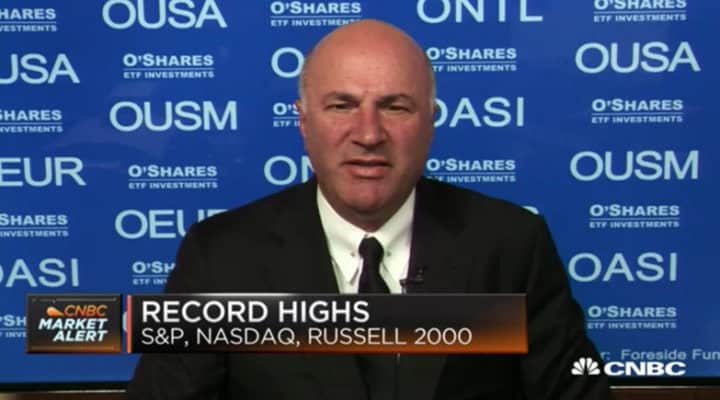
 Small-cap stocks are still an investor’s best bet, even as the Trump administration makes progress toward easing trade tensions, “Shark Tank” investor and entrepreneur Kevin O’Leary told CNBC on Monday.
 BEIJING/SHANGHAI – Alphabet Inc’s (GOOGL.O) self-driving unit Waymo has set up a subsidiary in Shanghai, according to a business registration filing, the latest sign that the U.S. internet giant is attempting to make new inroads into China.
 MADRID – The Bank of Spain’s website has been hit since Sunday by a cyber attack which has temporarily disrupted access to the site, a spokesman for the central bank said on Monday.
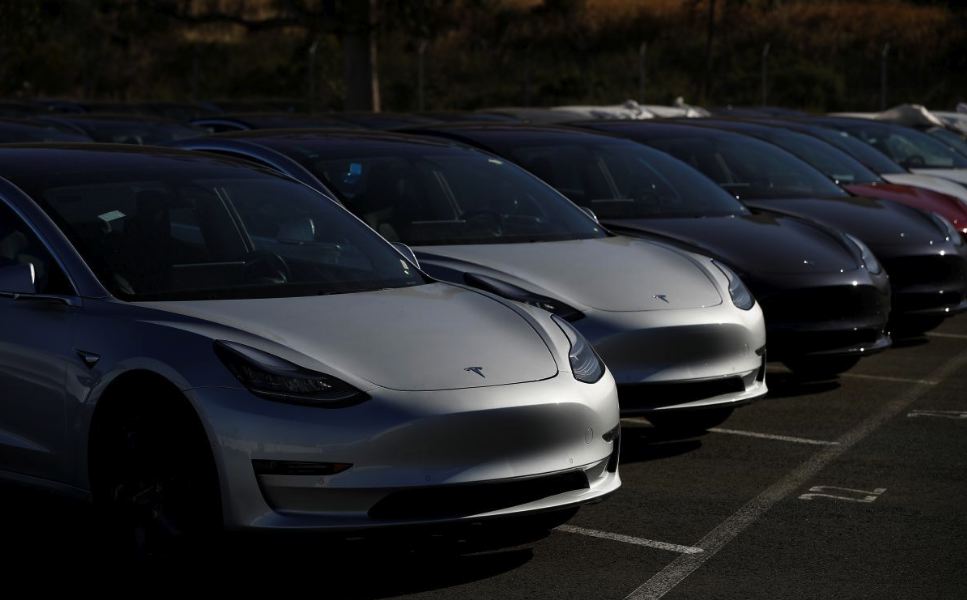 A federal judge in San Francisco has dismissed a lawsuit in which Tesla Inc (TSLA.O) shareholders accused the carmaker of misleading the public about the progress on production of its Model 3 vehicle.
 BONN, Germany – Germany’s antitrust watchdog expects to take first steps this year in its probe against Facebook (FB.O) after finding that the social media giant abused its market dominance to gather data on people without their knowledge or consent.