
Archives for July 23, 2018

Less than 20% of apartments are affordable for middle-income black renters
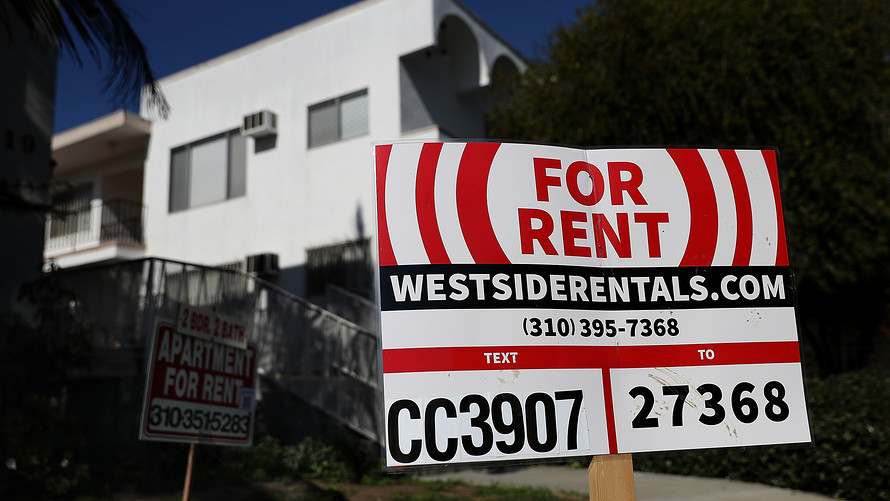
Millions of Americans rent because they can’t afford to buy. And many of those people struggle to pay the rent, new research suggests, more so if they are African-American or Hispanic.

A renter who earned $39,647 per year, the median black household income in the U.S., could afford just 16.2% of rentals available on Zillow Z, -1.53% if they kept their housing costs below 30% of their pretax income, according to a new analysis from the real-estate company.

Hispanic renters fared somewhat better: Those who earned the median household income could afford 27.3% of rentals before they risked spending more than a third of their pretax income on housing.

Spending 30% of your gross income on rent is the traditional measure of affordability used by many real-estate experts. Comparatively, white renters who earned the median household income for their demographic could afford 49.7% of rentals, while Asian renters could afford 67.4%.

“Perhaps more so than any other factor, income determines where and how we live in the United States today,” said Zillow senior economist Aaron Terrazas in the report.

“Income disparities across racial and ethnic groups in the United States have remained stubbornly persistent and, as a result, black and Hispanic families encounter far fewer affordable rental options than white and Asian families,” he said.

Matters for black and Hispanic renters were even more dire in some of the country’s largest — and most expensive — metropolitan areas. Black renters in New York could only afford 3.4% of rentals if they earned the median household income and wanted to keep housing costs below 30% of their pretax income. In Los Angeles, only 2.2% of black renters could afford the rental properties listed on Zillow.

Given the limited options, renters were forced to spend more than 30% of their pretax income on housing — and doing so opened up far more options. If black renters making the national median household income for their demographic spent up to 45% of their pretax earnings on their housing, they could afford 49.4% of rentals.

In some cities, like San Francisco, black renters on average had to spend nearly 75% of their income on rent. Even in the most affordable rental market in Zillow’s analysis, the typical rent charged to a black resident required 29.9% of their median income.

Black and Latino households are at a major disadvantage

More than half (55%) of black and Latino households are rent-burdened in the country’s 100 largest cities, meaning they spend more than 30% of their income on rent, according to a separate report released by real-estate website Trulia last year. For the overall population, that figure only stands at 47%.

And research has shown that income inequality faced by people of color makes it difficult to afford housing-related costs, in turn making far more minority households rent-burdened. And the rising unaffordability of rental properties is increasing homelessness rates across the country.

Paying such a large share of one’s income each month toward housing costs can make a sudden change in income much more pronounced, which in turn makes eviction more likely.

This Could Be the Most Important Piece of Financial Advice You’ll Ever Get

There are plenty of money-related lessons to be learned in life. The importance of following a budget is one of them, as is avoiding debt whenever possible. But when asked what the most important piece of financial advice would be to pass on to younger generations, Americans overwhelmingly agreed that it’s the need to save for retirement. That’s the latest from Comet, which also found that 43% of the folks they surveyed aren’t on track with their nest eggs.

If you’ve yet to start thinking about retirement, which may very well be the case if you’re younger, then consider this your wake-up call: The sooner you start planning and saving for this major milestone, the greater your chances of actually getting to leave the workforce when you want to and live a comfortable lifestyle in the years that follow.

Always have an eye on the future

Why is it so important to save for retirement? It’s simple: Social Security won’t be enough to sustain you when you’re older. In a best-case scenario, it will replace about 40% of your previous income, assuming you were an average earner. Most seniors, however, need about twice that amount to cover the bills, and that means it’s on you to come up with the rest by building a nest egg.

Thankfully, you have a number of choices when it comes to establishing long-term savings. If your employer offers a 401(k) plan, you can sign up and have a portion of each paycheck sent directly into savings. You can contribute up to $18,500 annually if you’re under 50, or $24,500 if you’re 50 or older, but if those thresholds sound unattainable to you, just do the best you can — it’s certainly better than nothing.

If you don’t have access to a 401(k), you can open an IRA through most financial institutions. The current annual contribution limits are much lower than those of a 401(k) — $5,500 for workers under 50, and $6,500 for those 50 and over. On the other hand, it’s easier to max out an IRA than a 401(k) because of these lower thresholds, and while both accounts offer a host of investment options, IRAs tend to come with a significantly wider ranger of choices than 401(k)s.

Speaking of investing, you’ll want to invest your savings wisely to ensure that your money grows. In this regard, stocks are truly your friend, especially when you’re young and have a long investment window ahead of you. If you’re iffy about putting your money into individual stocks, there’s always the option to go heavy on index funds. Not only are they a cost-effective option thanks to their low fees, but they’re also a good way to build a diversified portfolio without having to do the same amount of research individual stocks would normally require — though you should always research any investment you’re thinking of putting in your portfolio.

So now that all of the basics are out of the way, let’s talk money — specifically, how much of it you might accumulate if you start saving now. Check out the following table, which will give you an idea:

The sooner you begin putting money away for retirement, the more it stands to grow. That’s because as your investments make money, you get a chance to reinvest those gains and kick-start a wealth accumulation cycle that will serve you well as a senior.

Now you’ll notice that the table assumes an 8% average annual return on investment. That’s just below the stock market’s historical average, which means that if you load up on stocks early on, you stand to do pretty well.

Here’s something else to take note of: The table assumes only a $300 monthly investment, which isn’t even close to maxing out an IRA, let alone a 401(k). If you’re able to do better — say, save $400 or $500 a month — you stand to amass even more of a nest egg.

Like it or not, your retirement isn’t going to fund itself, and if you wait too long to start saving for it, you’ll risk struggling financially later in life. On the other hand, if you commit to saving relatively early on, there’s a good chance you’ll wind up sitting pretty by the time your golden years roll around.

Strategies for saving: How to pay off your mortgage early

With the average 30-year fixed mortgage rate now climbing over 4.7 percent, it’s no surprise that many homeowners are looking for ways to pay their mortgage off early — and save themselves thousands of dollars in the process. There are several ways to go about this. Below, I’ll highlight each of them and explain when you may not want to speed up your mortgage payments.

Should you pay your mortgage off early?

Sticking to your fixed-rate 30-year mortgage will cost you a lot more in interest than paying it off early, but there are times when it is the smarter play. If you have a lot of high-interest debt, like credit card debt, you’re better off putting any extra funds toward that instead of your mortgage. You may also want to stick to your standard mortgage payments if you don’t have any sort of emergency fund in place. Most experts recommend keeping at least three to six months’ worth of living expenses in a savings account in case of job loss or an unexpected emergency.

But assuming your finances are in good shape, isn’t it a good idea to pay off your mortgage early? Maybe. There are a couple of questions you need to ask yourself first. First, will your lender allow you to pay your mortgage off early without penalty? And second, is there a better place to put that extra cash?

Check with your lender to see what its policies are on extra mortgage payments. Some lenders only allow you to make extra payments at specific times of the year, so you’ll need to plan accordingly. There may also be prepayment penalties if you pay off your mortgage within a specific number of years. In that case, you’ll have to decide if the fees are worth what you’re saving in interest.

It’s a good idea to explore other options for your spare cash before you go making an extra mortgage payment each year. If you have investment accounts, you may prefer to put your money there instead. It’s not uncommon for these accounts to yield an average rate of return of about 8 percent, provided you know what you’re doing. Over the lifetime of your mortgage, that can help make up for the 4 percent you’re paying in interest on your home.

Strategies for paying your mortgage off early

If you’ve evaluated all of your options and you still want to pay your mortgage off early, there are a few different ways you can go about this.

First, you can refinance your 30-year mortgage for a 15-year mortgage. Say you have a $200,000 mortgage with a 4.25 percent interest rate. Over 30 years, you’ll pay $354,197. But let’s say after five years, you switch to a 15-year mortgage at a 4 percent interest rate. You’ll save $52,372, and you’ll pay off the mortgage 10 years ahead of schedule. You will have to pay closing costs, so this is only a smart option if you can score a lower interest rate than the one on your existing mortgage.

If this isn’t the case, then rather than refinancing, you can pay your 30-year mortgage off in 15 years by simply doubling the payments you make each month. If you can’t afford to do that, you may feel more comfortable paying just 1/12 extra each month. In our example above, your monthly payment would be $984. Add 1/12 to that, and you get $1,066 per month. That extra cost would be pretty easy for most people to absorb, and over the course of each year it’ll add up to one extra mortgage payment. You’ll save $24,885 over the lifetime of your loan, and you’ll pay it off four years and three months early.

You can achieve the same effect by making a single extra payment each year or by setting up biweekly payments, if your lender allows this. You’ll pay half of your monthly mortgage payment every other week, so it won’t feel like you’re paying that much more. But because there are 52 weeks in a year, and you’re paying every other one, that adds up to 26 half-payments, or 13 full payments, each year. Whichever method you choose, be sure to note on the check or elsewhere that the money is to be applied to the loan principal rather than your next month’s payment.

Another way to pay your mortgage off early is to put all of your unexpected or extra income toward your mortgage. This includes tax returns, bonuses, and any financial gifts you receive from friends or family. The advantage of this strategy is that you don’t have to set aside any money in your monthly budget for an extra mortgage payment. The disadvantage is that this makes it much harder to predict when you’ll pay the loan off. Still, every little bit counts, and if you’re contributing extra money whenever you can, you’ll probably be able to knock a few thousand dollars off your mortgage.

Paying your mortgage off early is pretty simple once you have a strategy in place. By following one of the methods listed above, you can save yourself a lot of money without putting a huge strain on your monthly budget.

3 books that will change your mindset about money

There are a lot of great personal finance books out there to choose from but only some that can change the way you think.

Below, CNBC Make It rounded up three money-related reads that come highly recommended from self-made millionaires, early retirees and super savers because these books were able to help reshape their mindsets about how to spend and how to save.

“Your Money or Your Life” by Vicki Robin and Joe Dominguez

This 1992 classic, which was recently revised and updated, is a favorite among early retirees and super savers.

One New York City-based millennial, who goes by the pen name J.P. Livingston on her blog “The Money Habit,” retired with $2.25 million before age 30. And it was “Your Money or Your Life” that “opened my eyes” to the idea of early retirement, she tells CNBC Make It.

Another millennial millionaire, Grant Sabatier of “Millennial Money,” who went from having $2.26 in his bank account to seven figures, calls it “the best book on money, period.” And he’s read over 360 personal finance books.

It changed his relationship with money and his approach to spending and saving, he tells CNBC Make It: “The premise of it is that you exchange your time for money. And when you start thinking about how many hours of your life it took to save up the money to buy something, you really start thinking twice about your purchases.”

For example, “Say I work eight hours a day and after taxes, make $10 an hour, meaning I’m earning $80 a day. I want to go out for a nice dinner on Friday and that costs about $80, meaning I spent an entire day of my life working for this meal. And then you start thinking about even larger purchases, like a $1,000 TV, and you think, ‘How much of my life did I trade for this? Is it worth it?'”

“Early Retirement Extreme” by Jacob Lund Fisker

“The Money Wizard,” a personal finance blogger who saved $100,000 by age 25 and plans to retire in his early 30s, says his journey to financial independence started after reading Jacob Lund Fisker’s book at age 22.

“The book changed my whole outlook on a working career,” he tells CNBC Make It. “I had always assumed, like most people, that I needed several millions of dollars to retire. Yet here the author was proving retirement was possible on far less than I ever imagined. It’s not one size fits all for everybody — it depends on how much money you spend and what your expenses are.”

“So Good They Can’t Ignore You” by Cal Newport

Chris Reining banked $1 million by age 35 and retired at 37, thanks to various habits he had developed, including reading for one hour every night. On his blog, Reining shares books that have had the biggest impact on his life. And Cal Newport’s made the list.

“Most people don’t understand that how much money you make depends on your value,” Reining writes. “And you increase this value by building what Cal Newport calls ‘career capital,’ or honing more and more skills.”

Young people in particular should pick up this books, says the self-made millionaire: “If I read this book when I started my career, I wouldn’t have wasted so much time in my 20s being stagnant. I would’ve known that to advance my career I needed to spend my time mastering more skills.”