Archives for April 26, 2018

Six cappuccinos or a year off your home loan?

If you have R150 in your bank account once all your fixed monthly expenses have been paid, would you typically spend or save this extra amount? If you are like many South Africans, you’ll feel that R150 is just too little to make a dent in your home loan or retirement savings so you’ll end up spending it instead.

André Wentzel, Solutions Manager at Sanlam Personal Finance, begs to differ. “R150 can seem like such an inconsequential sum that people would rather use it for a few cappuccinos or to treat themselves to a takeaway dinner. But doing this means missing out on the opportunity to turn a relatively small amount into a larger long-term investment.”

Wentzel says, “It really helps to be able to visualise short-term rewards versus long-term pay-backs to understand the effect of compound interest and how small sacrifices now can make a big difference later.”

To practically demonstrate this, Wentzel decided to do the maths. Here’s what would happen if a person decided to invest the extra R150 in his or her future rather than on instant gratification:

1. Towards your retirement

If you save an additional R150 per month towards retirement, this will accumulate to between R400 000 or R500 000 in 30 years’ time, depending on what you assume the investment return to be. For example, an 8% return will yield R405k and a 9% return will yield R473k, after investment costs. (This also assumes that you increase the R150 per month in line with inflation each year.)

2. Towards your home loan

On a R700 000 home loan, assuming an interest rate of prime (10.25%), the monthly instalment for a 20-year loan will be R6 608 per month. When contributing an extra R150 each month, the loan will be paid off in around 19 years instead of 20 and you’ll save approximately R70 000 in interest over this period.

3. Paying off your credit debt

Paying off a credit debt of R15 000 over three years works out to a repayment of R525 per month (at an interest rate of 18% per annum). An extra R150 per month means you can pay it off nine months earlier, saving approximately R1 100 in interest.

Now, here’s what R150 could get you in the short-term:

  • 16 California rolls
  • 6 cappuccinos
  • 2 basic T-shirts
  • 2 movie tickets
  • 1 gigabyte of data

Wentzel says that practical exercises like this make the longer-term gains more concrete, “The trick to switching people’s thinking from a short-term bias to a longer-term one is to better articulate long-term goals and find ways to make these seem attainable.”

According to Wentzel, people with longer-term mind-sets typically have more retirement savings and are often better at managing credit. Additionally, being clear on their goals means that they’re frequently more active in finding ways to save and avoid expense creep.

TIPS ON LONG-TERM PLANNING

Wentzel’s three tips for shifting to a longer-term mindset are:

  1. Take the time to really consider what you want to achieve financially in the next five, 10, and 20 years. Compile a list of long-term goals and order these in terms of priority. Consider the potential trade-offs you’ll need to make for each goal. Then chat to a financial adviser.
  2. Use FinTech to budget better, track your expenditure, and visualise and articulate your longer-term savings and investment goals – and monitor these. If your investments aren’t performing, chat to your financial adviser and make a change, if necessary.
  3. Pick an appropriate savings vehicle for each goal based on how long you plan to save for, the likelihood that you’ll need to draw on those savings before the end of your planned savings term, and your tax circumstances. You also need to consider whether you can afford to consistently save the extra amount or whether you’ll contribute more erratically when funds are available.

More tips to save an extra R150 (or hopefully more) each month:

  • Wait 30 days before buying a non-essential item that’s over a certain amount – e.g. R500 or R1000 – to see if you still want it. If you don’t buy it, consider saving the money you would have spent.
  • Only buy what’s on the shopping list and consider online shopping for easy price comparisons between providers and to avoid the temptation of the mall.
  • Pack your own lunches and save what you would have spent on a meal.
  • Cancel unused club memberships and subscriptions and consider saving what you were spending.
  • Monitor your data usage, ensure you have a suitable data plan in place and reduce your consumption when possible, especially when you have regular access to free WiFi.

Houses Selling For More Than Asking Price

If you’re going to write a book about personal finance, Job One is to say something different than the hundreds of books already covering the topic. Novice author Gordon Stein aced this test.

“Most personal finance books say save 10 per cent and invest it,” the author of Cashflow Cookbook told me when I met him recently for a coffee. “But most people would say, I don’t have 10 per cent. My book shows how to carve out money for saving, without being cheap.”

Mr. Stein is a sales executive in the tech industry, an MBA and an engineer. Appalled at the financial mistakes he’s seen people making, he has written a book with 60 “recipes” for saving money in all aspects of everyday life. Car repairs, grocery shopping, the daily commute and home maintenance are among the subjects he tackles. .

Some of the ideas were inspired by the financial moves of people he’s worked with over the years. “People buying lattes when we have a perfectly good coffee machine in the office, and then buying a snack of chips and coke in the afternoon. You could be leasing a Honda Civic for the price of all that.”

That’s sort of the idea of Cashflow Cookbook. Find a bunch of different ways to save and then use the money to improve your finances. Mr. Stein suggests paying down debt first and then investing for the future.

Mr. Stein’s book is available from Amazon.ca as well as his website, where you can also find free spreadsheets for tracking debt, net worth and the long-term wealth you can build by saving money every month. He’s also started a blog where he’s recently covered topics like dividend stocks and how parents can help financially launch their adult children after graduation. One recent post looks at whether budgeting may actually be damaging your finances.

A 36-year-old who learned to invest like Charlie Munger explains his 4 principles

When Danielle Town found herself burnt out and even starting to get sick from her work as a corporate attorney, she knew she didn’t want to keep laboring at the same breakneck pace for much longer. So she started brainstorming ways to retire faster.

“I started to think, ‘What else can I do to support myself without being dependent on my salary?’” Town tells CNBC Make It.

Although she was reluctant to turn to the stock market, she eventually called up her dad, an investor who had written two finance books, to walk her through the basics of investing. Town spent the next year developing a weekly practice and learning the basics of ‘value investing,’ a system Warren Buffett and Charlie Munger employ in their own lives.

Value investing means you “buy a wonderful company when it is a bargain and only when you are certain that it will be worth more 10 years from now than it is today,” Town writes in her new book, “Invested: How Warren Buffett and Charlie Munger Taught Me to Master My Mind, My Emotions, and My Money (with a Little Help from My Dad).”

She continues: “Be so confident that you now own a great company that — even if the stock prices goes down — you don’t worry and you stay with it until it goes back up, and, ideally, you never sell.”

To follow this advice, Town decided she needed to be dedicated to researching and tracking companies she believes in, rather than putting her money into index funds or a target date fund and calling it a day.

In addition to following Buffett’s No. 1 rule, “Don’t lose money,” Town also studied Charlie Munger’s four guidelines for picking winning companies. Here’s how she breaks them down:

1. It must be a business you are capable of understanding

First and foremost, choose companies that make sense to you. “This is an extraordinary principle because it doesn’t say, ‘Understand it right now,’ it says, ‘Once you put some time into it once you put some research and some practice into it, I know that I can figure this company out,’” Town says.

In fact, once you start looking around, you’ll realize that you’re actually an expert on a multitude of businesses and products. Try looking around your house, Town suggests. “There are a lot of companies we encounter every single day in our normal lives and we already have opinions about those companies and what kind of products they make,” she says.

Anything from the brand that makes your toilet paper to the place you buy your groceries to the most-used app on your phone could be a potential investment.

A 36-year-old who learned to invest like Warren Buffett explains how saving can actually cost you money A 36-year-old who learned to invest like Warren Buffett explains how saving can actually cost you money

2. It must be a business with a durable competitive advantage

“In industry parlance, this is called a ‘moat,’ like the moat around a castle,” Town says.

A company’s moat is what sets it apart from its competition. “If a business has a good moat, it’s going to be hard for competitors to breach the moat and take the castle,” Town writes in her book. “Not impossible, but difficult. So difficult that they won’t try. So difficult that if they had all the money it would cost to buy the whole company, they still couldn’t compete with it.”

Examples of moats include a strong brand, such as Coca-Cola or Kleenex; proprietary secrets, such as the drug patents Pfizer and Merck hold; or when it’s prohibitively difficult to switch to another, similar company, the way it would be for a long-time Apple user to convert their phone, laptop, tablet and everything else to non-Apple products.

Warren Buffett’s partner Charlie Munger: Avoid these 5 things that can make you miserable Warren Buffett’s partner Charlie Munger: Avoid these 5 things that can make you miserable

3. Ideally, the business’s management has integrity and talent

Munger and “Warren Buffett have both talked a lot about how they want to make sure they have a company that can withstand human error, because eventually someone’s going to come along and try to screw this company up, and you want a company that can handle that and get back on its feet within a few years,” Town says.

The first company Town invested in was Whole Foods, because she respected its CEO and loved its emphasis on conscious capitalism.

However, it’s important to remember that this isn’t completely necessary, because no company is immune to human error. “We’d like to have good management but we are aware that sometimes people screw up,” Town says.

Buffett’s partner Charlie Munger shares his advice for living a rich life Warren Buffett’s partner Charlie Munger shares his advice for living a rich and successful life

4. It must be a business you can buy for a price that makes sense

Time your purchase well to make sure that you’re getting a good deal. Although this principle might seem the most obvious, Munger lists it fourth for a reason.

“First of all, you find the company and that’s wonderful, then you look at the price,” Town explains. “And only when the price is right do you then buy — with a margin of safety — so that in case [you’re] wrong, there’s still a margin of safety on that so that it can go down it can go up and will still make money.”

Here’s what 5 millionaires and billionaires would do if they lost everything and had to start over
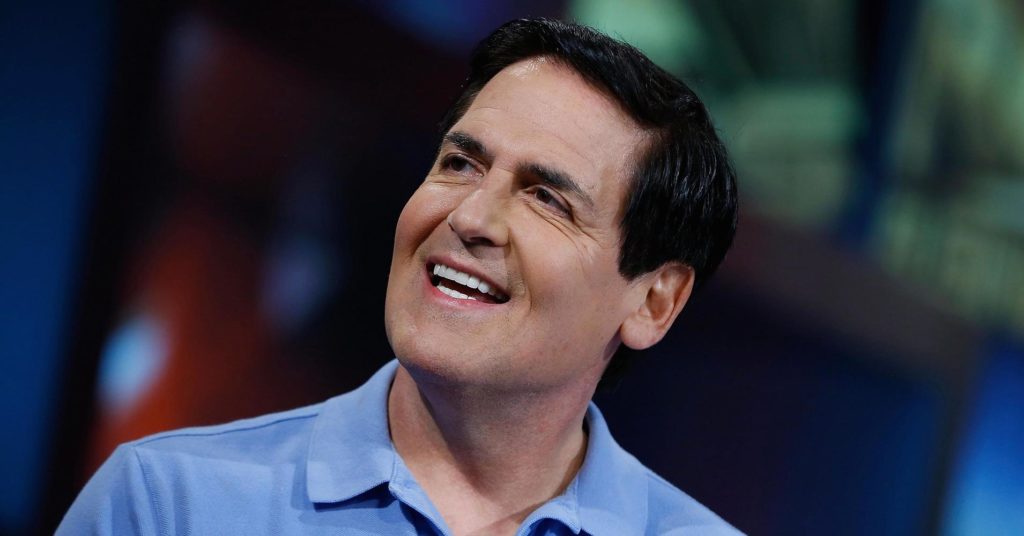
Having started from scratch once, it’s not surprising that many self-made millionaires and billionaires think they could succeed again if they lost everything overnight. Even if they couldn’t reach the same level of wealth they have today, they believe they have a good plan for how they’d try to succeed.

Here’s what Mark Cuban, Richard Branson and other successful individuals would do if they had to start over.

Mark Cuban would bartend and work in sales

If the self-made billionaire and “Shark Tank” investor lost everything, his first step would be to go out and get two gigs. “I would get a job as a bartender at night and a sales job during the day, and I would start working,” Cuban said in an episode of the podcast “How I Built This.”

While he’s confident he could succeed again, he’s not sure he could become a billionaire again. “To be a billionaire, you have got to get lucky,” Cuban said. But he’s certain that he could turn at least seven figures. “Could I become a multimillionaire again? I have no doubt.”

Richard Branson would start another business

If the 67-year-old billionaire entrepreneur had to reboot, he knows exactly what he would do: Launch a new business he hasn’t tried yet. A devoted note taker, Branson would “go through all my notebooks, find the best ideas that had fallen through the cracks and start them up,” he writes in his autobiography, “Finding My Virginity.”

While a lot has changed in the business world over the past several decades, the fundamentals of building a strong business have not, he says: “Once an entrepreneur, always an entrepreneur. I know I’d find a gap in the market somewhere.”

Barbara Corcoran would get a job as a waitress

The self-made millionaire says she is still “worried about all of a sudden losing everything.” If that happened, Corcoran would go back to waitressing, which is the one job, out of the 22 she worked before age 23, that most prepared her to build a successful company.

“You learn more in waitressing than you can in any other job, and I had every kind of menial job you can imagine,” the self-made millionaire tells CNBC Make It.

If she had to start from the bottom again, it wouldn’t affect her happiness, either, she adds: “I was happy before I made any money and I guess I’ll be happy again.”

Marcus Lemonis would sell cars

“If I lost everything today and I had to start over, I would go sell cars,” says the self-made millionaire and star of CNBC’s “The Profit.” “Because I’m working with somebody else’s inventory, I control my own pay plan. I control my schedule. I can get up at 5 in the morning and work ’til 10 at night. And I enjoy it.”

Jim Koch would take a month off

The Boston Beer Company founder nearly did lose everything, he tells CNBC Make It. About 10 years ago, after discovering a defect in its bottles, the company had to recall 25 million bottles of beer.

His dad asked him, “What do you think can happen here?” Koch recalls. “And I said, ‘Well, we could lose everything. This could be the end.’ And my dad said, ‘Don’t worry. It’s been a great ride and I’m proud of you.’ And I thought, perfect, I’m going into it with that attitude. If I lose everything, it’s OK. It’s been a great ride. You did some amazing things. What’s next?”

As for the next project, he has no idea what it would be. “The first thing I would do is take a month off,” says Koch. “Take a deep breath, take a month off and think about it.”

2 Uses for Intel Corp.’s Upcoming 22FFL Manufacturing Tech

Although chip giant Intel (NASDAQ: INTC) manufactures most of its products internally using its own manufacturing process technologies, the company still outsources the production of some products to its key rival, Taiwan Semiconductor Manufacturing Company (NYSE: TSM).

Over time, though, Intel has sought to bring those products internal. For example, Intel’s XMM 7360 and XMM 7480 LTE modems (shipping now) that power the iPhone 7-series and iPhone 8/X-series smartphones, respectively, are currently manufactured by TSMC, but the next-generation modem, known as the XMM 7560, is slated to be manufactured using Intel’s own 14nm technology.

Intel Senior Fellow Mark Bohr presenting details about the company’s manufacturing technologies.

Last year, Intel disclosed that it had developed a new, low-cost manufacturing technology known as 22FFL. 22FFL, according to Intel, offers better chip area scaling than “industry 28/22nm technologies” and should also offer significant performance advantages over what the competition offers by leveraging technology lifted from its high-performance microprocessor manufacturing technologies.

The company has indicated that it plans to use this technology both for internally designed products as well as products manufactured by third parties.

In this column, I’d like to go over two of Intel’s product lines that I expect the company to migrate to 22FFL.

1. RF chips

Intel’s cellular solutions incorporate both a modem (think of this as the brains of the solution that handles all of the signal processing) as well as a transceiver chip (this handles both the receipt and transmission of radio signals).

Historically, Intel has outsourced the manufacturing of both the modem and the transceiver chip to third parties, though as I mentioned above, the company’s next modem will be manufactured using its own 14nm technology.

A potential use case for Intel’s 22FFL technology, then, would be to manufacture transceiver chips for future Intel cellular solutions. According to an analysis of the 22FFL technology performed by WikiChip’s David Schor, 22FFL has quite good analog performance, which is critical to supporting the manufacture of a product like an RF transceiver.

2. Solid-state drive controllers

One area Intel has been talking about — and investing heavily in — is its non-volatile memory solutions group, or NSG for short. This group mainly builds solid-state storage drives for both data center and consumer use cases.

A typical solid-state drive incorporates both NAND flash media (something that Intel manufactures in-house) as well as a controller chip that handles how data is read and written to the device. The quality of the controller chip is critical to the performance and lifespan of a solid-state drive.

For years, Intel outsourced the production of its solid-state drive controllers to third parties. Moreover, for Intel’s lower-performance consumer-oriented drives, the company has simply used third-party-designed controllers altogether.

Given that Intel pitches 22FFL as a step up from current third-party 28nm technology (which is broadly used to build solid-state drive controllers by other industry players), I could see Intel migrating its internal controller designs to in-house manufacturing using 22FFL.

Moreover, if Intel ever decides it wants to stop using third-party controllers for its consumer drives and design its own controllers for such products, 22FFL would seem like an ideal technology choice to build those controllers on.

If 22FFL is as cost-effective and as power-efficient as Intel claims, then Intel would be mad not to use it to build its own solid-state drive controllers with it.

As an added bonus, if 22FFL is truly superior to the competition’s offerings, then Intel may want to aggressively court other solid-state drive controller makers to use 22FFL to give its struggling contract chip manufacturing business a much-needed boost.

3 Stocks That Could Double in the Next Decade

The recipe for successful long-term investing is simple in theory but difficult in practice: Buy shares of high-quality companies; pay reasonable prices for those shares; and hold on to them for many years, unless there are legitimate reasons to sell. Failing at any one of those steps will cause trouble.

Any stock could double over the next decade, but only some have an above-average shot at doing so. These Motley Fool investors think Alphabet (NASDAQ: GOOG)(NASDAQ: GOOGL), Blackberry (NYSE: BB), and Berkshire Hathaway (NYSE: BRK.B) are three such stocks. Here’s what you need to know.

Hand on backboardI

This tech giant is just getting started

Steve Symington (Alphabet): It might seem crazy to predict that shares of a $750 billion company could double from here. But I think Alphabet (NASDAQ: GOOG)(NASDAQ: GOOGL) has the potential to do exactly that.

As the parent company of Google, Alphabet already boasts seven products that each have at least one billion active users, including Search, YouTube, Gmail, Android, Chrome, Maps, and the Google Play store. But it’s easy to forget that around 4.5 billion people — two-thirds of the world’s population — still don’t have access to the internet. And the network effect surrounding the already enormous scale of Alphabet’s core product portfolio will mean it’s well positioned to benefit when those people come online.

That’s also not to mention Alphabet’s smaller “Other Bets” segment, which is mostly made up of early stage businesses with massive long-term promise. Think Nest connected-home products, Fiber high-speed internet, Verily Life Sciences solutions, and Waymo self-driving vehicles, to name only a few.

Revenue at Other Bets jumped nearly 50% last year to $1.2 billion. But many of its smaller businesses are still in their pre-revenue stages, so the segment incurred a hefty operating loss of $3.4 billion over the same period. But with a growing cash hoard of nearly $103 billion on its balance sheet at the end of last year thanks to its massively profitable Google operations, Alphabet can afford to continue fostering these bets with a long-term mindset. If any one of them truly begins to take off in the coming years, it could stoke Alphabet’s returns that much more.

A humbled tech giant

Leo Sun (BlackBerry): BlackBerry controlled about a fifth of the world’s smartphone market in 2009. But it eventually lost the entire market to iPhones and Android devices. By the time John Chen became BlackBerry’s CEO in 2013, it controlled less than 1% of the market

Rather than attempt a comeback in smartphones, Chen expanded BlackBerry’s enterprise software, services, and licensing businesses. Its core growth engine became BlackBerry Enterprise Service (BES), which lets companies secure and monitor their employees’ mobile devices.

In 2016, BlackBerry stopped manufacturing its own smartphones, and licensed its brand to Chinese smartphone maker TCL, which created a new subsidiary called BlackBerry Mobile. TCL pays BlackBerry licensing fees, a high-margin revenue stream that complements its software and services revenues.

Last year, BlackBerry’s software and services revenue (which includes its licensing fees) rose 20% and accounted for 80% of its top line. Unfortunately, that growth was offset by its declining handset sales and service access fees, and BlackBerry’s total revenue slid 29%. But as its handset and service access revenue drops toward zero, the growth of its software and services should gradually offset those losses.

Wall Street expects BlackBerry’s revenue to fall just 8% this year, and rebound 10% next year. Its earnings are also expected to grow again as its revenue rises. BlackBerry’s growth and valuations look messy now, but I think investors could warm up to this humbled tech giant again over the next decade — and its stock could eventually double.

Many years of growth ahead

Tim Green (Berkshire Hathaway): Warren Buffett’s Berkshire Hathaway is already worth nearly a half-trillion dollars. But it’s not crazy to think that the stock could double over the next 10 years. A doubling over a decade requires a compound annual growth rate of just about 7.2%. That’s a little more than one-third of the historical growth rate of both Berkshire’s book value and its stock price.

In other words, Berkshire doesn’t need to hit home runs for the stock to double from here. It just needs to keep doing what it’s been doing. Under Buffett’s leadership, the conglomerate has built up a collection of high-quality businesses with durable competitive advantages that should throw off increasing amounts of cash as time goes on. That cash can be invested in even more high-quality businesses, picked by Buffett or his eventual successors.

Of course, if the broader market goes nowhere over the next decade, perhaps because valuations today are historically high, Berkshire could follow suit and fall short of doubling. But Berkshire’s earnings will likely rise substantially over that time, making the stock more attractive and planting the seeds of future gains.