Archives for March 22, 2018

Why the Next iPhone X Could Be More Affordable
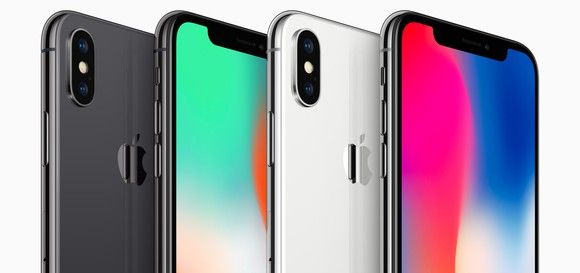
Apple’s (NASDAQ: AAPL) iPhone X is expensive, mostly due to the elevated costs that the company itself faces with manufacturing the device. Not only are OLED panels significantly more expensive than traditional LCD displays, Apple had also initially faced difficulties in ramping production due to complexities in assembling TrueDepth camera systems. Generally speaking, low yields for any component drive up average costs.

The unfortunate consequence of slapping a $999 starting price on the device has been worse-than-expected demand, with a meaningful number of consumers believing the device is “too expensive,” according to a recent survey conducted by Piper Jaffray. The good news is that Apple seems to be making progress with its cost structure.

iPhone X lineup

Costs are coming down

DIGITIMES reports that Apple has been able to reduce the manufacturing bill of materials (MBOM) for iPhone X recently, and the second-generation iPhone X’s MBOM could be at least 10% less than the first-generation model. The first-generation iPhone X MBOM was approximately $400 at launch, according to the report. For reference, supply chain researcher IHS Markit had previously estimated that it cost about $370 to build iPhone X.

Apple is widely expected to release three new iPhone models this year: a 5.85-inch OLED model, a 6.45-inch OLED model, and a 6.1-inch LCD model. The 5.85-inch model would be a successor to the current iPhone X, and DIGITIMES believes that Apple will position that iPhone as the most affordable of the trio, taking advantage of those cost reductions. The company was reportedly exploring a 5.8-inch LCD iPhone due to cost concerns, but that project appears to have been scrapped now that Apple has been able to bring down costs.

The Mac maker has also reached a new supply agreement with Samsung for OLED panels, according to the report, after failing to meet its previous purchase commitments. The new agreement will insulate Apple from any potential surprises regarding cost increases.

What will Apple do with the savings?

It’s worth pointing out that while DIGITIMES could very well be correct with its assessments of Apple’s cost structures, the outlet really has no way to tell what Apple will do with those cost savings. Apple can either give those savings back to consumers in the form of a lower price, or keep them for itself and boost its gross margin. Supply-chain leaks are a fact of life for Apple, but pricing strategy is something that’s decided in Cupertino, far from DIGITIMES’ ears on the ground.

Still, it’s becoming increasingly clear that fewer people are willing to pay $1,000 for a smartphone than Apple had initially hoped. The challenge for Apple will be how to justify a lower starting price in terms of marketing and messaging after charging so much last time around.

Amazon’s 26 Million U.S. Streamers Fall Short of Netflix, but Boost Prime Memberships
Amazon (NASDAQ: AMZN) has been tight-lipped about its Amazon Prime Video figures, perhaps because it doesn’t want to be compared to top video streamer Netflix (NASDAQ: NFLX).

While Netflix boasts about 55 million U.S. subscribers, only about 26 million U.S. Prime members have watched TV shows or films on Amazon, according to early 2017 data found in internal documents that were obtained by Reuters. Amazon and Netflix have both been spending billions annually to churn out high-quality content to attract streamers, but Netflix has been the clear winner with hits like Stranger Things and Narcos.

However, Amazon’s end goal for streaming is to draw people into its Prime membership program so that they spend more on its site. And the documents show that Amazon’s video platform helped convert more than 5 million people worldwide to its Prime program from late 2014 to early 2017, Reuters reported, so Amazon’s plan seems to be working.

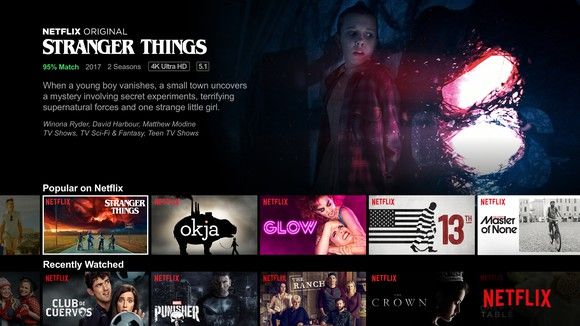
Netflix’s home screen, showing an ad for its hit show

Netflix’s hit shows like Stranger Things have helped it reach 118 million subscribers. Image source: Netflix.

Amazon Prime Video boosts Prime memberships

Amazon has grown into an empire, especially with the addition of Whole Foods last June, but its main goal is still signing up more Prime subscribers.

Amazon Prime Video is no different: It’s a service meant to help convert Amazon viewers into Amazon shoppers. The fact that the company kept track of the 5 million streamers-turned-shoppers as of early 2017 is further validation that this is its end goal.

While Amazon doesn’t release a specific Prime membership figure, it has maintained that it has “tens of millions of members around the world.” Amazon may have hit 90 million U.S. subscribers this past September, according to the most recent estimate from Consumer Intelligence Research Partners.

Amazon Prime memberships continue to be the end goal

But why is Amazon so laser-focused on growing its membership program? Because Amazon Prime members spend more money than nonmembers on its website.

Amazon CEO Jeff Bezos explained this strategy in a 2015 interview with The Hollywood Reporter. “When people join Prime, they buy more of everything we sell,” he said. “They buy more shoes, they buy power tools and so on.”

If you look at Amazon’s many different revenue streams, that’s why they all go back to trying to convert nonmembers into members. For example, the company’s 14 Amazon Books storefronts all offer discounts only to Prime members. Amazon’s Whole Foods offers special services to Prime members, such as free two-hour grocery delivery in four cities, with plans to expand that program in 2018.

And once Amazon has you in its $99-per-year membership program, it can really start to take over your life. The company can then start luring you not only to shop on its platform, but also to purchase one of its Alexa devices and use it to control your coffee maker or dishwasher.

In its boldest move to date, Amazon has started marketing a smart lock that allows Amazon delivery employees to place a package just inside your door — but only if you’re a Prime member. You would get a live-streamed video of the delivery sent to an app on your phone. Soon, Amazon could start using this lock system to send house cleaners or technicians into Prime members’ homes while they’re at work.

Amazon ramps up content output to keep up with Netflix

Netflix and Amazon both have multibillion-dollar content budgets because of the “golden formula” that says better content leads to more subscribers. Netflix expects to spend between $7.5 billion and $8 billion on content in 2018, while Amazon spent an estimated $4.5 billion on content in 2017 in an effort to catch up to Netflix’s lead. “The real driver is to make the big titles bigger,” Netflix CEO Reed Hastings said on the last earnings call.

While Netflix has about 55 million U.S. subscribers, Hastings says it can still add about 35 million more subscribers in the country, for a total of 90 million; that would be about 28% of the current U.S. population of around 327 million. Although the U.S. is becoming a saturated market, Netflix actually added slightly more subscribers in 2017’s fourth quarter (1.98 million net additions) versus Q4 2016 (1.93 million net additions).

Meanwhile, Amazon is estimated to have 90 million U.S. subscribers, but only 26 million of them used its video service between late 2014 and early 2017. That indicates there’s room to grow in the U.S. for both Netflix and Amazon, especially as more people cut the cord on cable.

Why Nutanix Isn’t Done Growing Yet

Shares of Nutanix (NASDAQ: NTNX) have been flying high on the stock market this year. The cloud computing specialist is taking advantage of the booming demand for hyper-converged cloud infrastructure, a market that could be worth $12 billion in 2022 thanks to a rapid annual growth rate of 43%.

Nutanix is firmly on track to make the most of this opportunity, as clearly evident from its second-quarter results. Let’s look at how the company performed last quarter and why it probably isn’t done growing yet.

Computer key denoting cloud computing.

Nutanix is aggressively moving toward profitability

Nutanix’s revenue in the recently reported second quarter shot up 44% year over year to $287 million. It would have reported stronger growth, but the company eliminated $14 million worth of hardware-related revenue as it is pivoting its business toward a software-only model.

This shift in its business model should boost its push toward profitability. And the strategic shift is margin accretive already — last quarter gross profit margin increased by 1.6% sequentially.

The margin improvements have positively impacted the bottom line despite a 20% increase in operating expenses. Nutanix’s net loss fell 18% year over year to $62.6 million, and it can cut its losses further as the software shift gains momentum.

Nutanix currently gets 73% of its revenue from the software and support side of the business, with hardware revenue accounting for the rest. The company is on track to reduce hardware sales to just 8% to 9% of total revenue by the end of the current fiscal year, so Nutanix will get closer to achieving profitability in the coming quarters.

Its offerings are gaining great traction

Nutanix’s terrific financial growth during the second quarter was driven by a rapid growth in its customer base. The company added 1,057 customers last quarter, taking its total customer base to 8,870. By comparison, Nutanix had 5,380 customers in the year-ago period and had added 900 new clients during that quarter.

Nutanix has just announced new incentives for its channel partners that could continue to boost sales. For instance, Nutanix’s channel partners will be rewarded with a 5% rebate for bringing in new customers, and could also get a $3,000 rebate for each XC Core server node they sell. These initiatives will encourage the company’s partners to push sales of Nutanix software and help the company tap more of the hyper-converged cloud infrastructure market.

Nutanix’s customers are now striking bigger deals, showing the company’s growing clout in the hyper-converged cloud space. Last quarter, Nutanix saw a 104% year-over-year increase in the number of $1-million-plus deals to 57. Additionally, the company struck five deals worth more than $3 million related to software and support.

The growth in Nutanix’s deal size and customer count boosted the company’s deferred revenue by 57% year over year to $478 million. Deferred revenue is the amount received by a company for services that will be delivered at a later date, and is a common metric used to forecast the growth of companies selling subscription-based services.

Nutanix’s deferred revenue grew faster than actual revenue — good news for investors as this indicates the growing demand for its software solutions. The company should continue reporting strong deferred revenue growth as it lands more subscription customers thanks to the recently deployed sales initiatives.

In all, Nutanix is doing what’s needed to ride the hyper-converged cloud infrastructure growth wave. The company’s customer count is increasing at a terrific rate, it is striking bigger deals with clients, and it is focusing on margin improvement by shifting to a software-based sales strategy. Anyone looking for a fast-growing cloud computing stock should definitely take a closer look at Nutanix.

Amazon’s Focus on Customer Loyalty Is Paying Off
It should be no surprise that more and more consumers around the world are shopping on Amazon.com (NASDAQ: AMZN). As more people gain access to the internet and Amazon expands to more countries, it’s only natural that it would attract a broader audience. According to a survey by PwC, 59% of shoppers across 27 countries bought items on Amazon.com last year. That’s up 3 percentage points from the prior year.

What is surprising, though, is that the percentage of people who shop exclusively on Amazon.com, when they shop online, increased from 10% to 14%. Amazon is facing more online competition than ever from the likes of Walmart (NYSE: WMT), MercadoLibre (NASDAQ: MELI), and Flipkart, among others. Even so, its customers are increasingly loyal, making it difficult for even incumbent e-commerce companies to face off against Amazon.

A stack of boxes from Amazon.

3 big factors driving loyalty

There are several factors that make Amazon shoppers increasingly loyal.

Amazon Prime is, no doubt, one of the biggest factors keeping customers coming back over and over again. Not having to worry about shipping cost or speed is a big draw for Prime members, but the sunk cost of the membership may also encourage members to get as much value as possible out of the $99 annual fee (for U.S. members).

Prime is growing faster than ever, too. Amazon just reported adding more members in 2017 than any year before both in the United States and worldwide. India likely played a big role in that, as Amazon added more Prime members in that country than it did in any other country in its first year of offering the program.

A second factor is the growing product selection available on Amazon. There’s been a massive increase in third-party merchants on Amazon over the last several years, expanding Amazon’s product selection. Many have opted to use the Fulfilled by Amazon service, in order to offer Prime shipping benefits. As a result, the number of Prime-eligible items on Amazon.com has grown to 100 million.

And third, Amazon’s customer focus makes its shopping experience better than what’s offered by most other large online retailers. Amazon is willing to sacrifice profits today in order to make its customers happy, which is paying off in the long run with more loyal shoppers.

The competition doesn’t stand a chance

Walmart tried to undermine Amazon’s Prime shipping benefits in 2017, offering free two-day shipping on a couple million items on its website — no membership required. Walmart saw excellent growth through the first three quarters of 2017. But that growth largely came from its acquisitions — like Jet.com — and the growth of its online grocery ordering platform. With Amazon moving into online grocery ordering, that growth may slow more than anticipated in 2018.

Walmart is also facing e-commerce challenges internationally. It’s shutting down its first-party e-commerce business in Brazil. At the same time, Amazon is expanding its operations in Latin America’s largest economy to include electronics and appliances. That’s unwelcome news for MercadoLibre investors, who’ve seen their company dominate e-commerce throughout the region. Brazil accounted for 59% of MercadoLibre’s revenue in 2017.

Amazon’s early growth in India is promising as it looks to take on Flipkart. Amazon is winning customers with its extremely underpriced Prime offering, which costs about $15 per year in India, but still offers streaming video, music, and — of course — fast shipping on every order.

Incumbent Flipkart is bringing on more investors, raising money to battle the well-funded Amazon. In fact, it’s reportedly close to a massive $7 billion deal with Walmart valuing the company around $20 billion. Flipkart could use the cash injection as Amazon has pledged to spend $5 billion in India building out infrastructure, logistics, and payments systems.

As Amazon looks to bring Prime, product selection, and its customer-first focus to the rest of the world, it presents a massive challenge to every retailer unwilling to forgo profits for customer loyalty. With 14% of online shoppers exclusively using Amazon.com, it shows Amazon’s strategy is paying off.

The next version of Chrome will block autoplaying videos with sound
With Chrome 64, Google began allowing users to stop videos from autoplaying on

With Chrome 64, Google began allowing users to stop videos from autoplaying on specific websites but with Chrome 66, the company is adding new criteria that dictate when videos can autoplay. As 9to5Google reports, in Google’s upcoming version of Chrome, there are a few conditions that must be met for media to autoplay on a website. It must be muted or not have audio, the user has to have tapped or clicked on the site while browsing, the site has to have been added to the Home Screen by the user on mobile or the user has to have frequently played media on that site if on desktop.

Chrome 66 is now in the beta channel and should be released in the next few weeks. Along with the new autoplay restrictions, Chrome 66 will also display warnings following crashes caused by third-party software injecting code and removes trust for Symantec certificates.

First impressions of the $199 Oculus Go VR headset

Virtual reality seems to have become a very tired topic to consumers, products are still getting made though because big tech companies are convinced of its eventual ubiquity. The challenge now becomes attracting attention from people whose attention spans for what you’re selling has perhaps already timed out.

Oculus Go is the latest VR hardware to hit the market from ole Facebook.com and it seems to be a pretty thoughtful move with hardware that makes some solid improvements to existing products in a package that doesn’t push performance but drives down costs and complexity. I had a chance to demo the headset this afternoon and had largely positive first impressions.


Oculus Go turns on when you press the power button and it works from there. For all the good things I’ve had to say about the Rift or Gear VR, a straightforward setup every time I want to use the headset has never been one of them. By owning the hardware completely, Oculus isn’t beholden to what updates need to be installed or what app you have to click, it’s all very simple and feels remarkably less labor-intensive.

The headset manages to feel more high quality than the Rift in a lot of ways. Comfort-wise, I would say the Oculus Go bests even the first-gen Google Daydream View headset which pretty much felt like a tight sweater on your face — in a good way. The Oculus Go fabric “facial interface” is spongey and breathable and actually fit around my glasses which is a first for headsets from Oculus.

The display is sharp and the lenses appear to be the best that Oculus has built yet. I’ll need to spend a bit more time with the screen to get a full impression on this front, but assuredly this feels like far less of a toy than the Gear VR does.


It’s hard to judge the device’s sound quality because the Game Developers’ Conference kept a low roar even when demoing in private rooms, but I will say that the stereo speakers next to your ears seem to be more of a fallback option to headphones, delivering audio that is neither particularly loud nor crisp. That being said, I’m happy they were included given how many high-end headsets don’t have any integrated audio.

Other notes, the controller is fine and is about as good as it is going to get for non-tracked input. The headset itself also didn’t feel too heavy, the straps balanced things out well on my head. Ultimately, I was happy with it.

I can say that this probably won’t be the company’s breakthrough VR product, but it does showcase how steadily the company’s VR ambitions are starting to align. As someone who has spent a lot of time with the company’s hardware, I have often reluctantly found the games I’ve tried as moments to examine what is possible and what it groundbreaking rather than perhaps whether what I’m seeing is going to be something people actually want to buy as it is now.

My 30 minutes or so today demoing the Oculus Go was one of the first glimpses I’ve had of a product from Oculus that is nearly ready to be purchased by normal people. I think a mass-market product is going to still need to have tracked controllers and a tracked headset, but that will happen in due time. The company’s “Santa Cruz” headset will likely be emerging next year and while it most definitely won’t arrive at the Go’s price point, in due time all of these features will drift down to the entry-level.

VR probably could’ve benefitted from playing a bit more of its early years in the shadows, but very few projects of Facebook keep a low profile. Things are finally shaping up a bit more though, and I think Oculus Go finally represents a product that feels more well put together than it doesn’t. My first impression is that it’s probably still a product for people who want to “try VR” rather than people who just want to get their moneys worth out of a gadget that they’ll use on a daily basis, but for $199, I think Oculus can still make a pretty convincing sell for this when it goes on sale sometime in the next few months.