Archives for January 27, 2018

Qatar Airways’ first Airbus A350-1000 to be delivered Feb 15-20: CEO

FILE PHOTO: A logo of Qatar Airways is seen at Hamad International Airport in Doha, Qatar June 12, 2017.

DOHA (Reuters) – Airbus will deliver the first ever A350-1000 jet to an airline to Qatar Airways between Feb. 15 and Feb. 20, the carrier’s chief executive said on Saturday.

Delivery of Europe’s largest twin-engined passenger jet to launch customer Qatar Airways had been delayed from late last year to some time next month due to issues with installing business class seats.

“We are progressing very well to receive our aircraft somewhere between the 15th and 20th [of February],” Qatar Airways Chief Executive Akbar al-Baker told reporters in Doha.

Qatar Airways has ordered 37 A350-1000s.

The major Middle East airline is known to be a demanding customer when reviewing aircraft for quality defects before delivery. Qatar Airways has in the past refused to take delivery of aircraft over what it said were quality issues, and has also canceled some deliveries.

The “complex seat configuration” of Qatar Airways’ Qsuite, business class which features seats that face each other, and lie-flat double beds, had delayed the delivery of the A350-1000, until February, Baker said on Monday without detailing a specific date.

The A350-1000 will be the first Airbus jet to feature the Qsuite, which was unveiled last year and has been installed on Qatar Airways’ Boeing 777 jets, Baker said.

The A350-1000 is the largest version of the A350 series, and was launched to compete against Boeing’s 777s in the up to 400-seat market.

Baker, speaking to reporters on board one of Airbus’ A350-1000 test aircraft, said the airline expected to receive four of the twin-engined jets this year.

“This is contractually and I am confident that Airbus will deliver them to us,” he said.

An Airbus spokeswoman declined to comment on Baker’s remarks, telling Reuters that the European planemaker looked “forward to deliver the first A350-1000 to Qatar Airways” and that it was the “customer’s privilege to announce delivery schedule.”

Qatar Airways plans to initially fly its first A350-1000 on long haul routes before adding it to ultra long-haul routes in a few months time, in case of any potential technical issues with the new jet.

Baker said the airline expected to take delivery of its first Boeing 777x by the first half of 2020.

The airline has ordered 60 777x jets, according to data on Boeing’s website.

Las Vegas Sands Q4: The Asia Bet Pays Off

Las Vegas Sands’ Parisian Macao

We might as well call this period “casino operator annual earnings season.” Las Vegas Sands (NYSE: LVS) just reported its results for the fourth-quarter and full-year 2017 frames, closely following on the heels of rival Wynn Resorts (NASDAQ: WYNN). In a few short weeks, it will be MGM Resorts International’s turn.

In pole position, Wynn did rather well for the quarter and the year. Can we say the same for Las Vegas Sands?

Asian ascent

We can.

Like Wynn, Las Vegas Sands notched convincing beats on both the top and bottom lines for the quarter. The company’s Q4 saw its net revenue increase by almost 12% on a year-over-year basis to $3.44 billion. Adjusted net profit increased a beefy 43% to $700 million ($0.88 per share), which excludes a non-cash income tax benefit of $526 million derived from the recent government tax reforms.

The average analyst estimate for net revenue was $3.27 billion, and for per-share adjusted net profit, the estimate was $0.77.

Growth was also in the cards for fiscal 2017 as a whole. Las Vegas Sands’ net revenue for the year was nearly $12.9 billion, a 13% improvement over the 2016 result. Adjusted net income came in 30% higher, at a shade over $2.4 billion.

Despite its name, Las Vegas Sands these days draws most of its revenue from the thriving Chinese gaming enclave of Macau. That’s good, because Macau is in recovery mode. After several years of declines (due to a government crackdown on casino junket operators that dampened visitor numbers), the region’s gaming take has improved greatly; for the entirety of 2017, its total rose by 19% to the equivalent of $33 billion.

As a result, most of the company’s properties in the enclave showed substantial improvements. Its top resort by revenue, the Venetian Macao, improved its take by 19%. Meanwhile, No. 2 Sands Cotai raked in almost 26% more. All told, Las Vegas Sands’ Macau revenue rose 13% to over $2.1 billion.

Macau wasn’t the only Asian hot spot for the company during the quarter. The Marina Bay Sands in Singapore posted a 14% improvement in net revenue, at $825 million.

Las Vegas Sands’ relatively small operations in the U.S. — which consists of the Venetian and Palazzo resorts, plus the Sands Expo and Convention Center in Las Vegas, and the Sands Bethlehem in Pennsylvania — saw a more modest rise. Combined, these facilities brought in net revenue of $564 million, up from the $551 million of Q4 2016.

Entertaining the masses

If we compare Las Vegas Sands’ top line to that of Wynn, the latter takes the prize for Q4 improvement — its overall net revenue rose by 30% to $1.69 billion.

Much of that is due to Macau, and much of the Macau growth was due to great improvement in the high-spending VIP segment. For 2017, VIPs collectively spent 27% more than they did in 2016, while the mass market rose by less than 10%. This is perhaps a key reason Wynn’s stock saw a nice pop after its Q4 results were made public. Las Vegas Sands’, by contrast, barely moved in after-hours trading following its release.

Still, the vastly improved health of the overall Macau gaming industry gives plenty of reason for optimism on Las Vegas Sands’ prospects for continued growth. Although there is concern that Chinese government policy could negatively affect the enclave’s casino business again, analysts are generally expecting more growth. That would almost certainly juice the results of Las Vegas Sands going forward.

A Life of Pie: B.C. Woman Bakes Works of Art

A former filmmaker’s journey from kitchen klutz to pastry pro

Jessica Clark-Bojin holds an apple pie that she made bearing a likeness of actor and comedian Betty White, at her home in Vancouver, B.C.

Jessica Clark-Bojin remembers at one time having a reputation for her lack of cooking skills.

“I couldn’t crack an egg. I was shooed out at family gatherings,” says the Vancouver native, laughing. “I had no experience in a kitchen whatsoever.”

Now Clark-Bojin is shaking up the baking world with her elaborate pie creations, which range from detailed celebrity portraits to towering three-dimensional “pie-scrapers.”

The former filmmaker’s journey from kitchen klutz to pastry pro started with a New Year’s resolution to cut down on sugar in 2016, when she began experimenting with pies to sate her dessert cravings. What began as a creative foray has become a full-time gig.

“It’s the most fun job that I’ve ever had in my life,” she said. “I never thought I’d be doing anything like this.”

Jessica Clark-Bojin puts the finishing touches on an apple pie that she made bearing a likeness of actor and comedian Betty White, at her home in Vancouver, B.C.

Cooking with chemistry

Clark-Bojin’s multi-tiered masterpieces include Calvin and Hobbes riding a wagon down a hillside and an Aladdin-themed castle. The self-described science fiction nerd has also concocted a glow-in-the-dark Tron apple pie and Star Wars themed fruit turnovers shaped like Jabba the Hut.

Along the way, Clark-Bojin has tapped into her science background as a former university physics student to develop new methods and materials. Her innovations include colouring pastry dough, creating pigments that glow in the dark and baking three-dimensional shapes.

“This isn’t cooking. This is chemistry!”

The American talk show The Chew invited Clark-Bojin to New York to present a pie on the show in late 2016, which was followed by an invitation from the Food Network to start making videos for the cooking channel, she said.

Pies present particular problems

Pies are especially challenging because pastry dough quickly becomes tough when overworked and its inconsistency means it often changes shape unpredictably in the oven, Clark-Bojin said.

She said one “aha moment” came while designing an alien face from the sci-fi franchise Predator, when Clark-Bojin came up with a method of blending different layers of pastry together, “like modeling clay,” using an egg mixture.

“That opened a whole new world,” she said.

Clark-Bojin said most of her baking gets done late at night after her five-year-old son, Cillian, is in bed. She described him as her harshest critic.

“He’ll look at something that I’ve been slaving over for days and I’m really proud of and he’ll be like, “Hmm. It’s not your best work, mommy,’ ” she said.

An appetite for growth

Clark-Bojin doesn’t sell her pies directly. She supports her work by offering how-to guides and dough stencils for sale.

Her next task is to simplify her techniques.

“My mission with all of this is not just to be a snooty pie artist,” she said, adding that the overall goal is to create a new industry.

“I want to teach other people and inspire other people to create cool things in this medium that they love with this food that they love.”

There’s a New Drone That Will Fit Into Your Pocket
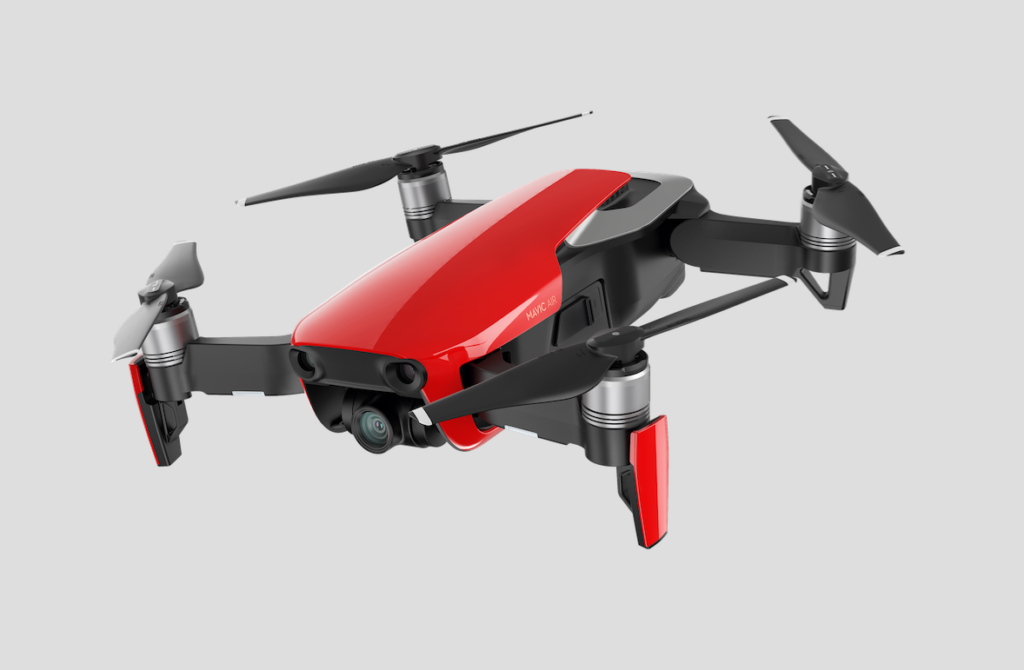
DJI is the 800-pound gorilla of the drone world. At this point, every time the Chinese company introduces a new drone, it’s basically cannibalizing sales of its own existing products.

Never will that become more true than next week, when its new Mavic Air drone is unveiled. Far smaller than the older Mavic Pro, the Air folds up small enough to fit into a coat pocket — its most important feature by far.

But the Mavic Air is less expensive, too ($800 including remote controller), yet still does 4K video capture from a camera that’s on a 3-axis gimbal that reduces camera shake and provides super-stable video. And the Air has sensors on the back so that it can avoid collisions, either forward or backward.

You can control the Air with hand motions, just as you can the $400, non-folding, equally small DJI Spark. In fact, you can use even more motions.

On the Spark, those “use the force” hand gestures were iffy. No matter how spastically you waved your hands, the drone sat motionless. When I review the new Air next week, I’ll see if DJI has managed to improve that feature.

In the meantime, on paper, anyway, the Mavic Air is one juicy semi-pro drone indeed!

Three RRSP Myths That Will Mess Up Your Retirement

RRSP deadline March 1: Seven tips for making last-minute contributions

Planning out retirement can be daunting, regardless of your age. But one of the most common retirement savings options in Canada, the Registered Retirement Savings Plan (RRSP), isn’t as popular as it used to be, according to a recent poll by CIBC.

CIBC’s Managing Director of Tax & Estate Planning Jamie Golombek says fewer Canadians are contributing to those plans, and more people are withdrawing from them early. In his most recent note to investors, Golombek highlights some of the myths that have manifested around the RRSP, and explains why those misconceptions can actually be a huge hinderance to long-term savings goals.

Myth 1: TFSAs are a better retirement investing vehicle than RRSPs.

You put your money in, you take your money out, and the tax man doesn’t touch a cent. Pretty great, right? That’s certainly what many Canadians think — 67 per cent of those surveyed said a Tax-Free Savings Account (TFSA) is a better way to save because all contributions are tax free forever. With an RRSP, you’re paying taxes on the money when you withdraw it during retirement.

While the TFSA may be a good choice for some people, it certainly shouldn’t be the default for all Canadians to save for retirement.

“Although a TFSA may be a better choice for those currently in a lower tax bracket or early in their income-earning years, an RRSP can provide a completely tax-free rate of return and is frequently the best option for retirement savings,” says Golombek.

Those who are in a lower tax bracket or people who are early in their income-earning years can make more strategic use of TFSAs as retirement vehicles, but everyone else should be using an RRSP. TFSAs also have an annual limit on how much you can contribute, which varies from year to year. This tax year’s contribution limit is $5,500, and the limit is cumulative for all past years, so if you’ve never put money in a TFSA, you can contribute up to $57,500 for the 2017 tax year.

Myth 2: RRSPs are pointless, because you have to pay tax when you withdraw it.

In the CIBC poll, 39 per cent of people surveyed said it was pointless to have an RRSP, as they’ll have to pay the tax on that income later on, anyway.

Golombek points out in his report that there are actually plenty of tax-related reasons to contribute to an RRSP: 1) you get a tax deduction the year you contribute to your RRSP, 2) if the tax rate is lower the year you take out the money, you’ll actually get a better after-tax rate of return, and 3) when you grow your income inside a registered vehicle like a RRSP, you won’t pay capital gains tax.

“The bottom line is that there’s no point having non-registered investments unless you have maxed out your TFSA or RRSP room,” says Golombek.

Myth 3: Other sources will fund retirement, so an RRSP isn’t needed.

49 per cent of Canadians who responded in the poll don’t cite an RRSP as one of their main sources of income for retirement. Primary sources of income are expected to be government pensions/benefits (57 per cent), employer-sponsored pensions (34 per cent), TFSAs (32 per cent), equity in the primary residence (19 per cent), non-registered investments (18 per cent), inheritance (11 per cent), real estate investments (8 per cent), rental property income (7 per cent), and lottery winnings (4 per cent).

In 2018, the maximum monthly payment amount for a government pension plan was $1,134.17, or $13,610.04 annually. These benefits are only available after you turn 65, so if you plan on spending more than that amount every month in retirement, a supplementary income, like funds from an RRSP, may be necessary.

“Moreover,” says Golombek, “57% of respondents said they wished they knew what retirement savings strategy was best for them. Yet among those who were currently not retired or only semi-retired, only 10% had a formal and detailed plan that describes the lifestyle they want in retirement, the income they will need, and take measures to save regularly to achieve their goals.”

Only 60 per cent of Canadians have an RRSP, and that number drops the younger the demographic; only 49 per cent of 18-to-34-year-olds have an RRSP. Even fewer Canadians (and especially Millennials) plan on contributing to their RRSP this tax year (42 per cent and 40 per cent respectively).

Golombek recommends consulting with a financial professional to plan out the best course of action for funding retirement goals.

Caterpillar Announces Officer Retirement; Consolidation of Functions
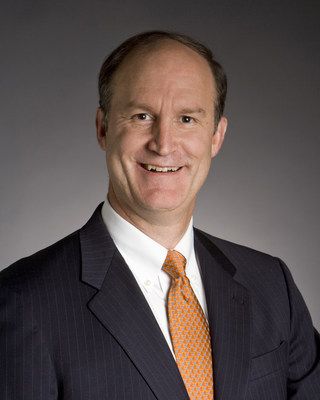
Frank Crespo, Caterpillar vice president of the Global Supply Network Division, elects to retire effective February 1, 2018.

DEERFIELD, MI — Caterpillar Inc. (CAT) announced today that Frank Crespo, Caterpillar vice president of Global Supply Network Division (GSND), has elected to retire. In connection with this retirement, the GSND organization will be consolidated into existing divisions within the company.

Crespo joined Caterpillar in 2010, and since then he has led the procurement teams, along with our global suppliers, to achieve world-class procurement processes and deliver on our customer commitments.

“We thank Frank for his commitment and dedication to Caterpillar and his contribution to the success of our customers,” said Denise Johnson, Caterpillar group president of Resource Industries.

Prior to joining Caterpillar, Crespo was Vice President and Chief Procurement Officer with Honeywell International Inc. At Honeywell, he had responsibility for setting strategic direction, developing and managing the supplier base, driving supplier alliance relationships, and building and delivering people excellence within the organization.

Crespo’s retirement is effective February 1, 2018.

About Caterpillar

For more than 90 years, Caterpillar Inc. has been making sustainable progress possible and driving positive change on every continent. Customers turn to Caterpillar to help them develop infrastructure, energy and natural resource assets. With 2017 sales and revenues of $45.462 billion, Caterpillar is the world’s leading manufacturer of construction and mining equipment, diesel and natural gas engines, industrial gas turbines and diesel-electric locomotives. The company principally operates through its three product segments – Construction Industries, Resource Industries and Energy & Transportation – and also provides financing and related services through its Financial Products segment.