Archives for June 26, 2017

Clinical pharmacist Carrie Beth Smith discusses dietary supplements and their role in wellness

Dietary supplements are intended to complement a diet and provide what a person may lack nutritionally based on daily habits, medicines they’re taking or other outside factors.

“Supplements [cover] a multitude of things. Whether we’re talking about vitamins, minerals, herbal products, it’s anything that we use to add to … whatever lifestyle choices you have for various reasons. It’s not a replacement, it’s an addition,” says Carrie Beth Smith, PharmD and Board Certified Pharmacotherapy Specialist at Saint Francis Medical Center.

Smith says there has been a wide range of research done on supplementation.

“Most people who use supplementation use it because they recognize that they have a deficiency in some area,” she says. “That’s why most of us take a multivitamin because we’re not sure if we get everything we need from our diet.”

A number of people who take supplements may be doing it to provide their body with something to compensate for an insufficiency caused by medical reasons or conditions.

“Some people use different supplements to assist in care for certain conditions. Â… They use them to help benefit their body for certain conditions and it’s a broad range,” Smith says. “People use supplements for, pick a topic, and somebody will probably tell you, ‘Oh, there’s a supplement for that.'”

All the nutrients we need could have been sourced from our diet 60 or more years ago according to Smith. As time has gone on, more automated options, chemicals and pesticides have come into use and loss of soil nutrients from erosion have made those nutrients less easily obtained.

When considering the saying “You eat whatever your food eats,” Smith says “most of the time we think about that for animals, but it’s the same thing with fruits and vegetables because they get their nutrients from the soil. So if we’re eating the fruits and vegetables to get the nutrients but the soil doesn’t have what it used to, then the tomato your grandma or great-grandma ate is not the tomato you’re eating today.”

With those factors in mind, Smith also says every person’s supplement needs (or lack thereof) will be different because every person has a distinctly different diet and lifestyle.

“There are certain things that probably are more predominantly geared toward or more necessary for men versus women,” she says. “There are some things that go across the board that everybody probably needs a little bit of. To do supplementation appropriately, you look at the individual person and what that individual needs.”

The main goal of supplementation is to get a person to a proper state of health. Once that goal has been met, Smith says supplementation can most likely be reduced.

“Once your body’s in a healthy mode and in a healthy place, then eating healthy and eating that variety, it’s much easier to get what you need (in terms of vitamins and minerals),” she says.

When it comes to supplementing for other reasons, Smith says the conversation shifts. She says people often continue supplementing for years without considering whether or not they still need the supplements they’re consuming.

“You have to think about, what’s it doing for your body and then does your body really still need it?” she says.

This is a difficult question to consider, Smith says, because many healthcare providers may not have a definitive answer.

“Unless you have somebody who’s really interested in supplementation and really has taken a personal interest in it, finding qualified individuals to speak to becomes difficult, to be perfectly honest,” she says.

Enter physicians and pharmacists.

“When you have that physician/pharmacist team that both have an understanding of supplements and why supplementation is important and how to do it, then you can actually provide people with what their bodies need,” Smith says.

And in most cases, Smith says speaking with a physician to order supplements is the safest option.

“The best quality supplements are those that physicians must order because the companies meet beyond the strictest standards of what’s required for supplementations on the shelf at ‘pick-your-drugstore,'” she says.

Although dietary supplements are not regulated by the U.S. Food & Drug Administration, according to its website, firms that market supplements are required to ensure the product manufactured is safe, any claims made about the product are not false or misleading and the products comply with the Federal Food, Drug and Cosmetic Act and FDA regulations in all other respects.

The solution to any doubt in this case, Smith says, is looking for companies that work directly with physicians to supply supplements for their patients.

Smith also recommends speaking to a physician or pharmacist because they can best consider which medications a person may be on already and determine how certain supplements may interact with them.

“When you have a pharmacist/physician team that works together, you get the best of both worlds,” she says.

Smith says the first step in moving from health to wellness is taking responsibility for one’s own wellbeing and asking physicians and pharmacists the appropriate questions about dietary and supplemental needs.

“I’m a firm believer when your body gets what it needs it does what it was created to do,” Smith says. “… Why wouldn’t you want to be well?”


Bankers Are Hiring Cyber-Security Experts to Help Get Deals Done

  • Global threats, recent WannaCry ransom attack fuel awareness
  • Cybersecurity will increasingly become part of deal-vetting

Executives and investors are hiring an unlikely crowd to help them do deals: computer geeks.

Companies and investment funds are adding an extra layer of scrutiny to acquisitions by screening targets for cybersecurity risks, as global computer attacks raise awareness. That’s prompting offers specifically tailored to takeovers by a variety of players, from consultants like Deloitte LLP to software providers including Intralinks Holdings Inc.

“There’s a risk you’re buying an empty shell,” overpaying for a target whose patents have been spied on and copycatted, or whose sensitive customer data has been stolen, said Michael Bittan, head of Deloitte’s Cyber Risk Services unit in France. “Cybersecurity is not about getting technical, it’s about business impact, and ultimately valuations. It will become a pillar of M&A decisions.”

The wake-up call for cybersecurity expertise during mergers and acquisitions came after a 2014 Yahoo! Inc. hack affected about 500 million accounts, damaging the company’s reputation and causing Verizon Communications Inc. to cut its offer to buy the company by $350 million. There’s concern that computer viruses can be planted and remain dormant until after a deal, leaving the acquirer to cope with stolen customer data, industrial secrets or ransom demands.

At Deloitte, Bittan’s French team started the service about 3 months ago and has signed up about a dozen customers since. Deloitte’s global cybersecurity unit more broadly had sales of $850 million during the full-year that ended end-May 2016 and has a target for $1.8 billion by end-May 2020.

‘Killing Deals’

A majority of executives would seek to significantly lower a deal’s valuation in case of a high-profile data breach, a survey by stock market operator NYSE showed last year. About 85 percent of executives interviewed in the study said discovering major vulnerabilities at the audit stage of an acquisition would likely affect their final decision to go ahead with the takeover or back out.

“That trend will grow — we’ll see more companies killing deals or devaluing the target,” said Grace Keeling, head of communications at Intralinks, which has conducted a similar survey. The company, which provides virtual safe-storage rooms to customers including Credit Suisse Group AG during deals, reported most respondents of its survey would cut valuation by as much as 20 percent in case of a breach at the target’s level.

Demand from executives and investors has been growing, as high-profile attacks grab the spotlight. More than 200,000 computers in at least 100 countries were infected by ransomware in May, blocking parts of activity at Germany Deutsche Bahn train stations, the U.K.’s National Health Service, and some factories of French car-marker Renault SA.

“There’s huge potential for development — the more attacks there are, the more cyber audits are likely to become standard procedure,” said Frederic Ichay, a partner at lawfirm Pinsent Masons LLP, who specializes in M&A transactions. “We’ll see more and more of them as we see more cyberattacks against companies and more flaws being exploited, not just blocking computer systems, but also potentially entire factories.”

Barely Starting

Those who are getting audits done aren’t out bragging about them though, and there’s good reason for that: attacks are ongoing and a green light from due diligence teams today isn’t a guarantee that a company won’t be vulnerable in the future. Experts interviewed for this story all declined to name their customers.

It’s also because cybersecurity analysis is still part of only a minority of M&A transactions. A 2015 academic report in the Richmond Journal of Law & Technology showed cybersecurity analysis is carried out in less than half of deals.

A report by Freshfields Bruckhaus Deringer in 2014 showed 8 in 10 deal-makers don’t think potential cybersecurity impacts are quantified as part of due diligence. Several experts speaking to Bloomberg said that hasn’t changed much since: cybersecurity isn’t yet a standard analysis like fiscal or social audits, but rather something companies do for very large transactions or operations on companies that value data heavily in their business models.

Phone operator Orange SA, which is investing in cybersecurity to capitalize on a surge in demand from corporate clients, is seeing M&A audits start to pop up on the list of requests from its customers just recently, said Michel Van Den Berghe, chief of the company’s cyberdefense unit.

“It’s something our very large customers are asking for in the final phases of a deal, as part of a mapping of potential risks,” Van Den Berghe said. “It’s the kind of request we’ve been getting for less than a year — it’s barely starting.”

Buffett Bullish on Canada But Not as Much on Its Housing: Globe

Buffett Bullish on Canada But Not as Much on Its Housing: Globe
The city skyline is seen from a condominium under construction in Toronto, Ontario, Canada, on Tuesday, June 25 2013. Canadas housing agency further trimmed its forecast for housing starts this year amid modest economic and employment growth. Photographer: Brent Lewin/Bloomberg

Warren Buffett may have thrown a lifeline to embattled Canadian alternative lender Home Capital Group Inc., but that doesn’t mean he’s as enthused about the nation’s soaring housing markets.

“I’m bullish on Canada,” Buffett said, according to a transcript Toronto’s Globe and Mail newspaper published Saturday of a June 22 interview with the legendary investor. “Being bullish on a country doesn’t automatically make you bullish on the housing market.”

On June 21, Buffett’s Berkshire Hathaway Inc. agreed to take a 38 percent stake in Home Capital for about C$400 million ($302 million) and provide a line of credit. The Canadian company’s stock has risen more than 24 percent since then.

“Prices have gone up a lot, and if you’re lending money on housing, you’d rather not have it having gone up that much,” Buffett told the Globe. “You’ve got to be more careful, obviously, the higher prices get.”

Canada’s home-price escalation has been driven primarily by two cities. In Toronto, average home prices have soared 130 percent in the past decade, reaching C$863,910 in May. In Vancouver, prices have risen 115 percent to C$1.1 million in the same period. Buffett said the investment doesn’t reflect an assessment of whether those will go up or down. “I do not know that,” he said.

Buffett said Berkshire Hathaway has confidence in Home Capital’s board and doesn’t plan to exit its investment quickly. “We’re not buying it to resell in four months or next year or anything of the sort,” he said.

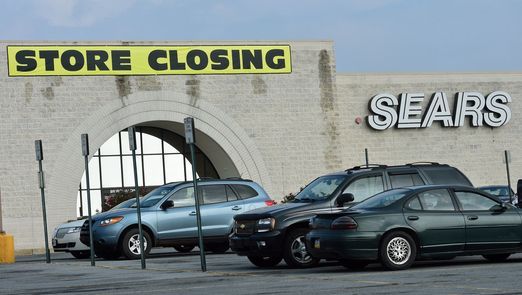
We Went to Sears For The First Time In More Than 10 Years and Instantly Saw Why It’s Dying

I haven’t been inside a Sears store for more than 10 years, until Thursday, June 22. And, wow, did I learn a lot.

Mainly, I came away with a better understanding of why Sears Holdings Corp. (SHLD) is closing an additional 20 stores on top of the 245 it already planned to shutter. And why it has failed to turn a profit in 29 out of the last 37 quarters and seen same-store sales decline in 11 of the past 12 quarters.

I observed alienating treatment of a loyal customer at the store in Jersey City, N.J., which was also messy and uninviting inside.

When I came upon customer Stephanie Rosso, a resident of Jersey City, she was struggling with four employees to get a simple return transaction completed for a dryer she’d bought and sent back to the warehouse that day with the delivery man. Normally, getting a refund takes about two minutes tops.

But Rosso spent 20 minutes getting the runaround from Sears staff, some of whom gave her incorrect information about store policy. That meant she’d have to come back to the store the next day. Who has time for that?

“No, that’s not my address. No, that’s not my number,” said Rosso to the employees as they tried to find her order. “Why don’t they get new technology here?”

At the store, employees said they couldn’t issue Rosso a refund on the dryer until the warehouse staff verified that the appliance had arrived. As I observed, when Rosso asked one of the employees if she could call the store the next day to get the refund, she was told no.

That wasn’t so, it turned out. One employee later told TheStreet that Rosso could, in fact, call to get her refund by phone.

This was a woman who needed that appliance fast. Because of what Rosso had been told, she also agreed reluctantly to charge a second dryer.

“I’ve been coming here for years, and it’s gotten worse and worse,” Rosso said in an interview with TheStreet later.

Sears spokesman Howard Riefs did not return a request for comment for this story.

On Thursday, the same day Rosso was grappling with getting a refund, things up north in Canada were falling apart for the Sears brand. Sears Canada (SRSC) filed for bankruptcy in Ontario. Although Sears Holdings and Sears Canada operate as separate entities, the encounter I witnessed at the Jersey City store was telling. The fundamental issues Sears continues to face hint that it may not be long before the U.S. retailer follows its Canadian brother.